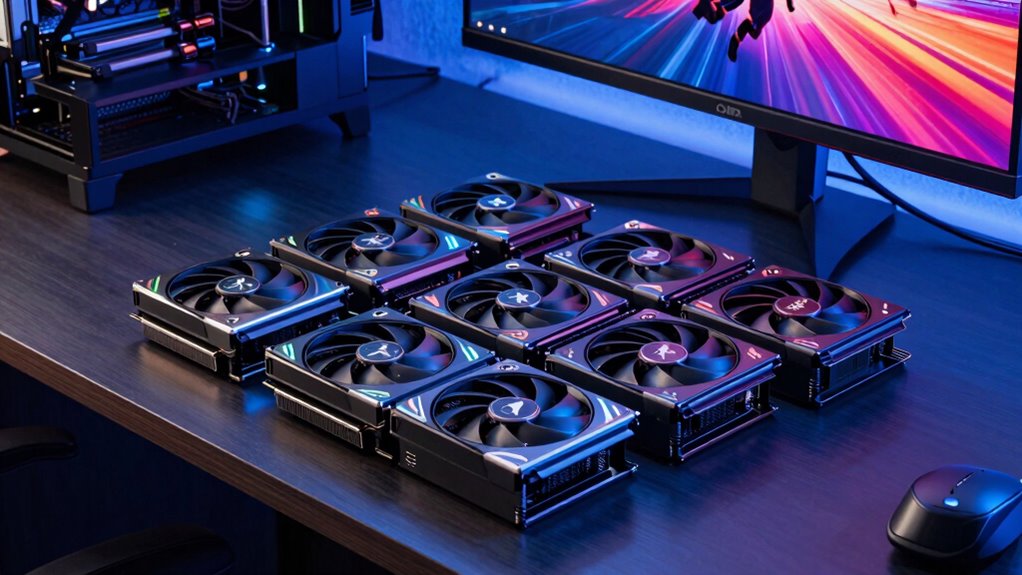

Finding a GPU capable of delivering a solid VR experience on a tight budget can be challenging. The best overall pick, the GIGABYTE GeForce RTX 3050 WINDFORCE OC V2 6G, offers reliable performance for its price, making it suitable for most entry-level VR setups. The GPVHOSO GTX 1060 6GB stands out as a budget classic that still handles VR well, especially for older builds. However, tradeoffs include lower future-proofing and reduced performance compared to newer models. Continue reading for a detailed breakdown of these options and how they stack up for your VR needs in 2026.
Listen free for 30 days with Audible
Thousands of audiobooks and originals — cancel anytime.
Start your free trialAs an affiliate, we earn on qualifying purchases.
Complete the kit


Key Takeaways
- The RTX 3050 series offers the best balance of performance and price for budget VR builds.
- Older cards like the GTX 1060 remain viable but are less future-proof, especially as VR demands grow.
- VR-focused GPUs need at least 8GB of VRAM for smoother experiences, making some 6GB options less ideal long-term.
- Cooling and size vary significantly; compact cards may suit smaller cases but might limit airflow or upgrade options.
- Price fluctuations and availability in 2026 mean shopping smart and considering used options can be beneficial.
| GIGABYTE GeForce RTX 3050 WINDFORCE OC V2 6G Graphics Card |  | Best Overall for Budget VR Builds | GPU Architecture: NVIDIA Ampere | RT Cores: 2nd Generation | Tensor Cores: 3rd Generation | VIEW ON AMAZON | See Our Full Breakdown |
| GPVHOSO GTX 1060 6GB Graphics Card GDDR5 8K 192bit HDR VR Ready, Dual Cooling Fans, HDMI + 2*DP |  | Best for Entry-Level VR with Versatile Connectivity | Memory: 6GB GDDR5 | Memory Bandwidth: 192bit | VR Compatibility: Yes | VIEW ON AMAZON | See Our Full Breakdown |
| MSI Gaming RTX 3050 Ventus 2X 6G OC Graphics Card |  | Best for Versatile Gaming and VR with Multiple Outputs | Chipset: GeForce RTX 3050 | Boost Clock: 1492 MHz | Memory: 6GB GDDR6 | VIEW ON AMAZON | See Our Full Breakdown |
| Kelinx AISURIX RX 580 Graphics Card, 8GB GDDR5, 2048SP, PCI Express 3.0, Dual DisplayPort & HDMI, 3840×2160 Max Resolution |  | Best for High-Resolution VR on a Budget | Graphics Coprocessor: RX 580 8GB | GPU Clock Speed: 1750 MHz | Video Output Interface: 2x DisplayPort, 1x HDMI | VIEW ON AMAZON | See Our Full Breakdown |
| ASUS Dual NVIDIA GeForce RTX 3050 6GB GDDR6 OC Edition Gaming Graphics Card | 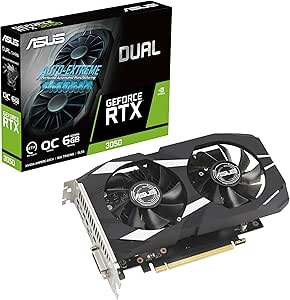 | Best Compact VR Card for Small Chassis | Graphics Coprocessor: NVIDIA GeForce RTX 3050 | GPU Clock Speed: 4000 MHz | Memory: 6GB GDDR6 | VIEW ON AMAZON | See Our Full Breakdown |
| MSI Gaming Radeon RX 6600 XT MECH 2X 8G OC Graphics Card |  | Best Balanced Performance for VR on a Budget | Model: Radeon RX 6600 XT MECH 2X 8G OC | Memory: 8GB GDDR6 | Bus Interface: 128-bit | VIEW ON AMAZON | See Our Full Breakdown |
| gpu for vr on a budget pc build | Memory | Cooling |
|---|---|---|
| GIGABYTE GeForce RTX 3050 WIND | 6GB GDDR6 | 2X WINDFORCE Fans |
| GPVHOSO GTX 1060 6GB Graphics | 6GB GDDR5 | Dual Fans |
| MSI Gaming RTX 3050 Ventus 2X | 6GB GDDR6 | — |
| Kelinx AISURIX RX 580 Graphics | — | — |
| ASUS Dual NVIDIA GeForce RTX 3 | 6GB GDDR6 | — |
| MSI Gaming Radeon RX 6600 XT M | 8GB GDDR6 | Dual Torx Fans |
More Details on Our Top Picks
GIGABYTE GeForce RTX 3050 WINDFORCE OC V2 6G Graphics Card
The GIGABYTE RTX 3050 stands out for offering a balanced mix of performance and affordability, thanks to NVIDIA’s Ampere architecture and 6GB GDDR6 memory. Compared with the ASUS Dual RTX 3050, it provides comparable ray-tracing capabilities but with a slightly better cooling system, thanks to its dual WINDFORCE fans. This makes it a solid choice for gamers who want reliable VR performance without overspending. The main tradeoff is the 6GB VRAM, which might limit high-end VR or future-proofing, and it lacks detailed clock speed info, making power tuning a bit opaque. Still, for a budget build focused on VR, this card offers excellent value. It’s best suited for users who prioritize cooling efficiency and NVIDIA’s architecture in a compact form.
Pros:- Balanced performance with NVIDIA Ampere architecture
- Effective cooling with dual WINDFORCE fans
- 6GB GDDR6 memory suitable for most VR titles
Cons:- Limited to 6GB VRAM, may restrict high-end VR experiences
- Lack of detailed clock speed and power info
Best for: Budget-conscious gamers aiming for solid VR performance without high-end features
Not ideal for: Users planning professional-level VR or future-proofing with demanding workloads, due to VRAM limits
- GPU Architecture:NVIDIA Ampere
- RT Cores:2nd Generation
- Tensor Cores:3rd Generation
- Memory:6GB GDDR6
- Memory Interface:96-bit
- Cooling:2X WINDFORCE Fans
Our verdict“This card offers a reliable, well-cooled option for budget VR setups, especially for those prioritizing NVIDIA’s features.”
GPVHOSO GTX 1060 6GB Graphics Card GDDR5 8K 192bit HDR VR Ready, Dual Cooling Fans, HDMI + 2*DP
The GPVHOSO GTX 1060 6GB offers a compelling entry point for VR on a tight budget, supporting HDMI and DisplayPort outputs that make multi-monitor setups straightforward. Compared to the Kelinx RX 580, it delivers slightly lower power consumption and more mature driver support, making it suitable for users new to VR. However, it requires a power supply over 400W, and its 6GB VRAM may limit future VR experiences, especially as titles grow more demanding. Its dual fans help keep temperatures in check, but lacking modern features like ray-tracing means it won’t handle the latest graphical effects. This card is ideal for those with a modest power supply and a focus on basic VR and gaming functionality without needing 4K support or advanced features.
Pros:- Supports modern gaming and VR with HDMI and DisplayPort
- Efficient dual-fan cooling system
- Good value for entry-level VR setups
Cons:- Requires a high-wattage power supply over 400W
- Limited to 6GB VRAM, restricting future-proofing
Best for: Beginners building a VR-capable PC with limited upgrade plans
Not ideal for: Power users or those seeking the latest graphics technology or higher VRAM capacity
- Memory:6GB GDDR5
- Memory Bandwidth:192bit
- VR Compatibility:Yes
- Cooling:Dual Fans
- Power Supply Requirement:Over 400W
- Supports:DirectX 12, PCIe 3.0
Our verdict“A solid choice for newcomers seeking affordable VR performance with reliable connectivity.”
MSI Gaming RTX 3050 Ventus 2X 6G OC Graphics Card
The MSI Ventus RTX 3050 excels for users who want a versatile GPU for gaming and VR, with a boost clock of 1492 MHz and multiple outputs including HDMI 2.1a and DisplayPort 1.4a. Compared to the GIGABYTE RTX 3050, it offers similar architecture and VRAM but emphasizes multiple display options, ideal for multi-monitor VR setups or streaming. The absence of specific cooling features is a drawback, possibly affecting thermal performance during extended use, and it still shares the 6GB VRAM limit. This card makes sense for users who prioritize display flexibility and a slightly higher clock speed, but it might not satisfy those needing professional workloads or future-proofing for demanding VR titles.
Pros:- High clock speed with 1492 MHz boost
- Supports multiple displays including HDMI 2.1a
- Built on NVIDIA’s efficient Ampere architecture
Cons:- Limited to 6GB VRAM, not ideal for demanding VR titles
- No detailed cooling features mentioned
Best for: Gamers who want flexible connectivity and strong VR performance in a single card
Not ideal for: Users seeking overclocking features or higher VRAM for future games
- Chipset:GeForce RTX 3050
- Boost Clock:1492 MHz
- Memory:6GB GDDR6
- Memory Speed:14 Gbps
- Outputs:DisplayPort x 1, HDMI 2.1a x 2
Our verdict“This card balances performance and multi-monitor flexibility, perfect for multi-display VR setups on a budget.”
Kelinx AISURIX RX 580 Graphics Card, 8GB GDDR5, 2048SP, PCI Express 3.0, Dual DisplayPort & HDMI, 3840×2160 Max Resolution
The Kelinx RX 580 offers 8GB of GDDR5 memory, making it a more future-proof choice against 6GB options like the GTX 1060 or the MSI RTX 3050. It supports 4K resolutions and DirectX 12, making it well-suited for high-resolution VR experiences. Compared to the GPVHOSO GTX 1060, it provides more VRAM and better support for modern VR headsets, but it draws more power—up to 185W—and requires a robust power supply. Its dual DisplayPort and HDMI outputs allow for flexible multi-monitor setups, though its maximum of two outputs may limit some users. The card is ideal for those who prioritize high-resolution VR but are willing to manage higher power demands and slightly noisier operation.
Pros:- 8GB GDDR5 VRAM for better future-proofing
- Supports 4K and DirectX 12
- Dual DisplayPort and HDMI outputs for multi-monitor use
Cons:- Requires a dedicated 8-pin power connector
- Higher power draw at 185W
Best for: VR enthusiasts aiming for higher resolutions and better future-proofing on a budget
Not ideal for: Users with limited power supply capacity or who need more than two outputs
- Graphics Coprocessor:RX 580 8GB
- GPU Clock Speed:1750 MHz
- Video Output Interface:2x DisplayPort, 1x HDMI
- Graphics RAM Type:GDDR5
- Display Maximum Resolution:3840×2160
- Power Draw:185 W
Our verdict“A well-rounded choice for VR users seeking higher resolutions and more VRAM within a budget.”
ASUS Dual NVIDIA GeForce RTX 3050 6GB GDDR6 OC Edition Gaming Graphics Card
The ASUS Dual RTX 3050 OC offers high-performance ray-tracing and AI capabilities within a compact 2-slot design, making it ideal for small cases. Its 4000 MHz GPU clock boosts performance in VR and gaming, comparable to the MSI Ventus but with the added advantage of a three-year warranty. Compared to the GIGABYTE RTX 3050, it emphasizes a smaller footprint, which is critical for tight builds. The dual Axial-tech fans improve cooling, but the limited VRAM of 6GB remains a concern for future VR titles. The card’s emphasis on small size makes it perfect for mini-ITX builds, but users with larger cases may find it offers more capacity than needed and miss out on some cooling options found in larger models.
Pros:- High GPU clock speed with 4000 MHz boost
- Compact 2-slot design suitable for small cases
- Supports 4K resolution gaming and ray-tracing
Cons:- Limited to 6GB VRAM, less future-proof for demanding VR
- No extensive cooling features detailed
Best for: Small-form-factor builders needing VR-ready GPU with high performance
Not ideal for: High-end users or those planning to run very demanding VR titles that benefit from more VRAM
- Graphics Coprocessor:NVIDIA GeForce RTX 3050
- GPU Clock Speed:4000 MHz
- Memory:6GB GDDR6
- Video Output Interface:HDMI, DisplayPort
- Item Dimensions:7.9″L x 4.7″W
- Warranty:3 Years
Our verdict“This compact card delivers strong VR performance in small builds, though VRAM limits may affect future gaming.”
MSI Gaming Radeon RX 6600 XT MECH 2X 8G OC Graphics Card
The MSI Radeon RX 6600 XT MECH 2X 8G OC stands out for delivering solid VR performance at a budget-friendly price, especially when compared to entry-level options like the GTX 1060. Its 8GB GDDR6 memory provides enough headroom for immersive VR titles, while overclocking capabilities help squeeze extra performance. The dual Torx fans and efficient cooling design help manage heat during extended gaming sessions, which is a key advantage over the less robust cooling found in some competing models. However, as a renewed product, it may come with limited warranty support, and it requires a compatible system to unlock its full potential. This card makes the most sense for budget-conscious gamers seeking a reliable VR experience without sacrificing too much performance or stability, but it might not be ideal for those planning to upgrade their entire system soon or needing cutting-edge features.
Pros:- 8GB GDDR6 memory ensures smooth VR gameplay and multitasking
- Overclocking capabilities for extra performance headroom
- VR ready with low latency for immersive experiences
- Dual Torx fans provide effective heat dissipation
Cons:- Renewed status may limit warranty coverage
- Requires a compatible PC setup to achieve optimal performance
Best for: Budget gamers who want a VR-capable GPU with decent overclocking potential and reliable cooling.
Not ideal for: Enthusiasts aiming for the highest possible frame rates or future-proofing, as this card may have limited warranty and slightly older architecture.
- Model:Radeon RX 6600 XT MECH 2X 8G OC
- Memory:8GB GDDR6
- Bus Interface:128-bit
- Outputs:DP, HDMI
- Cooling:Dual Torx Fans
- VR Ready:Yes
- DirectX:12
Our verdict“This GPU is a well-rounded choice for budget-conscious VR gamers who prioritize reliability and decent performance over the latest features.”
How We Picked
These GPUs were chosen based on their ability to handle VR workloads within a budget, focusing on price-to-performance ratio, availability, and compatibility with entry-level gaming PCs. We prioritized models that are widely available, have proven VR performance, and offer reliable build quality. The ranking considers power consumption, size, cooling solutions, and future-proofing, ensuring each option serves a different type of budget-conscious VR user. Tradeoffs like lower VRAM, older architecture, or reduced ray tracing capabilities are acknowledged to provide a realistic view of their capabilities in 2026.Factors to Consider When Choosing Gpu For Vr On A Budget Pc Build
Choosing the right GPU for VR on a budget involves balancing several factors. Beyond just raw performance, you should consider compatibility with your existing setup, future VR titles, and long-term value. Making the wrong choice can lead to frame drops, latency issues, or even the need for an early upgrade, which defeats the purpose of saving money. Here are key considerations to keep in mind when selecting a GPU for your VR build.Performance and VR Suitability
Ensure the GPU can deliver at least 90 FPS in your preferred VR titles to avoid motion sickness and latency issues. Budget cards like the GTX 1060 or RTX 3050 are capable but may struggle with more demanding games or higher settings. Always check VR benchmarks for the specific models you’re considering, and remember that higher frame rates lead to smoother experiences, especially in fast-paced VR environments.
VRAM and Future-Proofing
VR headsets increasingly demand more VRAM for textures and rendering. While 6GB can suffice now, 8GB or higher provides more headroom for upcoming titles and higher resolutions. Investing in slightly more VRAM can extend your GPU’s relevance, but it often comes at a higher cost. Be cautious of models with less than 6GB, as they may limit performance in future VR games.
Size, Compatibility, and Cooling
Make sure the GPU physically fits your case, especially if you have a small form factor build. Cooling solutions vary; dual-fan designs typically run cooler and quieter but may be larger. Consider your airflow setup to prevent thermal throttling. A well-cooled card maintains performance longer and can extend the lifespan of your components.
Power Requirements and Efficiency
Check your power supply capacity and connectors, as budget GPUs can have different power demands. Some models require only one 6-pin connector, while others may need more. Efficiency matters too—more efficient cards generate less heat, which is beneficial in budget builds that might lack advanced cooling. Overestimating your power needs can lead to compatibility issues or unnecessary upgrade costs.
Price Stability and Availability
GPU prices can fluctuate wildly due to market conditions, so look for deals or consider used options carefully. The most budget-friendly card today might be unavailable tomorrow, so flexibility in model choice can save money. Also, consider warranty and return policies when buying used or from less-known vendors, to avoid future headaches if the card fails.
Frequently Asked Questions
Can I run VR smoothly with a GTX 1060 6GB?
Yes, the GTX 1060 6GB can handle many VR titles at decent settings, offering a playable experience for entry-level VR. However, it may struggle with newer, more demanding games or higher resolutions, leading to lower frame rates or the need to dial back settings. Its age means it lacks support for some of the latest VR features, so while it’s a solid budget option, it’s less future-proof than newer cards.
Is the RTX 3050 a good choice for VR on a budget?
The RTX 3050 strikes a good balance for budget-conscious VR users, providing better performance than older cards like the GTX 1060. It supports ray tracing and DLSS, which can enhance VR experiences in compatible titles, and generally offers more longevity. The main tradeoff is its price, which might be slightly higher, but it’s a worthwhile upgrade for smoother and more immersive VR gameplay.
Should I prioritize VRAM over raw performance?
VRAM is important for handling higher-resolution textures and future game updates, but raw performance—measured in frame rates—is critical for a smooth VR experience. For budget builds, a card with at least 6GB of VRAM is acceptable, but if you plan to keep your setup for several years, aiming for 8GB or more can help future-proof your investment. Balancing VRAM with overall performance ensures better stability and longevity.
Are compact GPUs suitable for VR builds?
Compact GPUs are appealing for small cases, but they often come with tradeoffs like reduced cooling capacity and potential performance limitations. If your case is tight, a smaller card can still handle VR, provided it has adequate cooling. However, larger cards tend to have better cooling solutions, which support sustained performance. Consider your case size carefully to avoid thermal issues or the need for aftermarket cooling solutions.
Is it worth buying a used GPU for VR on a budget?
Buying a used GPU can save money, but it comes with risks such as limited warranty and potential wear from previous use. For VR, reliability is key, so thoroughly check the seller’s reputation, request proof of proper functioning, and inspect the card if possible. Used models like the GTX 1060 or RX 580 can still perform well for entry-level VR, but ensure they meet your performance needs and are free from overheating or other issues.
Conclusion
For most budget-conscious VR enthusiasts, the GIGABYTE GeForce RTX 3050 WINDFORCE OC V2 6G offers the best overall performance and future compatibility. The GPVHOSO GTX 1060 6GB remains a solid choice for those on an ultra-tight budget or with an older build, while the MSI Gaming Radeon RX 6600 XT MECH 2X 8G OC is a good pick if you want a bit more power without a steep price. Beginners should focus on cards with good cooling and compatibility, while enthusiasts may consider slightly more expensive options that offer better longevity. Ultimately, your choice depends on your current setup, gaming expectations, and willingness to upgrade in the near future.
Fall Picks
fall essentials
As an affiliate, we earn on qualifying purchases.