
If you’re looking to elevate your SteamVR experience in 2026, I recommend the ASUS ROG Astral GeForce RTX 5090 for top performance, along with the ASUS GeForce RTX 5080 16GB Noctua OC for excellent cooling and stability. The ASUS RTX 3050 6GB OC offers a reliable budget option, while the ASUS ROG GeForce RTX 5070 Ti 16GB provides a balanced high-performance choice. Keep in mind that compatibility and cooling features are essential, so stay tuned for more insights.
Key Takeaways
- Prioritize GPUs with at least 11 TFLOPS for smooth SteamVR performance in 2026.
- Opt for models with 16GB or more VRAM to handle demanding VR content and future applications.
- Choose high-end GPUs like ASUS ROG Astral GeForce RTX 5090 for maximum ray tracing and AI features.
- Ensure compatibility with HDMI 2.1 or DisplayPort 1.4a and support PCIe 5.0 for optimal VR headset connectivity.
- Select GPUs with advanced cooling and quiet operation to maintain stability during extended VR sessions.
| ASUS ROG Astral GeForce RTX 5090 Gaming GPU | 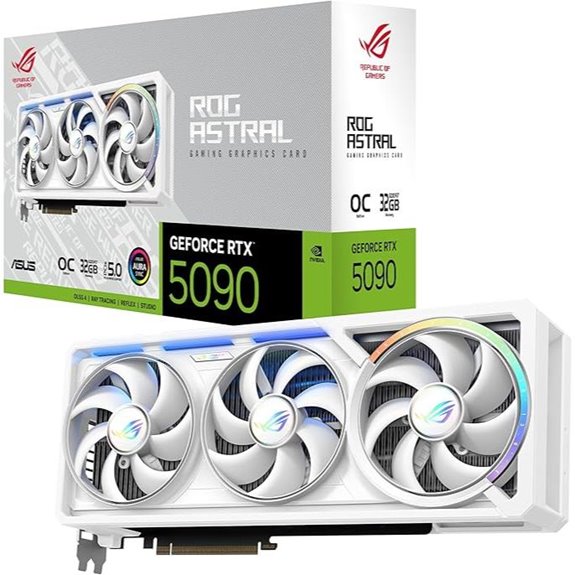 | Top-Tier Powerhouse | Memory: 32GB GDDR7 | Architecture: NVIDIA Blackwell | Cooling System: Massive heatsink + 4 Axial-tech fans | VIEW LATEST PRICE | See Our Full Breakdown |
| ASUS GeForce RTX 5080 16GB Noctua OC Edition | 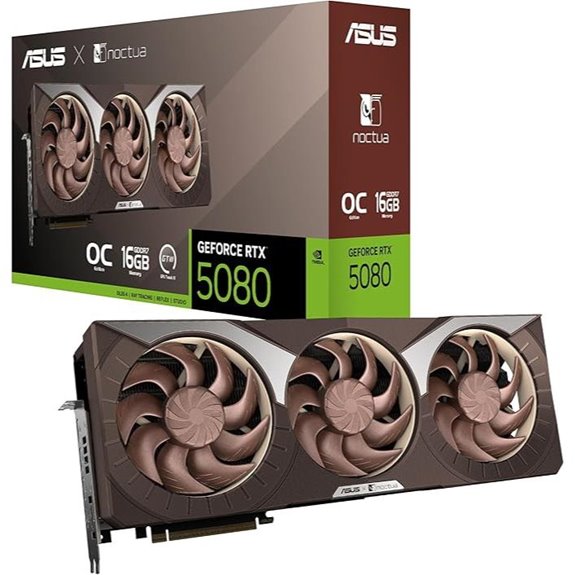 | Quiet Performance | Memory: 16GB GDDR7 | Architecture: NVIDIA Blackwell | Cooling System: Vapor chamber + 3 Noctua fans | VIEW LATEST PRICE | See Our Full Breakdown |
| ASUS NVIDIA RTX 3050 6GB OC Gaming Graphics Card | 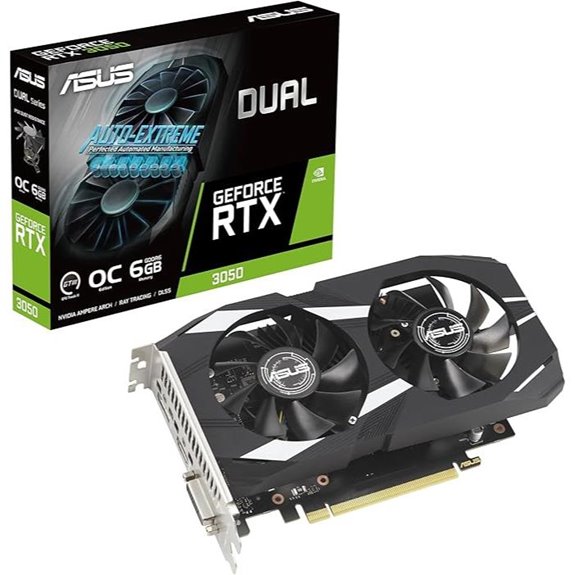 | Budget Gaming | Memory: 6GB GDDR6 | Architecture: NVIDIA Ampere | Cooling System: Axial-tech fans + heatsink | VIEW LATEST PRICE | See Our Full Breakdown |
| ASUS ROG GeForce RTX 5070 Ti 16GB Graphics Card | 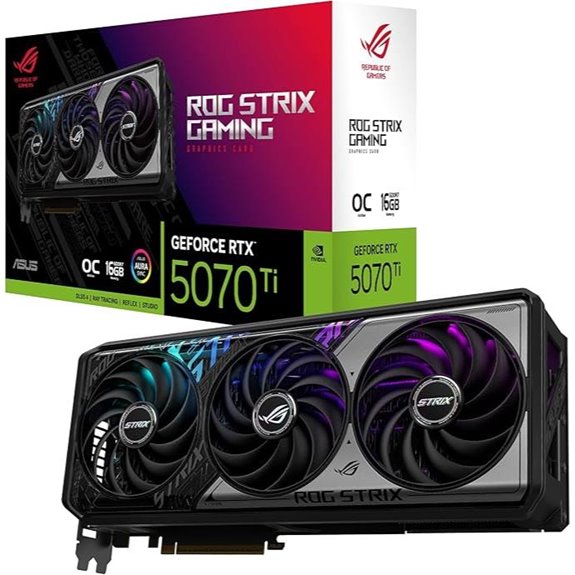 | High-Performance Mid-Range | Memory: 16GB GDDR7 | Architecture: NVIDIA Ada Lovelace (implied by high-tier RTX series) | Cooling System: MaxContact vapor chamber + Axial-tech fans | VIEW LATEST PRICE | See Our Full Breakdown |
More Details on Our Top Picks
ASUS ROG Astral GeForce RTX 5090 Gaming GPU
If you’re serious about high-performance VR gaming in 2026, the ASUS ROG Astral GeForce RTX 5090 stands out as the top choice thanks to its cutting-edge NVIDIA Blackwell architecture and massive 32GB GDDR7 memory. This GPU features a sleek, durable design with a full metal shroud, reinforced backplate, and advanced thermal systems like a vapor chamber and phase-change thermal pads, ensuring ideal cooling. Its quad Axial-tech fans boost airflow by up to 20%, maintaining low temperatures even under heavy loads. With DLSS 4 OC mode, a 2610 MHz boost clock, and robust stability, it delivers exceptional performance for immersive SteamVR experiences.
- Memory:32GB GDDR7
- Architecture:NVIDIA Blackwell
- Cooling System:Massive heatsink + 4 Axial-tech fans
- Support for AI Technologies:3593 AI TOPS, DLSS 4
- Connectivity Outputs:HDMI 2.1, DP 2.1
- Overclocking/Performance Modes:OC Mode: 2610 MHz
- Additional Feature:Full metal diecast shroud
- Additional Feature:Massive finned heatsink
- Additional Feature:Four Axial-tech fans
ASUS GeForce RTX 5080 16GB Noctua OC Edition
The ASUS GeForce RTX 5080 16GB Noctua OC Edition stands out for gamers and professionals seeking top-tier VR performance with near-silent operation. Its 16GB DDR7 memory and NVIDIA Blackwell architecture deliver exceptional AI performance, supporting DLSS 4 for sharper visuals. Overclocked to 2730 MHz, it ensures smooth, responsive gameplay. The triple Noctua fans and advanced vapor chamber cooling system keep temperatures low without noise, thanks to 0dB technology. Dual BIOS offers customizable performance settings, while GPU Tweak III simplifies tuning and monitoring. Overall, this card combines power, efficiency, and quiet operation, making it ideal for immersive VR experiences in 2026.
- Memory:16GB GDDR7
- Architecture:NVIDIA Blackwell
- Cooling System:Vapor chamber + 3 Noctua fans
- Support for AI Technologies:1858 TOPS, DLSS 4
- Connectivity Outputs:HDMI 2.1, DisplayPort 1.4a
- Overclocking/Performance Modes:OC Mode: 2730 MHz
- Additional Feature:Quiet 0dB technology
- Additional Feature:Dual BIOS modes
- Additional Feature:Large fin array
ASUS NVIDIA RTX 3050 6GB OC Gaming Graphics Card
For gamers seeking a reliable, compact GPU that delivers solid performance in SteamVR, the ASUS NVIDIA RTX 3050 6GB OC Gaming Graphics Card stands out. It features PCIe 4.0, 6GB GDDR6 memory, and advanced cooling with Axial-tech fans, ensuring efficient thermal management in small cases. Powered by NVIDIA’s Ampere architecture, it offers twice the FP32 throughput and improved ray tracing with 2nd Gen RT Cores. The card also includes HDMI 2.1 and DisplayPort 1.4a outputs, supporting high-resolution displays and fast data transfer. Its durable steel bracket and low-noise technology make it a dependable choice for immersive VR gaming.
- Memory:6GB GDDR6
- Architecture:NVIDIA Ampere
- Cooling System:Axial-tech fans + heatsink
- Support for AI Technologies:0 (not specified but supports ray tracing/AI)
- Connectivity Outputs:HDMI 2.1, DisplayPort 1.4a
- Overclocking/Performance Modes:OC Mode: 2625 MHz
- Additional Feature:Steel bracket construction
- Additional Feature:Compact 2-slot design
- Additional Feature:Axial-tech fan design
ASUS ROG GeForce RTX 5070 Ti 16GB Graphics Card
Looking for a GPU that can handle the most demanding SteamVR experiences in 2026? The ASUS ROG GeForce RTX 5070 Ti 16GB delivers top-tier performance with 16GB of GDDR7 memory and PCIe 5.0 support. Its OC edition boosts speeds up to 2625 MHz, ensuring smooth, immersive VR sessions. The card features advanced cooling with axial-tech fans, vapor chamber, and phase-change thermal pads, keeping temperatures low and performance high. Plus, Aura Sync ARGB lighting allows for customization, and its robust power delivery with high-stability capacitors guarantees reliable operation. This GPU is built for serious VR enthusiasts seeking premium performance and aesthetics.
- Memory:16GB GDDR7
- Architecture:NVIDIA Ada Lovelace (implied by high-tier RTX series)
- Cooling System:MaxContact vapor chamber + Axial-tech fans
- Support for AI Technologies:1492 AI TOPS, DLSS (implied)
- Connectivity Outputs:HDMI/DP 2.1
- Overclocking/Performance Modes:OC Mode: 2625 MHz
- Additional Feature:Aura Sync ARGB lighting
- Additional Feature:MaxContact vapor chamber
- Additional Feature:3.2-slot design
Factors to Consider When Choosing a GPU for SteamVR
When selecting a GPU for SteamVR, I focus on VR performance capabilities and how well it handles demanding virtual experiences. I also check the graphics memory size to make sure smooth visuals and consider cooling and noise levels for a comfortable setup. Finally, compatibility, ports, and power supply requirements are key to making sure everything works seamlessly together.
VR Performance Capabilities
Choosing the right GPU for SteamVR hinges on understanding its performance capabilities, especially since smooth virtual reality experiences demand high power and efficiency. A GPU with at least 11 TFLOPS of performance is recommended, as higher scores translate to better frame rates and sharper visuals. VR performance heavily relies on a GPU’s ability to handle high-resolution rendering at low latency, which requires advanced ray tracing and AI features. The number of CUDA, RT, or Tensor cores also affects real-time effects and responsiveness. Additionally, support for the latest DirectX and Vulkan APIs ensures optimized rendering pipelines, boosting overall performance. Ultimately, a GPU with 8GB or more VRAM is essential to manage complex scenes and textures without bottlenecks, ensuring a seamless VR experience.
Graphics Memory Size
A GPU with at least 8GB of VRAM is essential for smooth SteamVR experiences, especially when handling high-resolution textures and complex environments. More VRAM, like 16GB or higher, can boost performance in demanding VR applications and future-proof your setup. Insufficient VRAM—less than 8GB—may cause stuttering, lower frame rates, or force you to reduce graphics settings, affecting immersion. Larger VRAM allows better management of large scene assets, reducing load times and texture pop-in. It also ensures you can run high-quality, demanding VR content at higher resolutions without performance drops. As VR experiences grow more detailed, having ample VRAM becomes increasingly important to maintain smooth, immersive gameplay without compromising visual fidelity.
Cooling and Noise Levels
Effective cooling and low noise levels are essential factors in selecting a GPU for SteamVR, as they directly impact performance and immersion. A well-designed cooling system, like vapor chambers and multiple fans, keeps temperatures in check during long VR sessions, preventing overheating and thermal throttling. Larger heatsinks and optimized airflow pathways improve thermal dissipation, ensuring consistent performance. Quiet operation is equally important; technologies like 0dB mode and high-quality fan blades minimize distracting noise, allowing for a more immersive experience. Advanced thermal management, including phase-change thermal pads, further reduces noise while maintaining effective cooling. A GPU that stays cool and quiet not only enhances stability but also preserves the sense of presence essential for an engaging VR session.
Compatibility and Ports
When selecting a GPU for SteamVR, paying close attention to compatibility and ports is essential to guarantee a seamless experience. First, ensure the GPU has HDMI 2.1 or DisplayPort 1.4a outputs to handle the high bandwidth needs of VR headsets, which is vital for smooth visuals. Verify that the GPU supports PCIe 4.0 or PCIe 5.0 interfaces, confirming compatibility with modern motherboards and ideal data transfer speeds. Check that the video outputs are sufficient in number and type to connect your VR headset and any additional displays. Additionally, confirm the GPU’s maximum resolution and refresh rate match your headset specifications to prevent latency or visual issues. Lastly, make sure power connectors and physical size fit within your case and supply enough power for VR gaming.
Power Supply Requirements
Choosing the right power supply is essential to support your GPU for SteamVR, especially when aiming for high-end performance. I recommend a unit capable of delivering between 600W and 750W to handle demanding GPUs comfortably. Make sure it has the necessary PCIe power connectors—usually 8-pin or 6+2-pin—that match your GPU’s requirements. Pay attention to the +12V rail’s amperage; high-performance GPUs often need 30A or more for stable operation. Additionally, selecting an efficient power supply with an 80 Plus Bronze, Silver, or Gold rating guarantees reliable power delivery under load. It’s also wise to leave some headroom beyond your GPU’s maximum power draw for other components and future upgrades. This approach guarantees stable performance and longevity for your VR setup.
Price and Value
Investing in a high-quality GPU for SteamVR requires balancing performance with cost. While pricier GPUs often deliver better performance and future-proofing, they don’t always match the value for casual users. It’s essential to evaluate the cost-to-performance ratio to guarantee you’re getting ideal VR performance for your money. Budget-friendly options can handle less demanding VR titles but may struggle with more intensive applications, leading to lag or stuttering. Additionally, investing in a GPU with ample VRAM—8GB or more—can considerably improve your experience. Comparing features like ray tracing, AI processing, and thermal management helps determine if the extra cost provides real benefits for your VR gaming needs. Ultimately, choosing the right balance ensures you get the best value and performance for your investment.
Frequently Asked Questions
How Does GPU VR Latency Impact Overall VR Immersion?
GPU VR latency directly impacts my immersion; lower latency means smoother, more responsive visuals. When latency is high, I experience lag and motion sickness, breaking the illusion of being in the virtual world. A fast GPU reduces this delay, making interactions feel natural and seamless. For me, minimizing latency is key to enjoying a truly immersive VR experience, allowing me to forget the real world and plunge into the virtual environment fully.
Are There Specific GPU Features Optimized for Steamvr?
Yes, there are specific GPU features optimized for SteamVR. I look for GPUs with hardware-accelerated ray tracing, fast frame rates, and VR-specific optimizations like low latency modes. These features help reduce lag and enhance immersion. Additionally, support for Display Stream Compression (DSC) and HDMI 2.1 guarantees smooth visuals. I always choose GPUs with robust VR software support and high VR-ready benchmarks to ensure my experience is seamless and immersive.
How Important Is GPU VRAM for Future VR Titles?
VR titles in the future will rely heavily on GPU VRAM because higher resolution textures and more complex environments demand more memory. I think having ample VRAM guarantees smoother gameplay and prevents bottlenecks, especially as VR experiences become more detailed. So, I’d say investing in a GPU with plenty of VRAM is essential if you want to stay ahead and enjoy immersive, high-quality VR content without performance issues.
Can Older GPUS Be Upgraded for Better VR Performance?
Yes, older GPUs can often be upgraded with new drivers or BIOS updates, but their hardware limits still cap performance improvements, especially for demanding VR titles. Upgrading the GPU itself is usually the most effective way to enhance VR performance. If you’re considering an upgrade, I recommend investing in a recent, high-quality GPU designed for VR to get the smoothest and most immersive experience.
What GPU Cooling Solutions Best Prevent VR Overheating?
I recommend using aftermarket air coolers or liquid cooling solutions to prevent VR overheating. High-performance air coolers like the Noctua NH-U12S or Corsair Hydro Series are effective and easy to install. Liquid cooling, such as the NZXT Kraken X63, offers superior cooling and quieter operation. Ensuring good airflow in your case and regularly cleaning your system also helps keep your GPU cool during intense VR sessions.
Conclusion
Choosing the right GPU is like selecting a key to open your VR universe—each offers a different portal. The ASUS ROG Astral RTX 5090 is my shining star, guiding me through immersive worlds with clarity and power. Whether you pick the Noctua OC or the Ti model, remember, your GPU is the bridge that turns dreams into reality. Pick wisely, and let your VR journey be endless and extraordinary.