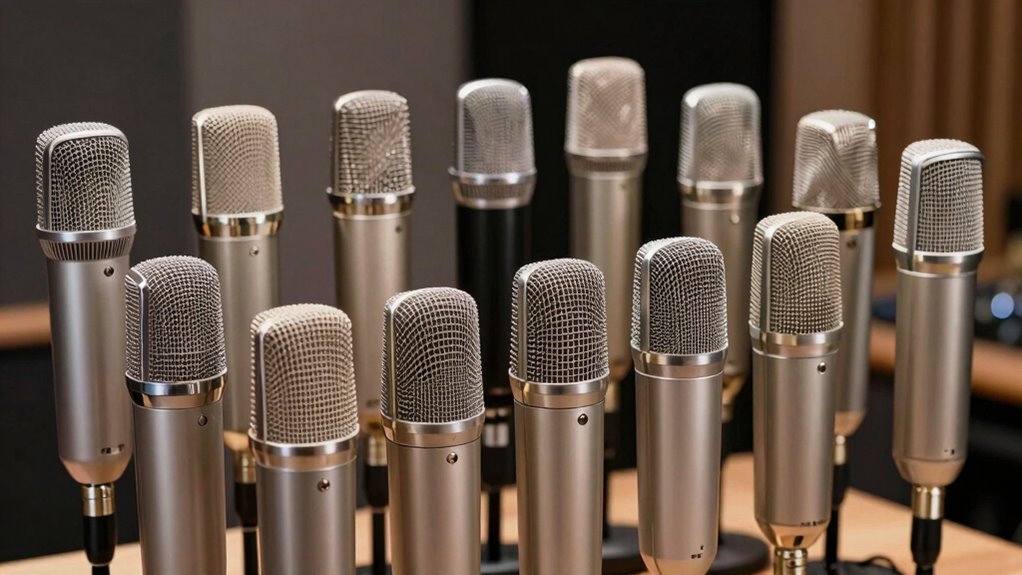

Choosing the right condenser microphone for vocals can dramatically improve your sound quality, whether you’re recording in a professional studio or at home. The best models offer a clear, natural tone with good detail, but they often come with tradeoffs like cost, complexity, or versatility. The RØDE NT1 Signature stands out as the overall top pick for its balance of sound quality and reliability. Meanwhile, the Audio-Technica AT2020 offers excellent value for budget-conscious users, and the TONOR XLR Kit provides a complete starter setup. Continue reading for a detailed breakdown of each option and how to choose the best condenser microphone for your vocal needs.

Get the latest gadgets delivered free with Prime
- Fast, free delivery on millions of items
- Prime Video, Amazon Music and more included
- Member-only deals all year
Complete the kit

Key Takeaways
- Top-tier microphones like the RØDE NT1 Signature deliver exceptional clarity but come at a higher price point.
- USB condenser mics like FIFINE models provide convenience and ease of use for beginners or casual recording.
- XLR-based options generally offer more professional sound quality and expandability, but require additional equipment.
- Build quality and included accessories can significantly impact long-term usability and setup simplicity.
- Budget-friendly mics can perform well if used within their limits, but often lack the refinement of premium models.
| RØDE NT1 Signature Series Studio Condenser Microphone, Black |  | Best Overall – Professional Warmth and Low Noise | Connectivity Technology: XLR | Polar Pattern: Unidirectional | Audio Sensitivity: 4 dB | VIEW ON AMAZON | See Our Full Breakdown |
| RØDE NT1 Signature Series Studio Condenser Microphone, Red |  | Best for High-Quality Studio Recording – Low Noise and Sensitivity | Type: Condenser Microphone | Diaphragm Size: 1 inch | Polar Pattern: Cardioid | VIEW ON AMAZON | See Our Full Breakdown |
| FIFINE T669 Studio Condenser USB Microphone for Recording and Podcasting |  | Best for Beginners and Streaming – Easy Setup with Versatility | Connectivity Technology: USB | Polar Pattern: Unidirectional | Frequency Response: 20 Hz – 20 KHz | VIEW ON AMAZON | See Our Full Breakdown |
| FIFINE K669B USB Microphone, Condenser Recording Mic for Vocals, Meetings |  | Best for Casual Professionals – Easy, Reliable USB Recording | Connectivity Technology: USB | Polar Pattern: Unidirectional | Frequency Response: 20Hz-20kHz | VIEW ON AMAZON | See Our Full Breakdown |
| Audio-Technica AT2020 Cardioid Condenser Studio XLR Microphone |  | Best Budget Studio Microphone – High Quality for Home Use | Polar Pattern: Cardioid | Output Connector: 3-pin XLRM | Frequency Response: Extended | VIEW ON AMAZON | See Our Full Breakdown |
| TONOR XLR Condenser Microphone Kit with Boom Arm, Shock Mount, and Pop Filter |  | Best Overall for Versatile Studio Setup | Power Source: 48V phantom power required | Pattern: Cardioid | Frequency Response: Not specified | VIEW ON AMAZON | See Our Full Breakdown |
| MAONO A04 Gen2 XLR/USB Condenser Microphone Kit for PC Podcast Recording |  | Best Value for Dual Connectivity and Flexibility | Connectivity: XLR and USB | Sampling Rate: 192kHz/24bit | Frequency Response: 30Hz-16kHz | VIEW ON AMAZON | See Our Full Breakdown |
| SUUNTOK XLR Condenser Microphone with Shock Mount and Pop Filter – Home Studio Voice-Over, Streaming, ASMR, YouTube |  | Best for Budget Home Studio Voice-Over and Streaming | Material: Metal | Capsule Size: 16mm | Frequency Response: 40Hz-18kHz | VIEW ON AMAZON | See Our Full Breakdown |
| Audio-Technica AT2035 Cardioid Condenser Microphone with Shock Mount |  | Best for Versatile Studio-Quality Sound | Polar Pattern: Cardioid | Diaphragm: Large | Output: XLR | VIEW ON AMAZON | See Our Full Breakdown |
| FIFINE AmpliTank K688CT Podcast Microphone Kit, USB/XLR Dynamic Vocal Mic |  | Best for Beginners and Streaming Enthusiasts | Connectivity Technology: USB, XLR | Frequency Response: 16 KHz | Polar Pattern: Unidirectional | VIEW ON AMAZON | See Our Full Breakdown |
| Mackie EM-Series Large-Diaphragm Condenser Microphone (EM-91C) |  | Best Overall Value for Versatile Studio Use | Type: Condenser Microphone | Polar Pattern: Cardioid | Includes: Shock mount, XLR cable | VIEW ON AMAZON | See Our Full Breakdown |
| XLR Condenser Microphone with Desktop Stand for Vocals and Podcasting |  | Best for Focused Vocal and Podcast Recording with Accessories | Type: Condenser Microphone | Connectivity: XLR | Power Requirement: 48V phantom power | VIEW ON AMAZON | See Our Full Breakdown |
| condenser microphones for vocal | Polar Pattern | Frequency Response |
|---|---|---|
| RØDE NT1 Signature Series Stud | Unidirectional | — |
| RØDE NT1 Signature Series Stud | Cardioid | — |
| FIFINE T669 Studio Condenser U | Unidirectional | 20 Hz – 20 KHz |
| FIFINE K669B USB Microphone | Unidirectional | 20Hz-20kHz |
| Audio-Technica AT2020 Cardioid | Cardioid | Extended |
| TONOR XLR Condenser Microphone | — | Not specified |
| MAONO A04 Gen2 XLR/USB Condens | — | 30Hz-16kHz |
| SUUNTOK XLR Condenser Micropho | — | 40Hz-18kHz |
| Audio-Technica AT2035 Cardioid | Cardioid | — |
| FIFINE AmpliTank K688CT Podcas | Unidirectional | 16 KHz |
| Mackie EM-Series Large-Diaphra | Cardioid | — |
| XLR Condenser Microphone with | — | — |
More Details on Our Top Picks
RØDE NT1 Signature Series Studio Condenser Microphone, Black
The RØDE NT1 Signature Series stands out for its exceptionally low self-noise of just 4 dB, making it ideal for capturing vocals with stunning clarity. Compared to the Audio-Technica AT2020, it offers a richer, more detailed sound with smoother high frequencies, but its bulkier size and premium price might deter casual users. The included shock mount and pop filter simplify setup for studio environments, while its high SPL handling allows recording loud sources without distortion. However, it requires an external audio interface, which adds to the overall cost and complexity. This microphone suits professional vocalists, voice-over artists, and serious home studio owners who prioritize pristine sound quality.
Pros:- Extremely low self-noise for pristine recordings
- Includes essential accessories like shock mount and pop filter
- High SPL handling for versatile use
Cons:- Requires an external audio interface, increasing setup complexity
- Bulkier size may be less portable for mobile recordings
Best for: Professional vocalists and voice-over artists needing studio-grade sound with minimal noise
Not ideal for: Beginners or casual streamers who prefer simple plug-and-play solutions and portability
- Connectivity Technology:XLR
- Polar Pattern:Unidirectional
- Audio Sensitivity:4 dB
- Microphone Form Factor:Large Diaphragm
- Signal-to-Noise Ratio:78 dB
- Power Source:Corded Electric
Our verdict“This mic is best suited for users seeking studio-quality vocals and willing to invest in a professional setup.”
RØDE NT1 Signature Series Studio Condenser Microphone, Red
The RØDE NT1 in classic red boasts a true 1-inch condenser capsule, delivering a broad, smooth frequency response that makes it ideal for capturing vocals with clarity and warmth. In comparison to the Audio-Technica AT2020, it provides a slightly more natural sound profile and a longer 10-year warranty, emphasizing durability and confidence. Its high sensitivity and included accessories make it a favorite for studio environments, but it demands phantom power and comes with a premium price tag. This microphone is well-suited for professional vocal recording, voice-over artists, and those who value long-term reliability.
Pros:- Exceptional low noise level for clean recordings
- Includes professional-grade shock mount and pop filter
- Durable with a 10-year warranty
Cons:- Requires phantom power, adding to setup complexity
- Premium price may be prohibitive for casual users
Best for: Producers and engineers seeking detailed vocal recordings with excellent noise control
Not ideal for: Beginners or content creators on a tight budget who need an easy, affordable option
- Type:Condenser Microphone
- Diaphragm Size:1 inch
- Polar Pattern:Cardioid
- Noise Level:4dBA
- Included Accessories:Shock mount, pop filter
- Warranty:10 years
Our verdict“This mic is ideal for those who prioritize detailed, professional studio vocals and are prepared for a higher investment.”
FIFINE T669 Studio Condenser USB Microphone for Recording and Podcasting
The FIFINE T669 offers a straightforward, plug-and-play USB connection that makes it accessible for newcomers to recording, streaming, and podcasting. Compared to the FIFINE K669B, it adds an adjustable gain knob and a more comprehensive boom arm, catering to users who want flexible positioning and easy control. Its wide frequency response and noise handling make it capable of capturing clear vocals, but its built-in microphone may lack the nuanced sound of professional XLR mics like the RØDE NT1. The need for external power for certain features could be a hurdle for some, yet it remains an excellent choice for home studio starters. This model is perfect for beginners, content creators, and streamers seeking hassle-free setup and decent audio quality.
Pros:- Simple plug-and-play USB connection
- Includes adjustable boom arm and pop filter
- Versatile for streaming, gaming, and voice recording
Cons:- Limited sound nuance compared to XLR microphones
- Requires external power for some features
Best for: Content creators new to recording who want an all-in-one, easy-to-use setup
Not ideal for: Advanced users or those requiring studio-level sound precision for professional production
- Connectivity Technology:USB
- Polar Pattern:Unidirectional
- Frequency Response:20 Hz – 20 KHz
- Signal-to-Noise Ratio:78 dB
- Included Accessories:Boom arm, pop filter
- Power Source:USB power
Our verdict“This microphone suits beginners and streamers who prioritize simplicity and convenience over studio-grade fidelity.”
FIFINE K669B USB Microphone, Condenser Recording Mic for Vocals, Meetings
The FIFINE K669B offers dependable USB connectivity with a sturdy metal build, making it a strong contender for home recording, meetings, or gaming. Unlike the FIFINE T669, it lacks an adjustable gain knob but compensates with a simple desktop stand and volume control, appealing to users who want straightforward operation. Its crisp sound capture and noise reduction features perform well in quiet environments, though it may struggle in noisier settings or for more nuanced vocal recordings. The plug-and-play design keeps setup quick, but it’s not compatible with Xbox or mobile devices without adapters. This microphone is well-suited for content creators, students, and casual professionals seeking reliable, easy-to-use audio.
Pros:- Simple USB plug-and-play setup
- Durable metal construction
- Provides clear, crisp sound with noise filtering
Cons:- No gain adjustment for more precise control
- Limited compatibility with gaming consoles without adapters
Best for: Content creators and professionals needing quick, reliable USB recording
Not ideal for: High-end studio applications or users needing fine-tuned sound control
- Connectivity Technology:USB
- Polar Pattern:Unidirectional
- Frequency Response:20Hz-20kHz
- Signal-to-Noise Ratio:78 dB
- Microphone Form Factor:Desktop
- Color:Black
Our verdict“This mic works best for casual content creators requiring a straightforward, durable recording solution.”
Audio-Technica AT2020 Cardioid Condenser Studio XLR Microphone
The Audio-Technica AT2020 offers a compelling balance of affordability and professional sound, making it a popular choice for home studios. While it lacks the ultra-low noise of the RØDE NT1, its high SPL handling and wide dynamic range make it versatile across various recording tasks, especially vocals. The XLR connection means it needs an audio interface, similar to the RØDE NT1, but its straightforward design and reliable performance make it accessible for beginners stepping into more serious recording. It’s less suited for live performances due to its studio focus, but it remains a solid entry point for those building a vocal recording setup on a budget. This microphone is perfect for hobbyists and semi-professionals looking for quality without breaking the bank.
Pros:- Affordable yet delivers professional sound quality
- High SPL handling suitable for loud sources
- Reliable and straightforward XLR connection
Cons:- Requires external audio interface
- No onboard controls or features for easy adjustments
Best for: Home studio owners and hobbyists needing a cost-effective, high-quality condenser microphone
Not ideal for: Mobile streamers or casual users who prefer USB plug-and-play solutions for immediate use
- Polar Pattern:Cardioid
- Output Connector:3-pin XLRM
- Frequency Response:Extended
- Application:Studio, Home Studio
- Diaphragm:Low mass, custom-engineered
Our verdict“This mic offers excellent value for newcomers and hobbyists seeking quality vocal recordings on a budget.”
TONOR XLR Condenser Microphone Kit with Boom Arm, Shock Mount, and Pop Filter
This bundle stands out for its comprehensive package, making it ideal for those seeking a professional-grade setup without needing to piece together accessories separately. Its cardioid pattern effectively reduces background noise, which makes it a step above budget options like the FIFINE AmpliTank K688CT, especially in demanding environments. The included boom arm, shock mount, and pop filter simplify setup and improve sound quality, though the need for external phantom power adds complexity and weight—less ideal for portable recording. Compared to the more flexible MAONO A04 Gen2, this kit offers a more robust physical setup but lacks the USB convenience, making it better suited for dedicated studio use.
Pros:- High-quality cardioid pattern reduces background noise effectively
- Includes essential accessories for a professional studio setup
- Suitable for diverse recording applications from vocals to streaming
Cons:- Requires external phantom power, complicating portable use
- Heavy and bulky setup may be less convenient for mobile recording
Best for: Home studio owners and content creators who want a complete, professional setup with minimal additional purchases
Not ideal for: Travelers or mobile podcasters who need lightweight, portable solutions without external power requirements
- Power Source:48V phantom power required
- Pattern:Cardioid
- Frequency Response:Not specified
- Maximum SPL:High SPL handling
- Dynamic Range:Wide dynamic range
- Included Accessories:Boom arm, shock mount, pop filter, XLR cable, manual
Our verdict“This microphone kit is perfect for those prioritizing a full-featured, stable studio environment over portability.”
MAONO A04 Gen2 XLR/USB Condenser Microphone Kit for PC Podcast Recording
The MAONO A04 Gen2 excels for users who need both USB and XLR options, offering versatile connectivity that surpasses single-mode microphones like the SUUNTOK, especially when adapting to different recording setups. Its high-resolution 192kHz/24bit sampling rate ensures professional-quality sound, and included accessories such as a pop filter and adjustable arm stand streamline setup. However, the XLR cable is not included—adding an extra step and cost—and the necessity of phantom power for XLR mode may be a hurdle for casual users. Unlike the simpler FIFINE AmpliTank, this model offers more control and higher sound fidelity, making it ideal for semi-professional or evolving studio environments.
Pros:- Dual XLR and USB connectivity for maximum flexibility
- High-resolution recording with 192kHz/24bit sampling rate
- Includes comprehensive accessories for easy setup and sound optimization
- Advanced software controls for sound customization
Cons:- XLR cable not included, requiring additional purchase
- Requires phantom power for XLR mode, adding complexity
Best for: Podcasters and streamers who want a flexible microphone for both casual and semi-professional use
Not ideal for: Gamers or casual users who only need a plug-and-play USB microphone, as it involves additional setup and costs
- Connectivity:XLR and USB
- Sampling Rate:192kHz/24bit
- Frequency Response:30Hz-16kHz
- Capsule Size:16mm
- Included Accessories:Pop filter, foam windscreen, shock mount, adjustable arm stand, USB cable
- Compatibility:Laptop, PC, PS4/PS5, mobile phones
Our verdict“This mic offers excellent versatility, making it suitable for content creators who want room to grow and adapt their setup.”
SUUNTOK XLR Condenser Microphone with Shock Mount and Pop Filter – Home Studio Voice-Over, Streaming, ASMR, YouTube
The SUUNTOK XLR mic offers a durable, metal build and a 16mm capsule, making it a reliable choice for entry-level home studios. Its sound quality, with a frequency response of 40Hz-18kHz, is comparable to more expensive models like the AT2035, but without the advanced features like switchable high-pass filter or pad. The included shock mount and pop filter help achieve cleaner recordings, though the need for phantom power (48V) might limit portability and convenience. This model is ideal for voice-over artists and streamers on a budget but less suited for musical vocals requiring broader frequency ranges or more nuanced control.
Pros:- Durable metal construction for longevity
- Effective noise isolation with cardioid pattern
- Includes essential accessories for professional-sounding recordings
- Affordable price point for entry-level users
Cons:- Requires phantom power, limiting portability
- No built-in monitoring or USB connection
Best for: Beginners and hobbyists focused on voice-over, ASMR, or streaming at home
Not ideal for: Professional singers or users needing wide frequency response and advanced features, as it lacks those enhancements
- Material:Metal
- Capsule Size:16mm
- Frequency Response:40Hz-18kHz
- Power Requirement:48V phantom power
- Included:Shock mount, pop filter
- Warranty:1 year
Our verdict“This mic is a solid choice for newcomers seeking a durable, quality XLR option for voice work and streaming.”
Audio-Technica AT2035 Cardioid Condenser Microphone with Shock Mount
The AT2035 is distinguished by its large diaphragm and switchable high-pass filter and pad, offering excellent control for vocal recordings. Compared with the SUUNTOK, which is more limited in features, the AT2035 provides more precise tone shaping and better isolation, making it suitable for both serious vocalists and podcasters. Its smooth, natural tone and broad dynamic range make it a favorite in professional settings, though it’s less portable and requires an XLR interface—limiting use for on-the-go recording or casual setups. For those who prioritize sound quality and versatility over simplicity, this microphone makes a compelling choice.
Pros:- Excellent sound quality with natural, smooth tone
- Versatile with switchable high-pass filter and pad
- Good isolation due to large diaphragm and shock mount
- High SPL handling for dynamic vocals
Cons:- Requires an XLR interface, not USB
- More complex setup may challenge beginners
Best for: Intermediate to professional users who want studio-grade vocal clarity and precise sound control
Not ideal for: Beginners or mobile users seeking USB plug-and-play simplicity, as it demands an interface and technical knowledge
- Polar Pattern:Cardioid
- Diaphragm:Large
- Output:XLR
- High Pass Filter:80 Hz switchable
- Pad:10 dB switchable
- Includes:Custom shock mount
Our verdict“Ideal for users who need professional-level vocal clarity and detailed sound adjustments in a dedicated studio environment.”
FIFINE AmpliTank K688CT Podcast Microphone Kit, USB/XLR Dynamic Vocal Mic
The FIFINE K688CT offers a user-friendly combination of USB and XLR connectivity, making it suitable for those starting out in streaming, gaming, or podcasting. Its unidirectional pattern effectively isolates vocals from background noise, which is a key advantage over more sensitive condenser mics that pick up unwanted room sounds. The included boom arm, windscreen, and noise reduction features simplify setup and improve audio clarity. However, the limited frequency response of 16 KHz and the disabled function keys during XLR mode may frustrate users seeking advanced controls or broader sound capturing. Compared to premium models like the AT2035, this mic prioritizes ease of use and affordability over nuanced sound detail.
Pros:- Dual USB and XLR connectivity for flexible use
- Includes a sturdy boom arm and accessories for quick setup
- Noise reduction features improve clarity in noisy environments
- User-friendly controls for easy operation
Cons:- Function keys are disabled with XLR connection, limiting control
- Limited frequency response may affect vocal richness
Best for: New streamers or podcasters looking for a straightforward, all-in-one microphone kit for home use
Not ideal for: Professional vocalists or sound engineers needing high-fidelity, broad frequency response, or advanced features
- Connectivity Technology:USB, XLR
- Frequency Response:16 KHz
- Polar Pattern:Unidirectional
- Maximum Frequency:16 KHz
- Included:Boom arm, windscreen, shock mount
- Color:Black
Our verdict“This microphone kit provides an accessible, all-in-one solution for newcomers to streaming and podcasting in a home setting.”
Mackie EM-Series Large-Diaphragm Condenser Microphone (EM-91C)
The Mackie EM-91C stands out for delivering professional-quality sound at an accessible price point, making it an excellent choice for both budding and experienced vocalists. Unlike the Audio-Technica AT2020, which often requires additional accessories for optimal setup, the EM-91C includes a shock mount and XLR cable, simplifying the recording process. Its rugged build suits home studios and portable setups, but the cardioid-only pattern limits its flexibility in capturing ambient or multiple sources. This mic is ideal for those who prioritize clear, warm vocals without breaking the bank, yet it may fall short for users needing multiple polar patterns or advanced features like switchable patterns. Overall, if you want a dependable condenser for vocals that balances quality and cost, this is a smart pick.
Pros:- Affordable price with professional sound quality
- Includes essential accessories like shock mount and XLR cable
- Rugged construction suitable for various studio settings
Cons:- Limited to a cardioid polar pattern, reducing versatility
- Lacks advanced features such as switchable patterns or high-pass filters
- Potentially less suited for live-stage use due to its design
Best for: Home studio owners and hobbyists seeking an affordable, all-around condenser microphone with solid sound quality
Not ideal for: Vocalists or podcasters requiring multiple polar patterns or advanced features for diverse recording environments
- Type:Condenser Microphone
- Polar Pattern:Cardioid
- Includes:Shock mount, XLR cable
Our verdict“This mic suits budget-conscious users who want reliable vocal recordings in a straightforward studio setup.”
XLR Condenser Microphone with Desktop Stand for Vocals and Podcasting
This XLR condenser microphone is designed for serious podcasters, streamers, and vocalists who want a focused sound with minimal interference. Compared with the RØDE NT1, which is renowned for its ultra-low noise floor, this model emphasizes high SPL handling (130dB) and includes a comprehensive accessory kit, making it ready for professional environments. The need for external phantom power might be a hurdle for beginners without an audio interface, but it offers greater control over sound quality. The bulkier desktop setup can be a downside for users with limited space or those preferring portable solutions. This mic is ideal for users who already have a mixer or audio interface and want a complete, ready-to-use package for vocals and podcasts.
Pros:- Focused cardioid capsule for clear vocal and speech capture
- Includes a full accessory kit for immediate use
- Handles high sound pressure levels without distortion
Cons:- Requires external equipment with phantom power, adding complexity and cost
- No power supply or audio interface included, which could be a barrier for newcomers
- Bulkier desktop configuration compared to USB mics
Best for: Podcasters, streamers, and musicians with existing audio interfaces seeking a high-quality, all-in-one vocal mic setup
Not ideal for: Beginners or mobile users without an external phantom power source or space for a desktop setup
- Type:Condenser Microphone
- Connectivity:XLR
- Power Requirement:48V phantom power
- Max SPL:130dB
- Includes:Desk stand, shock mount, pop filter, XLR cable, user manual
Our verdict“This microphone fits users who want professional-quality vocals and podcasts with a complete setup, provided they have compatible equipment.”

How We Picked
To select these condenser microphones for vocals, I evaluated each model based on sound quality, build durability, ease of use, versatility, and value for money. Preference was given to microphones that excel in capturing vocal nuances with clarity and warmth, while also considering user-friendly features such as USB connectivity or included accessories. The ranking reflects a balance between professional performance and accessibility, highlighting options suitable for various budgets and skill levels. I also considered customer reviews and industry reputation to ensure these picks are dependable choices for vocal recording in 2026.| condenser microphones for vocal | Polar Pattern |
|---|---|
| RØDE NT1 Signature Series Stud | Unidirectional |
| RØDE NT1 Signature Series Stud | Cardioid |
| FIFINE T669 Studio Condenser U | Unidirectional |
| FIFINE K669B USB Microphone | Unidirectional |
| Audio-Technica AT2020 Cardioid | Cardioid |
| TONOR XLR Condenser Microphone | — |
| MAONO A04 Gen2 XLR/USB Condens | — |
| SUUNTOK XLR Condenser Micropho | — |
| Audio-Technica AT2035 Cardioid | Cardioid |
| FIFINE AmpliTank K688CT Podcas | Unidirectional |
| Mackie EM-Series Large-Diaphra | Cardioid |
| XLR Condenser Microphone with | — |
Factors to Consider When Choosing Condenser Microphones For Vocals
Choosing the right condenser microphone for vocals involves understanding several key factors. Beyond price, consider how the microphone’s design and features align with your recording environment, the type of vocals, and your technical setup. Making informed decisions can prevent common pitfalls like buying a mic that’s too sensitive for noisy spaces or one that lacks the necessary connectivity options. Here are the main considerations to keep in mind.Type of Connection (USB vs. XLR)
USB microphones are typically easier to set up, making them ideal for beginners, podcasters, or those with limited space. XLR microphones usually require an audio interface, but they offer better sound quality, greater flexibility, and the potential for upgrades over time. Your choice depends on your technical comfort level, future plans, and budget. Keep in mind that USB mics often have built-in preamps, but they may not match the audio fidelity of dedicated XLR setups.
Sound Quality and Frequency Response
For vocals, a microphone with a flat or slightly tailored frequency response that emphasizes clarity and warmth is preferable. Look for models with a smooth, natural sound that captures vocal nuances without overly accentuating sibilance or harshness. Consider whether the microphone has a cardioid pickup pattern, which minimizes background noise and focuses on the singer, especially important in less controlled environments.
Build Quality and Durability
Since microphones are often handled during setup or moved between locations, selecting a model with solid construction can save headaches down the line. Metal housings and well-secured capsules tend to last longer and resist damage. Additionally, accessories like shock mounts and pop filters can improve recording quality and protect the mic from mechanical noise or plosive sounds.
Included Accessories and Setup
Many condenser mics come with essential accessories such as shock mounts, pop filters, or boom arms. These can significantly improve recording quality and ease of setup, especially for beginners. When comparing options, consider whether the included gear justifies the price or if additional purchases are necessary. A complete kit often offers better value for those starting out.
Price and Long-Term Value
While higher-end microphones deliver superior sound and durability, they also come with a higher price tag. Budget models can perform adequately, especially for casual or hobbyist use, but may lack some finesse or durability. Think about your long-term goals: investing in a quality microphone now can save money and frustration later if you plan to develop your recording skills or work professionally.
Frequently Asked Questions
Is a USB condenser microphone good enough for professional vocals?
USB condenser microphones are increasingly capable of delivering high-quality vocal recordings suitable for streaming, podcasts, and even some professional projects. However, they tend to have limitations in dynamic range and customization compared to XLR microphones connected to a dedicated audio interface. If you plan to record at a professional level or want maximum control over your sound, an XLR setup might be a better investment, but for many users, a high-quality USB mic can be more than sufficient.
What is more important for vocals: a large-diaphragm or small-diaphragm condenser microphone?
For vocal recordings, a large-diaphragm condenser microphone generally offers a richer, fuller sound with better sensitivity to vocal nuances. They are designed to capture the warmth and depth of singing voices, making them the preferred choice for most vocalists. Small-diaphragm mics tend to be more accurate and are often used for instruments or detailed recordings, but they may lack the fullness that large-diaphragm models provide for vocals.
Can I use a condenser microphone in a noisy environment?
Condenser microphones are highly sensitive and can pick up background noise if not used carefully. In noisy environments, a cardioid pattern helps focus on the vocalist while reducing ambient sounds, but additional sound treatment, like acoustic panels or a reflection filter, can significantly improve results. For very noisy spaces, dynamic microphones might be a better choice, as they are less sensitive and more forgiving of environmental sound.
Do I need a preamp or audio interface for a condenser microphone?
Most condenser microphones, especially XLR models, require a preamp or audio interface to connect to your computer and to provide the necessary power (phantom power). USB condensers have built-in preamps, simplifying setup. Investing in a quality audio interface can improve overall sound quality and give you more control over your recordings, making it a worthwhile addition if you aim for professional results.
How much should I expect to spend for a good condenser mic for vocals?
Entry-level condenser microphones suitable for vocals are available around $100 to $200, offering decent quality for home or beginner use. Mid-range options between $200 and $500 deliver improved clarity, build, and features, making them suitable for semi-professional work. Premium models above $500 often provide superior sound fidelity, durability, and features, which are more appropriate for professional studios or serious hobbyists willing to invest in their sound quality.
Conclusion
For casual users or streamers just starting out, the FIFINE T669 USB Microphone offers plug-and-play simplicity and solid quality. Serious vocalists or those aiming for professional studio results will find the RØDE NT1 Signature or Audio-Technica AT2035 to be worth the investment, thanks to their superior sound and build. Budget-conscious buyers should consider the FIFINE K669B, which balances price and performance. For those seeking a complete setup, the TONOR XLR Kit provides excellent value with accessories included. Ultimately, your choice depends on your recording environment, technical needs, and future ambitions.
As an affiliate, we earn on qualifying purchases.Fall Picks

DJI Osmo Action 4 Essential Combo Waterproof 4K Action Camera