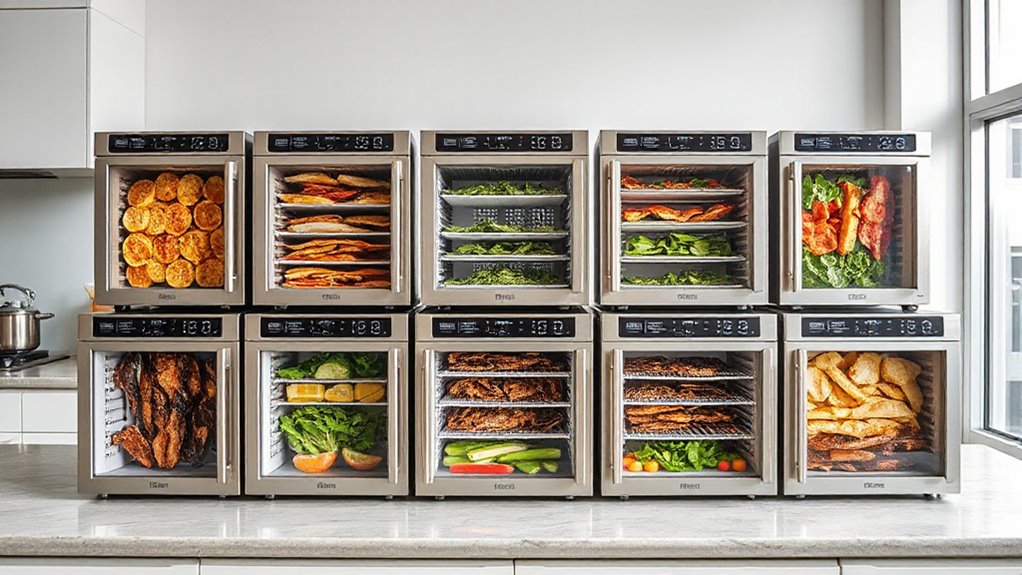

For home enthusiasts looking to process large quantities of food, commercial grade food dehydrators offer unmatched capacity and durability. The Magic Mill Premium Food Dehydrator stands out as the best overall choice, combining high power with user-friendly features. For those on a tighter budget, the OSTBA Food Dehydrator with 20 Trays offers impressive capacity at a more accessible price point. The main tradeoffs in this category revolve around size, price, and complexity—larger, more powerful models tend to cost more and require more setup, but they also handle bigger batches efficiently. Continue reading for a detailed breakdown of the best options and what to consider before buying.
Complete the kit



Key Takeaways
- Capacity varies widely, with models offering from 14 to over 22 square feet of drying space, influencing suitability for different batch sizes.
- Power ratings between 700W and 2000W significantly impact drying speed and efficiency, especially for dense or large quantities of food.
- Durability and build quality are key, with stainless steel models generally offering better longevity for frequent use.
- Features like digital timers, temperature controls, and tray adjustability enhance usability but often come at a higher cost.
- Price points reflect capacity and features; investing in a slightly more expensive model can improve performance and longevity.


| commercial grade food dehydrators for home use | Power | Number of Trays | Temperature Range | Material |
|---|---|---|---|---|
| Magic Mill Premium Food Dehydr | 700W | 10 | 95°F to 167°F | Stainless Steel, BPA-free |
| Commercial Large 12 Trays Food | 1200W | 12 | — | Food-grade stainless steel |
| Commercial Food Dehydrator 18 | 2000W | 18 | 70°F to 190°F | Food-grade stainless steel |
| Food Dehydrator for Fruit | 1200W | — | 70°F to 190°F | BPA-free stainless steel |
| LEM Products BigBite 16-Tray S | 1200W | 16 | 95 to 176°F | — |
| Commercial Food Dehydrator Mac | 1500W | 16 | 70-190°F | 316 stainless steel |
| 12-Tray Commercial Food Dehydr | 800W | 12 | 85 to 194°F | 304 Stainless Steel |
| OSTBA Food Dehydrator with 20 | 1300W | 20 | 95–180°F | — |
| Commercial Food Dehydrator Mac | 1100W | 15 | 86°F to 194°F | Food-grade stainless steel |
More Details on Our Top Picks
Magic Mill Premium Food Dehydrator Machine with 10 Extra-Large Stainless Steel Trays, 700W, Digital Timer, Temperature Control
This dehydrator excels in providing even drying thanks to its rear-mounted fan and advanced airflow, making it ideal for those who want consistent results. Its precise digital controls for temperature and time give users versatility, especially when compared to the smaller capacity models like the Food Dehydrator for Fruit with 14 trays. While the stainless steel build ensures durability and easy cleaning, the 700W power draw is higher than some counterparts, potentially increasing energy costs. Its quiet operation makes it suitable for home environments, but the lack of additional accessories might be a limitation for some users seeking more convenience. Overall, this model offers a balanced mix of performance and durability for serious home dehydraters.
Pros:- Even drying with rear-mounted fan
- Precise temperature and timer controls
- Durable stainless steel and dishwasher-safe trays
- Quiet operation
Cons:- High power consumption at 700W
- Limited included accessories
Best for: Home users wanting professional-quality results with large tray capacity and precise control
Not ideal for: Small kitchens or budget-conscious buyers who prefer lower power consumption or simpler models
- Power:700W
- Number of Trays:10
- Material:Stainless Steel, BPA-free
- Temperature Range:95°F to 167°F
- Timer:48 hours
- Safety Features:Automatic Shut-Off, Overheat Protection
Our verdict“This dehydrator is a strong choice for home enthusiasts seeking reliable, large-capacity dehydration with detailed control.”
Commercial Large 12 Trays Food Dehydrator, 1200W, Stainless Steel, Up to 22.67ft², 70℉-190℉, for Meat, Fruit, Veggies, Herbs, Pet Foods
This model stands out for its substantial capacity, offering 12 large trays and up to 22.67 sq. ft. of drying space, making it suitable for frequent or large batch dehydration. Its digital controls for temperature and time are comparable to the 18-tray commercial unit but at a more accessible price point—perfect for serious home users or small businesses. However, its 1200W power consumption and bulkiness may deter those with limited space or energy concerns. Unlike smaller models, it’s designed to handle high-volume drying efficiently, but it’s less ideal for casual hobbyists. If you need a robust, large-capacity dehydrator without the expense of full industrial equipment, this offers excellent value.
Pros:- Large capacity and drying area
- Precise digital temperature and timer controls
- Sturdy stainless steel construction
- Suitable for high-volume dehydration
Cons:- Requires 120V power supply
- Bulky design for small kitchens
- Higher price due to commercial-grade features
Best for: Home-based small business owners or large families needing high-capacity dehydration
Not ideal for: Small kitchens or users with limited space and energy efficiency preferences
- Number of Trays:12
- Tray Dimensions:15.75 x 15.75 inches
- Power:1200W
- Maximum Temperature:190℉
- Dehydrator Area:up to 22.67 ft²
- Material:Food-grade stainless steel
Our verdict“This dehydrator makes the most sense for users needing serious capacity without the expense of industrial equipment.”
Commercial Food Dehydrator 18 Trays, 2000W Large Capacity Food Dryer Machine for Jerky, Meat, Fruit, Herbs
This dehydrator’s 18 stainless steel trays and 34.42 sq. ft. drying area make it ideal for bulk food processing, whether for a large household or small commercial operation. Its digital temperature control from 70°F to 190°F and a 24-hour timer provide precise drying options suitable for delicate herbs or tougher meats. Compared to models with fewer trays, this unit offers the highest capacity but at the cost of increased size and power consumption, which could be a drawback for small kitchens or energy-sensitive users. Its inclusion of various accessories makes it versatile, but the noise level and bulkiness mean it’s best suited for dedicated drying spaces rather than casual use. For heavy-duty needs, this dehydrator delivers unmatched capacity and control.
Pros:- Massive capacity with 18 trays
- Precise digital controls
- Food-grade stainless steel and included accessories
- Large drying area
Cons:- Bulky and heavy for small kitchens
- High power consumption at 2000W
- Potentially noisy during operation
Best for: Small commercial operations or large households with high-volume dehydration needs
Not ideal for: Small kitchens or casual hobbyists seeking compact or budget-friendly options
- Number of Trays:18
- Power:2000W
- Temperature Range:70°F to 190°F
- Drying Area:34.42 sq ft
- Tray Dimensions:15.67 x 15.67 inches
- Material:Food-grade stainless steel
Our verdict“This dehydrator is best suited for users with high-volume dehydration needs who can accommodate its size and power draw.”
Food Dehydrator for Fruit, 14 Trays, Large Food Dryer for Beef Jerky, 190°F
This stainless steel model offers a good balance of capacity and flexibility, with 14 trays and adjustable temperatures up to 190°F. Its electronic thermostat and timer allow for precise drying, comparable to the 16-tray models but with slightly fewer trays. The unit’s durability and safety features like overheating protection make it a strong choice for regular home use, especially for those making jerky or dried fruits. However, initial odor from stainless steel and a noise level of 50 dB could be drawbacks for sensitive environments. While not as large as the 18-tray units, its 14 trays still accommodate substantial batches. This dehydrator strikes a solid balance between capacity, control, and durability for dedicated home users.
Pros:- Large capacity with 14 trays
- Adjustable temperature and timer
- Durable stainless steel and safety features
- Good for nutrient retention
Cons:- Initial stainless steel odor
- Relatively noisy at 50 dB
- Requires ventilation during initial use
Best for: Home cooks making large batches of jerky, dried fruits, or vegetables
Not ideal for: Small kitchens or users seeking an ultra-quiet or minimal footprint model
- Trays:14
- Temperature Range:70°F to 190°F
- Timer:up to 24 hours
- Power:1200W
- Material:BPA-free stainless steel
- Warranty:3 years
Our verdict“This dehydrator offers a versatile and durable option for home users who need substantial capacity and precise control.”
LEM Products BigBite 16-Tray Stainless Steel Dehydrator
The LEM BigBite offers a generous 16-tray setup with a total drying space of 19 sq. ft., making it suitable for serious dehydration tasks. Its digital control panel provides easy adjustment of temperature (95–176°F) and timer, comparable to other high-capacity units like the 18-tray model but with a slightly smaller footprint. Its stainless steel housing and dishwasher-safe trays promote durability and easy cleanup. However, the relatively high power draw at 1200W and its size may be less appealing for small kitchens or energy-conscious users. The tray grid size of 3/8″ helps with airflow but may be less suitable for very small items. This model strikes a good balance for those needing large capacity without stepping into industrial territory.
Pros:- Large capacity with 16 trays
- Digital controls for temperature and timer
- Stainless steel construction
- Easy-to-clean trays
Cons:- High power consumption at 1200W
- Bulky for small spaces
- Price information not specified
Best for: Home users who want large drying capacity with straightforward controls and easy maintenance
Not ideal for: Small kitchens or those seeking ultra-quiet operation
- Power:1200W
- Number of Trays:16
- Tray Dimensions:14.65″ L x 11.7″ W
- Temperature Range:95 to 176°F
- Timer:30 minutes to 24 hours
- Housing Material:Stainless steel
Our verdict“This dehydrator is well-suited for users needing substantial capacity with reliable, user-friendly features.”
Commercial Food Dehydrator Machine, 16 Trays, 27.28 sq ft, 1500W
This dehydrator stands out for its impressive capacity and durable construction, making it ideal for those who want a commercial-grade machine that can handle large batches at home. Compared with the 12-tray model, it offers nearly double the drying area, which is perfect for serious food preservation projects. Its stainless steel build ensures longevity and resistance to corrosion, though the size and power draw mean it requires a dedicated space and energy supply. The precise temperature control up to 190°F and included recipes make it versatile for a variety of foods, but the size and noise level could be drawbacks for smaller kitchens or quiet environments.
Pros:- Large capacity suitable for bulk drying
- Durable, corrosion-resistant 316 stainless steel
- Precise temperature control and comprehensive recipes
Cons:- Requires significant space due to its size
- High power consumption may increase energy costs
- Potentially noisy because of dual fans
Best for: Home food preservers with ample space and high-volume drying needs.
Not ideal for: Small kitchens or users seeking a compact, energy-efficient dehydrator.
- Number of Trays:16
- Tray Dimensions:15.7 x 15.7 inches
- Total Drying Area:27.28 sq ft
- Temperature Range:70-190°F
- Power:1500W
- Material:316 stainless steel
Our verdict“This dehydrator is perfect for dedicated home users who need industrial capacity without compromising durability.”
12-Tray Commercial Food Dehydrator
The 12-tray model excels with its smart preset menus and quiet operation, making it a reliable choice for those who prioritize ease of use and efficiency. Compared to the larger 16-tray option, it offers a slightly smaller drying area but benefits from a lower power draw and more streamlined footprint, ideal for busy households. Its rust-resistant 304 stainless steel construction ensures durability, while the 24-hour timer and temperature range of 85 to 194°F make it versatile for a variety of foods. However, its bulkiness can be a concern for small kitchens, and the higher cost reflects its commercial-grade features.
Pros:- Good capacity for large batches
- Smart preset menus simplify operation
- Durable, rust-resistant stainless steel
Cons:- May be too bulky for small kitchens
- Higher price point due to commercial features
Best for: Food lovers and large families who want a dependable dehydrator with preset convenience.
Not ideal for: Users with limited space or those seeking a more budget-friendly option.
- Power:800W
- Number of Trays:12
- Temperature Range:85 to 194°F
- Material:304 Stainless Steel
- Timer:24 hours
Our verdict“This dehydrator is well-suited for serious home food preservation where ease of use and capacity are priorities.”
OSTBA Food Dehydrator with 20 Trays, 1300W Dryer, 95–180°F Temp, 48H Timer
This model offers the advantage of dual independent drying zones, a feature not found on most other dehydrators like the 15-tray machine. Its large capacity of 20 trays and powerful 1300W heater enable simultaneous dehydration of different foods, making it ideal for batch processing. The smart digital controls and safety features add convenience, though the complex interface may take some time to master. Its size and high energy use mean it’s better suited to dedicated storage space and energy plans, especially compared to smaller, less feature-rich options.
Pros:- Large capacity with 20 trays
- Dual zones enable simultaneous drying
- Smart digital controls with preset programs
Cons:- Potentially bulky for small kitchens
- High energy consumption
Best for: Food producers or serious home cooks who want to dehydrate different foods at the same time.
Not ideal for: Kitchens with limited space or users looking for a simple, plug-and-play dehydrator.
- Number of Trays:20
- Power:1300W
- Temperature Range:95–180°F
- Zones:Dual independent
- Additional Accessories:10 mesh sheets, 2 drip trays
Our verdict“This dehydrator is ideal for those needing maximum flexibility and capacity for diverse batch food dehydration.”
Commercial Food Dehydrator Machine 15 Trays, 1100W Meat Dehydrator
This dehydrator makes the most sense for users focused on meat jerky and bulk drying, thanks to its precise digital temperature control and multiple presets. Compared with the larger 20-tray model, it offers slightly fewer trays but maintains a large drying area suitable for jerky or herbs. Its stainless steel construction and quiet operation are significant advantages, especially for those who prioritize durability and lower noise levels. However, its 1100W motor consumes more power than smaller units, and its size could be inconvenient for those with limited storage space.
Pros:- Large capacity with 15 stainless steel trays
- Precise digital temperature control and presets
- Even heat circulation for uniform drying
Cons:- High power consumption at 1100W
- Bulkier design may require more storage space
Best for: Serious jerky makers and bulk food processors needing consistent results and durability.
Not ideal for: Casual users or those with limited space seeking a smaller or less specialized dehydrator.
- Number of Trays:15
- Power:1100W
- Temperature Range:86°F to 194°F
- Timer:Up to 48 hours
- Material:Food-grade stainless steel
Our verdict“This dehydrator suits dedicated meat and bulk drying enthusiasts who need durability and precise control.”
How We Picked
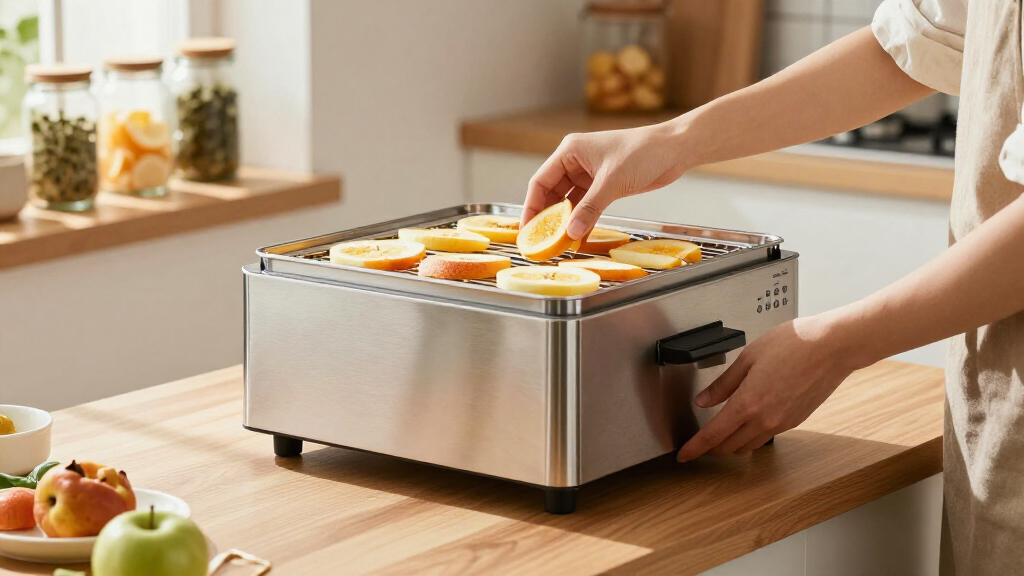
In selecting these products, I focused on capacity, build quality, power, usability, and value. Each dehydrator was evaluated for its ability to handle large batches, ease of operation, and durability for frequent home use. Models with advanced features like digital controls and adjustable trays were prioritized, but I also considered affordability for different budgets. The ranking reflects a balance between performance and practicality, ensuring each option offers tangible benefits for home users seeking commercial-grade capacity. I avoided models with poor reviews or questionable durability, aiming to highlight the most reliable choices for steady, high-volume food dehydration.Factors to Consider When Choosing Commercial Grade Food Dehydrators For Home Use
Choosing a commercial grade food dehydrator for home use involves weighing several factors to match your specific needs. While larger capacity and higher power offer faster drying and bigger batches, they also tend to be more expensive and require more space. Understanding these tradeoffs helps ensure you pick a model that fits your food preservation goals, available space, and budget. The following sections outline key considerations to guide your decision.Capacity and Size
Capacity directly affects how much food you can process at once, which is vital for batch processing or frequent use. Larger models with over 20 square feet of drying space are ideal for serious home food preservation, but they also take up significant space and can be costly. Smaller, compact models offer convenience and easier storage but may require multiple runs for large batches. Consider your typical batch size and available space when selecting a model, balancing capacity with practicality.
Power and Drying Speed
Power ratings, usually between 700W and 2000W, influence how quickly food dries and how well dense items like jerky or thick slices fare. Higher wattage generally means faster drying times and more consistent results, especially for large quantities. However, more powerful units consume more energy and may generate more heat, requiring careful placement. If you plan to dehydrate frequently or large amounts, investing in a higher wattage model can save time, but for occasional use, moderate power may suffice.
Build Quality and Materials
Durability is crucial for a device intended for frequent, high-volume use. Stainless steel models tend to withstand wear better than plastic counterparts, resisting corrosion and damage over time. Ensure the trays and internal components are sturdy and easy to clean, as regular maintenance prolongs the life of your dehydrator. Cheaper models with flimsy materials might be tempting initially but can lead to frequent repairs or replacements, increasing overall costs.
Features and Usability
Features like digital timers, precise temperature controls, and adjustable trays enhance control and ease of use. Digital timers prevent over-drying, while adjustable trays allow you to customize your drying setup for different foods. Some models include preset programs or alarms, adding convenience. However, extra features often increase price, so prioritize those that match your typical drying needs without overpaying for unnecessary bells and whistles.
Price and Value
Price varies based on capacity, features, and build quality. While it can be tempting to opt for the cheapest model, investing a bit more often yields longer-lasting, more reliable performance. Consider your frequency of use and how much food you plan to dehydrate—spending more upfront can reduce frustration and replacement costs later. Look for models that offer a good balance of capacity, features, and durability within your budget.
Frequently Asked Questions
Can I use a commercial dehydrator for home cooking or small batches?
Absolutely. Most commercial-grade dehydrators are versatile enough for home use, especially if you process large batches regularly. They typically have adjustable temperature settings and trays that can be customized for different foods. However, if you only dehydrate occasionally or in small quantities, a smaller, less expensive model might be more practical. Larger models do require more space and power, so consider your actual needs before choosing.
What is the main advantage of a stainless steel dehydrator?
Stainless steel models tend to be more durable and resistant to corrosion, making them ideal for frequent use. They are often easier to clean and maintain, which helps keep food contamination risks low. While they usually come at a higher price, their longevity justifies the investment if you plan to dehydrate regularly or in larger quantities. Plastic models, by contrast, may be cheaper but can wear out faster and are more prone to cracking or warping.
How much space do these dehydrators typically require?
Most commercial-grade dehydrators occupy a footprint ranging from around 2 to 4 feet in width and depth, with height depending on tray stacking. Larger models can take up significant counter or storage space, so measure your available area before purchasing. Modular or stackable units offer some flexibility, but keep in mind that very large models may need dedicated space or shelving for safe operation and storage.
Are higher wattage dehydrators more energy-efficient?
Not necessarily. Higher wattage units tend to dry food faster, which can reduce total energy consumption over the drying period. However, they also draw more power during operation, so the overall energy cost depends on your drying duration and frequency. For infrequent use, a moderate-wattage model might be more energy-efficient, while high-wattage dehydrators make sense if you process large batches often and want speed.
What features are most important for beginners?
For those new to dehydration, user-friendly features like simple analog controls, clear temperature settings, and preset programs are beneficial. A transparent door or window helps monitor progress without opening the unit, while easy-to-clean trays reduce setup time. Investing in a model with good customer support and straightforward operation can make the learning curve smoother and ensure consistent results.
Conclusion
For those seeking the best overall performance and durability, the Magic Mill Premium Food Dehydrator stands out as the top choice. If value is your priority, the OSTBA Food Dehydrator with 20 Trays offers impressive capacity at a more affordable price. For buyers willing to invest in premium features and longevity, a stainless steel, high-wattage model like some of the larger units makes sense. Beginners or casual users should lean towards smaller, simpler models, while serious home food processors aiming for large-scale dehydration will benefit from the most powerful, spacious options. Clearly, your ideal pick depends on your specific needs, budget, and space constraints.