Choosing the best audio interface for podcasters and musicians involves balancing sound quality, ease of use, and connectivity options. The Zoom AMS-44 stands out as the overall top pick thanks to its versatile 4-in/4-out design, ideal for multi-mic setups. The Focusrite Scarlett Solo 4th Gen offers excellent value with straightforward operation for beginners, while the RØDE RØDECaster Pro II provides an all-in-one solution for streamers and content creators. The main tradeoffs involve balancing affordability against feature set and build quality. Keep reading for a detailed breakdown that helps you find the perfect match for your recording needs.

Get the latest gadgets delivered free — and shop member deals
- Fast, free delivery on millions of items
- Access to Prime Big Deal Days deals on October 6–7
- Prime Video, Amazon Music and more included
Complete the kit



Key Takeaways
- The best audio interface depends heavily on your specific use case, whether podcasting or music production.
- Top-tier models like the RØDE RØDECaster Pro II excel in all-in-one functionality but come at a premium price.
- Budget-friendly options like the Focusrite Scarlett Solo provide excellent sound quality for beginners with simple setups.
- Connectivity options such as USB-C and multiple inputs/outputs are key for flexible recording setups.
- Build quality and included software can significantly influence long-term satisfaction and workflow efficiency.
| Zoom AMS-44 USB Audio Interface for Musicians & Podcasters, 4 In / 4 Out |  | Best for Versatile Live and Studio Use | Inputs: 4 XLR/TRS combo | Outputs: 4 | Preamps: 4 low-noise with 48V phantom power | VIEW LATEST PRICE | See Our Full Breakdown |
| PreSonus Studio 24c 2×2 USB Audio Interface with Studio One DAW Software |  | Best for High-Resolution Studio Recordings | Inputs/Outputs: 2×2 | Resolution: 24-bit | Sampling Rates: 44.1, 48, 88.2, 96, 176.4, 192 kHz | VIEW LATEST PRICE | See Our Full Breakdown |
| Fender Quantum HD 2 20×24 USB-C Audio Interface for Music Production |  | Best for Large-Scale Music and Streaming | Input Channels: 20 | Output Channels: 24 | Connectivity: USB-C | VIEW LATEST PRICE | See Our Full Breakdown |
| MOTU M6 6×4 USB-C Audio Interface | 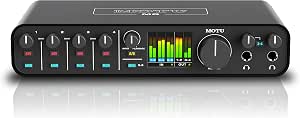 | Best for Precision Monitoring and Streaming | Inputs/Outputs: 6×4 | DAC Technology: ESS Sabre32 Ultra | Dynamic Range: 120 dB | VIEW LATEST PRICE | See Our Full Breakdown |
| Zoom AMS-24 USB Audio Interface for Musicians & Podcasters |  | Best for Compact Multi-Mode Streaming and Recording | Inputs: 2 XLR/TRS | Outputs: 4 (2 headphone, 2 main TRS) | Compatibility: PC, Mac, iOS, Android | VIEW LATEST PRICE | See Our Full Breakdown |
| Fender Quantum HD 8 USB-C Audio Interface for Music Production |  | Best for Professional Musicians and Producers | Input Channels: 26 | Output Channels: 30 | Connectivity: USB-C | VIEW LATEST PRICE | See Our Full Breakdown |
| Solid State Logic 2 MKII Plus USB-C Audio Interface, 2×4 |  | Best for Compact Studio Setups and Live Musicians | Interface Type: USB-C | I/O Configuration: 2×4 | Power: Bus powered | VIEW LATEST PRICE | See Our Full Breakdown |
| Focusrite Scarlett Solo 3rd Gen USB-C Audio Interface |  | Best for Beginners and Home Studios | Inputs: 2 high-headroom instrument inputs | Outputs: 2 balanced outputs | Resolution: up to 24-bit/192kHz | VIEW LATEST PRICE | See Our Full Breakdown |
| Universal Audio Volt 2 USB Audio Interface |  | Best for Versatile Recording and UAD Integration | Bit Depth: 24-bit | Sample Rate: 192 kHz | Compatibility: MacOS, Windows, iPad, iPhone | VIEW LATEST PRICE | See Our Full Breakdown |
| Focusrite Scarlett Solo 4th Gen USB Audio Interface Bundle with Studio Headphones, XLR Cable & Pop Filter |  | Best for Beginners and Podcast Creators on a Budget | Model: Scarlett Solo 4th Gen | Inputs/Outputs: 2-in, 2-out | Dynamic Range: 120dB | VIEW LATEST PRICE | See Our Full Breakdown |
| Audient iD14 MKII USB-C Audio Interface with 2 Class-A Microphone Preamps, Black |  | Best Overall for Professional-Quality Sound in Compact Form | Preamps: 2x Class-A console microphone preamps (ASP8024 HE design) | Connectivity: USB-C | Headphone Outputs: 2 | VIEW LATEST PRICE | See Our Full Breakdown |
| MOTU M4 4×4 USB-C Audio Interface |  | Best for Flexible Routing and Visual Monitoring | Inputs/Outputs: 4-in/4-out | Connection: USB-C | Microphone Preamps: 2 | VIEW LATEST PRICE | See Our Full Breakdown |
| RØDE RØDECaster Pro II All-in-One Audio Production Studio |  | Best for Standalone, Broadcast-Ready Podcasting | Mic Inputs: 4 XLR | Sound Pads: 8 customizable SMART pads | Audio Processing: APHEX presets | VIEW LATEST PRICE | See Our Full Breakdown |
More Details on Our Top Picks
Zoom AMS-44 USB Audio Interface for Musicians & Podcasters, 4 In / 4 Out
The Zoom AMS-44 stands out for its flexible four-input, four-output configuration, making it ideal for podcasters who need multiple sources or musicians recording with friends. Unlike smaller interfaces like the Focusrite Scarlett Solo, this model offers greater input options, plus the ability to switch easily between studio and streaming modes—an advantage for live streaming and versatile recording environments. However, the reliance on AA batteries for portability can be inconvenient, especially for long sessions, and the absence of additional power options limits its flexibility. Its real-time monitoring with zero latency and compatibility with major DAWs make it a strong all-around choice for multi-source setups.
Pros:- Multiple inputs and outputs for flexible recording
- Easy switching between studio and streaming modes
- Zero-latency real-time monitoring
Cons:- Batteries require frequent replacement for portable use
- Limited to USB-C or AA batteries, no other power options
Best for: Podcasters and musicians who need multiple inputs and outputs for live streaming or multi-mic recording on the go
Not ideal for: Solo creators with simple setups or those who prefer powered solutions with fewer batteries to replace
- Inputs:4 XLR/TRS combo
- Outputs:4
- Preamps:4 low-noise with 48V phantom power
- Power:USB-C or 2 AA batteries
- Modes:Studio and Stream
- Platform Compatibility:All major platforms and DAWs
Our verdict“This interface is best suited for podcasters and musicians requiring multiple sources in a portable, versatile setup.”
PreSonus Studio 24c 2×2 USB Audio Interface with Studio One DAW Software
The PreSonus Studio 24c is a compact, high-resolution interface that excels in professional studio environments, supporting up to 192 kHz sampling rates with 24-bit clarity. Compared to the MOTU M6, which offers superior audio quality and a detailed LCD, the Studio 24c is more streamlined with fewer inputs—making it ideal for solo artists or podcasters who prioritize sound quality over expandability. Its two XMAX-L preamps deliver warm, transparent sound, but the limited input count makes it less suitable for multi-mic recording setups. The included Studio One 6 Artist software adds value for those starting out but may be unnecessary for experienced producers.
Pros:- Supports high-resolution 192 kHz, 24-bit audio
- Includes Studio One 6 Artist DAW software
- Versatile combo inputs with quality XMAX-L preamps
Cons:- Limited to 2 inputs/outputs, restricting larger setups
- No display screen for detailed level monitoring
Best for: Solo musicians or podcasters needing high-quality audio and integrated recording software
Not ideal for: Producers requiring multiple inputs for complex recording sessions or live band setups
- Inputs/Outputs:2×2
- Resolution:24-bit
- Sampling Rates:44.1, 48, 88.2, 96, 176.4, 192 kHz
- Preamps:2 XMAX-L
- Main Outputs:2 balanced 1/4-inch TRS
- Connectivity:USB-C (USB-C and USB-A cables included)
Our verdict“This interface suits solo creators focused on high-quality recordings and integrated software, but falls short for larger, multi-mic projects.”
Fender Quantum HD 2 20×24 USB-C Audio Interface for Music Production
The Fender Quantum HD 2 offers extensive I/O with 20 inputs and 24 outputs, standing out for complex music production and streaming setups. Its MAX-HD preamps and professional-grade converters deliver pristine recordings, comparable to the MOTU M6’s audiophile-grade sound, but with significantly more channels. The device’s full remote control and auto gain features streamline workflow for engineers and producers handling large projects. Still, its complexity and price make it less suitable for beginners or solo podcasters who do not need such extensive I/O or advanced features.
Pros:- Extensive digital I/O for studio expansion
- High-quality MAX-HD preamps for professional-grade sound
- Auto Gain and remote control for quick setup
Cons:- Complex setup for newcomers
- Premium price point may be prohibitive for some
Best for: Musicians, producers, or broadcasters managing large sessions with multiple sources and outputs
Not ideal for: Solo podcasters or musicians with simple recording needs who prefer plug-and-play solutions
- Input Channels:20
- Output Channels:24
- Connectivity:USB-C
- Sample Rate:192 kHz
- Bit Depth:32-bit
- Digital I/O:ADAT & S/PDIF
Our verdict“This interface is best for large studios or advanced users needing maximum I/O and professional features.”
MOTU M6 6×4 USB-C Audio Interface
The MOTU M6 excels thanks to its ESS Sabre32 Ultra DAC technology, providing an impressive 120 dB dynamic range—ideal for audiophiles and streamers demanding clarity. Its full-color LCD offers detailed level metering, surpassing the basic LED meters of the PreSonus Studio 24c, making it easier to fine-tune recordings and streams. While the larger footprint is a downside compared to more compact interfaces like the Focusrite Scarlett 6i6, its ultra-low latency (just 2.5 ms round-trip) and dedicated monitor switching make it a standout for live performance, podcasting, and streaming. The bundled software and robust build add further value, but the size could be a constraint for mobile use.
Pros:- Exceptional ESS Sabre32 DAC technology for high-fidelity sound
- Full-color LCD with detailed metering
- Ultra-low 2.5 ms latency for live monitoring
Cons:- Larger footprint than most portable interfaces
- Requires external power supply for stand-alone operation
Best for: Podcasters and musicians who prioritize audio fidelity, detailed monitoring, and low latency in a semi-permanent setup
Not ideal for: Travelers or those with very limited space needing ultra-compact interfaces
- Inputs/Outputs:6×4
- DAC Technology:ESS Sabre32 Ultra
- Dynamic Range:120 dB
- Round Trip Latency:2.5 ms
- Display:Full color LCD
- Supported Software:MOTU Performer Lite, Ableton Live Lite 11
Our verdict“This interface is perfect for those prioritizing pristine audio quality and detailed control in a semi-permanent setup.”
Zoom AMS-24 USB Audio Interface for Musicians & Podcasters
The Zoom AMS-24 offers a combination of two inputs and four outputs, making it suitable for simple podcast setups or musicians who need quick versatility. Its multiple modes for streaming and recording, along with bus power and direct monitoring, provide a flexible workflow for users on the move. Compared to the more feature-rich AMS-44, this model is more portable but less capable of handling multiple sources simultaneously. Its lack of bundled software and limited input count restricts its use to smaller, straightforward setups—ideal for beginners or casual streamers.
Pros:- Supports multiple modes for streaming and recording
- Compatible with PC, Mac, iOS, Android
- Includes hardware controls for quick operation
Cons:- Limited to 2 inputs, not suitable for larger setups
- No bundled software or advanced features
Best for: Podcasters and musicians who want a portable, easy-to-use interface with multiple modes for streaming and recording
Not ideal for: Producers or multi-mic recording artists who require more inputs and advanced features
- Inputs:2 XLR/TRS
- Outputs:4 (2 headphone, 2 main TRS)
- Compatibility:PC, Mac, iOS, Android
- Features:Loopback, Direct Monitoring, Hardware switches
- Power:Bus powered
Our verdict“This interface is best for casual podcasters or musicians needing a portable, multi-mode device for simple recording or streaming.”
Fender Quantum HD 8 USB-C Audio Interface for Music Production
The Fender Quantum HD 8 stands out for its high-quality mic preamps and extensive I/O options, including ADAT and S/PDIF, making it ideal for complex studio setups. Compared with the Solid State Logic 2 MKII Plus, it offers more channels and flexible expansion, but its advanced features may overwhelm beginners. The built-in DSP and full-color display facilitate latency-free streaming and precise control, crucial for professional content creation. However, its complexity means new users might need additional time to master all functions. This makes it a powerful choice for experienced musicians and producers who need scalable, high-fidelity audio. Tradeoffs include a steeper learning curve and reliance on compatible software for full functionality.
Pros:- High-quality mic preamps and 32-bit/192 kHz conversion for pristine sound
- Flexible I/O options including ADAT and S/PDIF for expansion
- Intuitive full-color display and built-in DSP for latency-free operation
Cons:- Complex feature set may intimidate new users
- Requires compatible software to access full capabilities
Best for: Professional musicians needing comprehensive I/O and scalable features
Not ideal for: Beginners or casual podcasters who prefer simple, plug-and-play interfaces
- Input Channels:26
- Output Channels:30
- Connectivity:USB-C
- Sample Rate:192 kHz
- Bit Depth:32-bit
- Expansion Options:ADAT, S/PDIF
- Included Software:Fender Studio Pro License
- Display:Full-color high-resolution
Our verdict“This interface is best suited for experienced producers seeking high-end, expandable studio integration.”
Solid State Logic 2 MKII Plus USB-C Audio Interface, 2×4
The Solid State Logic 2 MKII Plus offers a compact yet feature-rich design, with high-quality SSL preamps and analog enhancement via Legacy 4K, making it ideal for musicians and podcasters who value professional sound in a portable format. Unlike the Focusrite Scarlett Solo 3rd Gen, it provides stereo loopback and MIDI I/O, which are essential for live streaming and multi-device setups. Its bus-powered design enhances portability, but the limited two mic preamps restrict larger multi-mic sessions. For solo acts, podcasters, or small studios, this interface delivers studio-grade sound and versatile connectivity without sacrificing space. However, its 2×4 I/O can be restrictive for expanding into larger multi-mic arrangements. It’s a great choice for those prioritizing high sound quality and compactness over extensive I/O.
Pros:- SSL Legacy 4K analog enhancement for warm, musical sound
- Stereo loopback and MIDI I/O ideal for streaming and content creators
- Bus-powered for easy portability
Cons:- Limited to two mic preamps, restricting multi-mic recordings
- 2×4 I/O can be limiting for larger setups
Best for: Solo musicians and podcasters with limited space but high sound quality needs
Not ideal for: Multi-mic recording sessions or large live studio setups that demand more I/O channels
- Interface Type:USB-C
- I/O Configuration:2×4
- Power:Bus powered
- Sample Rate:192 kHz
- Mic Preamps:2 XLR
- Analog Enhancement:Legacy 4K
- MIDI I/O:5-pin DIN
- Included Software:SSL Production Pack
Our verdict“This interface is perfect for solo performers or streamers seeking high-quality SSL sound in a portable package.”
Focusrite Scarlett Solo 3rd Gen USB-C Audio Interface
The Focusrite Scarlett Solo 3rd Gen offers a straightforward, high-quality recording solution with its renowned pre-amps and switchable Air mode for added clarity, making it ideal for newcomers and solo musicians. Compared to the Universal Audio Volt 2, it lacks vintage emulation but compensates with a simpler, more accessible interface and broader software support. Its 24-bit/192 kHz resolution ensures professional-level audio, though its two-input limit may restrict more complex multi-instrument recordings. The device’s compact size and included software make it a no-fuss option for beginners looking to produce polished recordings at home. Its main tradeoff is limited I/O, which could be a constraint as your setup grows. This is a solid choice for entry-level users prioritizing ease and quality.
Pros:- High-quality pre-amps with Air mode for enhanced clarity
- Supports 24-bit/192 kHz recording for professional sound
- Includes popular software and intuitive controls
Cons:- Limited to two inputs, restricting complex recording chains
- Requires USB-C port, possibly incompatible with older computers
Best for: Beginners setting up a simple home recording or podcasting station
Not ideal for: Advanced producers or multi-instrument recording setups that require more inputs
- Inputs:2 high-headroom instrument inputs
- Outputs:2 balanced outputs
- Resolution:up to 24-bit/192kHz
- Connectivity:USB-C
- Warranty:3 years
- Included Software:Focusrite Control, Ableton Live Lite
Our verdict“Ideal for beginners seeking a reliable, easy-to-use interface with excellent sound quality.”
Universal Audio Volt 2 USB Audio Interface
The Universal Audio Volt 2 excels in delivering vintage preamp emulation and versatile compatibility across Mac, Windows, iPad, and iPhone, making it highly adaptable for mobile musicians and home producers. Its 24-bit/192 kHz recording quality rivals higher-end interfaces, while its UAD plug-ins and tutorials support users of all skill levels. Unlike the Scarlett Solo, it provides more flexibility with device compatibility and offers a classic analog character through emulation. However, it requires an external power supply and an Apple Lightning to USB Camera Adapter for iPads, which could limit portability and convenience. For those who want professional sound with UAD plugin access on multiple devices, this interface offers a compelling balance of features and quality. Its main tradeoff involves dependency on external power and adapters. This makes it a strong pick for mobile content creators and home studio owners seeking vintage tone and UAD support.
Pros:- High-quality 24-bit/192 kHz audio recording with vintage preamp emulation
- Compatible with Mac, Windows, iPad, and iPhone for flexible use
- Includes UAD plug-ins and tutorials for all skill levels
Cons:- Requires external power supply, reducing portability
- Needs Apple Lightning to USB Camera Adapter for iPads
Best for: Musicians and podcasters who value analog character and device versatility
Not ideal for: Users seeking a portable, battery-powered setup without external power needs
- Bit Depth:24-bit
- Sample Rate:192 kHz
- Compatibility:MacOS, Windows, iPad, iPhone
- Requires:External power, Apple Lightning to USB Adapter
- Includes:UAD plug-ins, tutorials
Our verdict“Best suited for mobile recording enthusiasts wanting classic tone and broad device compatibility.”
Focusrite Scarlett Solo 4th Gen USB Audio Interface Bundle with Studio Headphones, XLR Cable & Pop Filter
The Focusrite Scarlett Solo 4th Gen Bundle offers an all-in-one solution for newcomers, combining a reliable 2-in, 2-out interface with essential accessories. Its ultra-low-noise mic preamp and Hi-Z instrument input support high-quality recordings, while the Air Mode adds a professional harmonic presence. Compared to standalone models, this bundle provides a complete setup with headphones, XLR cable, and pop filter, making it ideal for podcasting and home recording. Its 120dB dynamic range and included software make it accessible for beginners, though its single mic and instrument inputs limit multi-layered recordings. The bundle’s simplicity and affordability appeal to those starting out, but experienced users may find it restrictive for complex projects. This is a practical, value-packed option for entry-level podcasters and musicians.
Pros:- Reliable 120dB dynamic range with 24-bit/192kHz resolution
- Includes headphones, XLR cable, and pop filter for immediate use
- Air Mode adds professional harmonic character
Cons:- Limited to one mic and one instrument input, restricting complex recording
- No advanced hardware monitoring controls beyond basic level adjustments
Best for: Beginner podcasters and home musicians seeking an all-in-one starter kit
Not ideal for: Advanced producers needing multiple inputs or extensive I/O options
- Model:Scarlett Solo 4th Gen
- Inputs/Outputs:2-in, 2-out
- Dynamic Range:120dB
- Converters:192kHz, 24-bit
- Included Software:Ableton Live Lite, Pro Tools Artist
- Bundle Items:Headphones, XLR cable, pop filter
Our verdict“This bundle is perfect for beginners wanting a straightforward, complete recording package at an accessible price.”
Audient iD14 MKII USB-C Audio Interface with 2 Class-A Microphone Preamps, Black
The Audient iD14 MKII stands out for delivering outstanding sound quality thanks to its two Class-A preamps derived from high-end Audient consoles. Unlike the MOTU M4, which offers more inputs but less premium preamps, this model prioritizes audio fidelity, making it ideal for podcasters and musicians who want professional-grade recordings in a portable setup. Compared with the RØDECaster Pro II, it lacks built-in effects and multiple sound pads, but it provides a cleaner, more transparent sound for critical recordings. The all-metal chassis enhances durability, and the USB-C connection ensures reliable power and data transfer. Its primary tradeoff is the limited two-mic preamp count, which can restrict larger multi-mic setups. This interface is best suited for solo podcasters or musicians needing top-tier preamps without a lot of extra features.
Pros:- Class-A preamps borrowed from high-end consoles deliver professional sound quality
- Rugged all-metal chassis makes it durable and portable
- USB-C connection improves handling and power supply
- Dual headphone outputs and monitor panning for flexible monitoring
Cons:- Only 2 microphone preamps may limit larger recording setups
- iOS compatibility may require additional adapters
Best for: Solo podcasters and musicians who prioritize high-quality preamps and portable durability.
Not ideal for: Teams or groups needing multiple mic inputs simultaneously, or those requiring extensive onboard processing.
- Preamps:2x Class-A console microphone preamps (ASP8024 HE design)
- Connectivity:USB-C
- Headphone Outputs:2
- Compatibility:Mac/PC/iOS
- Dimensions:173 x 120 x 62 mm
- Weight:1250 g
Our verdict“This interface is perfect for solo creators seeking premium preamp quality in a compact, durable package.”
MOTU M4 4×4 USB-C Audio Interface
The MOTU M4 excels with its 4-in/4-out configuration, providing more routing options than the Audient iD14 MKII or RØDECaster Pro II, making it well-suited for musicians and podcasters who need multiple sources or complex setups. The full-color LCD meters set it apart from simpler interfaces, offering clear visual feedback—an advantage over the RØDECaster’s limited visual cues. Although it has only two microphone preamps, its hardware monitoring and loopback features support live streaming and recording workflows efficiently. However, with the same mic preamp count as the Audient, it doesn’t support more simultaneous mics, which could be a drawback for multi-mic podcast hosts. This makes it ideal for users who want versatile routing and good visual feedback without sacrificing sound quality.
Pros:- 4-in/4-out configuration provides flexible routing options
- Full-color LCD screen for easy metering and monitoring
- Hardware monitoring with loopback capability enhances live streaming
- Compatible with Mac, PC, and iOS devices
Cons:- Limited to 2 microphone preamps, restricting multi-mic setups
- Extra inputs may be unnecessary for solo creators
Best for: Musicians and podcasters needing multiple inputs, flexible routing, and detailed visual monitoring.
Not ideal for: Solo creators who prioritize high-end preamp quality over multiple channels or advanced features.
- Inputs/Outputs:4-in/4-out
- Connection:USB-C
- Microphone Preamps:2
- Display:LCD screen
- Compatibility:Mac/PC/iOS
- Included Software/Content:6+GB of free content
Our verdict“This interface is best for creators who require multiple inputs and comprehensive visual feedback for complex recording or streaming setups.”
RØDE RØDECaster Pro II All-in-One Audio Production Studio
The RØDECaster Pro II redefines all-in-one podcast production with its 4 XLR mic inputs, sound pads, and onboard effects. Unlike the previous two interfaces, it doesn’t require a computer for basic operation, making it ideal for live broadcasts or on-the-go recording. The integrated APHEX presets allow quick, broadcast-quality voice processing with a single tap, while the 8 customizable SMART pads provide instant access to sound effects or music, simplifying live show control. Its ability to record directly to microSD, USB, or to a computer offers maximum flexibility. The tradeoff is that microphones are not included, and the size of the unit might be bulky for tight spaces. Still, for podcasters who want an all-in-one solution with minimal setup, it offers unmatched convenience. This is especially suitable for those prioritizing ease of use and standalone operation over detailed routing or high-end preamps.
Pros:- All-in-one design eliminates need for separate interface or mixer
- One-tap APHEX presets produce broadcast-ready voices instantly
- Flexible recording options to computer, microSD, or USB drive
- Operates standalone without a computer
Cons:- Microphones are not included, requiring additional purchase
- Size and weight may be less suitable for tight or mobile setups
Best for: Podcasters and live streamers seeking a portable, all-in-one production studio with minimal setup.
Not ideal for: Musicians needing multiple high-end preamps or those who prefer extensive routing options over simplicity.
- Mic Inputs:4 XLR
- Sound Pads:8 customizable SMART pads
- Audio Processing:APHEX presets
- Recording Options:Multitrack to computer, microSD, or USB drive
- Standalone Operation:Yes
- Box Contents:Console, power supply, USB-C cable
Our verdict“This studio is ideal for podcasters who want a portable, plug-and-play device with broadcast-quality features without extra gear.”
How We Picked
These products were selected based on a combination of performance, usability, build quality, and value. Priority was given to interfaces that support clear, low-latency audio, as well as those with durable construction suitable for daily use. Ease of setup and included features like bundled software, microphone preamps, and connectivity options also played a major role. The ranking reflects a balanced view of price versus features, aiming to serve both beginners and professionals seeking reliable, versatile options for podcasting and music creation.Factors to Consider When Choosing Best Audio Interfaces For Podcasters And Musicians
When choosing an audio interface for podcasting or music, several factors influence the right choice. Understanding these can help you avoid common pitfalls and make a purchase that grows with your skills and needs. From connectivity to software, each element impacts your workflow and sound quality. Carefully considering these aspects ensures your investment supports your creative projects effectively.Connectivity and Inputs/Outputs
Evaluate the number and type of inputs and outputs your setup requires. For solo podcasters or musicians, a simple 1-2 input model might suffice, but multi-mic setups demand more channels. USB-C interfaces offer faster data transfer and future-proofing, while Thunderbolt options, though more expensive, deliver lower latency. Think about how many microphones, instruments, or external gear you plan to connect now and in the future.
Sound Quality and Preamps
High-quality microphone preamps are essential for capturing clear, natural audio. Look for interfaces with low noise floors and sufficient gain range, especially if you work with dynamic microphones or need detailed recordings. While budget models can deliver decent sound, professional-grade preamps make a noticeable difference in clarity and warmth, which is crucial for music production or high-quality podcasts.
Build Quality and Portability
Your interface’s durability matters if you plan to record on the go or transport it frequently. Metal chassis and robust connectors prevent damage and ensure longevity. Additionally, size and weight influence portability—compact models are easier to carry but may sacrifice some connectivity or features. Consider your recording environment and whether a sturdy, portable design aligns with your workflow.
Software and Compatibility
Bundled software can add value, especially for beginners or those seeking integrated production tools. Also, verify compatibility with your operating system and DAW (Digital Audio Workstation). Some interfaces come with proprietary software that enhances workflow, while others are more open-ended. Compatibility issues can cause frustration, so check these details before purchasing.
Budget and Future-Proofing
Balance your current needs with potential future requirements. Spending more initially on a versatile, high-quality interface can save money later, as upgrading mid-project can be disruptive. However, if your needs are basic, affordable models can deliver excellent results without overspending. Assess whether features like additional inputs, better preamps, or higher resolution audio matter now or can wait for a future upgrade.
Frequently Asked Questions
Can I use a simple USB microphone with these interfaces?
Yes, you can connect a USB microphone directly to your computer without an audio interface, but using an interface provides better sound quality and more control over your audio. If you plan to record multiple microphones or instruments, an interface becomes necessary. For single-mic setups, a high-quality USB microphone might suffice, but for versatility and professional results, an audio interface is recommended.
Is a higher number of inputs always better?
Not necessarily. While more inputs provide flexibility for recording multiple sources simultaneously, they also come with increased cost and complexity. If you only record solo podcasts or a single instrument at a time, a 2-input interface will work perfectly. Choose a model that matches your current needs but also consider potential future expansion to avoid needing an upgrade soon.
What’s the benefit of USB-C over USB-A interfaces?
USB-C offers faster data transfer and lower latency, which can improve the overall recording experience. It also tends to be more durable and future-proof, as many new computers and devices are adopting USB-C ports. If your computer supports USB-C, opting for an interface with this connection can provide marginal performance improvements and increased compatibility with upcoming hardware.
Should I prioritize software bundles when choosing an interface?
Software bundles can add significant value, especially for beginners or those looking for integrated tools to get started quickly. However, the core audio quality and connectivity features should remain your primary focus. If you already own preferred DAW software, a minimal bundle might suffice. Otherwise, a model with comprehensive, user-friendly bundled software can streamline your workflow and save money.
Is it worth investing in a premium interface for a beginner?
Investing in a higher-end interface can be beneficial if you plan to develop your skills and need reliable, high-quality audio from the start. Premium models often include better preamps, build quality, and additional features that support growth. However, if you’re just beginning and on a tight budget, a more affordable model can still deliver excellent results, allowing you to upgrade later as your needs evolve.
Conclusion
For those starting with podcasting or music, the Focusrite Scarlett Solo 4th Gen offers an excellent balance of quality and affordability, making it ideal for beginners. If you need a versatile, all-in-one device with advanced features, the RØDE RØDECaster Pro II serves content creators and streamers exceptionally well. Professionals seeking maximum control and pristine sound will appreciate the Universal Audio Volt 2 or MOTU M6. Budget-conscious buyers should consider the PreSonus Studio 24c for solid performance without overspending. Ultimately, your choice hinges on your current setup, future plans, and specific needs—use this guide to select the perfect interface for your creative journey.
Fall Picks
fall essentials
As an affiliate, we earn on qualifying purchases.