Wireless clip-on microphones make it easier to record speech without holding a mic, but the right choice depends on your device, recording style, and need for one or two speakers. I rank the DJI Mic Mini (2 Transmitters, Mobile Receiver) as the best overall for its flexible two-person setup, while the Hollyland LARK A2 stands out for its charging case and AI Auto-Limit, and the Mini Mic Pro offers a simpler phone-first option. The main tradeoffs are polished controls and expandability versus compact size, easy plug-in use, and lower-cost simplicity. Compatibility, connection range, battery life, and noise handling also vary widely across this lineup. Read on for the full breakdown, buying advice, and picks matched to different recording needs.

Get the latest gadgets delivered free with Prime
- Fast, free delivery on millions of items
- Prime Video, Amazon Music and more included
- Member-only deals all year
Complete the kit


Key Takeaways
- The two DJI Mic Mini listings serve different setups: the mobile-receiver option favors a direct phone workflow, while the kit with a receiver and charging case better suits buyers who want a fuller system.
- Hollyland’s LARK A2 options focus on system features: the full kit adds a charging case and AI Auto-Limit, while the Mini Duo gives buyers a more compact two-transmitter setup.
- Phone compatibility is not interchangeable: USB-C, Lightning, and camera-style receiver connections differ across the list, so matching the receiver to your recording device matters before choosing.
- Not every clip-on mic is a phone creator mic: the WinBridge amplifier is aimed at voice projection for teaching, while TONOR and Phenyx Pro use more traditional wireless-system formats.
- Low-cost two-mic bundles trade polish for simplicity: Bulatry, MAYBESTA, Labstandard, and the USB-C/Lightning mini set target accessible phone recording, but their feature sets and stated range or battery details vary.
| DJI Mic Mini Wireless Microphone (2 Transmitters, Mobile Receiver) |  | Best Overall | Transmitters: 2 | Receiver: 1 mobile receiver | Transmitter weight: 10 g | VIEW LATEST PRICE | See Our Full Breakdown |
| USB‑C Wireless Lavalier Microphone with Active Denoise – Clip‑On Mic for Android, iPhone 15, PC – Ideal for Vlog, TikTok, YouTube, Podcast | 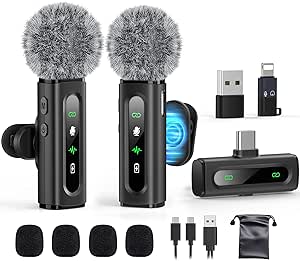 | Best for Device Compatibility | Transmitters: 2 | Receiver: 1 | Connectors: USB Type‑C, USB Type‑A adapter, Lightning adapter | VIEW LATEST PRICE | See Our Full Breakdown |
| Hollyland Lark M2 Wireless Microphone for iPhone 15/16/17 & Android, USB‑C Mini Lavalier, 1000 ft Range, Hi‑Fi Audio, Noise Cancellation, 30 h Battery | 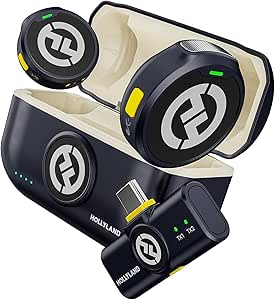 | Best for Long Shoots and Extended Range | Transmitter weight: 9 g | Audio resolution: 48 kHz/24-bit | Signal-to-noise ratio: 70 dB | VIEW LATEST PRICE | See Our Full Breakdown |
| Wireless Lavalier Microphone for iPhone, Android, PC, Live Streaming & Vlogging (Black) |  | Best for Simple Automatic Pairing | Transmission: 2.4 GHz digital | Maximum range: 20 m | Battery life: About 6 hours per mic | VIEW LATEST PRICE | See Our Full Breakdown |
| Bulatry 2-Pack Wireless Mini Lavalier Microphone for iPhone and Android – 65 ft Range, Noise Reduction, 6 h Battery |  | Best Compact Two-Mic Pick | Microphones: 2 | Weight per microphone: 10 g | Wireless range: 65 ft (20 m) | VIEW LATEST PRICE | See Our Full Breakdown |
| Hollyland LARK A2 (2 TX + 1 RX + Charging Case) Wireless Microphone with AI Auto-Limit |  | Best for Recording Protection | Configuration: 2 transmitters and 1 receiver | Wireless connectivity: 2.4 GHz | Audio resolution: 48 kHz / 24-bit | VIEW LATEST PRICE | See Our Full Breakdown |
| Mini Mic Pro – Wireless Lavalier Microphone for iPhone & Android | 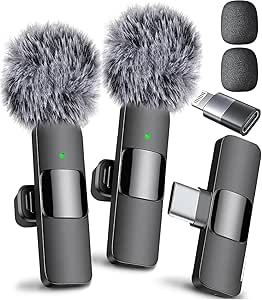 | Best for Simple Phone Recording | Connectors: Lightning and USB-C | Microphone pattern: Omnidirectional | Recording time: Up to 6 hours per charge, according to the description | VIEW LATEST PRICE | See Our Full Breakdown |
| Hollyland Lark A2 Mini Duo Wireless Microphone System |  | Best Lightweight Dual-Mic Kit | Configuration: 2 transmitters and 1 receiver | Transmitter weight: 8.5 g | Audio resolution: 48 kHz / 24-bit | VIEW LATEST PRICE | See Our Full Breakdown |
| Labstandard Dual Wireless Lavalier Microphone for iPhone, iPad, and USB-C Devices |  | Best for Dual-Phone Compatibility | Configuration: 2 omnidirectional microphones and receiver | Connector types: Lightning and USB Type-C | Connectivity listed: Bluetooth; product description also refers to 2.4 GHz transmission | VIEW LATEST PRICE | See Our Full Breakdown |
| DJI Mic Mini Wireless Lavalier Microphone Kit (2 Transmitters, 1 Receiver, Charging Case) | 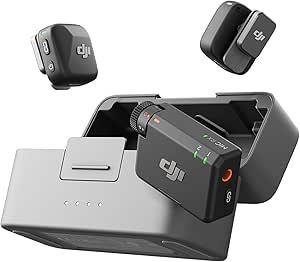 | Best for Long-Range Recording | Configuration: 2 transmitters, 1 receiver, and charging case | Transmitter weight: 10 g | Maximum transmission range: Up to 400 m | VIEW LATEST PRICE | See Our Full Breakdown |
| WinBridge Wireless Voice Amplifier with Clip-On Lapel Mic for Teachers |  | Best for Teaching and Room-Wide Voice | Speaker output: 15W | Microphone weight: 0.64 oz | Speaker battery: 2600 mAh rechargeable | VIEW LATEST PRICE | See Our Full Breakdown |
| TONOR UHF Wireless Microphone System, 1 Set of Bodypack & Lavalier Mic |  | Best for PA and Mixer Setups | Wireless technology: UHF | Connector: 6.35 mm jack | Stated range: Up to 200 ft line of sight | VIEW LATEST PRICE | See Our Full Breakdown |
| MAYBESTA Wireless Mini Microphone for iPhone and Android – 2 Pack Lavalier Lapel Mic |  | Best Value for Two-Person Phone Recording | Microphone count: 2 | Connectors: Lightning and USB Type-C | Pickup pattern: Omnidirectional | VIEW LATEST PRICE | See Our Full Breakdown |
| Wireless Mini Microphone for iPhone & Android, 2-Pack Clip-On Lavalier Mic with USB-C & Lightning, Noise Reduction |  | Best for On-Mic Controls | Microphone count: 2 | Connectors: USB-C and Lightning | Wireless frequency: 4.8 GHz | VIEW LATEST PRICE | See Our Full Breakdown |
| Phenyx Pro PDP-1-1B Digital Wireless Headset and Lavalier Microphone System |  | Best for Performance Flexibility | Frequency range: 902–928 MHz | Channels: 15 tunable channels | Audio resolution: 48 kHz/24-bit | VIEW LATEST PRICE | See Our Full Breakdown |
More Details on Our Top Picks
DJI Mic Mini Wireless Microphone (2 Transmitters, Mobile Receiver)
The DJI Mic Mini is my strongest all-around pick for creators who want a compact two-person setup without giving up useful recording safeguards. Its 10 g transmitters are light enough for discreet clipping, while two noise-cancellation levels let you choose between gentler voice cleanup and stronger reduction in noisier surroundings. Automatic audio limiting can help keep sudden loud sounds from becoming distracting peaks. Compared with the Hollyland Lark M2, DJI offers a shorter stated range but a clearly listed mobile receiver and a simpler feature set to weigh. The 300 m range and up to 11.5 hours of operating time suit interviews and mobile shoots, though the battery figure is less generous than the GoorDik’s stated upper range. It is not waterproof, and cold conditions may reduce battery performance.
Pros:- Two 10 g transmitters are unobtrusive on clothing
- Two noise-cancellation levels suit different background-noise conditions
- Automatic audio limiting can help control unexpectedly loud sounds
- Up to 300 m transmission range and 11.5 hours of operating time
Cons:- Not waterproof
- Battery performance may decrease at low temperatures
- Operating time is shorter than the up-to-30-hour claim for the Hollyland Lark M2
Best for: Mobile creators and interviewers who need two lightweight clip-on transmitters, noise-control options, and a dedicated mobile receiver.
Not ideal for: Creators recording in wet conditions or working long, cold outdoor shoots where its lack of waterproofing and reduced cold-weather battery performance could be limiting.
- Transmitters:2
- Receiver:1 mobile receiver
- Transmitter weight:10 g
- Maximum transmission range:300 m
- Maximum operating time:11.5 hours
- Noise cancellation:2 levels: Basic and Strong
- Connectivity:Bluetooth, Wi-Fi
- Connector:USB Type-C
Our verdict“Choose the DJI Mic Mini for a lightweight two-person mobile setup with practical noise controls and audio limiting, provided you do not need weather protection.”
USB‑C Wireless Lavalier Microphone with Active Denoise – Clip‑On Mic for Android, iPhone 15, PC – Ideal for Vlog, TikTok, YouTube, Podcast
The GoorDik USB‑C wireless lavalier is the adaptable pick for creators who move between phones and computers and want a broad set of included connection options. Its package includes USB‑C, USB‑A, and Lightning adapters, plus two transmitters, windscreens, and foam covers; that makes it more flexible across device types than the USB‑C-focused Hollyland Lark M2. Dual denoise modes and a magnetic clip give buyers options for managing background sound and mic placement, while the 30 m range is suited to typical room-scale recording rather than the DJI Mic Mini’s much longer stated reach. Battery life is listed as 6–12 hours, with simultaneous charging for both transmitters. The tradeoff is a heavier 70 g item weight, and some Android phones may need OTG activated before the receiver works.
Pros:- USB‑C, USB‑A, and Lightning adapters support a wide range of devices
- Includes two transmitters, foam covers, and furry windscreens
- Dual active-denoise modes offer flexibility around background noise
- Up to 12 hours of battery life with simultaneous transmitter charging
Cons:- Some Android phones require OTG activation
- The receiver has only one USB‑C port and some setups may need another adapter
- Its 30 m range is much shorter than the DJI Mic Mini’s stated 300 m
Best for: Creators using a mix of USB‑C phones, Lightning iPhones, and USB‑A computers who want a two-transmitter kit with included adapters and wind protection.
Not ideal for: Android users who want a guaranteed plug-in-and-record setup without checking OTG settings, or creators who need a very long wireless range.
- Transmitters:2
- Receiver:1
- Connectors:USB Type‑C, USB Type‑A adapter, Lightning adapter
- Battery life:6–12 hours per charge
- Wireless range:30 m
- Polar pattern:Omnidirectional
- Frequency response:20 Hz–20 kHz
- Item weight:70 g
- Included accessories:USB‑C cable, foam covers, furry windscreens, USB adapter, Lightning adapter
Our verdict“Pick the GoorDik if device flexibility and bundled accessories matter more to you than minimal weight or long-distance transmission.”
Hollyland Lark M2 Wireless Microphone for iPhone 15/16/17 & Android, USB‑C Mini Lavalier, 1000 ft Range, Hi‑Fi Audio, Noise Cancellation, 30 h Battery
The Hollyland Lark M2 is the range-and-runtime specialist here: its stated 1,000 ft line-of-sight range and up to 30 hours of battery operation give it more headroom for long production days than the DJI Mic Mini or Bulatry set. At just 9 g, its transmitter is also the lightest listed in this group, a plus when a visible or heavy clip-on mic would distract on camera. The 48 kHz/24-bit audio specification and one-click noise cancellation are aimed at creators who want more recording control than a basic plug-and-play lavalier. In exchange, its full adjustment set depends on the HollyAudio app, and connector compatibility is narrower than the adapter-rich GoorDik kit. The supplied product data also describes a C-type battery requirement, so buyers should check the power arrangement against their preferred setup.
Pros:- Very light 9 g transmitter for discreet clipping
- Stated line-of-sight range reaches up to 1,000 ft
- Up to 30 hours of runtime is suited to extended shoots
- 48 kHz/24-bit audio specification with one-click noise cancellation
Cons:- Full feature adjustments depend on the HollyAudio app
- Connector compatibility is more limited than the GoorDik kit with multiple adapters
- Product data lists four C-type batteries, which may add bulk to the power setup
Best for: Vloggers, filmmakers, and podcasters who need a very light transmitter, extended line-of-sight range, and long runtime for lengthy recording sessions.
Not ideal for: Creators who want broad adapter compatibility or prefer to adjust every setting without using a companion app.
- Transmitter weight:9 g
- Audio resolution:48 kHz/24-bit
- Signal-to-noise ratio:70 dB
- Maximum line-of-sight range:Up to 1,000 ft
- Maximum battery life:Up to 30 hours
- Polar pattern:Omnidirectional
- Maximum SPL:115 dB
- Connector:USB Type‑C
- Enclosure material:Metal
Our verdict“Choose the Lark M2 when low transmitter weight, long claimed range, and extended runtime take priority over app-free controls and broad adapter support.”
Wireless Lavalier Microphone for iPhone, Android, PC, Live Streaming & Vlogging (Black)
This wireless lavalier microphone focuses on a low-fuss start: automatic pairing and a stated 20 m range make it a straightforward fit for close-range vlogging, online meetings, and interviews. Its USB‑C and Lightning adapters cover common phone connections, and the included windshields help when recording near moving air. Compared with the GoorDik, it gives up the broader accessory bundle and dual denoise modes; compared with the Bulatry, it has no listed recording modes or latency figure. Its about-six-hour battery life per mic is enough for shorter sessions, but less suited to a full day without charging. The plastic build and range limits in obstructed or noisy environments also make this a more basic choice than the DJI or Hollyland systems.
Pros:- Automatic pairing reduces setup steps
- USB‑C and Lightning adapters support common phone connections
- About six hours of battery life per mic
- Includes windshields for outdoor or breezy recording
Cons:- 20 m range may be limiting around obstructions or interference
- Plastic enclosure offers a less substantial build than the Hollyland Lark M2’s metal enclosure
- One listed channel and limited control features provide less flexibility than the DJI Mic Mini
Best for: New smartphone creators and remote-meeting users who want automatic pairing, common phone adapters, and a mic for short, close-range recordings.
Not ideal for: Filmmakers recording over long distances, all-day creators who cannot recharge, or users who need detailed audio controls and a robust feature set.
- Transmission:2.4 GHz digital
- Maximum range:20 m
- Battery life:About 6 hours per mic
- Connector:USB Type‑C
- Compatible devices:Smartphone, tablet, PC, Mac
- Polar pattern:Omnidirectional
- Signal-to-noise ratio:65 dB
- Number of channels:1
- Enclosure material:Plastic
Our verdict“Choose this model for straightforward, short-range phone recording, but move up to the DJI Mic Mini or Hollyland Lark M2 for more range and recording flexibility.”
Bulatry 2-Pack Wireless Mini Lavalier Microphone for iPhone and Android – 65 ft Range, Noise Reduction, 6 h Battery
The Bulatry 2-pack makes the most sense for creators who want two tiny clip-on mics and quick phone recording without carrying a larger receiver system. Each mic weighs 10 g, and the listed 65 ft range covers ordinary interview or two-person video setups. Its three recording modes—mute, noise cancellation, and echo—give it a more playful control set than the simpler automatic-pairing model, while real-time monitoring can help creators keep track of capture. Compared with the DJI Mic Mini, Bulatry has a shorter stated range and half the maximum operating time, but it includes two microphones and claims a quick charge in under an hour. The main compromise is that six hours per mic can run short on longer shoots, and the supplied compatibility details center on Lightning and USB‑C phones.
Pros:- Two 10 g microphones suit portable two-person recording
- Three modes include mute, noise cancellation, and echo
- Up to 65 ft range and listed 0.0009-second latency
- Charging time is under one hour, with a storage pouch included
Cons:- Six-hour battery life may require a recharge during longer shoots
- Stated range is shorter than the DJI Mic Mini’s 300 m
- Compatibility details focus on Lightning and USB‑C phones rather than a broad adapter kit like GoorDik’s
Best for: Phone-based interviewers and social video creators who need two lightweight microphones, simple pairing, and a portable set for sessions under six hours.
Not ideal for: All-day production teams or creators who need longer range, extended runtime, or a more fully specified receiver and device-compatibility setup.
- Microphones:2
- Weight per microphone:10 g
- Wireless range:65 ft (20 m)
- Battery life:Up to 6 hours
- Charging time:Under 1 hour
- Latency:0.0009 seconds
- Microphone type:360° omnidirectional lavalier
- Recording modes:Mute, Noise Cancellation, Echo
- Compatibility:iPhone with Lightning and Android with USB‑C
Our verdict“Pick Bulatry for a portable two-mic phone kit with quick charging and simple recording modes, but choose DJI for longer range and operating time.”
Hollyland LARK A2 (2 TX + 1 RX + Charging Case) Wireless Microphone with AI Auto-Limit
The LARK A2 suits creators who want help keeping dialogue usable when recording conditions change. Its AI noise cancellation has three levels, while Auto-Limit and a safety track can help tame sudden loud sounds before they ruin a take. Compared with the DJI Mic Mini, it lists a shorter maximum wireless range, but its 200 m reach is still ample for many interviews and creator setups. The 8.5 g transmitters are lighter than the DJI’s 10 g units, so they’re a discreet choice for on-camera wear. The charging case is listed for up to 42 hours of total use, though the source data’s battery description also mentions three C batteries, an unusual detail worth checking against the supplied kit. It uses 2.4 GHz, which can face interference in busy wireless environments.
Pros:- Three adjustable AI noise-cancellation levels suit changing background conditions
- Auto-Limit and safety track help protect recordings from sudden loud sounds
- Lightweight 8.5 g transmitters are discreet on clothing
- Charging case is listed for up to 42 hours of total battery life
Cons:- 2.4 GHz operation may be affected by congestion or interference
- Product data also references three C batteries, making the power setup unclear
- Maximum listed range is shorter than the DJI Mic Mini’s 400 m
Best for: Interviewers and video creators who want dual transmitters, adjustable noise reduction, and protection against clipped dialogue.
Not ideal for: Creators recording in crowded wireless environments or buyers who want a straightforward, clearly specified rechargeable-battery setup.
- Configuration:2 transmitters and 1 receiver
- Wireless connectivity:2.4 GHz
- Audio resolution:48 kHz / 24-bit
- Signal-to-noise ratio:68 dB
- Transmitter weight:8.5 g
- Wireless range:Up to 200 m (650 ft)
- Battery life:Up to 7 hours per transmitter; up to 9 hours with AI Power Saving; up to 42 hours with case
- Noise and level controls:Three-level AI noise cancellation, AI Auto-Limit, and safety track
Our verdict“Choose the LARK A2 if recording safeguards and very light transmitters matter more than the DJI Mic Mini’s longer stated range.”
Mini Mic Pro – Wireless Lavalier Microphone for iPhone & Android
The Mini Mic Pro is the simplest fit here for a solo creator who wants to clip on a mic and connect straight to a phone. Its Lightning and USB-C connectors cover common iPhone and Android setups, and the plug-and-play design needs no app or Bluetooth pairing. That is a more direct workflow than the two-transmitter Hollyland LARK A2 or DJI Mic Mini kits, which are better suited to interviews and two-person recording. Wind protection is included, giving outdoor clips a practical advantage over setups that leave wind handling to the buyer. The tradeoff is limited detail about its wireless link and only one microphone in the described kit, so it is less flexible for interviews. Battery life is listed at up to six hours, but the spec data’s C-battery entry conflicts with the description of a rechargeable unit.
Pros:- Lightning and USB-C connections support a broad range of phones and tablets
- Plug-and-play operation avoids app setup and Bluetooth pairing
- Includes foam and deadcat wind protection for outdoor recording
- Compact design weighs under an ounce
Cons:- Described as a single-microphone setup, unlike the dual-transmitter Hollyland LARK A2 and DJI Mic Mini
- Battery information conflicts between rechargeable operation and a C-battery listing
- Wireless range and transmission details are not provided
Best for: Solo phone vloggers who switch between Lightning and USB-C devices and want a quick, app-free recording setup.
Not ideal for: Interviewers who need two microphones, or buyers who want a clearly documented battery and wireless-range specification.
- Connectors:Lightning and USB-C
- Microphone pattern:Omnidirectional
- Recording time:Up to 6 hours per charge, according to the description
- Weight:80 g
- Dimensions:3 x 0.5 x 0.25 inches
- Controls and features:One-touch recording, battery indicator, clip, and noise reduction
- Included wind protection:Foam and deadcat covers
- Compatible devices:iPhone, Android, tablets, laptops, and iPad
Our verdict“Pick the Mini Mic Pro for uncomplicated solo phone recordings, but choose a dual-transmitter kit for interviews.”
Hollyland Lark A2 Mini Duo Wireless Microphone System
The Lark A2 Mini Duo is a strong match for two-person recordings where small transmitters matter as much as clean speech. It supplies two pre-paired 8.5 g transmitters, so both speakers can be mic’d without adding much visible bulk. Like the other Hollyland LARK A2 in this roundup, it records at 48 kHz/24-bit and includes three levels of AI noise cancellation, Auto-Limit, and a safety track. The supplied description emphasizes the compact dual-mic setup, while the other LARK A2 listing calls out its AI Auto-Limit in the product name; the core listed audio and battery features are closely matched. Compared with the DJI Mic Mini, the Hollyland’s stated range is shorter at 200 m rather than 400 m. Its maximum nine-hour transmitter runtime also depends on enabling AI Power Saving.
Pros:- Two transmitters support interviews and paired on-camera presenters
- 8.5 g transmitter weight keeps the mics discreet
- AI noise cancellation offers three adjustable levels
- Auto-Limit and a -6 dB safety track help manage loud peaks
Cons:- Maximum 200 m range is shorter than the DJI Mic Mini’s listed 400 m
- Nine-hour transmitter runtime requires AI Power Saving
- Actual range may vary with the recording environment
Best for: Two-person interviewers and mobile creators who prioritize barely-there transmitters and built-in audio safeguards.
Not ideal for: Creators who need the longest stated wireless reach or want maximum transmitter runtime without a power-saving setting.
- Configuration:2 transmitters and 1 receiver
- Transmitter weight:8.5 g
- Audio resolution:48 kHz / 24-bit
- Wireless connectivity:2.4 GHz
- Wireless range:Up to 200 m (650 ft)
- Battery life:Up to 7 hours per transmitter, or 9 hours with AI Power Saving; up to 42 hours with case
- Noise control:AI noise cancellation with three adjustable levels
- Recording protection:AI Auto-Limit and -6 dB safety track
Our verdict“Choose the Lark A2 Mini Duo for a lightweight two-person kit, and favor the DJI Mic Mini if stated range is your priority.”
Labstandard Dual Wireless Lavalier Microphone for iPhone, iPad, and USB-C Devices
The Labstandard set stands out for buyers who need two microphones and both Lightning and USB-C adapters without committing to a single phone connector. Its listed 0.008-second latency is intended to keep recorded speech closely aligned with video, a useful detail for interviews and livestreams. Compared with the Mini Mic Pro, which is aimed at simple solo recording, this kit is better equipped for two speakers; compared with the Hollyland LARK A2, though, its transmission and battery details are less clear. The listing describes Bluetooth connectivity but also refers to 2.4 GHz transmission, and it mentions rechargeable operation alongside two included C batteries. Those inconsistencies make it harder to know what setup to expect. I’d favor it when adapter flexibility is the priority, not when a precisely documented wireless system is.
Pros:- Two omnidirectional microphones support interviews and two-person videos
- Lightning and USB-C compatibility covers common phone and tablet ports
- Listed 0.008-second latency supports close audio-video synchronization
- Noise reduction is included
Cons:- Connectivity is inconsistently described as Bluetooth and 2.4 GHz
- Battery details conflict between rechargeable use and included C batteries
- No wireless range is specified, unlike the Hollyland LARK A2 and DJI Mic Mini
Best for: Phone-based interviewers who need two mics and adapters for both Lightning and USB-C devices.
Not ideal for: Buyers who need unambiguous wireless, battery, and range specifications before choosing a recording kit.
- Configuration:2 omnidirectional microphones and receiver
- Connector types:Lightning and USB Type-C
- Connectivity listed:Bluetooth; product description also refers to 2.4 GHz transmission
- Latency:0.008 seconds
- Battery life:About 6 hours
- Weight:0.05 kg
- Dimensions:4.5 x 3.3 x 0.7 inches
- Included accessories:Receiver, user manual, USB-C charging cable, and rechargeable Lightning adapter
Our verdict“Choose Labstandard when dual mics and cross-connector phone compatibility lead your needs, but skip it if specification clarity is a priority.”
DJI Mic Mini Wireless Lavalier Microphone Kit (2 Transmitters, 1 Receiver, Charging Case)
The DJI Mic Mini is the range-focused choice in this group, with a stated 400 m transmission distance that exceeds the 200 m listed for both Hollyland LARK A2 kits. For crews recording across a wide space, that extra reach can offer more room to position a speaker away from the camera, though real-world range depends on conditions. Its two transmitters, receiver, and charging case make it ready for interviews, while up to 48 hours of case-supported battery life is the longest listed here. Basic and Strong noise-cancellation modes let buyers choose between lighter processing and more aggressive background reduction. The tradeoffs are that it is not waterproof and its strong magnets need care around magnetic cards and some medical devices. At 10 g, its transmitters are also slightly heavier than the Hollyland options’ 8.5 g units.
Pros:- 400 m stated transmission range is longer than either Hollyland LARK A2 listing
- Charging case supports up to 48 hours of battery life
- Two noise-cancellation levels and automatic audio limiting are included
- Can connect directly to compatible DJI devices
Cons:- Not waterproof
- Strong magnets require care around magnetic cards and some medical devices
- 10 g transmitters are heavier than the 8.5 g Hollyland LARK A2 transmitters
Best for: Mobile interview crews and creators who need dual transmitters, extended stated range, and long case-supported runtime.
Not ideal for: Outdoor users who need waterproof gear, people with magnet-sensitive devices, or buyers prioritizing the lightest transmitters.
- Configuration:2 transmitters, 1 receiver, and charging case
- Transmitter weight:10 g
- Maximum transmission range:Up to 400 m
- Battery life with case:Up to 48 hours
- Sampling rate:48 kHz
- Signal-to-noise ratio:70 dB
- Maximum SPL:120 dB
- Noise cancellation:Basic and Strong levels
- Connectivity:Bluetooth, DJI OsmoAudio, and USB Type-C
Our verdict“Pick the DJI Mic Mini for its longer stated range and 48-hour case runtime, provided its magnetic and water limitations suit your setup.”
WinBridge Wireless Voice Amplifier with Clip-On Lapel Mic for Teachers
The WinBridge is the strongest fit here when a clip-on mic needs to make a speaker audible across a room, rather than record polished phone video. Its 15W speaker amplification helps teachers address a class without projecting every sentence, and the 0.64-ounce lapel mic is light enough for long lessons. Compared with the MAYBESTA kit, which plugs into a phone for mobile recording, this is a self-contained voice-amplifier setup with Bluetooth playback for announcements or music. Auto-pairing and mute buttons keep operation straightforward, but it is less suited to creators who want a compact receiver feeding a phone. The main tradeoff is managing two rechargeable components; the speaker is listed with up to 12–15 hours of use and the mic with 10+ hours, but both need charging between sessions.
Pros:- 15W amplification helps speech carry without continual shouting
- Very light 0.64-ounce lapel mic supports extended wear
- Speaker and mic are listed for long operating sessions
- Auto-pairing, mute controls, and Bluetooth playback simplify classroom use
Cons:- Requires charging the speaker and microphone between uses
- Speaker-based amplification is bulkier than phone-connected mini lavalier kits
- The listed battery information includes both rechargeable capacities and a C battery, which may make power requirements less straightforward
Best for: Teachers, trainers, and tour leaders who need hands-free voice amplification in a classroom or other small-to-medium space
Not ideal for: Phone-first vloggers and interviewers who need a direct mobile recording receiver instead of an amplified speaker
- Speaker output:15W
- Microphone weight:0.64 oz
- Speaker battery:2600 mAh rechargeable
- Microphone battery:300 mAh rechargeable
- Listed operating time:Speaker: up to 12–15 hours; mic: 10+ hours
- Dimensions:3.1 x 2 x 4.1 inches
- Item weight:11.6 oz
- Model:WB005New_AU
Our verdict“Choose the WinBridge if your priority is amplifying a teacher’s voice around a room, not recording directly to a phone.”
TONOR UHF Wireless Microphone System, 1 Set of Bodypack & Lavalier Mic
The TONOR serves a different job from compact phone lavaliers: it sends a wireless mic signal to a PA system, mixer, or amplifier through a standard 6.35 mm jack. Its bodypack can work with either the included lavalier or headset mic, giving presenters a choice between a discreet clip-on and a more secure head-worn fit. Compared with the Phenyx Pro PDP-1-1B, it offers a similar performance-oriented format and 15 selectable frequencies, but lists a shorter receiver runtime of up to eight hours and a 60 dB signal-to-noise ratio. The 200-foot line-of-sight range suits larger spaces, though obstacles and interference can disrupt a signal, sometimes calling for a manual frequency change. It also needs external audio equipment and two AA batteries for the bodypack, so it is not a plug-in phone solution.
Pros:- Includes both lavalier and headset microphones for different wearing preferences
- Up to 200-foot stated line-of-sight range supports movement across a venue
- 15 selectable frequencies provide options when managing wireless interference
- Rechargeable receiver is listed for up to eight hours of operation
Cons:- Requires external audio equipment with a 6.35 mm input
- Bodypack uses two AA batteries, which are not included
- Signal can drop out and may require manual frequency changes
Best for: Presenters, instructors, and event hosts who already have a PA, powered speaker, or mixer with a 6.35 mm input
Not ideal for: Mobile creators seeking a pocketable receiver that connects directly to a phone or laptop
- Wireless technology:UHF
- Connector:6.35 mm jack
- Stated range:Up to 200 ft line of sight
- Selectable frequencies:15
- Receiver runtime:Up to 8 hours
- Signal-to-noise ratio:60 dB
- Included microphone formats:Lavalier and headset
- Item weight:0.39 kg
Our verdict“Pick the TONOR for hands-free presentation through an existing PA, but skip it if you need direct phone recording.”
MAYBESTA Wireless Mini Microphone for iPhone and Android – 2 Pack Lavalier Lapel Mic
For interviews or paired clips recorded on a phone, MAYBESTA makes the most sense because the kit supplies two clip-on microphones and Lightning and USB-C receiver options. Automatic pairing and a long receiver connector that accommodates phone cases cut setup friction, while the included windscreen is useful when recording outdoors. Compared with the wedaniya two-pack, MAYBESTA lists a longer-lasting rechargeable setup but does not describe the same real-time monitoring or selectable recording modes. Its omnidirectional pickup can capture voices without precise mic placement, though it may also pick up more surrounding sound than a tightly aimed microphone. The product data notes a one-channel-per-mic limitation, so buyers seeking separate stereo tracks or advanced control should look at more production-focused systems. It is a simple phone-first choice, not a PA microphone.
Pros:- Two lavalier microphones support interviews and paired recordings
- Lightning and USB-C receiver connectors cover many phones and tablets
- Automatic pairing avoids app-based setup
- Extended receiver connector is designed to work with phone cases
Cons:- One channel per mic limits stereo recording options
- Omnidirectional pickup can include unwanted surrounding noise
- Phone-centric receiver is not a substitute for a system that connects to a PA or mixer
Best for: Two-person interviewers and social video creators who record on Lightning or USB-C phones and want a simple paired-mic setup
Not ideal for: Creators who need stereo-separated tracks, detailed monitoring controls, or wireless output to a PA system
- Microphone count:2
- Connectors:Lightning and USB Type-C
- Pickup pattern:Omnidirectional
- Wireless frequency:2.4 GHz
- Signal-to-noise ratio:80 dB
- Audio sensitivity:15 dB
- Impedance:2200 Ω
- Enclosure material:Acrylonitrile butadiene styrene
Our verdict“Choose MAYBESTA for straightforward two-person phone videos, but look elsewhere if you need separate stereo recording or advanced monitoring.”
Wireless Mini Microphone for iPhone & Android, 2-Pack Clip-On Lavalier Mic with USB-C & Lightning, Noise Reduction
The wedaniya kit stands out for creators who want more control at the microphone than the simpler MAYBESTA phone set provides. Along with USB-C and Lightning receivers, it lists DSP noise reduction and Standard, Reverb, and Mute modes, plus real-time monitoring. Those options can help a creator adapt to a quiet talking-head clip or a more effect-driven recording without opening an app. The microphones weigh under an ounce and include windshields, which makes them easy to clip on for outdoor shoots. There are tradeoffs: the stated recording time is up to six hours, and power comes from an AA battery rather than a rechargeable system. The receiver connects to the phone, so this is not a fully untethered setup. Compared with the WinBridge, it is for capture rather than room amplification.
Pros:- USB-C and Lightning receivers support a range of mobile devices
- DSP noise reduction and included windshields suit outdoor recording
- Real-time monitoring and selectable Standard, Reverb, and Mute modes add control
- Microphones weigh under one ounce
Cons:- Recording time is listed at up to six hours
- Uses an AA battery that must be replaced rather than recharged
- Phone connection relies on a receiver, so the setup is not fully cable-free
Best for: Phone-based creators who want clip-on noise reduction, monitoring, and selectable audio modes for short shoots
Not ideal for: People recording long sessions who prefer rechargeable mics or presenters who need sound amplified across a room
- Microphone count:2
- Connectors:USB-C and Lightning
- Wireless frequency:4.8 GHz
- Signal-to-noise ratio:70 dB
- Recording time:Up to 6 hours
- Power source:One AA battery included
- Dimensions:0.59 x 0.6 x 2.3 inches
- Weight:Less than 1 oz
Our verdict“Choose wedaniya if monitoring and selectable recording modes matter more than long runtime or a fully untethered connection.”
Phenyx Pro PDP-1-1B Digital Wireless Headset and Lavalier Microphone System
The Phenyx Pro is the more feature-rich stage and event option in this group, pairing a lavalier and headset mic with a bodypack and compact receiver. Its 15 tunable channels and encrypted digital transmission are aimed at managing a dedicated wireless link, while USB-C charging avoids the TONOR system’s need for AA batteries in its bodypack. The listed 160–200-foot line-of-sight range gives performers room to move, but walls, metal, and glass can reduce that reach. With a 6.35 mm receiver output, it fits mixers and PA equipment better than phone-connected options such as MAYBESTA. Some setups may need an adapter, and the 3-pin mini XLR connection adds another compatibility detail to check. This is a stronger match for live vocals than casual mobile video, with more setup demands than a plug-and-play phone lav.
Pros:- Includes both headset and lavalier microphones
- 15 tunable channels and encrypted digital transmission
- USB-C rechargeable receiver and transmitter
- Stated 160–200-foot line-of-sight operating range
Cons:- 6.35 mm receiver output may require an adapter for some equipment
- Range can be reduced by obstacles such as metal or glass
- More involved live-audio setup than direct phone-connected lavalier kits
Best for: Small-venue performers, wedding speakers, and church presenters who need a choice of headset or lapel mic with a PA-compatible receiver
Not ideal for: Phone-first vloggers or users without a mixer, powered speaker, or compatible adapter for the 6.35 mm output
- Frequency range:902–928 MHz
- Channels:15 tunable channels
- Audio resolution:48 kHz/24-bit
- Frequency response:110 Hz–18 kHz
- Signal-to-noise ratio:96 dB
- Operating range:160–200 ft line of sight
- Connections:6.35 mm jack and 3-pin mini XLR
- Charging:USB Type-C
- Included microphones:Headset and lavalier
Our verdict“Choose the Phenyx Pro for live presentations that benefit from headset-or-lapel flexibility, not for quick phone recording.”

How We Picked
I ranked these wireless clip-on microphones by how well their stated setup fits common buyer needs: phone video, interviews, two-person recording, teaching, or a more flexible wireless system. I looked at receiver and connector type, number of transmitters, stated range and battery details, noise-control features, charging accessories, and how much setup the product appears to require. A feature only counted as an advantage when it had a clear buyer benefit; for example, a charging case helps with portable multi-session recording, while a Lightning connector matters only to compatible devices.
The ranking favors useful versatility and clear setup fit over a long feature list. That puts the DJI Mic Mini mobile-receiver option first for broad phone use, with the full DJI kit and Hollyland LARK A2 systems close behind for buyers who want more components or case-based charging. Simpler phone bundles rank lower because their product descriptions offer fewer system details, while the WinBridge, TONOR, and Phenyx Pro options are ranked for narrower voice-amplification or wireless-system needs rather than general mobile creation. Product claims are treated as listed specifications, not as proof of identical results in every recording environment.
Factors to Consider When Choosing Wireless Clip On Microphones
Before choosing a model, I would settle the recording setup first. A mic that is convenient for a phone vlog may be a poor fit for a camera, a classroom, or a two-person interview. These are the broader tradeoffs I’d use to narrow the field.
Match the Receiver to Your Device
Start with the device you will record on most often, then check its port and the receiver type rather than relying on a broad compatibility label. USB-C and Lightning are not interchangeable, and a receiver intended for a phone may not suit a camera or computer without a compatible connection path. A common mistake is buying for the phone you own today while overlooking a second device used for work or travel. If you switch between devices, prioritize a kit with clearly listed support for each one or plan for the correct adapter. A direct phone receiver reduces setup clutter, while a more complete receiver system may offer greater flexibility at the cost of carrying more pieces.
Choose One or Two Transmitters for the Job
A single transmitter is enough for solo narration, demonstrations, and many short-form videos. Interviews, co-hosted videos, or two-person walk-and-talk recordings call for two transmitters, but the added mic only helps if the receiver can manage both speakers in the recording setup you use. Think about whether you need separate voices recorded independently or simply two people heard in one recording; product listings do not always make that distinction clear. Two-mic kits can save a second purchase, but they add charging and placement decisions. If you almost always record alone, a smaller one-mic setup may be easier to keep charged and ready.
Treat Range as a Shooting-Style Limit
Advertised wireless range is a best-case guide, not a promise for every room or street. Walls, crowds, nearby wireless devices, and the way a body blocks the signal can shorten a usable connection. Buyers recording close-up tutorials can usually favor easy pairing and compactness over a very long listed range. For outdoor interviews or moving shots, leave room between the stated range and your expected distance, and check whether the receiver gives a clear warning if the signal drops. Avoid choosing by the largest range claim alone; a stable, practical setup is more useful than a number that does not match your environment.
Decide How Much Noise Control You Need
Noise reduction can make speech easier to hear, but it cannot turn a loud location into a quiet studio. Fans, traffic, reverberant rooms, and clothing rubbing against the mic create different problems, so placement and a quiet recording spot still matter. Strong processing may also affect natural voice tone, making an unprocessed or adjustable option preferable for speech that needs to sound natural. Check whether the feature is described as active denoising, noise cancellation, or a specific limiter function; these labels do not all mean the same thing. If you record in changing environments, prioritize control over processing rather than assuming that a noise-reduction label solves every sound issue.
Plan for Battery, Charging, and Long Sessions
Battery claims matter most when recording several takes, interviews, or lessons away from a power source. Compare transmitter runtime with the length of your sessions, then check whether the receiver or charging case has its own power needs. A case can make recharging between takes easier, but it does not remove the need to charge the system before a long day. Buyers often focus on the largest battery number and forget that cold conditions, frequent reconnection, and heavy processing can change real-world runtime. For an occasional short clip, a lightweight plug-in setup may be more convenient than carrying extra charging hardware.
Pay for the System You Will Actually Use
Paying more makes sense when you need a two-person kit, a charging case, clearer system controls, or a format that supports your camera and phone workflow. It is less useful to pay for extra transmitters or receiver hardware that will stay unused. At the other end, a basic phone mic can be a sensible starting point for casual clips, but check what is included and whether its connector suits your device before buying. Teaching and public speaking are different jobs from recording a video: a voice amplifier such as WinBridge serves projection, while bodypack-based systems such as TONOR or Phenyx Pro suit more specialized wireless setups. Choose by the recording task first, then compare convenience and extras.
Frequently Asked Questions
Can I use any of these wireless clip-on microphones with both an iPhone and an Android phone?
No; the connection depends on the phone port and the receiver included with the mic. Several listings specify USB-C, Lightning, or support for particular phone generations, and that wording should guide your choice. If you use both types of phone, check whether the kit includes both connectors or supports a compatible adapter without blocking other ports. Do not assume that a microphone described as compatible with phones works with every phone model. I would verify the exact connector and recording app workflow before ordering.
Should I choose a kit with two transmitters if I usually record alone?
Only if you expect to record another speaker or want the flexibility for future interviews. Two transmitters can cover a host and guest, but they also mean more components to charge, store, and keep track of. A single-mic setup can be simpler for solo clips and may be all you need for tutorials or voiceovers. In this roundup, the DJI and Hollyland multi-transmitter kits make more sense for shared recording than for someone who never captures a second voice. Think about your actual recording format rather than treating a second mic as an automatic upgrade.
Is a wireless lavalier a good choice for teaching or speaking to a room?
It depends on whether you need recorded audio or amplified sound in the room. Most clip-on wireless lavaliers send audio to a phone, camera, or other receiver; they do not by themselves make your voice louder for an audience. The WinBridge listing pairs a clip-on mic with a voice amplifier, so it is a more direct fit for projection than a phone-focused recording kit. TONOR and Phenyx Pro use different wireless-system formats that may suit particular sound setups. Check what speaker or receiver equipment is included before choosing a recording mic for a live class.
Do noise-cancellation features mean I can record clearly in a busy place?
Not necessarily. Noise-control features may reduce some background sounds, but they cannot reliably remove every voice, echo, wind gust, or handling noise. Mic placement, distance from the speaker, and the room itself still have a large effect on clarity. A clip attached too close to rubbing fabric can sound worse even when its listing mentions noise reduction. For busy locations, look for controllable processing and test the setup in a similar environment before an important recording.
When is a charging case worth choosing over a smaller phone-first mic?
A charging case is useful if you record repeatedly away from a desk and want a place to recharge and store the transmitters between sessions. That makes the DJI Mic Mini full kit and Hollyland LARK A2 kit more appealing for frequent or multi-person use than a barebones phone-first bundle. For occasional short clips, a case can add bulk without changing the audio workflow much. Check whether the case charges the components you rely on and whether its capacity fits your schedule. The best choice is the one that reduces interruptions in your real routine, not simply the one with the most accessories.
Conclusion
For the best overall pick, I’d start with the DJI Mic Mini with two transmitters and a mobile receiver, which balances a phone-friendly workflow with two-person flexibility. For a more complete premium-style system, compare the DJI kit with charging case and Hollyland LARK A2; the right choice depends on which receiver setup and case features fit your devices. For value and a simple beginner setup, the Mini Mic Pro or one of the USB-C/Lightning mini bundles can be a sensible place to start, provided the connector matches your phone. For teaching and room projection, the WinBridge amplifier is the more relevant pick than a standard phone lavalier. For specialist wireless setups, consider TONOR or Phenyx Pro, and choose Bulatry, MAYBESTA, or Labstandard when their listed device compatibility and two-mic format match your needs. I would make the final decision by checking the exact receiver, number of speakers, and recording use—not by choosing the longest feature list.
Black Friday Picks

Kindle Paperwhite (12th Generation, 2024), 16 GB, 7-inch Display, Black
As an affiliate, we earn on qualifying purchases.