Choosing the best studio monitors for small untreated rooms can be challenging, as room acoustics significantly influence sound quality. In this roundup, the Yamaha HS5 stands out as the overall best pick for balancing clarity and affordability. The PreSonus Eris 3.5 offers excellent value for those on a tight budget, while the ADAM Audio D3V provides a premium option for more critical listening. The main tradeoffs in this category involve balancing room response, power, and size—larger monitors often deliver better low-end but can overwhelm small spaces. Keep reading to find detailed insights on each option and how to choose the right monitor for your small untreated room.
Key Takeaways
- Room size and untreated acoustics greatly impact monitor performance; smaller monitors with room compensation features often perform better.
- The best overall monitors balance clarity, power, and size, making them adaptable to untreated small spaces.
- Budget options like the PreSonus Eris 3.5 still deliver decent sound but may lack low-frequency extension and volume for critical mixing.
- Premium models such as the ADAM D3V excel in accuracy but come with a higher price tag and may require careful placement.
- Connectivity options, such as Bluetooth and multiple input types, add flexibility but can sometimes compromise audio fidelity.





More Details on Our Top Picks
Ortizan C7 Dual-Mode 2.0 Studio Monitors, Active Monitor Speakers for Near Field Music Production, Bluetooth 5.3 Wireless Computer PC Monitor Gaming Bookshelf Speakers(Pair, Black)
This model shines for small spaces needing versatile connectivity, combining Bluetooth 5.3, RCA, AUX, and even professional TRS inputs. Unlike the Yamaha HS5, which emphasizes flat response for accurate mixing, the Ortizan C7 offers a more engaging sound with broader connectivity options, ideal for casual creators or those who want wireless convenience in a small untreated room. Its built-in 24-bit DAC and 3.5-inch carbon fiber driver deliver clear, detailed audio, making it suitable for streaming, gaming, or basic music production. However, compared to the Yamaha’s more precise sound signature, it sacrifices some neutrality for versatility. The tradeoff is a slight compromise in audio fidelity for ease of use and multi-device compatibility. This pick makes the most sense for hobbyists or content creators who prioritize flexibility over absolute accuracy.
Pros:- Versatile input options including Bluetooth, RCA, AUX, and professional TRS
- Built-in 24-bit DAC for high-fidelity digital audio
- Compact and stylish design suitable for small spaces
Cons:- Sound signature leans toward engaging rather than neutral, not ideal for critical mixing
- Lacks the flat frequency response of higher-end monitors like Yamaha HS5
Best for: Small room content creators seeking wireless convenience and multiple inputs
Not ideal for: Professional mixers or critical audio engineers needing flat response for precise editing
- Power Output:60 Watts
- Frequency Response:20 KHz
- Speaker Type:Active 2.0
- Connectivity:Bluetooth 5.3, RCA, AUX, TRS
- Speaker Size:3.5 inch driver
- Material:ABS, Metal, Wood
- Dimensions:9 cm
- Weight:113.58 oz
Bottom line: This monitor is perfect for small rooms where wireless connectivity and flexibility matter more than absolute audio neutrality.
YAMAHA Hs5 Powered Studio Monitor, Pair
Compared with the Ortizan C7, the Yamaha HS5 prioritizes flat, uncolored sound, making it ideal for small untreated rooms where precise mix translation is critical. Its 5-inch cone woofer and 1-inch dome tweeter deliver a frequency response from 54 Hz to 30 kHz, emphasizing clarity and tonal accuracy. The bi-amplified 45W LF and 25W HF system provides ample power without distortion, and balanced XLR and TRS inputs ensure clean connections with professional gear. While the Yamaha lacks Bluetooth and other wireless features, it excels in delivering a transparent sound signature that reveals every detail, which is essential for mixing in untreated small rooms. The main tradeoff is reduced convenience, as it’s less suited for casual listening or multimedia use. This monitor makes the best choice for those needing true-to-source sound for critical editing and mixing.
Pros:- Flat, neutral frequency response for accurate mixing
- High power (70W) bi-amp system with ample headroom
- Balanced XLR and TRS inputs for professional connectivity
Cons:- No wireless or Bluetooth capabilities
- Less suited for casual listening or multimedia without additional equipment
Best for: Small room musicians and audio engineers requiring precise, flat response monitoring
Not ideal for: Casual users or content creators who want wireless features or colored sound for entertainment
- Power:45W LF, 25W HF
- Frequency Response:54 Hz to 30 kHz
- Speaker Type:Bi-amplified nearfield
- Input:XLR, TRS
- Woofer Size:5 inch
- Build Material:MDF
- Dimensions:20″W x 32″H x 24″D
- Weight:32.5 lbs
Bottom line: This is the go-to monitor for small room setups focused on critical listening and accurate mixing.
Yamaha MS101-4 Desktop Powered Studio Monitor
This Yamaha MS101-4 offers a compact, affordable option for small untreated rooms, with 30W power and a simple 2-band EQ. Compared to the HS5, the MS101-4 is less powerful and has a smaller 4-inch woofer, but it still provides decent clarity for casual mixing or production in tight spaces. Its small footprint makes it ideal for desktop use, especially in cluttered or untreated environments, where space is limited. The sound quality is adequate for monitoring basic mixes, but its limited bass extension and lower power mean it won’t deliver the same depth or volume as larger monitors. The main drawback is that it’s less suited for critical listening, making it better for beginners or secondary monitors in a small room. This monitor is best for those starting out or with space constraints who don’t need studio-level accuracy.
Pros:- Compact size ideal for small desks and limited space
- Affordable price point for entry-level users
- Simple 2-band EQ for quick adjustments
Cons:- Lower power output limits volume and bass depth
- Limited frequency response and detail for critical mixing
Best for: Beginners or hobbyists working in small, cluttered spaces with limited budget
Not ideal for: Professionals needing high fidelity and deep bass response for detailed mixing
- Power:30W
- Frequency Response:Not specified
- Speaker Type:2-way
- Input:Unspecified
- Woofer Size:4 inch
- Build Material:Plastic
- Dimensions:Not specified
- Weight:Not specified
Bottom line: This desktop monitor suits beginners or tight spaces where budget and size are bigger priorities than precision.
Edifier R980T 4″ Active Bookshelf Speakers – 2.0 Computer Speaker – Powered Studio Monitor (Pair)
Compared with the Yamaha MS101-4, the Edifier R980T offers a more refined aesthetic with its wooden enclosures, providing a warmer tone suitable for small untreated rooms. Its 24W RMS power and front-firing bass reflex port create rich, immersive sound for casual listening, gaming, or basic production. The inclusion of RCA and 3.5mm inputs makes it versatile for multiple devices, and its classic wood finish adds a stylish touch to a small studio or bedroom setup. While it doesn’t match the flat response of Yamaha HS5 or the power of larger monitors, it compensates with a pleasant, room-filling sound that minimizes harsh resonances common in untreated small rooms. The main limitation is the lower power and frequency response, which reduces its suitability for critical mixing. It’s best for those wanting a warm, aesthetic setup for general use and light production.
Pros:- Stylish wooden enclosure minimizes acoustic resonance
- Multiple input options including RCA and 3.5mm
- Affordable, suitable for casual or home studio environments
Cons:- Limited power and bass response for critical mixing
- Not designed for high-volume or professional use
Best for: Casual listeners or small room users seeking aesthetic appeal and warm sound
Not ideal for: Professional producers or mixing engineers requiring flat response and high fidelity
- Power:24W RMS
- Frequency Response:Not specified
- Speaker Type:Active Bookshelf
- Inputs:RCA, 3.5mm
- Woofer Size:4 inch
- Material:Wood
- Dimensions:Not specified
- Weight:Not specified
Bottom line: This monitor is ideal for small rooms where aesthetic and warm sound are more important than studio accuracy.
Audio-Technica ATH-M20x Professional Studio Monitor Headphones, Black
While not a speaker, the ATH-M20x headphones serve as a crucial tool for critical listening in small untreated rooms, especially when acoustic treatment is limited. Its 40mm drivers with rare earth magnets and copper clad aluminum wire voice coils deliver enhanced low frequencies and a neutral sound profile, helping isolate environment noise. Unlike speakers, headphones like the ATH-M20x eliminate room reflections and acoustic resonances, making them ideal for tracking and mixing in small, untreated spaces. They are comfortable for extended use and provide accurate stereo imaging, but they lack the spatial cues of speakers. The main tradeoff is that headphones do not provide the natural room sound or stereo field of monitors, which can be limiting for certain mixing tasks. These make a solid, affordable choice for detailed listening when room acoustics are poor.
Pros:- Excellent sound isolation and low-frequency response
- Comfortable and suitable for long sessions
- Affordable and portable for mobile setups
Cons:- Lacks the spatial cues of actual monitors
- Not suitable as the sole monitoring tool for final mixes
Best for: Home studio users needing accurate monitoring without room acoustic issues
Not ideal for: Listeners seeking speaker-based spatial awareness or mixing on speakers
- Driver Size:40 mm
- Design:Circumaural
- Built-in Features:Enhanced bass, noise isolation
- Connectivity:Cable (single side exit)
- Frequency Response:Not specified
- Application:Tracking, Mixing
Bottom line: These headphones are a practical supplement for critical listening in small untreated spaces, but shouldn’t replace speakers for mixing.
M-AUDIO BX5BT Pair 5″ Desktop Studio Monitor Speakers with DSP and Bluetooth with App Control
This pair stands out for delivering professional-grade clarity in a compact, space-constrained environment. Unlike the Yamaha HS3, which offers straightforward wired connectivity, the BX5BT adds Bluetooth streaming and app control, making it ideal for content creators who want flexibility without sacrificing sound quality. Its DSP tuning allows for quick room adjustments, though this added feature means a slightly more complex setup. The 5″ Kevlar woofer provides decent bass for such a small footprint, but it won’t replace larger monitors in delivering deep lows. Compared to the Edifier MR5, the BX5BT offers more customization options and wireless convenience, but at a higher price and with more setup complexity.
Pros:- Pro-grade clarity with 240W bi-amped power
- Built-in DSP with quick room tuning options
- Wireless Bluetooth streaming for versatile playback
- App control for custom EQ and presets
Cons:- Slightly more complex setup due to DSP and app features
- Higher price point compared to basic monitors
- Bluetooth may introduce latency in critical listening scenarios
Best for: Content creators, streamers, and video editors seeking professional sound with space-saving features.
Not ideal for: Budget-conscious beginners or those who prefer simple, wired monitors without app-based tuning.
- Power Output:240W
- Connectivity:Bluetooth 5.0, TRS, RCA
- Drivers:5″ Kevlar woofer, 1″ silk dome tweeter
- Tuning Options:DSP-based, front panel switches, app control
- Frequency Response:Not specified
- Room Adjustment:Yes
- Dimensions:Not specified
- Weight:Not specified
Bottom line: This pick suits modern creators who want flexible, high-quality sound in a small untreated room and don’t mind a bit of setup complexity.
Yamaha HS3 Powered Studio Monitor in Black, Pair (HS3 B)
Compared with the Edifier MR5, the Yamaha HS3 offers a more straightforward, reliable wired connection with a reputation built over decades of professional use. The 3.5″ cone woofer delivers a balanced, flat response suitable for mixing in small, untreated rooms, but it naturally lacks the deep bass of larger monitors like the HS5. Its simple design and high-frequency response make it a good choice for beginners and those who prefer minimal setup. While the HS3’s smaller size makes it ideal for tight spaces, its limited bass response could be a drawback for producers needing full-range sound. It’s a better fit for those prioritizing clarity over low-end punch, especially in environments where room treatment isn’t possible.
Pros:- Trusted Yamaha build and sound quality
- Easy plug-and-play setup with XLR/TRS inputs
- Compact size ideal for small rooms
- Wide frequency response from 70Hz to 22kHz
Cons:- Limited bass response due to small driver size
- No wireless or app-based tuning options
- Volume might be insufficient for large or noisy environments
Best for: Beginners or hobbyists needing reliable, wired monitors that fit into tight spaces without fuss.
Not ideal for: Music producers requiring extended bass or wireless connectivity for casual use.
- Speaker Size:3.5 inches
- Frequency Response:70Hz – 22kHz
- Power Output:26W
- Inputs:XLR/TRS, RCA
- Room Control:Yes
- Dimensions:Not specified
- Weight:Not specified
Bottom line: This monitor is perfect for beginners in small untreated rooms who want reliable, straightforward sound without extra features.
Yamaha HS5 W 5-Inch Powered Studio Monitor Speaker, White
Compared to the smaller HS3, the Yamaha HS5 W provides a larger 5″ woofer and increased power, making it more capable of handling detail and volume in a small untreated room. Its bi-amp design with 70W total output offers a significant upgrade in clarity and bass response, which is crucial in spaces with poor acoustics. The HS5’s reputation for neutrality means it’s less likely to color your mixes, a key advantage over more colored monitors like the Mackie CR3. However, its size and power might be overkill for very tight spaces or for users who prefer a simple, plug-and-play setup. This monitor suits those who want a step up from entry-level models without the complexity or size of larger speakers.
Pros:- Larger 5″ woofer for better bass extension
- High power output (70W) for clarity at moderate volumes
- Neutral sound profile ideal for mixing
- Room control and high trim response
Cons:- Size may be less suitable for extremely tight spaces
- Requires proper positioning to avoid room reflections
- No wireless or app-based tuning
Best for: Intermediate producers or serious hobbyists wanting accurate monitoring in small, untreated spaces.
Not ideal for: Beginners or casual listeners who don’t need high-level accuracy or volume.
- Speaker Size:5 inches
- Frequency Response:30Hz – 30kHz
- Power:45W LF + 25W HF
- Inputs:XLR, TRS
- Room Control:Yes
- Dimensions:Not specified
- Weight:Not specified
Bottom line: This model is well-suited for those who need more accurate, full-range monitoring in a small untreated room and can accommodate its size.
Mackie CR3.5 3.5″ Creative Reference Powered Studio Monitors
Compared to the Yamaha HS3, the Mackie CR3.5 emphasizes versatility with a built-in tone control and multiple input options, making it suitable for casual monitoring, gaming, and multimedia use in small spaces. Its 3.5″ driver produces a clear, articulate sound but struggles with deep bass, similar to the HS3, which makes it less ideal for critical mixing. The addition of a tone knob allows users to boost highs and lows, which can compensate for room shortcomings, but this can also introduce coloration if overused. Its compact size and built-in headphone jack make it a great all-in-one solution for tight spaces, though it lacks the neutrality of dedicated studio monitors like the HS3 or HS5.
Pros:- Compact, space-efficient design
- Built-in tone control for sound shaping
- Multiple input options including TRS, RCA, 3.5mm
- Includes headphone output for monitoring
Cons:- Limited bass response due to small driver size
- Coloration possible if tone knob is overused
- Not suitable for critical mixing or mastering
Best for: Casual creators, gamers, and hobbyists who want flexible sound shaping and multiple connectivity options in small rooms.
Not ideal for: Professional producers needing flat response and accurate mixing in untreated environments.
- Speaker Size:3.5 inches
- Frequency Response:Not specified
- Power:Not specified
- Inputs:TRS, RCA, 3.5mm
- Features:Tone knob, headphone output
- Dimensions:Not specified
- Weight:Not specified
Bottom line: This monitor is ideal for those who want versatile, adjustable sound for multimedia and light creative tasks in small, untreated rooms.
Edifier R1280T Powered Bookshelf Speakers – 2.0 Active Near Field Studio Monitor Speaker – White Enclosure – 42 Watts RMS
This Edifier model stands out for its affordability while delivering surprisingly balanced sound suited for small untreated spaces. Compared with larger monitors like the PreSonus Eris 3.5, it offers a more approachable price point without sacrificing clarity, though it lacks the extensive room tuning features. The side panel controls and remote make quick EQ adjustments easy, but the sound may lack the depth and low-end punch of higher-end options. Its MDF wood finish also complements home decor, making it ideal for casual or home studio setups. Tradeoffs include less precise bass control and limited high-frequency adjustments, which could matter in more critical mixing environments. Best for hobbyists or those on a budget seeking decent sound in small, untreated rooms.
Pros:- Affordable price with good overall sound quality
- Easy-to-use side panel EQ controls and remote
- Stylish MDF wood finish complements home decor
Cons:- Limited room tuning options for untreated spaces
- Bass and treble controls are basic, not precise
- Lacks detailed high-frequency extension compared to premium monitors
Best for: Budget-conscious home studio owners or beginners looking for simple, reliable near-field monitors.
Not ideal for: Professional producers needing detailed, flat frequency response for critical mixing.
- Power Output:42 Watts RMS
- Speaker Type:2.0 Active Bookshelf
- Enclosure Material:MDF wood finish
- Connectivity:Dual AUX, RCA
- Driver Size:4 inch full range
- Tweeter:13mm silk dome
- Controls:Side panel EQ and remote
- Dimensions:Not specified
- Weight:Not specified
Bottom line: A solid budget pick ideal for small untreated rooms where perfect accuracy isn’t critical.
Edifier R1280T Powered Bookshelf Speakers – 2.0 Active Near Field Studio Monitor Speaker – Wooden Enclosure – 42 Watts RMS Power
This Edifier model is similar to the white enclosure version but features a classic wood finish that suits a variety of home decors. It offers comparable sound quality with convenient side panel controls and dual AUX inputs, making it easy to connect multiple devices. Compared to the Yamaha HS3, it provides a richer aesthetic and more user-friendly EQ adjustments, though it may fall short in ultra-flat frequency response for critical mixing. Its built-in controls and remote are practical for casual listening or project studios, but the lack of advanced room correction limits its precision in untreated small rooms. The tradeoff here is a slightly more decorative look versus the more neutral sound profile of higher-end monitors. Best for those who want a good balance of looks, ease of use, and sound for small spaces.
Pros:- Elegant wood finish complements home decor
- Multiple input options for versatile device connection
- Remote control and side EQ controls for easy tuning
Cons:- Limited room tuning capabilities for untreated spaces
- Bass response could be more extended
- Not designed for critical mixing accuracy
Best for: Home hobbyists and casual producers seeking attractive monitors with good sound in small, untreated rooms.
Not ideal for: Professional engineers requiring flat, studio-grade response and room correction features.
- Power Output:42 Watts RMS
- Speaker Type:2.0 Active Bookshelf
- Enclosure Material:Wood effect vinyl over MDF
- Connectivity:AUX, RCA
- Driver Size:4 inch full range
- Tweeter:13mm silk dome
- Controls:Side panel EQ, remote
- Dimensions:Not specified
- Weight:Not specified
Bottom line: A stylish, user-friendly monitor suitable for casual use in small untreated rooms.
Audio-Technica ATH-M50X Professional Studio Monitor Headphones, Black, Professional Grade, Critically Acclaimed, with Detachable Cable
The ATH-M50X headphones are renowned among audio professionals for their detailed and accurate sound, making them an excellent choice for small untreated rooms where nearfield monitoring is essential. Unlike speakers, headphones like these eliminate room acoustics, providing a flat response that reveals flaws in recordings or mixes. Compared with the PreSonus Eris 3.5, they offer superior isolation and clarity, though they lack the stereo imaging of speakers. The large 45mm drivers deliver extended frequency response with deep bass and crisp highs, but extended use can cause fatigue if not properly calibrated. The detachable cable adds durability, but their closed-back design can sometimes feel less spacious than open-back models. Ideal for detailed editing, mixing, and critical listening in small, untreated environments.
Pros:- Exceptional clarity and flat frequency response
- Excellent sound isolation from room acoustics
- Durable build with detachable cable
Cons:- Can cause ear fatigue after extended use
- Lacks the stereo field and spatial cues of speakers
- Closed-back design reduces spaciousness
Best for: Producers, audio engineers, or musicians in small rooms needing precise monitoring without room interference.
Not ideal for: Casual listeners or those seeking portable or outdoor audio solutions.
- Driver Size:45mm
- Frequency Response:20 Hz – 28,000 Hz
- Impedance:38 Ohms
- Sensitivity:99 dB
- Design:Circumaural, closed-back
- Cable:Detachable
- Weight:0.29 kg
- Color:Black
- Warranty:2 years
Bottom line: The best choice for critical listening and mixing in small untreated spaces where room acoustics distort sound.
PreSonus Eris 3.5 Studio Monitors, Pair — Powered, Active Monitor Speakers for Near Field Music Production, Desktop Computer, Hi-Fi Audio
The Eris 3.5 monitors make an excellent choice for small untreated rooms, offering a surprisingly flat and detailed sound profile. Their 50W dual amplification and 3.5-inch woven-composite woofers deliver tight, punchy bass and clear high frequencies, making them suitable for mixing and critical listening. Compared with the Yamaha HS3, these provide a broader stereo image and more room tuning options via built-in high- and low-frequency controls. Their ultra-wide sweet spot ensures consistent sound even off-axis, which is beneficial in untreated spaces with reflective surfaces. However, they lack advanced room correction features, so placement is still important. The main tradeoff is that their size and power make them overkill for casual listening; they’re best suited for focused production work. Perfect for small home studios where accuracy matters but room treatment is minimal.
Pros:- Accurate, flat frequency response for mixing
- Wide stereo imaging from nearly any angle
- Flexible connectivity options and room tuning controls
Cons:- No advanced room correction features
- Requires proper placement for best sound
- Powerful enough to be overkill for casual use
Best for: Musicians and producers in small, untreated rooms who need accurate, flat response monitors.
Not ideal for: Casual listeners or those seeking Bluetooth connectivity and simple desktop speakers.
- Power:50 Watts
- Driver Size:3.5 inch woven woofer
- Frequency Response:45 Hz – 20 kHz
- Inputs:¼-inch TRS, RCA, ⅛-inch aux
- Features:High/Low EQ controls
- Dimensions:Not specified
- Weight:Not specified
- Design:Active monitor
- Connectivity:Multiple
Bottom line: A highly accurate monitor for small untreated rooms focused on critical listening and mixing.
ADAM Audio D3V Active Desktop Monitoring System with USB-C Connection (Pair, Black)
This ADAM Audio pair excels at delivering precise, transparent sound with a compact form factor, making them ideal for small untreated spaces. Their 3.5-inch aluminum woofers and dual passive radiators provide extended low-frequency response down to 45 Hz, while the innovative D-ART ribbon tweeter ensures high-frequency clarity without fatigue. Compared with the PreSonus Eris 3.5, they offer more refined high-end reproduction and a more detailed stereo image, thanks to their ribbon tweeter technology. The USB-C input allows direct connection to modern computers or mobile devices, streamlining setup in small setups. Built-in DSP and room tuning switches mitigate placement issues common in untreated rooms, but require some familiarity to optimize. They are overkill for casual listening but unmatched for studio use in tight spaces. Ideal for producers and musicians seeking professional-grade accuracy in small, acoustically challenging environments.
Pros:- Exceptional high-frequency detail with ribbon tweeter
- Extends bass down to 45 Hz with passive radiators
- Built-in room tuning and DSP features
Cons:- More expensive than basic monitors
- Requires some knowledge to optimize room settings
- Limited low-end extension without subwoofer
Best for: Critical audio work in small, untreated spaces where clarity and precision are paramount.
Not ideal for: Casual listeners or those who prefer Bluetooth connectivity and simplified setups.
- Woofer Size:3.5 inches
- Frequency Response:45 Hz – 20 kHz
- Power:80 Watts
- Input:USB-C, balanced ¼
- Passive Radiators:Dual-sided 3.5 inch
- Dimensions:Not specified
- Weight:Not specified
- Design:Active desktop monitors
- Features:Room tuning switches, DSP
Bottom line: Premium nearfield monitors offering studio-level accuracy in small, untreated environments with flexible room correction.
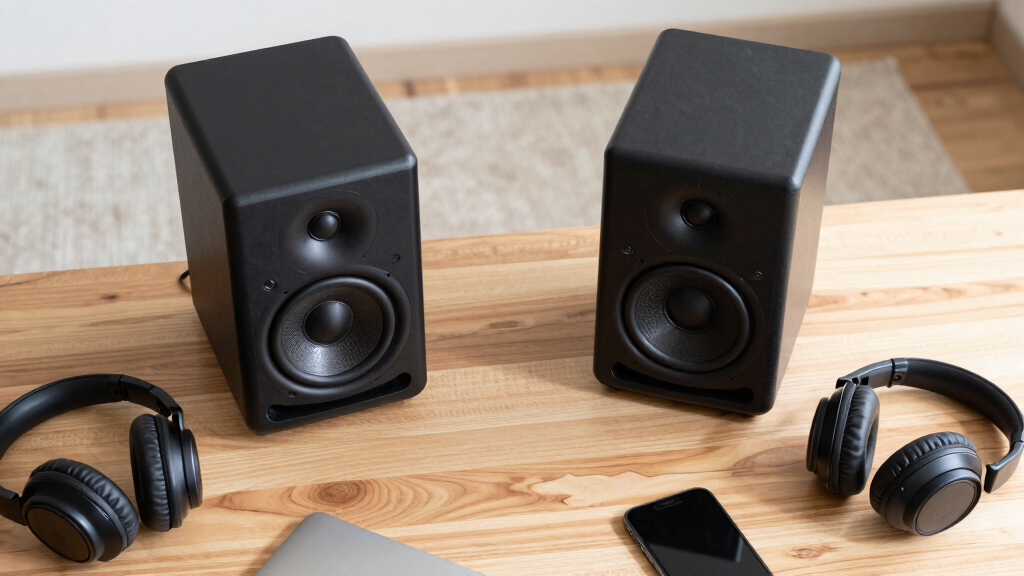
How We Picked
These monitors were evaluated based on performance in small untreated environments, including clarity, bass response, and room compensation features. Usability factors like connection options and size were also critical, as they directly affect placement and setup in limited spaces. Build quality and reliability were considered, but the focus remained on how well each monitor could deliver accurate sound without extensive room treatment. The ranking reflects a balance between price, sonic accuracy, and suitability for small, untreated rooms, prioritizing models that help mitigate common acoustic challenges while remaining practical for typical small studio setups.Factors to Consider When Choosing Best Studio Monitors For Small Untreated Rooms
When choosing studio monitors for small untreated rooms, certain factors can make a significant difference in your listening experience. Understanding room size, monitor size, and features like room compensation can help you make smarter choices. It’s also important to consider your budget and how much space you have for placement. A well-selected monitor can compensate for acoustic shortcomings, but poor choices can amplify issues like muddiness or imbalance. Here are key considerations to keep in mind:Room Size and Acoustic Environment
Small untreated rooms often introduce reflections and bass buildup that muddy the sound. Monitors with built-in room correction or high-frequency dispersion can help mitigate these effects. Choosing a monitor with a smaller driver size generally reduces low-frequency coupling with the room, making it easier to achieve accurate sound in tight spaces. Remember, larger monitors might produce richer bass but can overwhelm small rooms or cause placement issues, so size and room acoustics should guide your choice.
Monitor Size and Power
The physical size of the monitor influences how well it fits into your space and how it interacts with room acoustics. Smaller monitors, around 3 to 5 inches, are typically better suited for small rooms because they produce less low-end energy that can cause muddiness. Power output also matters; adequate wattage ensures clear volume without distortion, but excessive power can lead to overloading small spaces. Match the monitor’s size and power to your room dimensions and listening needs.
Frequency Response and Room Compensation
Accurate frequency response is vital for mixing and critical listening, especially where room treatment is minimal. Monitors with room correction features or equalizers can help compensate for untreated acoustics by reducing problematic resonances. Without these features, you might need to invest in acoustic panels or bass traps, which can be costly and space-consuming. Selecting monitors with well-balanced response and room compensation options can save you time and money while improving sound clarity.
Connectivity and Setup Flexibility
In small spaces, flexible connectivity options such as Bluetooth, XLR, or RCA inputs allow easy integration with various devices. Wireless connectivity can reduce cable clutter, but sometimes compromises audio quality. Proper placement is crucial; monitors should be positioned at ear level and away from walls to avoid boundary effects. Consider monitors that include features like tilt or isolation pads to optimize positioning and sound dispersion.
Budget and Long-Term Value
While budget monitors can be tempting, investing slightly more often yields better sound and build quality, especially in untreated rooms. Cheaper models may lack low-frequency extension or clarity, leading to frustrated mixing sessions. Conversely, overspending on premium monitors might not translate into better outcomes if your room acoustics are poor. Balance your budget with your room’s limitations, aiming for a monitor that offers the best performance for your specific needs.
Frequently Asked Questions
Can I use regular hi-fi speakers as studio monitors in a small untreated room?
While you can use hi-fi speakers for casual listening, they are generally not designed for accurate audio reproduction required in a studio setting. Hi-fi speakers often emphasize bass or treble, leading to unbalanced mixes. In a small untreated room, these issues worsen, as reflections and room modes distort the sound further. Dedicated studio monitors with flat response and room correction features are better suited for critical listening, helping you make more precise adjustments.
How important is room treatment when using studio monitors in a small space?
Room treatment plays a significant role in small untreated spaces. Without proper treatment, reflections and bass buildup can cause misleading sound cues, making it difficult to judge mixes accurately. While some monitors include room correction features, additional acoustic panels, bass traps, and diffusers can substantially improve clarity. Investing in room treatment complements your monitor choice, resulting in a more balanced and reliable listening environment.
Is it better to prioritize size or power when selecting monitors for my small room?
In small untreated rooms, size often takes precedence because smaller monitors are less likely to produce overwhelming low frequencies and are easier to position. Power is still important, but excessive wattage can cause distortion or sound boomy if the room isn’t properly treated. Focus on monitors with appropriate driver sizes (around 3-5 inches) and sufficient power for your space, balancing volume needs with room acoustics.
Should I choose active or passive monitors for a small untreated room?
Active monitors are generally more convenient for small spaces because they have built-in amplification, reducing the number of external components and simplifying setup. They often include room correction features, which are beneficial in untreated environments. Passive monitors require a separate amplifier and more careful placement, which can be more challenging in limited space. For most small untreated rooms, active monitors provide a practical, straightforward option.
How much does monitor placement affect sound in a small untreated room?
Placement has a profound impact on sound quality, especially in small untreated spaces. Proper positioning—such as placing monitors at ear level, avoiding corners, and keeping a distance from walls—can reduce boundary effects and standing waves. Using isolation pads or stands can further improve sound clarity. Even the best monitor can sound muddy or unbalanced if placed incorrectly; therefore, attention to placement is crucial for achieving accurate sound.
Conclusion
For most users, the Yamaha HS5 offers the best balance of performance and affordability, making it ideal for general use in small untreated rooms. If you’re new to studio monitoring or on a tight budget, the PreSonus Eris 3.5 provides impressive clarity at a lower cost. Those seeking a professional-grade setup should consider the ADAM D3V for its accuracy and build quality, though it demands careful placement. Beginners and hobbyists will benefit from monitors with room correction features, while experienced producers may prioritize flat response and connectivity options. Ultimately, selecting the right monitor depends on your space, budget, and how critical your listening environment is—each choice offers different strengths tailored to specific needs.