
📊 Full opportunity report: The Future Of AI In NATO: Friend Or Foe At The Operational Level? on ThorstenMeyerAI.com — validation score, market gap, and execution plan.

Get the latest gadgets delivered free — and shop member deals
- Fast, free delivery on millions of items
- Access to Prime Big Deal Days deals on October 6–7
- Prime Video, Amazon Music and more included
TL;DR
NATO’s critical communication and sensor infrastructure heavily depends on Chinese equipment, raising concerns about AI-enabled vulnerabilities. The alliance faces legal and security challenges as it modernizes its defense systems.
NATO’s military and communication infrastructure increasingly relies on Chinese technology, raising security concerns about potential vulnerabilities at the operational level. This dependency occurs amid ongoing efforts to modernize and harden alliance defenses, making the future role of AI in NATO both promising and problematic.
Recent assessments reveal that key NATO member states, including Belgium and Germany, have significant portions of their telecommunications networks built on equipment from Chinese companies like Huawei. Belgium’s entire EU and NATO communications backbone, until recently, depended on Chinese hardware, which is legally obligated to cooperate with Chinese intelligence under the 2017 National Intelligence Law. In Germany, approximately 60% of the 5G network relies on Huawei equipment, passing through NATO forces stationed there. Eastern European countries like Poland and Romania also use Chinese gear, with no immediate plans for removal.
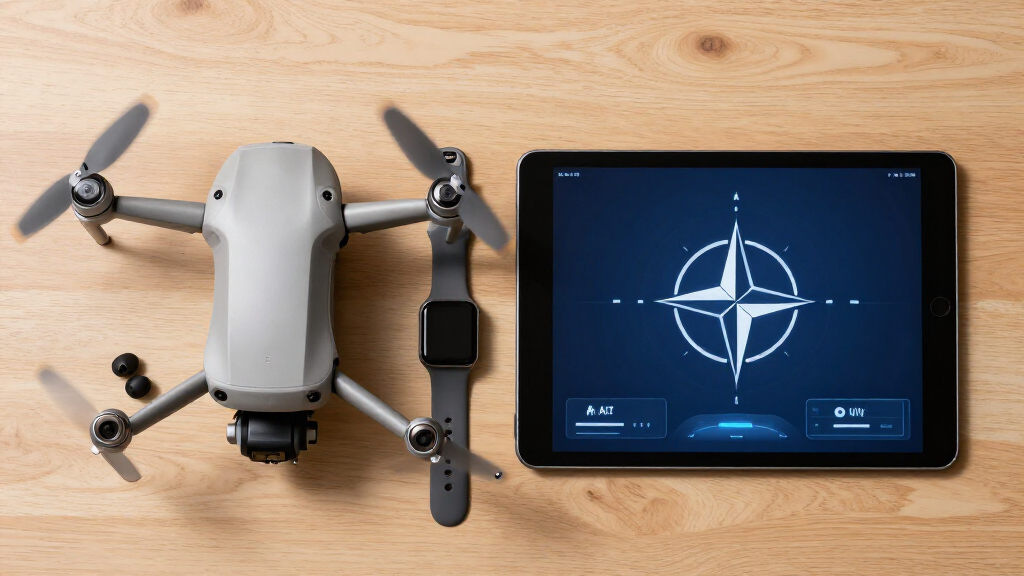
While NATO and its allies are actively working to replace Huawei technology, the process is costly and complex. Germany has set a 2026 deadline for removing Huawei from its 5G networks, but technical and financial challenges persist. Despite Huawei’s denials of providing backdoor access, the legal framework in China means the equipment could be exploited on demand, posing a structural risk. Additionally, Chinese components are embedded in sensors and drone systems used by NATO, creating vulnerabilities at the operational level.
Friendly fire at alliance scale: what Chinese equipment in NATO networks actually means
Yesterday: Ukraine may have turned a Russian unit’s identification layer against its own jet. Today’s question doesn’t require that to be true. It requires only that the concept be plausible — and then asks what it means when NATO’s own identification layer is built on equipment from a country whose law compels its companies to cooperate with intelligence on demand.
Any Chinese entity — any company, any employee, anywhere — must assist national intelligence work when asked. No carve-out for foreign deployments. No judicial review. No refusal option. When Beijing asks Huawei for access, Huawei must provide it. The law doesn’t distinguish between Shenzhen and Stuttgart. It doesn’t distinguish between civilian and NATO. This is not theoretical. It is operational law.
Requires no reconnaissance. The companies manufactured and installed the equipment. They have the source code, firmware, manufacturing tolerances, and update pipeline — the reconnaissance was completed before the adversary was even identified as one. A stronger position than what InformNapalm claims Ukraine achieved.
The question isn’t whether China will use this access. It’s whether NATO can afford to assume it won’t. Three things follow. Replacement is genuinely hard — banning without building the supply chain produces capability gaps, not security. The identification layer is where the exposure is sharpest — a Chinese motor is a supply-chain risk; a Chinese sensor or processor in an IFF system is an identification-layer risk, the same class the BARS Moscow story made visible. And the open-weight argument applies here — but stops short: open weights give you visibility into the classification model; they don’t give you visibility into the silicon it runs on. NATO has thirty-two members, each with its own procurement history. Together they’ve built an identification layer with distributed, unaudited, legally-accessible dependencies on a potential adversary. BARS Moscow required weeks of reconnaissance. The reconnaissance for NATO’s version was completed in the factory.
Implications of Chinese Tech Dependency for NATO Security
The reliance on Chinese technology in NATO’s critical infrastructure introduces potential security vulnerabilities that could be exploited through AI-enabled cyber or electronic warfare. If adversaries leverage these dependencies, they could compromise communications, sensor data, or command systems, undermining alliance cohesion and operational effectiveness. This dependency complicates NATO’s efforts to maintain technological sovereignty and could influence future AI deployment in military decision-making.
NATO communication security hardware
As an affiliate, we earn on qualifying purchases.
As an affiliate, we earn on qualifying purchases.
NATO’s Technological Dependencies and Policy Responses
Over recent years, NATO has recognized the risks posed by Chinese technology in critical infrastructure, prompting efforts to reduce dependence. The US and European allies have launched initiatives to replace Huawei and other Chinese vendors, with Germany aiming for a complete removal by 2026. Despite these efforts, the process remains slow and costly, with technical fixes being implemented in the meantime. The legal obligations under Chinese law mean that Chinese companies, even those operating abroad, are legally bound to cooperate with Chinese intelligence agencies, creating ongoing security concerns.
In parallel, NATO is exploring the integration of AI to enhance operational capabilities, but the security of AI systems depends heavily on the integrity of underlying hardware and software. The potential for adversaries to manipulate or exploit dependencies at the software and hardware level raises questions about the security and reliability of AI-driven systems in future conflicts.
Unresolved Risks and Unknown Exploitation Scenarios
While the legal and structural risks are clear, there is no documented case of Chinese equipment being exploited in NATO operations through AI or software manipulation. It remains uncertain whether adversaries have already developed or could develop effective methods to leverage these dependencies in a conflict scenario. The timeline and effectiveness of NATO’s mitigation measures are also still uncertain.
Next Steps for NATO’s Technological and Security Strategies
NATO is expected to accelerate efforts to replace Chinese equipment, with deadlines set for 2026. The alliance will likely increase investments in secure AI systems and develop strategies to monitor and mitigate software vulnerabilities. Future developments may include enhanced supply chain security, more rigorous testing of AI systems, and diplomatic efforts to limit dependence on Chinese technology in critical infrastructure.
Key Questions
What are the main security concerns with Chinese technology in NATO?
The primary concerns involve the potential for Chinese equipment to be exploited via legal obligations under Chinese law, allowing access for espionage or sabotage, especially as AI systems become more integrated into military operations.
Is NATO planning to remove all Chinese equipment from its networks?
NATO member states, especially Germany, have set goals to replace Chinese vendors by 2026, but the process is complex, costly, and ongoing, with some systems already operating without Chinese hardware.
How could AI be used maliciously in this context?
Adversaries could exploit vulnerabilities in hardware or software dependencies to manipulate sensor data, disrupt communications, or disable operational systems through AI-driven cyber attacks.
Has there been any confirmed breach involving Chinese equipment in NATO?
No publicly documented case has confirmed exploitation of Chinese equipment in NATO operations; the risks are primarily structural and legal at this stage.
What is NATO doing to address these vulnerabilities?
The alliance is actively working to replace untrusted vendors, improve system security, and develop AI systems with enhanced resilience, aiming for a more secure operational environment.
Source: ThorstenMeyerAI.com
Fall Picks
fall essentials
As an affiliate, we earn on qualifying purchases.