
For anyone looking to build a powerful media server and reliable backup system, the best 6 bay NAS for Plex and backups must balance performance, expandability, and ease of use. The QNAP TS-673A-8G stands out as the top overall choice thanks to its high performance and versatile features. Ugreen NAS DXP6800 Plus offers a compelling mix of speed and connectivity for more advanced users, while the Synology DS620slim appeals to those prioritizing simplicity and space savings. The main tradeoffs involve choosing between raw power and ease of setup, as well as balancing upfront cost against future expansion needs. Continue reading for a detailed comparison and tailored recommendations.
Key Takeaways
- High-performance CPUs like Intel i5 or AMD R7 are key for smooth Plex streaming and multitasking.
- Networking options such as 10GbE significantly improve transfer speeds for backups and media streaming.
- More RAM and M.2 NVMe slots enhance multitasking and caching, but often increase upfront costs.
- Ease of use and setup can vary greatly; some brands prioritize user-friendly interfaces over raw specs.
- The best NAS balances future expandability with current performance needs, avoiding bottlenecks.


More Details on Our Top Picks
UGREEN NAS DXP6800 Plus 6-Bay Desktop NAS, Intel i3 1215u 6-Core CPU, 8GB DDR5 RAM, Built-in 128G SSD, 1x 10GbE and 1x 2.5GbE LAN Port, 2X M.2 NVMe Slots, 4K HDMI, Network Attached Storage (Diskless)
This model stands out for its enterprise-grade performance thanks to an Intel i3 12th Gen processor and dual high-speed network ports—10GbE combined with 2.5GbE, offering blazing transfer speeds that outperform many competitors like the QNAP TS-673A. Its massive storage capacity up to 208TB, with RAID support and M.2 NVMe slots, makes it ideal for demanding business environments. The all-metal construction ensures excellent heat dissipation, and the integrated 4K HDMI allows for media streaming directly from the device. However, this NAS is diskless, so you need to purchase drives separately, and its wired-only network support limits flexibility. Compared to the QNAP TS-673A, it offers more raw throughput but slightly less extensive PCIe expandability. This pick makes the most sense for small to medium-sized organizations that need robust performance, advanced networking, and local media capabilities, accepting the tradeoff of higher cost and setup effort.
Pros:- Blazing 1250MB/s transfer speeds with 10GbE aggregation
- Up to 208TB storage capacity with RAID support
- Dual NVMe SSD slots for caching or expansion
- 4K HDMI output for direct media streaming
Cons:- Diskless chassis requires separate HDD/SSD purchase
- Limited to wired Ethernet connections
- Higher price point for enterprise features
Best for: Small to medium-sized business users requiring high-speed network connectivity and large storage capacity.
Not ideal for: Home users seeking a plug-and-play solution with Wi-Fi support and simpler setup.
- Processor:Intel 12th Gen i3 1215u 6-core
- RAM:8GB DDR5
- Network Ports:1x 10GbE, 1x 2.5GbE
- Max Storage:208TB
- Drive Bays:6 SATA + 2 M.2 NVMe
- Media Output:4K HDMI
Bottom line: Perfect for professional environments needing high throughput, extensive storage, and enterprise features, with the flexibility of M.2 NVMe and RAID support.
QNAP TS-673A-8G 6 Bay High-Performance NAS with 2 x 2.5GbE Ports and Two PCIe Gen3 Slots
This NAS excels in expandability thanks to its two PCIe Gen3 slots, allowing upgrades like 10GbE ports, SSD caching, or GPU passthrough—ideal for users who want versatility in connectivity and media processing. Its dual 2.5GbE ports can be bonded for up to 5 Gbps, providing fast network throughput comparable to the UGREEN DXP6800. The two M.2 NVMe slots enable Qtier technology and caching, optimizing storage performance. Its AMD Ryzen V1500B processor offers solid multitasking capabilities. Unlike the UGREEN NAS, it supports optional PCIe cards for added features, but this makes the initial setup more complex and increases cost. With support for NVIDIA graphics cards, it’s well-suited for video editing or GPU-accelerated tasks. It’s best for power users or creative professionals who need flexible expansion, accepting a higher price and complexity.
Pros:- Two PCIe Gen3 slots for extensive upgrades
- Supports 10GbE via optional PCIe cards
- M.2 NVMe slots for Qtier and caching
- Supports entry-level NVIDIA graphics cards
Cons:- Initial setup and configuration more complex
- Higher cost when adding PCIe upgrades
- Requires technical familiarity for optimal use
Best for: Power users or creative professionals needing flexible expansion options and media processing capabilities.
Not ideal for: Home users looking for a simple, out-of-the-box media server without PCIe upgrade needs.
- Processor:AMD Ryzen V1500B 4-core 2.2 GHz
- RAM:8GB DDR4
- Network Ports:2 x 2.5GbE
- Max Drive Bays:6 SATA
- Expansion Slots:2 PCIe Gen3
- Media Output:None
Bottom line: Best suited for advanced users needing expandability and multimedia processing, with the tradeoff of complexity and cost.
UGREEN NAS DXP6800 Pro 6-Bay Desktop NAS, Intel i5 1235u 10-Core CPU, 8GB DDR5 RAM, Built-in 128G SSD for System, 2X 10GbE, 2XM.2 NVMe Slots, 8K HDMI, 2XTBT4, Network Attached Storage (Diskless)
Compared to the QNAP TS-673A, the UGREEN DXP6800 Pro offers a more powerful Intel i5 12th Gen CPU with 10 cores, making it ideal for heavy multitasking, virtualization, and high data throughput. Its dual 10GbE ports support aggregated bandwidth up to 20Gbps, perfect for large file transfers and offsite backups. The inclusion of 2 NVMe slots and 8K HDMI output supports advanced media and graphics applications, including hardware transcoding for Plex. Its robust hardware enables it to handle demanding workloads like VM hosting or complex backups, making it suitable for medium to large businesses. The downsides are a higher price and increased power consumption. Compared with the QNAP TS-673A, it emphasizes raw CPU power and multimedia capabilities at the expense of some expandability. This makes it excellent for users who prioritize processing power and media output over PCIe upgrades.
Pros:- Powerful 10-core Intel i5 CPU for heavy multitasking
- Dual 10GbE ports for high-bandwidth networking
- Supports virtualization and hardware transcoding
- 2 NVMe slots for caching or OS drives
Cons:- Higher price point
- Increased power consumption
- Larger physical footprint
Best for: Medium to large businesses or power users needing virtualization, high-speed backups, and media transcoding.
Not ideal for: Home users or small offices with basic backup and media needs, due to cost and complexity.
- Processor:Intel i5 1235u 10-core
- RAM:8GB DDR5
- Network Ports:2 x 10GbE
- Drive Bays:6 SATA
- Media Output:8K HDMI
- NVMe Slots:2
Bottom line: Excellent for demanding business environments requiring processing power and media output, with less focus on expandability.
LincStation N2 6-Bay NAS Storage – Intel N100 4-Core Processor, 10GbE, 16GB LPDDR5 RAM, 128G eMMC, 2×2.5 SATA HDD + 4xM.2 NVMe Slots, 2-Year Warranty, 4K HDMI | Network Attached Storage (Diskless)
This NAS makes a compelling choice for beginners or home media users due to its straightforward design, pre-installed Unraid OS, and versatile connectivity options. Its Intel N100 4-core CPU and 16GB LPDDR5 RAM deliver smooth multitasking and media streaming, especially with its 4K HDMI output for direct media playback. The inclusion of 2 SATA bays and 4 NVMe slots offers flexible storage options, and the device supports mixing drives of different sizes with Unraid’s parity system—ideal for expanding storage gradually. The built-in 10GbE port ensures fast file transfers within a local network. Unlike more complex enterprise NAS systems, this device is easy to set up and manage, but it’s not suited for high-demand virtualization or intensive workloads. Its focus on user-friendliness makes it perfect for media streaming, backups, and casual file sharing at home.
Pros:- Pre-installed Unraid OS for flexible storage management
- 16GB LPDDR5 RAM for smooth multitasking
- Supports 4K media output via HDMI
- Affordable and user-friendly setup
Cons:- Limited support for intensive virtualization
- No PCIe slots for hardware expansion
- Not designed for high-traffic enterprise use
Best for: Home users or newcomers seeking a versatile, easy-to-use NAS for media and backups.
Not ideal for: Power users or small businesses needing advanced virtualization or enterprise features.
- Processor:Intel N100 4-core
- RAM:16GB LPDDR5
- Network Ports:1 x 10GbE
- Drive Bays:2 SATA + 4 NVMe
- Media Output:4K HDMI
- Included OS:Unraid
Bottom line: Ideal for beginners and home media enthusiasts needing simple yet flexible storage and media features.
LincStation N2 6-Bay NAS Storage – Intel N100 4-Core Processor, 10GbE, 16GB LPDDR5 RAM, 128G eMMC, 2×2.5 SATA HDD + 4xM.2 NVMe Slots, 2-Year Warranty, 4K HDMI | Network Attached Storage (Diskless)
This NAS makes a compelling choice for beginners or home media users due to its straightforward design, pre-installed Unraid OS, and versatile connectivity options. Its Intel N100 4-core CPU and 16GB LPDDR5 RAM deliver smooth multitasking and media streaming, especially with its 4K HDMI output for direct media playback. The inclusion of 2 SATA bays and 4 NVMe slots offers flexible storage options, and the device supports mixing drives of different sizes with Unraid’s parity system—ideal for expanding storage gradually. The built-in 10GbE port ensures fast file transfers within a local network. Unlike more complex enterprise NAS systems, this device is easy to set up and manage, but it’s not suited for high-demand virtualization or intensive workloads. Its focus on user-friendliness makes it perfect for media streaming, backups, and casual file sharing at home.
Pros:- Pre-installed Unraid OS for flexible storage management
- 16GB LPDDR5 RAM for smooth multitasking
- Supports 4K media output via HDMI
- Affordable and user-friendly setup
Cons:- Limited support for intensive virtualization
- No PCIe slots for hardware expansion
- Not designed for high-traffic enterprise use
Best for: Home users or newcomers seeking a versatile, easy-to-use NAS for media and backups.
Not ideal for: Power users or small businesses needing advanced virtualization or enterprise features.
- Processor:Intel N100 4-core
- RAM:16GB LPDDR5
- Network Ports:1 x 10GbE
- Drive Bays:2 SATA + 4 NVMe
- Media Output:4K HDMI
- Included OS:Unraid
Bottom line: Ideal for beginners and home media enthusiasts needing simple yet flexible storage and media features.
UGREEN NAS DH4300 Plus 4-Bay Desktop NASync, Support Capacity 128TB (Diskless), Remote Access, AI Photo Album, Beginner Friendly, 8GB LPDDR4X RAM, 2.5GbE, 4K HDMI, Network Attached Storage (Diskless)
This UGREEN NAS stands out for its user-friendly setup and smooth operation, making it an excellent choice for newcomers transitioning from cloud storage or external drives. Compared to the Synology DS223j, it offers more capacity and AI-powered photo management, but sacrifices some advanced features like native virtualization. Its support for remote access across multiple OS platforms, combined with a modern app interface, simplifies everyday use. However, its wired-only Ethernet limits flexibility, and the chassis can be noisy under heavy drives. Ideal for small households or individuals needing straightforward storage and media streaming.
Pros:- Beginner-friendly setup with clear instructions
- Supports remote access on multiple devices
- Includes AI photo recognition and duplicate removal
- Supports 4K HDMI output for media playback
Cons:- Limited to wired Ethernet, no Wi-Fi option
- Chassis can be noisy with enterprise drives
- No virtual machine support
Best for: Families seeking an affordable, easy-to-manage private cloud with AI photo features
Not ideal for: Power users requiring virtual machines or Wi-Fi support in a compact design
- Digital Storage Capacity:128 TB
- Network Connectivity:2.5GbE
- RAM:8GB LPDDR4X
- Support for Virtualization:Docker only
- Video Output:4K HDMI
- Support Capacity:Disks not included
Bottom line: This NAS is perfect for users prioritizing ease of use and AI photo features over advanced virtualization or wireless connectivity.
AOOSTAR WTR MAX AMD R7 8845HS(up to 5.1 Ghs 6+5 Bays Desktop NAS(Barebone),2 * 10GB SFP+ LAN Ports,USB4&Oculink Port,Support ECC RAM, 2*DDR5 5600Mhz Slots,5* M.2 NVME Slots
The AOOSTAR WTR MAX is a powerhouse, capable of running Linux VMs, Proxmox, or Windows with ease, making it ideal for tech enthusiasts and small business environments. Its support for ECC RAM and enterprise-grade CPU ensures high reliability, surpassing the basic consumer-focused NAS like the Synology DS223j. The 6+5 bays and multiple high-speed ports enable extensive storage and networking flexibility, while its support for NVMe SSDs significantly boosts performance. The tradeoff is a complex setup process and higher cost, which may be unnecessary for casual users. This pick is best suited for tech-savvy users needing virtualization, AI workloads, or heavy multitasking.
Pros:- Supports virtualization with Linux and Windows VMs
- ECC RAM for data integrity
- Multiple high-speed ports including 10GbE SFP+ and USB4
- Massive storage capacity with 5 NVMe slots
Cons:- Complex setup and configuration
- Higher price point
- Larger physical footprint
Best for: Small businesses, advanced home labs, and users running virtual machines or AI tasks
Not ideal for: Casual users seeking simple file storage and media streaming without virtualization
- Processor:AMD Ryzen 7 PRO 8845HS
- Maximum RAM:Supports ECC DDR5 5600MHz
- Total Bays:6 SATA + 5 NVMe
- Network Ports:2 x 10Gb SFP+ ports
- Support Capacity:Up to 184TB
- Form Factor:Barebone
Bottom line: This NAS is best for power users and small business owners who need robust virtualization and high-performance storage, not for basic home use.
Synology 2-Bay DiskStation DS223j (Diskless)
Compared to 6-bay options like the QNAP TS-664, the Synology DS223j offers a compact, secure environment for personal data and small team collaboration. It excels in data protection and multi-platform access, making it a solid choice for those prioritizing simplicity and security. Its two bays limit total capacity, but it compensates with robust Synology software, ease of use, and a 2-year warranty. For Plex or backups, it’s a reliable choice, though it lacks the expansion flexibility of larger NAS units. The main tradeoff is its limited capacity and fewer advanced networking features. This model makes the most sense for individuals or small offices with modest storage needs.
Pros:- Excellent data security and privacy
- Easy cross-platform access
- Intuitive setup and management
- Includes comprehensive backup options
Cons:- Limited to only 2 bays
- Lower overall capacity for Plex libraries
- No M.2 SSD slots for caching
Best for: Individuals or small teams needing straightforward private cloud and backup solutions
Not ideal for: Users with large media libraries or demanding virtualization needs
- Number of Bays:2
- Support Capacity:Disks not included
- Network Connectivity:Dual Ethernet
- Warranty:2 years
- Support for Virtualization:None
- Support Capacity:Small-scale
Bottom line: This NAS is ideal for small-scale, easy-to-manage private cloud and backup, not for large media or virtualized environments.
Asustor Lockerstor 6 Gen2+ AS6706T v2 6 Bay NAS Storage, Intel Quad-Core 2.0GHz CPU, Dual 5GbE Ports, 8GB RAM DDR4, 4 M.2 SSD Slots, HDMI, Network Attached Storage (Diskless)
The Asustor Lockerstor 6 Gen2+ combines solid performance with flexible connectivity, making it suitable for advanced home users and small offices. Its quad-core CPU and 8GB RAM handle Plex streaming, backups, and even light virtualization effectively. The built-in HDMI port adds media flexibility, and the four M.2 slots allow for SSD caching, boosting performance. Compared to the Synology DS223j, it offers more expandability and higher network throughput, but at a slightly higher price. Its dual 5GbE ports support link aggregation, providing faster data transfers for demanding tasks. The main tradeoff is a slightly more complex setup process and higher power consumption. This model is well-suited for users needing versatile multimedia, backup, and small-scale virtualization capabilities.
Pros:- Supports 4K media output via HDMI
- Dual 5GbE ports for faster networking
- Supports SSD caching with 4 M.2 slots
- Good balance of performance and expandability
Cons:- Relatively more complex setup
- Higher cost than entry-level models
- Power consumption slightly higher
Best for: Power users and small offices needing high performance and expandability
Not ideal for: Users seeking the simplest, plug-and-play NAS for basic backups or media streaming
- Processor:Intel Quad-Core 2.0GHz
- RAM:8GB DDR4
- Number of Bays:6
- Network Ports:Dual 5GbE
- Support Capacity:Supports M.2 SSD caching
- Video Output:HDMI
Bottom line: This NAS is ideal for users who want a versatile, high-performance device for media, backups, and light virtualization, not for basic cloud storage.
QNAP TS-664-8G-US 6 Bay High-Performance Desktop NAS with Intel Celeron Quad-core Processor, M.2 PCIe Slots and Dual 2.5GbE (2.5G/1G/100M) Network Connectivity
The QNAP TS-664 offers a strong balance of performance and expandability, especially with dual 2.5GbE ports supporting link aggregation, making it suitable for media-heavy backups and Plex streaming. Its quad-core Intel Celeron processor and multiple USB ports ensure smooth multitasking and fast data transfers. Compared to the Synology DS223j, it provides higher network throughput and more advanced connectivity options, making it attractive for users with demanding network environments. The six bays provide ample room for media libraries, but its relatively higher price and complexity may deter casual users. This model is ideal for tech-savvy users who need fast network speeds and flexible storage options.
Pros:- Dual 2.5GbE ports with link aggregation
- Supports multiple USB 3.2 ports
- Good for media streaming and backups
- Flexible storage with six bays
Cons:- More complex setup
- Higher price point
- Power consumption may be higher
Best for: Enthusiasts and small offices needing speedy backups and media streaming
Not ideal for: Entry-level users or those seeking a very simple, plug-and-play NAS
- Processor:Intel Celeron Quad-Core
- Support Bays:6
- Network Ports:Dual 2.5GbE
- Support Capacity:Supports multiple drives for extensive media libraries
- USB Ports:Multiple USB 3.2
- Form Factor:Desktop
Bottom line: This NAS is best for users requiring high-speed networking and media storage, not for those looking for simple, low-cost solutions.
AOOSTAR WTR MAX 6+5 Bays Desktop NAS Barebone, AMD R7 8845HS CPU, 2 * 10GB SFP+ LAN Ports,USB4&Oculink Port,Support ECC RAM, 2*DDR5 5600Mhz Slots,5* M.2 NVME Slots
This NAS stands out for its incredible processing power, thanks to the AMD R7 8845HS CPU, which surpasses typical Intel Atom or Celeron-based models like the Synology DS620slim. It offers a flexible 6+5 bay design with a total capacity up to 184TB, ideal for large media libraries or demanding backups. Its support for ECC RAM and enterprise-grade CPU makes it perfect for AI, virtualization, and heavy multitasking—something the Synology DiskStation can’t match. However, this sophistication comes with a higher complexity and cost, making setup and maintenance more challenging for less technical users. Compared to the Synology 5-bay DS1525+, this model offers vastly more raw power but sacrifices plug-and-play simplicity. This pick makes the most sense for professionals or advanced users needing maximum performance and flexibility in a DIY setup.
Pros:- Exceptional processing power with AMD Ryzen 7 CPU
- Support for ECC RAM ensures data integrity and stability
- Multiple high-speed interfaces including dual 10GbE SFP+ ports and USB4
Cons:- Complex setup and configuration for non-technical users
- Higher price point compared to more consumer-focused NAS options
Best for: Tech-savvy professionals seeking a versatile, high-performance NAS capable of AI processing, virtualization, and large-scale storage.
Not ideal for: Beginner users or small home users who prioritize simplicity and ease of setup over raw power and customization.
- CPU:AMD R7 PRO 8845HS
- RAM:Supports ECC DDR5 5600MHz
- Drive Bays:6 SATA + 5 M.2 NVMe
- Total Storage Capacity:Up to 184TB
- Network Ports:2 x 10Gb SFP+ LAN
- Ports:USB4, Oculink
- Graphics:AMD Radeon 780M
- Size:25 x 24.5 x 20 cm
Bottom line: Ideal for advanced users who need a customizable, powerful NAS for AI, virtualization, and large backups.
Synology 5-Bay DiskStation DS1525+ (Diskless)
This NAS excels in reliability and ease of use, supporting drives from the official compatibility list and offering up to 300TB with expansion, similar to the UGREEN NAS DXP8800 Plus. Its built-in 2.5GbE ports provide fast network connectivity, ideal for small business backups and shared media libraries. Unlike the AOOSTAR, it does not require extensive technical knowledge to operate and benefits from Synology’s intuitive DSM interface, plus a three-year warranty. However, it lacks the raw processing power for AI or virtualization tasks, limiting its use case to straightforward storage and backup solutions. When compared with the UGREEN NAS DXP8800, the Synology offers superior software support and reliability but fewer hardware customization options. This model makes the most sense for small businesses or home users prioritizing stability and simple management over performance.
Pros:- Reliable hardware with 3-year warranty
- Supports drives from official compatibility list for stability
- User-friendly DSM interface for easy setup and management
Cons:- Limited processing power for AI or virtualization tasks
- Less flexible for DIY customization compared to the AOOSTAR
Best for: Small business owners or home users seeking dependable, easy-to-manage storage without the need for high-end processing or virtualization.
Not ideal for: Power users requiring AI processing, virtualization, or extensive customization in their NAS setup.
- Drive Bays:5
- Max Raw Storage:up to 300TB with expansion
- Network Interface:2 x 2.5GbE ports
- Throughput:Up to 1,180 MB/s
- Warranty:3 years
- Form Factor:Desktop
- Support:Official drive compatibility list
- Size:Not specified
Bottom line: Best for users who need stable, straightforward storage and backup with minimal fuss.
UGREEN NAS DXP8800 Plus 8-Bay Desktop NASync, Intel i5 1235u 10-Core CPU, 8GB DDR5 RAM, Bulit-in 128G SSD for System, 2*10GbE, 2*M.2 NVMe Slots, 8K HDMI, 2X TBT4, Network Attached Storage (Diskless)
The UGREEN NAS DXP8800 Plus offers a compelling combination of high-speed networking, robust hardware, and large capacity, making it a strong competitor to the Synology DS1525+ for demanding business environments. Its 8-core Intel i5 CPU outperforms many other NAS processors in multitasking and virtualization, and the dual 10GbE ports enable seamless high-speed data transfer—ideal for large backups and media workflows. With support for RAID configurations up to 272TB, it surpasses many in raw capacity. Unlike the Synology, it provides extensive connectivity options like 8K HDMI and Thunderbolt 4, making it more versatile for media and professional work. The tradeoff is that its setup and management can be more complex, especially for less experienced users. Compared to the Synology, it’s better suited for users who need both speed and flexibility in high-performance environments.
Pros:- Powerful 10-core Intel i5 CPU for multitasking
- Dual 10GbE ports support aggregated bandwidth of 20Gbps
- Supports RAID up to 272TB for large-scale storage
Cons:- More complex setup and configuration process
- Higher cost due to advanced features
Best for: Small to medium-sized businesses needing fast data transfers, virtualization, and large storage capacity.
Not ideal for: Home users or beginners who prefer plug-and-play simplicity over advanced features and extensive connectivity options.
- CPU:Intel i5 1235u 10-Core
- RAM:8GB DDR5
- Drive Bays:8
- Maximum Capacity:272TB
- Network:2 x 10GbE ports
- Video Output:8K HDMI
- Ports:2 x TBT4
- Size:Not specified
Bottom line: Best for tech-savvy professionals requiring high-speed data transfer and extensive media connectivity.
Synology 6 bay 2.5″ NAS DS620slim (Diskless)
This NAS excels in compact design while still providing solid performance for small-scale backups and media streaming, supporting over 220 MB/s read/write speeds even with encryption. Its 2GB DDR3L memory and flexible RAID options make it suitable for home or small office environments, particularly where space is limited. Compared to the AOOSTAR WTR MAX, the DS620slim is much easier to set up and manage but lacks the raw processing power for virtualization or AI workloads. Its size and simplicity make it ideal for users who need a reliable, space-efficient storage solution without extensive customization. The tradeoff is its lower maximum capacity and less advanced hardware, which may limit future expandability. This model suits users prioritizing ease of use and space savings over high-end performance.
Pros:- Compact, space-efficient design
- Supports RAID for data safety
- Decent transfer speeds even under encryption
Cons:- Limited RAM (2GB), affecting multitasking
- Lower maximum capacity and expandability
Best for: Home users or small offices needing reliable, space-saving storage for backups and media streaming.
Not ideal for: Power users or professionals requiring AI, virtualization, or extensive media editing capabilities.
- Drive Bays:6
- Support:2.5″ HDD/SSD
- Speed:Over 220 MB/s
- Memory:2GB DDR3L
- Max Volume:108TB
- Transcoding:4K
- Form Factor:Mini NAS
- Size:Small
Bottom line: Ideal for users needing reliable, compact storage for backups and media in limited space.
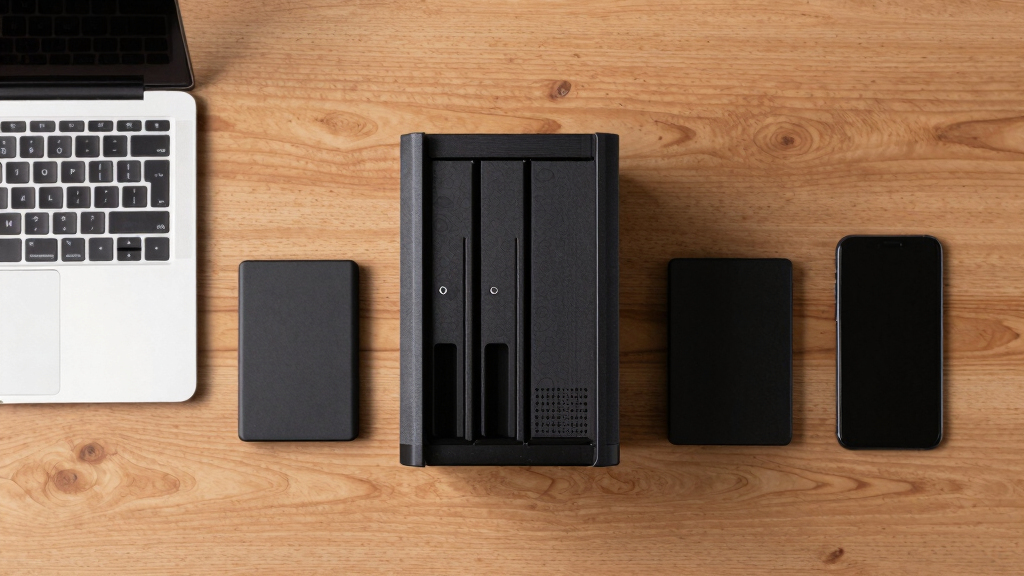
How We Picked
Products were evaluated based on a combination of performance metrics, build quality, expandability, and user experience. I prioritized models with robust CPUs, ample RAM, and fast networking options like 10GbE or higher, since these are critical for Plex streaming and large backups. Cost-effectiveness was also considered, ensuring that the products offer good value relative to their features. To determine the ranking, I looked at how well each NAS supports media playback, storage scalability, and ease of management, ensuring they meet the needs of both casual users and power users. This approach ensures that each pick serves a specific role while providing a clear comparison point for buyers.Factors to Consider When Choosing Best 6 Bay Nas For Plex And Backups
Choosing the best 6 bay NAS for Plex and backups involves considering several key factors. It’s not just about raw specs; understanding how these features align with your media needs, network environment, and future plans helps avoid costly mistakes. A well-chosen NAS can serve as the backbone of your digital ecosystem, so weighing each factor carefully ensures long-term satisfaction.Processor Performance and RAM
The CPU and RAM determine how smoothly your NAS handles media transcoding, multitasking, and large backups. For Plex, a capable processor like an Intel i5 or AMD R7 is often necessary for 4K streaming without hiccups. RAM should be at least 8GB for most users, but more memory helps with caching and running additional apps. Skimping on processor power can lead to buffering issues, especially with high-bitrate streams, so invest where it counts.
Network Connectivity
Fast network interfaces such as 10GbE dramatically reduce transfer times, especially for large media files and backups. Many 6 bay NAS now include dual 2.5GbE or higher ports, which should be prioritized if your network infrastructure supports it. Using slower Gigabit Ethernet can bottleneck data transfers, making backups take longer and Plex streaming less reliable. Consider future-proofing your setup by choosing models with multi-gig ports if your budget allows.
Expandability and Storage Options
Beyond the six bays, look for features like M.2 NVMe slots for caching, PCIe expansion slots, and compatibility with larger drives. These options extend the lifespan and utility of your NAS, especially as your media library grows. Keep in mind, however, that some models may have limited M.2 slots or fewer PCIe options, restricting future upgrades. Balance current needs with potential growth to avoid outgrowing your device prematurely.
Ease of Use and Ecosystem
User-friendly interfaces and reliable software ecosystems matter immensely, especially for those new to NAS. Synology’s DSM and QNAP’s QTS are known for intuitive management, but some models may require more technical knowledge. Simplified setup processes and good customer support can save time and frustration. Also, consider community support and available apps for Plex and backups to ensure smooth ongoing operation.
Price and Total Cost of Ownership
While higher-end models offer more power and expandability, they come at a premium. Budget-conscious buyers should focus on core features like CPU, RAM, and network interfaces, but be mindful of potential future costs for drives, expansion cards, or accessories. Conversely, investing more upfront can reduce the need for upgrades later, especially if you plan to run demanding media or backup workloads. Balancing initial costs with long-term value is key.
Frequently Asked Questions
Is a 6 bay NAS enough for a large Plex media library?
Yes, a 6 bay NAS typically provides ample space for a sizable Plex library, especially when combined with high-capacity drives. It allows for redundancy and future expansion, making it suitable for most home media collections. However, if your library exceeds 40TB or you need multiple simultaneous streams at 4K, consider models with faster CPUs and more RAM to handle transcoding smoothly.
Should I prioritize network speed over CPU power for Plex streaming?
Both matter, but for Plex, CPU power often takes precedence because transcoding is CPU-intensive. A fast network ensures quick data transfer, but without a capable processor, your streams may buffer or require lower quality settings. For a more seamless experience, choose a NAS with at least a quad-core processor and modern network interfaces like 10GbE if your network supports it.
Can I upgrade RAM or storage later on these NAS models?
Most 6 bay NAS allow for RAM upgrades, which can boost performance, especially for multitasking and transcoding. Storage upgrades are straightforward—adding drives or replacing them with higher-capacity models is common. However, check each model’s specifications for maximum supported RAM and drive configurations before making a purchase to ensure future expandability.
Is a diskless NAS a good choice for Plex and backups?
Yes, a diskless NAS offers flexibility, allowing you to choose drives that meet your capacity and performance needs. This approach is often more cost-effective upfront and lets you upgrade drives as your storage needs grow. Just ensure you select drives compatible with your NAS and plan your RAID setup to balance redundancy and capacity effectively.
How much should I spend for a good 6 bay NAS for Plex and backups?
Expect to spend between $700 and $1,200 for a solid 6 bay NAS with good performance, network features, and expandability. Cheaper models may lack powerful CPUs or fast networking, limiting Plex transcoding or backup speeds. Investing more can provide a smoother experience, especially if you plan to run multiple streams or large backups regularly.
Conclusion
For most users, the QNAP TS-673A-8G offers the best overall balance of power, expandability, and ease of use, making it ideal for media enthusiasts and backup needs alike. Budget-conscious buyers or those new to NAS should consider the Synology DS620slim for simplicity and space savings. Power users seeking maximum performance and future-proofing may prefer high-end models like the Ugreen NAS DXP6800 Plus or AOOSTAR WTR MAX with advanced networking and multi-NVMe slots. Each choice should align with your current requirements and long-term plans, ensuring your investment supports your media and backup needs for years to come.