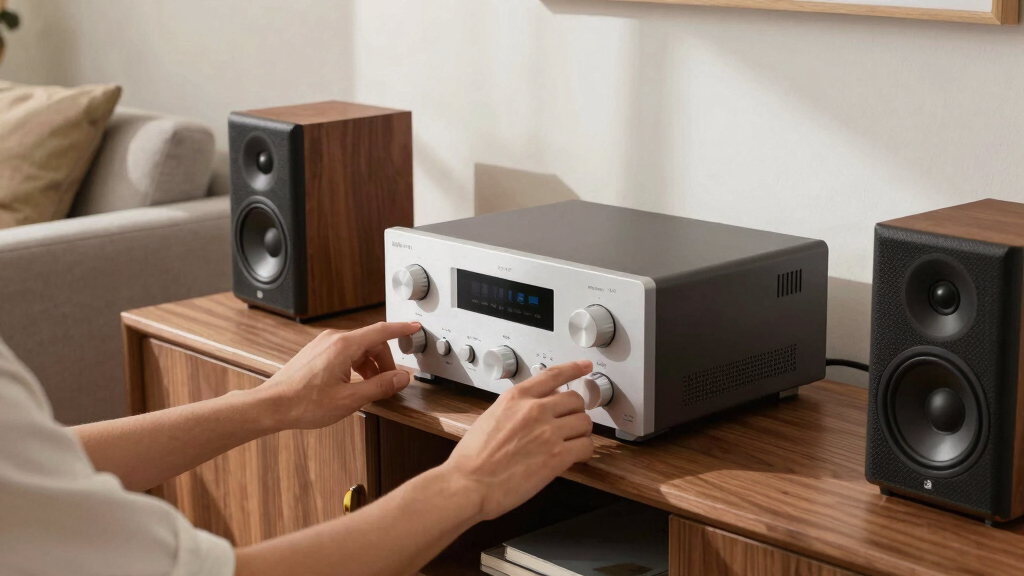

If you’re starting your journey into high-fidelity audio, choosing the right integrated amplifier can feel overwhelming. The best options for beginners balance ease of use, sound quality, and value without overwhelming you with features. The Denon PMA-600NE stands out as the overall best thanks to its balanced power, built-in DAC, and user-friendly design. For those seeking vintage vibes, the Fosi Audio MC331 offers a tube-based aesthetic at an entry-level price. The main tradeoffs revolve around complexity versus simplicity and up-front cost versus long-term performance. Keep reading for a detailed breakdown of these options and how to pick the best fit for your needs.
Key Takeaways
- The top picks balance sound quality with user-friendly features suitable for beginners.
- Many amplifiers provide built-in DACs and streaming options, but these often come with tradeoffs in complexity or price.
- Tube-based amplifiers like Fosi Audio MC331 offer vintage appeal but may require more maintenance and careful handling.
- Power output varies significantly; beginners should consider their speaker sensitivity and room size to avoid under- or overpowering.
- Build quality and future expandability are worth considering, even at entry levels, to ensure the amplifier remains relevant as skills grow.




More Details on Our Top Picks
Denon PMA-600NE Bluetooth Stereo Amplifier | 2 Channel Amplifier Home Audio | Integrated Amp | 70W x 2 | Built-in DAC & Phono Pre-Amp | Analog Mode | Advanced Ultra High Current Power
The Denon PMA-600NE stands out for its balanced combination of power, digital connectivity, and audio purity, making it ideal for beginners seeking a versatile yet high-quality entry point. Compared to the Yamaha A-S501, it offers a more refined analog experience with dedicated circuit separation that reduces digital interference, while still providing modern features like Bluetooth and multiple digital inputs. The built-in DAC and phono preamp add convenience for vinyl lovers and digital streaming alike, but it sacrifices some advanced tone controls and customization options found in higher-end models. Its 70W per channel into 4 ohms ensures ample volume for most home setups, with a focus on clean, immersive sound. The design emphasizes durability and simplicity, making it accessible without overwhelming the user.
Pros:- Powerful 70W per channel drives most speakers with authority
- Built-in DAC and phono preamp simplify setup for digital and vinyl sources
- Divided circuitry minimizes digital noise for clearer analog sound
- Bluetooth connectivity for wireless streaming
Cons:- Limited tone controls and customization options
- No dedicated loudness or advanced EQ settings
- Relatively basic remote control with minimal features
Best for: Beginners who want a full-featured, reliable amplifier for both digital and analog sources with room to grow.
Not ideal for: Audiophiles looking for extensive tone shaping or advanced room calibration features, as this model prioritizes straightforward operation.
- Power Output:70W x 2 at 4 ohms
- Digital Inputs:2 Optical, 1 Coaxial
- Built-in DAC:Yes, 192kHz/24-bit
- Phono Input:Yes
- Bluetooth:Yes
- Weight:18 Pounds
Bottom line: This amp is perfect for beginners wanting a powerful, straightforward integrated that balances digital convenience with high-quality analog performance.
YAMAHA A-S501BL Natural Sound Integrated Stereo Amplifier (Black)
The Yamaha A-S501BL excels for those who appreciate a classic, warm sound combined with modern digital inputs. It offers 85W per channel, providing ample power and a smooth, natural tone that harks back to vintage hi-fi traditions. Compared with the Denon PMA-600NE, it emphasizes a more organic sound signature with high-quality analog circuitry, making it ideal for listeners prioritizing musicality over feature density. Its versatile input options include digital coaxial and optical connections, as well as a dedicated phono stage for vinyl, but it lacks digital streaming capabilities or Bluetooth connectivity. The straightforward interface and sturdy build make it accessible for those new to hi-fi but who want reliable performance.
Pros:- High power output of 85W per channel supports demanding speakers
- Rich, warm sound signature ideal for musical immersion
- Includes both optical and coaxial digital inputs plus phono stage
- Solid construction and straightforward controls
Cons:- No Bluetooth or built-in streaming services
- Limited digital features compared to more modern amps
- Lacks advanced room calibration or tone shaping options
Best for: Music lovers seeking a warm, natural sound with sufficient power and simple setup for traditional stereo listening.
Not ideal for: Listeners who want integrated streaming or wireless features, as this model focuses on pure analog and digital inputs without wireless connectivity.
- Power Output:85W x 2 at 8 ohms
- Digital Inputs:1 Coaxial, 1 Optical
- Phono Stage:Yes
- Weight:22.7 Pounds
- Inputs:Multiple analog including Phono
- Build Quality:Durable metal chassis
Bottom line: This amplifier is suited for those who value a warm, natural tone and simplicity over digital streaming features.
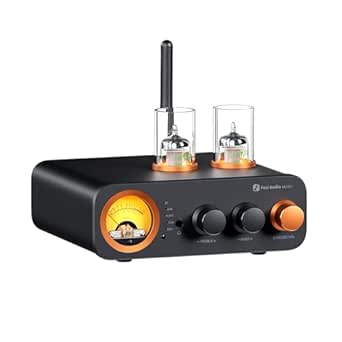
Fosi Audio MC331 Tube Integrated Amplifier with DAC, 2 Channel Home Audio Stereo Power Amp for HiFi Bookshelf Speakers/3.5mm Headphones, Vintage VU Meter Preamp with Bluetooth and USB/Opt/Coax/RCA
The Fosi MC331 combines vintage aesthetics with versatile features, making it a compelling choice for beginners who want a distinctive look and flexible connectivity. Its vacuum tube design and VU meter evoke classic hi-fi gear, but it delivers a surprisingly robust 105W per channel into 4 ohms, comparable to much more expensive models. Compared to the Yamaha R-N800A, it offers a more nostalgic, visual appeal and includes Bluetooth, USB, optical, coaxial, and RCA inputs, supporting a wide range of sources. However, its tube-based sound can be more colored and less neutral than transistor amps like the Denon PMA-600NE, which might not suit all tastes. It’s user-friendly with remote control and a replaceable tube design, allowing customization of tone and character.
Pros:- Distinctive vintage look with vacuum tubes and VU meter
- Powerful 105W per channel supports most bookshelf speakers
- Supports multiple digital and analog sources including Bluetooth and USB
- Remote control for convenient operation
Cons:- Tube sound may be overly colored for some listeners
- Less neutral tonal balance compared to transistor amps
- Bulkier due to vintage design elements
Best for: Beginners who want a visually striking amplifier with broad source support and a warm, vintage tone.
Not ideal for: Listeners seeking a neutral, audiophile-grade sound without coloration or vintage aesthetics, as the tubes add a distinctive character.
- Power Output:105W x 2 at 4 ohms
- Inputs:Bluetooth, USB, Coax, Optical, RCA
- VU Meter:Yes
- Tube Type:5725W vacuum tubes
- Remote Control:Included
- Size:Compact
Bottom line: Ideal for those wanting a nostalgic aesthetic paired with modern versatility and a warm sound signature.
Advance Paris A12 Classic Integrated Amplifier
The Advance Paris A12 offers a hybrid Class A/AB design that delivers impressive power and classic styling, making it suitable for those wanting both vintage appeal and modern performance. With up to 190W into 8 ohms and 280W into 4 ohms, it supports demanding speakers with ease, surpassing many beginner amps in raw power. Compared to the Yamaha A-S501, it features balanced XLR inputs, a high-quality phono stage, and oversized toroidal transformers that ensure low noise and dynamic delivery. Its sleek brushed aluminum chassis, paired with dual VU meters, exudes a premium aesthetic. The tradeoff is the increased complexity and size, which may be less suitable for compact spaces or those new to hi-fi who prefer simplicity.
Pros:- High power output supports demanding and larger speakers
- Hybrid Class A/AB architecture delivers warm yet dynamic sound
- Includes balanced XLR, multiple RCA, optical, coaxial, and USB-B inputs
- Premium build with iconic dual VU meters
Cons:- Heavier and larger, less suitable for small spaces
- More complex setup with multiple input options
- Higher price point for a beginner’s entry-level amplifier
Best for: Beginners seeking a high-powered, hybrid amplifier with a classic look and comprehensive connectivity for larger or more demanding speakers.
Not ideal for: Those with limited space or who prefer a minimalist setup, as its size and complexity are greater than typical entry-level models.
- Power Output:190W x 2 at 8 ohms
- Inputs:XLR, RCA, Optical, Coaxial, USB
- Transformers:Oversized toroidal
- Design:Brushed aluminum with dual VU meters
- Weight:Approximately 30 Pounds
Bottom line: Best suited for newcomers who want a high-capacity, visually striking amplifier capable of powering demanding speakers with ease.
Yamaha R-N800A Network Receiver with Phono and Built-in DAC, Silver
The Yamaha R-N800A integrates high-resolution digital features with traditional stereo power, making it excellent for beginners who want seamless access to streaming and vinyl. Its ESS SABRE ES9080Q DAC supports DSD 11.2 MHz and high-res PCM, ensuring superior audio fidelity from digital sources. Compared to the Denon PMA-600NE, it offers built-in Wi-Fi, streaming apps, and Yamaha’s proprietary YPAO-R.S.C. room calibration, providing a more tailored listening experience. The 100W per channel output delivers enough power for most homes, but its digital focus means it lacks direct Bluetooth streaming, requiring external adapters for wireless audio. Its sleek design and intuitive controls make it suitable for those who want modern convenience without sacrificing sound quality.
Pros:- High-performance ESS SABRE DAC supports high-res audio
- Supports DSD 11.2 MHz and 384 kHz PCM playback
- Built-in phono input for vinyl and multiple digital inputs
- Includes Yamaha YPAO room calibration
Cons:- No native Bluetooth streaming; requires external adapters
- Slightly more complex menu system for setup
- Higher price compared to basic amps without streaming
Best for: Beginners who prioritize integrated streaming, high-res digital playback, and vinyl listening in a single, easy-to-use package.
Not ideal for: Listeners who prefer purely analog setups or want extensive wireless streaming without external accessories, as the unit emphasizes wired digital connections.
- Power Output:100W x 2 at 8 ohms
- DAC:ESS SABRE ES9080Q
- High-Res Support:DSD 11.2 MHz, 384 kHz PCM
- Inputs:Phono, digital coaxial, optical
- Wireless:Wi-Fi, supports streaming apps via external device
- Size:Approx. 22 Pounds
Bottom line: Ideal for newcomers seeking a versatile receiver with excellent digital and analog features, including streaming and high-res playback.
R-N600A Network Receiver with Streaming, Phono and Built-in DAC, Silver
This receiver stands out for combining high-resolution music streaming with a dedicated phono input, making it ideal for those who enjoy both vinyl and digital formats. Compared with the Marantz PM6007, it offers more advanced streaming options, including high-res DSD playback, thanks to its ESS SABRE DAC, which translates to superior sound clarity for digital files. However, its focus on network features means it may lack the raw power some audiophiles seek for demanding speakers. The built-in DAC and optical connections ensure versatile integration with TVs and other devices. This choice is perfect for beginners who want a comprehensive, modern listening experience without sacrificing vinyl playback.
Pros:- High-resolution DSD playback up to 11.2 MHz
- Built-in ESS SABRE DAC offers superior sound clarity
- Dedicated phono input for vinyl enthusiasts
- Network capabilities with streaming and TV audio
Cons:- Limited power output may not drive large or demanding speakers
- Less focus on raw wattage compared to traditional amps
Best for: Audiophiles starting out who want a versatile receiver with excellent streaming and vinyl support
Not ideal for: Users seeking maximum power output for large rooms or demanding speakers, as its focus is on quality, not volume
- High-Resolution Playback:DSD 11.2 MHz / 384 kHz
- DAC:ESS SABRE ES9010K2M
- Inputs:Phono, Optical, USB
- Network Capability:Streaming, Wi-Fi
- Power Output:Not specified
- Dimensions:Not specified
- Weight:Not specified
- Built-in DAC:Yes
Bottom line: This receiver is best suited for beginners who prioritize streaming quality and vinyl playback in a versatile, all-in-one unit.
Denon PMA-900HNE Integrated Stereo Amplifier 85Wx2, Advanced High Current Circuit, Built-in HEOS, Bluetooth & AirPlay 2, Amazon Alexa, MC/MM Phono Equalizer, Hi-Res Certified, Home Amplifier
This amp excels for those seeking multi-room streaming and voice control integration, thanks to its built-in HEOS and compatibility with Alexa, Siri, and Google Assistant. Unlike the Marantz PM6007, it offers multi-room capabilities and extensive wireless streaming options, making it ideal for users who want to expand their audio system across multiple rooms. Its 85W x 2 power rating ensures it can drive a wide range of speakers with clarity and impact. The inclusion of a dedicated phono input with MC/MM support makes vinyl playback accessible, while multiple optical and coaxial inputs support home theater setups. The tradeoff is that its focus on connectivity and streaming may compromise some audiophile purity for convenience. This model is best for beginners who want a feature-rich, connected home audio system.
Pros:- Built-in HEOS multi-room streaming
- Voice control compatible with Alexa, Siri, and Google Assistant
- Multiple high-quality digital inputs
- Powerful 85W x 2 output
Cons:- Complex setup may overwhelm beginners seeking simplicity
- Less emphasis on high-end analog audio fidelity
Best for: Homeowners looking for an integrated amplifier with multi-room streaming and voice control
Not ideal for: Audiophiles who prioritize high power output or pure analog sound over streaming features
- Power Output:85W x 2
- Streaming:HEOS, AirPlay 2
- Voice Control:Alexa, Siri, Google
- Inputs:Optical, Coaxial, Phono
- Built-in DAC:Yes
- Wi-Fi:Yes
- Bluetooth:Yes
- Dimensions:Not specified
Bottom line: This amplifier suits beginners eager to combine streaming, voice control, and vinyl in a versatile, modern package.
Dayton Audio HTA200 Integrated Stereo Hybrid Tube Amplifier 200 Watts
This hybrid tube amplifier appeals to beginners who want a striking vintage look combined with warm, musical sound. Its 200W power handling makes it suitable for larger rooms or speakers that need a bit more juice. The tube preamp offers a charming, rich tonal character, comparable to more expensive vintage gear but with modern reliability. Unlike the Marantz PM6007, which leans toward refined clarity, the Dayton HTA200 emphasizes character and presence, making it ideal for relaxed, immersive listening. Its versatile connectivity includes RCA, optical, Bluetooth, and a USB DAC, accommodating a wide range of sources. However, its larger size and vintage style might not fit into minimalist modern setups. This amp is best for beginners who desire a classic look and a warm, engaging sound profile.
Pros:- High power output at 200W
- Hybrid tube design for warm, musical sound
- Multiple inputs including Bluetooth and USB DAC
- Stylish vintage front panel with VU meters
Cons:- Larger footprint may not suit small spaces
- Sound character may not suit those seeking clinical accuracy
Best for: Vintage style lovers and those seeking a powerful, character-rich amp for large or demanding speakers
Not ideal for: Minimalist or space-constrained setups, due to its size and aesthetic
- Power Output:200W
- Inputs:RCA, Optical, Bluetooth, USB
- Tube Preamp:Yes
- Display:VU meters
- Type:Hybrid tube/solid-state
- Dimensions:Not specified
- Weight:Not specified
- Built-in DAC:Yes
Bottom line: This amplifier is perfect for beginners wanting a powerful, vintage-inspired unit with a warm, musical presentation.
Marantz PM6007 45 Watt 2 Channel Integrated Stereo Amplifier (Black)
This Marantz model makes the list for its excellent balance of sound quality, power, and straightforward operation. Its 45W per channel power rating is sufficient for most small to medium rooms, and the DAC provides clear digital conversion, outperforming basic integrated amps. Unlike the Dayton HTA200, it emphasizes cleaner, more neutral sound without added character, making it suitable for users who want a true-to-source listening experience. Its compact size and simple interface make it accessible for beginners. The main tradeoff is that it lacks streaming features—users will need additional components for wireless or multi-room setups. This amplifier is ideal for newcomers who prioritize sound fidelity with straightforward operation.
Pros:- Balanced, natural sound profile
- High-quality DAC for digital sources
- Compact and easy to operate
- Adequate 45W power for typical listening rooms
Cons:- No built-in streaming or wireless features
- Limited power for larger or demanding speakers
Best for: Beginners seeking a reliable, high-quality stereo amplifier with excellent digital and analog sound
Not ideal for: Users who want built-in streaming or multi-room capabilities, as it’s focused on pure stereo sound
- Power Output:45W per channel
- DAC:Cirrus Logic CS3310
- Inputs:RCA, Optical, Coaxial
- Size:Compact
- Channels:2
- Weight:Not specified
- Dimensions:17.3 x 14.6 x 4.1 inches
- Built-in DAC:Yes
Bottom line: This amp offers a straightforward, high-fidelity experience for beginners who don’t need wireless features.
NAD C3030 Integrated Stereophonic Amplifier – 50W x 2 HybridDigital Amp with PCM5242 DAC, MM Phono Stage, HDMI eARC, Bluetooth aptX HD & Dual VU Meters
The NAD C3030 stands out for its balanced combination of modern digital features and classic analog controls, making it a versatile choice for beginners seeking a true hi-fi experience. Its hybriddigital design delivers clean, high-current power that can easily drive a broad range of speakers, surpassing the simpler output of models like the Yamaha R-N2000A. The inclusion of a dedicated MM phono stage, PCM5242 DAC, and HDMI eARC support ensures it copes well with vinyl, digital, and even TV audio, providing a comprehensive setup. The dual VU meters add nostalgic visual feedback, which is rare at this price point. Compared to the AIYIMA A80, the NAD’s build quality and sound control are more refined, though it is less compact and costs more. Its main tradeoff involves size and price—less ideal for limited space or budget-conscious beginners.
Pros:- Balanced hybriddigital power for clean, detailed sound
- Includes high-quality PCM5242 DAC and MM phono stage
- Retro-inspired dual VU meters add character
Cons:- Larger size may not suit small spaces
- Higher price compared to entry-level amps
Best for: Beginners who want a reliable, stylish amplifier with digital and analog versatility for a full hi-fi setup.
Not ideal for: People with very limited space or those seeking ultra-budget options, as the NAD is relatively larger and pricier.
- Power Output:50W x 2 into 8Ω
- DAC:Texas Instruments PCM5242
- Inputs:MM Phono, HDMI eARC, Bluetooth aptX HD
- Design:HybridDigital
- Features:Dual VU meters, remote control, space-saving chassis
Bottom line: Ideal for beginners ready to invest in a durable, feature-rich amplifier that combines modern digital and classic analog features.
AIYIMA A80 Bluetooth Stereo Amplifier DAC HiFi Home Audio Component TPA3255 with PFFB,2 Channel Hi-Res Class D Power Amp | PC-USB COA Opt Inputs,Digital VU Meter | Pre-Out | TRS Balanced Input |Tone
The AIYIMA A80 makes a compelling case for budget-conscious beginners who want high power and modern features without sacrificing sound quality. Its TPA3255 Class D amp supports up to 300W per channel and offers ultra-low distortion, making it comparable to more expensive options like the Yamaha R-N2000A in terms of clarity and power, albeit with less high-end refinement. The inclusion of a high-res decoder, digital inputs, and a digital VU meter provides versatility for multiple sources and visual feedback. Unlike the Yamaha R-N2000A, the A80 lacks built-in Wi-Fi and streaming, but it compensates with a compact footprint and affordability. The tradeoff involves fewer media features and a simpler interface, which might be less ideal for users seeking integrated streaming.
Pros:- Supports up to 300W per channel with low distortion
- Multiple input options including Bluetooth, PC-USB, optical, coaxial
- Compact and stylish with digital VU meter
Cons:- Lacks Wi-Fi and streaming capabilities
- No built-in DAC for high-resolution streaming
Best for: Beginners who prioritize high power output and extensive connectivity at a budget-friendly price.
Not ideal for: Audiophiles or users seeking integrated streaming and network features, as the A80 focuses on raw power and basic digital inputs.
- Power Output:up to 300W x 2 at 4Ω
- DAC:ES9038Q2M
- Inputs:PC-USB, Optical, Coaxial, Bluetooth
- Features:Digital VU meter, tone control, pre-out
- Dimensions:6.1 x 4.84 x 1.61 inches
Bottom line: Best suited for beginners who want powerful, flexible amplification without the need for extensive media streaming features.
Yamaha Audio Yamaha R-N2000A Hi-Fi Network Receiver with Streaming, Phono and DAC – Silver
The Yamaha R-N2000A offers a significant step up for beginners seeking high-end features combined with Yamaha’s renowned sound quality. Its ESS SABRE ES9026PRO DAC supports native DSD 11.2 MHz and high-resolution PCM, delivering pristine clarity that surpasses many entry-level amplifiers like the NAD C3030. The toroidal power transformer and high-quality components ensure spacious, detailed sound with a natural warmth. Its built-in MusicCast system allows seamless streaming from popular services, making it a more integrated choice for modern users. The receiver’s design balances classic aesthetics with advanced technology, but its complexity and price make it less suitable for casual or space-constrained setups. The main tradeoff involves cost and setup complexity, which might overwhelm some beginners.
Pros:- Exceptional high-resolution DAC with native DSD support
- Powerful output (190W x 7 channels) with spacious sound
- Built-in MusicCast for streaming and multi-room audio
Cons:- High cost may be prohibitive for some beginners
- Complex features might be overwhelming for newcomers
Best for: Beginners who want a sophisticated, future-proof amplifier with excellent streaming, phono, and high-resolution audio support.
Not ideal for: Those with tight budgets or minimal technical experience, as the unit requires more setup and investment.
- Power Output:190W x 7 channels
- DAC:ESS SABRE ES9026PRO
- Inputs:Streaming, Phono, USB, HDMI
- Connectivity:MusicCast, Wi-Fi, Bluetooth
- Features:High-Resolution Audio, Multi-room streaming
Bottom line: Ideal for beginners ready to invest in a high-quality, feature-rich receiver that offers excellent future-proofing and audio fidelity.
How We Picked
Our evaluation focused on amplifiers that suit entry-level users, prioritizing ease of use, sound quality, build robustness, and value. We compared power output to ensure suitability for typical home setups, and checked for essential features like built-in DACs, Bluetooth, and phono stages that benefit beginners. Compatibility with common speakers was a key factor, along with user interface simplicity. Products were ranked based on a combination of performance, reliability, feature set, and affordability, ensuring the top choices offered a balanced package for newcomers to hi-fi audio.Factors to Consider When Choosing Best Hi Fi Integrated Amplifiers For Beginners
When selecting a hi-fi integrated amplifier as a beginner, it’s vital to consider several key factors that influence both your immediate experience and future upgrades. Understanding these considerations can help you avoid common pitfalls like overpaying for unnecessary features or choosing an underpowered model that can’t drive your speakers effectively.Power Output and Speaker Compatibility
Matching your amplifier’s power output with your speakers’ requirements is essential. An underpowered amp may struggle to deliver clean sound at higher volumes, while an overpowered one risks damaging sensitive speakers. For most beginners, a model offering around 50-70W per channel provides enough headroom for typical room sizes and speaker sensitivities, balancing performance and safety.
Built-in Features and Connectivity
Features like DACs, Bluetooth, and phono stages add convenience and flexibility. Beginners benefit from integrated streaming, easy connectivity, and support for vinyl. However, beware of overly complex interfaces or features you won’t use, as they can complicate operation. Prioritize models that offer essential features in an intuitive package to simplify your setup process.
Ease of Use and Interface
Simplicity in design matters more for beginners. Look for amplifiers with straightforward controls, clear displays, and minimal setup steps. Complicated menus or excessive buttons can detract from your listening experience and discourage ongoing use. User reviews often highlight models that are genuinely beginner-friendly, so consider those insights during your choice.
Build Quality and Expandability
While affordability is key, investing in a well-built amplifier can pay off through increased durability and better sound. Also, consider future expandability—if you plan to upgrade speakers or add components later, choose a model that can accommodate those changes without requiring a new amplifier. This foresight can save you money and effort down the line.
Price and Value
Beginners often assume more expensive equals better, but many affordable models deliver excellent performance for their price. Focus on value—features that matter most for your setup and future plans—rather than just price tags. Sometimes, spending a bit more initially can provide better longevity and satisfaction, especially if you want a model that grows with your skills.
Frequently Asked Questions
Is a built-in DAC necessary for a beginner amplifier?
Having a built-in DAC can significantly simplify your setup, especially if you plan to stream music or connect digital sources directly. It allows you to connect a computer or mobile device without needing an external DAC, reducing clutter and complexity. For most beginners, this feature offers convenience and better sound quality without extra equipment, making it a worthwhile consideration.
Should I prioritize power output or sound quality?
For most home setups, sound quality and speaker compatibility are more critical than raw power. An underpowered amplifier may struggle with larger or less sensitive speakers, but exceeding your needs doesn’t necessarily improve sound. Focus on a model with enough power for your room size and speaker sensitivity, ensuring clean, distortion-free sound at typical listening levels.
Are tube amplifiers suitable for beginners?
Tube amplifiers like the Fosi Audio MC331 offer a vintage aesthetic and unique sound characteristics but can require more careful handling and maintenance. They are generally more delicate and may need bias adjustments or tube replacements over time. For beginners seeking simplicity and low maintenance, solid-state models often provide more reliability and straightforward operation.
Can I use a network receiver as an entry-level amplifier?
Yes, network receivers like the Yamaha R-N800A combine amplification with streaming and digital connectivity, making them excellent choices for beginners wanting integrated features. They typically offer user-friendly interfaces and multiple source options, but they tend to be more expensive and bulkier. Consider whether you value streaming and smart features enough to justify the cost.
How important is future expandability in a beginner amp?
Thinking ahead about adding speakers, a turntable, or other components can save you money and effort. Choosing an amplifier with multiple inputs, pre-outs, or speaker terminals allows flexibility for future upgrades. While it might mean paying a bit more initially, this foresight helps ensure your system evolves smoothly without needing a new amplifier sooner than expected.
Conclusion
The best overall pick for most beginners is the Denon PMA-600NE due to its balanced power, user-friendly features, and built-in DAC. If you want a more budget-friendly option that still offers solid sound, the Fosi Audio MC331 provides vintage charm with minimal fuss. For those seeking a high-end experience and future-proofing, models like the Yamaha R-N2000A or Marantz PM6007 cater to more dedicated audiophiles. Your ideal choice depends on your budget, preferred features, and plans for expansion—consider these factors carefully to enjoy your first steps into quality hi-fi sound.