The best 4K gaming monitors balance sharp detail with refresh rates your gaming system can actually use. My best overall pick is the ASUS TUF Gaming VG27UQ1A for its 27-inch 4K resolution and 160Hz refresh rate, while the LG UltraGear 32GX850A-B stands out for glossy OLED contrast and dual-mode speed, and the Dell S2725QS offers a more approachable 120Hz option. The main tradeoffs are pixel density versus screen size, OLED contrast versus burn-in precautions, and high refresh rates versus the graphics hardware needed to drive them. Dual-mode displays also make you choose between 4K clarity and a faster lower-resolution mode. Read on for how all 11 options compare and which one best fits your setup.

Get the latest gadgets delivered free with Prime
- Fast, free delivery on millions of items
- Prime Video, Amazon Music and more included
- Member-only deals all year
Complete the kit



Key Takeaways
- High refresh at 4K is available across several 27-inch picks: ASUS TUF, Amzfast, and LG’s 27-inch UltraGear all offer fast modes, but the Amzfast and LG add lower-resolution modes for even higher refresh rates.
- OLED is the standout for contrast, not a universal upgrade: the LG 32GX850A-B and ASUS ROG Swift PG32UCDM3 target buyers who value deep blacks and rapid response, while IPS options suit those wary of OLED care and static-image wear.
- Screen size changes the experience as much as refresh rate: 27-inch 4K models keep a compact, sharp desktop, the 32-inch OLEDs give games more presence, and Samsung’s 57-inch Odyssey Neo G9 demands a much larger desk and powerful system.
- Not every 4K monitor in the lineup is equally gaming-focused: the Dell S2725QS and Sceptre U275W-UPT lean toward versatile everyday use, while the 120Hz CRUA and higher-refresh gaming models better address motion and responsiveness.
- Dual-mode specifications need a use-case check: Amzfast and the two LG gaming options let buyers trade resolution for speed, but the faster mode does not deliver the same 4K detail.
| Amzfast 27-Inch 4K Dual-Mode Gaming Monitor, 160Hz UHD / 320Hz FHD |  | Best for Flexible Dual-Mode Gaming | Screen size: 27 inches | Panel: Fast IPS | Resolution: 3840 × 2160 (4K UHD) | VIEW LATEST PRICE | See Our Full Breakdown |
| ASUS TUF Gaming VG27UQ1A 27-Inch 4K 160Hz Gaming Monitor |  | Best for Straightforward 4K Gaming | Screen size: 27 inches | Panel: Fast IPS | Resolution: 3840 × 2160 (4K UHD) | VIEW LATEST PRICE | See Our Full Breakdown |
| LG UltraGear 32GX850A-B 32-Inch 4K UHD Glossy OLED Gaming Monitor, Dual-Mode 165Hz/330Hz, 0.03ms, G-SYNC Compatible, FreeSync Premium Pro, Adjustable Stand |  | Best Premium OLED | Screen size: 32 inches | Display type: Glossy OLED | Resolution: 3840 × 2160 (4K UHD) | VIEW LATEST PRICE | See Our Full Breakdown |
| ViewSonic VX2730D-4K 27-Inch 4K UHD Gaming Monitor |  | Best for Compact Esports Framing | Screen size: 27 inches | Panel: IPS | Resolution: 3840 × 2160 (4K UHD) | VIEW LATEST PRICE | See Our Full Breakdown |
| Sceptre U275W-UPT 27-Inch 4K UHD IPS Monitor |  | Best for Casual 4K Gaming | Screen size: 27 inches | Panel: IPS | Resolution: 3840 × 2160 (4K UHD) | VIEW LATEST PRICE | See Our Full Breakdown |
| CRUA 27-Inch 4K UHD 120Hz IPS Gaming Monitor |  | Best for a Simple 4K Setup | Screen size: 27 inches | Resolution: 3840 × 2160 (4K UHD) | Refresh rate: 120 Hz | VIEW LATEST PRICE | See Our Full Breakdown |
| ASUS ROG Swift PG32UCDM3 32-Inch 4K 240Hz Tandem QD-OLED Gaming Monitor |  | Best Premium 4K Gaming Monitor | Screen size: 32 inches | Resolution: 3840 × 2160 (4K UHD) | Refresh rate: 240 Hz | VIEW LATEST PRICE | See Our Full Breakdown |
| LG UltraGear 27-Inch 4K UHD IPS Gaming Monitor, Dual Mode 180Hz/360Hz |  | Best for Switching Between 4K and Competitive Play | Screen size: 27 inches | Resolution: 3840 × 2160 (4K UHD) | Dual Mode refresh rates: Up to 180Hz at 4K; up to 360Hz at Full HD | VIEW LATEST PRICE | See Our Full Breakdown |
| Acer Nitro VG270K V4 27-Inch 4K UHD IPS Gaming Monitor | 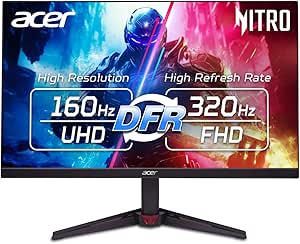 | Best for High-Refresh 4K on an IPS Panel | Screen size: 27 inches | Resolution: 3840 × 2160 (4K UHD) | Refresh rates: Up to 160Hz at 4K; up to 320Hz at 1080p with DFR | VIEW LATEST PRICE | See Our Full Breakdown |
| Dell 27-Inch S2725QS 4K UHD IPS Monitor, 120Hz, FreeSync Premium |  | Best for Everyday Gaming and Desk Use | Screen size: 27 inches | Resolution: 3840 × 2160 (4K UHD) | Refresh rate: Up to 120Hz | VIEW LATEST PRICE | See Our Full Breakdown |
| Samsung 57-Inch Odyssey Neo G9 Dual UHD 1000R Curved Gaming Monitor (G95NC) | 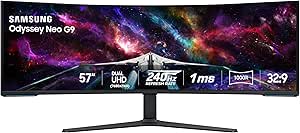 | Best for an Ultrawide 4K Battlestation | Screen size: 57 inches | Resolution: Dual UHD | Aspect ratio: 32:9 | VIEW LATEST PRICE | See Our Full Breakdown |
| 4K gaming monitor | Screen size | Resolution | Panel | Response time |
|---|---|---|---|---|
| Amzfast 27-Inch 4K Dual-Mode G | 27 inches | 3840 × 2160 (4K UHD) | Fast IPS | 1ms MPRT |
| ASUS TUF Gaming VG27UQ1A 27-In | 27 inches | 3840 × 2160 (4K UHD) | Fast IPS | 1ms |
| LG UltraGear 32GX850A-B 32-Inc | 32 inches | 3840 × 2160 (4K UHD) | — | 0.03ms GtG |
| ViewSonic VX2730D-4K 27-Inch 4 | 27 inches | 3840 × 2160 (4K UHD) | IPS | 0.5ms MPRT |
| Sceptre U275W-UPT 27-Inch 4K U | 27 inches | 3840 × 2160 (4K UHD) | IPS | 1ms |
| CRUA 27-Inch 4K UHD 120Hz IPS | 27 inches | 3840 × 2160 (4K UHD) | IPS | — |
| ASUS ROG Swift PG32UCDM3 32-In | 32 inches | 3840 × 2160 (4K UHD) | Tandem QD-OLED | 0.03 ms |
| LG UltraGear 27-Inch 4K UHD IP | 27 inches | 3840 × 2160 (4K UHD) | IPS | 1ms GtG |
| Acer Nitro VG270K V4 27-Inch 4 | 27 inches | 3840 × 2160 (4K UHD) | IPS | Up to 0.5ms GTG |
| Dell 27-Inch S2725QS 4K UHD IP | 27 inches | 3840 × 2160 (4K UHD) | IPS | — |
| Samsung 57-Inch Odyssey Neo G9 | 57 inches | Dual UHD | — | 1 ms GTG |
More Details on Our Top Picks
Amzfast 27-Inch 4K Dual-Mode Gaming Monitor, 160Hz UHD / 320Hz FHD
I’d pick the Amzfast AMZG27F6U for a PC setup that shifts between detailed 4K games and competitive play where frame rate takes priority. Its 160Hz at 4K keeps high-resolution gaming fluid, while the Full HD mode reaches 320Hz for supported games—though that jump in refresh rate comes with a clear drop in detail. Compared with the ViewSonic VX2730D-4K, Amzfast offers a higher listed refresh rate in both modes, while ViewSonic’s 24.5-inch esports mode may suit players who want a smaller, focused image area.
HDMI 2.1, DisplayPort 1.4, a fully adjustable stand, and eye-care features make this a flexible desk monitor. The tradeoff is typical IPS contrast at 1000:1, and its HDR 400 label should not be mistaken for OLED-like dark-scene depth. I’d skip it if you want one resolution for every game or stronger contrast.
Pros:- Offers 160Hz gameplay at 4K and a separate 320Hz Full HD mode.
- Includes two HDMI 2.1 and two DisplayPort 1.4 connections.
- Stand adjusts for height, tilt, swivel, and pivot, with 100 × 100 mm VESA support.
- Adaptive Sync and 1ms MPRT target smoother motion, with TÜV-certified eye-care features.
Cons:- The 320Hz mode lowers resolution to Full HD.
- The 1000:1 contrast ratio limits dark-scene depth compared with OLED alternatives.
- HDR 400 is a modest HDR specification, not a guarantee of pronounced highlight impact.
Best for: PC gamers who alternate between 4K single-player games and high-frame-rate Full HD competitive titles.
Not ideal for: Players who want strong dark-room contrast or expect the 320Hz mode to retain 4K resolution.
- Screen size:27 inches
- Panel:Fast IPS
- Resolution:3840 × 2160 (4K UHD)
- Refresh modes:Up to 160Hz at 4K; up to 320Hz at 1920 × 1080
- Response time:1ms MPRT
- HDR:HDR 400
- Adaptive Sync:FreeSync
- Ports:2 × HDMI 2.1; 2 × DisplayPort 1.4
- Stand adjustments:Height, tilt, swivel, and pivot
Our verdict“Choose the Amzfast if you want one 27-inch monitor that can switch between high-refresh 4K and faster Full HD gaming.”
ASUS TUF Gaming VG27UQ1A 27-Inch 4K 160Hz Gaming Monitor
The ASUS TUF Gaming VG27UQ1A suits players who want a fast 4K IPS screen without making dual-mode switching the centerpiece. Its 160Hz refresh rate and 1ms response time are aimed at responsive play at native resolution, while ELMB Sync and support for both FreeSync Premium and G-SYNC Compatible systems give PC gamers useful motion options. Compared with the Amzfast AMZG27F6U, ASUS keeps the focus on 4K rather than adding a 320Hz Full HD mode; Amzfast is the more versatile choice if you regularly play esports titles at lower resolution.
For console owners, HDMI 2.1 supports up to 4K at 120Hz, making this a better fit than a monitor without that stated console capability. The matte Fast IPS panel offers wide viewing angles, but its 1000:1 contrast is an ordinary IPS tradeoff. HDR support is listed without a stated certification, so I wouldn’t choose it for HDR-first gaming.
Pros:- Runs at 4K with a listed 160Hz refresh rate and 1ms response time.
- Supports FreeSync Premium and G-SYNC Compatible systems.
- HDMI 2.1 supports console gaming up to 4K at 120Hz.
- ELMB Sync targets motion blur while adaptive sync helps reduce tearing.
Cons:- The 1000:1 contrast ratio is limited compared with OLED displays.
- HDR support is listed without a specific HDR certification in the supplied specifications.
- Unlike the Amzfast and LG dual-mode options, no higher-refresh Full HD mode is specified.
Best for: PC and console players who want a 27-inch 4K display with a consistent high-refresh setup and broad adaptive-sync support.
Not ideal for: Buyers seeking a dual-mode esports refresh rate, OLED contrast, or a clearly specified HDR certification.
- Screen size:27 inches
- Panel:Fast IPS
- Resolution:3840 × 2160 (4K UHD)
- Refresh rate:160Hz
- Response time:1ms
- Color gamut:95% DCI-P3
- Adaptive Sync:AMD FreeSync Premium; NVIDIA G-SYNC Compatible
- Console support:Up to 4K at 120Hz via HDMI 2.1
- Warranty:3 years
Our verdict“Choose this ASUS for a straightforward high-refresh 4K setup, especially if you’ll connect a current-generation console as well as a PC.”
LG UltraGear 32GX850A-B 32-Inch 4K UHD Glossy OLED Gaming Monitor, Dual-Mode 165Hz/330Hz, 0.03ms, G-SYNC Compatible, FreeSync Premium Pro, Adjustable Stand
The LG UltraGear 32GX850A-B is the image-quality pick in this group: its glossy OLED panel, 1.5M:1 listed contrast ratio, and DisplayHDR True Black 400 support are better suited to dramatic dark scenes than the IPS options. At 32 inches, it also gives 4K games more room to breathe than the 27-inch ASUS TUF VG27UQ1A. Its dual modes reach 165Hz at 4K or 330Hz at Full HD, pairing high-resolution play with a faster option for competitive titles.
The tradeoff is not subtle: the faster mode is Full HD, not 4K, and typical brightness is 275 nits. That may be a limitation in a bright room, even as OLED contrast helps dark content stand out. I’d choose this over the Amzfast for OLED contrast and screen size, but the Amzfast provides more typical IPS-style brightness on paper and may suit brighter desks better.
Pros:- OLED panel and 1.5M:1 listed contrast ratio support deep blacks and strong dark-scene separation.
- Provides 165Hz at 4K and up to 330Hz at Full HD.
- 0.03ms GtG response time and support for G-SYNC Compatible and FreeSync Premium Pro.
- Stand supports height, tilt, swivel, and pivot adjustments.
Cons:- The 330Hz mode uses Full HD rather than 4K resolution.
- Typical brightness is listed at 275 nits, which may constrain use in bright rooms.
- Its 32-inch footprint takes more desk space than the 27-inch alternatives.
Best for: Players who prioritize OLED contrast, a larger 32-inch 4K image, and a high-refresh option for competitive games.
Not ideal for: Gamers in bright rooms who need higher typical brightness, or anyone expecting 330Hz gameplay at 4K.
- Screen size:32 inches
- Display type:Glossy OLED
- Resolution:3840 × 2160 (4K UHD)
- Refresh modes:Up to 165Hz at 4K; up to 330Hz at Full HD
- Response time:0.03ms GtG
- Typical brightness:275 nits
- HDR certification:VESA DisplayHDR True Black 400
- Color gamut:Up to 98.5% DCI-P3
- Adaptive Sync:NVIDIA G-SYNC Compatible; AMD FreeSync Premium Pro
Our verdict“Pick the LG if OLED contrast and a larger 4K screen matter more to you than high brightness or keeping maximum refresh at native resolution.”
ViewSonic VX2730D-4K 27-Inch 4K UHD Gaming Monitor
The ViewSonic VX2730D-4K stands apart with a 24.5-inch esports display mode, which gives players a smaller viewing area without changing monitors. It combines that focused mode with 144Hz at 4K and up to 288Hz at Full HD, so it covers both detailed play and faster competitive sessions. Compared with the Amzfast AMZG27F6U, its maximum refresh figures are lower—particularly in Full HD—but the esports mode gives ViewSonic a more specific appeal for players who prefer a compact image.
FreeSync Premium and G-SYNC compatibility add variable-refresh support, and the ergonomic stand offers useful positioning flexibility. Its 250-nit brightness is modest, however, and the 288Hz mode requires Full HD. Built-in 2W speakers are handy for basic audio, not a substitute for a headset or dedicated speakers. I’d pass if bright-room visibility or high-impact HDR is a priority; the supplied specifications don’t list an HDR certification.
Pros:- Offers 144Hz at 4K and up to 288Hz at Full HD.
- 24.5-inch esports mode provides a smaller, focused image area.
- Supports AMD FreeSync Premium and NVIDIA G-SYNC compatibility.
- Includes HDMI 2.1, DisplayPort, built-in speakers, and an ergonomic stand.
Cons:- The 288Hz refresh rate is available only at Full HD.
- Listed brightness is 250 nits, which may be limiting in a bright room.
- The built-in speakers are rated at 2W and are best treated as basic audio.
Best for: Competitive players who want a 27-inch 4K monitor with an optional smaller esports viewing mode.
Not ideal for: Buyers who need high brightness, strong HDR performance, or the highest available Full HD refresh rate.
- Screen size:27 inches
- Panel:IPS
- Resolution:3840 × 2160 (4K UHD)
- Refresh modes:144Hz at 4K; up to 288Hz at Full HD
- Response time:0.5ms MPRT
- Brightness:250
- Esports mode:24.5-inch viewing mode
- Adaptive Sync:AMD FreeSync Premium; NVIDIA G-SYNC compatible
- Ports:HDMI 2.1; DisplayPort
Our verdict“Choose the ViewSonic if you want 4K gaming with a dedicated smaller esports mode, and skip it if brightness or maximum refresh is your main priority.”
Sceptre U275W-UPT 27-Inch 4K UHD IPS Monitor
The Sceptre U275W-UPT is the least gaming-focused choice here, but it can fit a desk where 4K resolution matters more than high refresh. Its 27-inch IPS panel and matte finish suit mixed work and casual play, while the listed 70Hz refresh rate is a step above a basic 60Hz screen. That remains a long way behind the 144Hz ViewSonic VX2730D-4K or 160Hz ASUS TUF, so I’d reserve this Sceptre for slower-paced games rather than competitive play.
It includes built-in speakers, audio out, and a blue light filter, which can simplify a general-purpose setup. The contrast ratio is listed at 2000:1, but the supplied data does not identify HDR or adaptive-sync support. With only one HDMI port listed and a one-year limited warranty, it offers less gaming-specific flexibility than the other monitors in this batch. I’d choose it for casual 4K use, not as a high-refresh gaming upgrade.
Pros:- Provides 3840 × 2160 resolution on a 27-inch IPS panel.
- Matte finish supports comfortable viewing from multiple angles.
- DisplayPort supports refresh rates up to 70+ Hz.
- Includes built-in speakers, audio out, and a blue light filter.
Cons:- The listed 70Hz refresh rate is far below the 144Hz–160Hz 4K options in this batch.
- Only one HDMI port is listed.
- The supplied specifications do not state adaptive-sync support or an HDR certification.
Best for: Mixed-use buyers who want a 27-inch 4K IPS display for everyday computing and occasional slower-paced gaming.
Not ideal for: Competitive PC gamers or console players seeking high refresh, multiple listed HDMI inputs, or specified adaptive-sync support.
- Screen size:27 inches
- Panel:IPS
- Resolution:3840 × 2160 (4K UHD)
- Refresh rate:70Hz
- Response time:1ms
- Color gamut:100% sRGB
- Contrast ratio:2000:1
- Connectivity:DisplayPort, HDMI, audio out; one HDMI port listed
- Warranty:1-year limited manufacturer warranty
Our verdict“Choose the Sceptre for casual gaming and general 4K desktop use, but look to the ASUS or ViewSonic for smoother high-refresh play.”
CRUA 27-Inch 4K UHD 120Hz IPS Gaming Monitor
The CRUA pairs 4K resolution with 120Hz, giving single-player games sharp detail and smoother motion than a basic 60Hz display. Its IPS panel and FreeSync suit mixed gaming and everyday use, while built-in speakers and tilt adjustment keep the setup straightforward. Compared with the Dell S2725QS, it offers similar resolution and refresh rate, but the Dell lists a more flexible stand with height, swivel, and pivot adjustments. The CRUA instead specifies 120% sRGB coverage; that figure may appeal to buyers who want vivid color, though it does not establish color accuracy. I’d check the stated 21:9 aspect ratio before buying: it is unusual for a 27-inch 4K monitor and may affect how games and video fit. Limited stand movement is another compromise.
Pros:- 4K UHD resolution and 120Hz refresh rate combine detail with smoother gameplay.
- IPS panel lists 178-degree viewing angles.
- FreeSync helps reduce tearing and stutter with compatible systems.
- Built-in speakers, tilt adjustment, and 75 × 75 mm mounting support flexible placement.
Cons:- The listed 21:9 aspect ratio is unusual for a 27-inch 4K monitor and should be verified before purchase.
- Only tilt adjustment is specified, with no listed height, swivel, or pivot movement.
- The one-year warranty is shorter than the three-year coverage listed for the ASUS ROG Swift PG32UCDM3.
Best for: PC or console players who want a straightforward 27-inch 4K, 120Hz IPS display with speakers and FreeSync.
Not ideal for: Buyers who need a fully adjustable stand, verified standard 16:9 proportions, or a clearly specified competitive high-refresh mode.
- Screen size:27 inches
- Resolution:3840 × 2160 (4K UHD)
- Refresh rate:120 Hz
- Panel:IPS
- Aspect ratio:21:9 (as listed)
- Adaptive sync:FreeSync
- Connectivity:HDMI 2.1, DisplayPort 1.4
- Stand and mounting:Tilt; 75 × 75 mm mounting pattern
Our verdict“Choose the CRUA for a simple 4K/120Hz IPS setup with built-in speakers, but verify its aspect ratio and accept limited stand adjustment.”
ASUS ROG Swift PG32UCDM3 32-Inch 4K 240Hz Tandem QD-OLED Gaming Monitor
The ASUS ROG Swift PG32UCDM3 is the lineup’s performance-first choice: its 32-inch 4K Tandem QD-OLED panel combines a 240Hz refresh rate and 0.03ms response time for fast motion, deep blacks, and detailed color. That gives it a clear speed and contrast advantage over the IPS LG 27G810A-B, whose 360Hz mode drops to Full HD rather than remaining at 4K. The ASUS also has a DisplayPort 2.1 connection and USB-C with 90W power delivery, useful for a high-end PC setup or a compatible laptop. OLED ownership still means managing burn-in risk, though OLED Care Pro and the included three-year burn-in coverage offer added safeguards. Its 32-inch size and 19.2-pound weight call for more desk space and care during setup.
Pros:- 4K Tandem QD-OLED pairs 240Hz with a 0.03ms response time.
- High listed contrast and 99.5% DCI-P3 coverage support punchy HDR imagery and vivid color.
- DisplayPort 2.1, two HDMI 2.1 ports, and 90W USB-C power delivery offer broad connectivity.
- OLED Care Pro and three-year warranty coverage that includes burn-in address a key OLED concern.
Cons:- OLED pixels can still suffer burn-in despite the care features and warranty coverage.
- At 19.2 pounds, it is heavier to handle than the 27-inch IPS options such as the Acer Nitro VG270K V4.
- The 32-inch screen requires more desk space than the 27-inch alternatives.
Best for: Enthusiast PC gamers with a powerful graphics card who want 4K OLED contrast, very high refresh, and USB-C laptop charging.
Not ideal for: Budget-conscious players, buyers who leave static desktop elements onscreen for long periods, or anyone seeking a lighter, smaller monitor.
- Screen size:32 inches
- Resolution:3840 × 2160 (4K UHD)
- Refresh rate:240 Hz
- Panel:Tandem QD-OLED
- Response time:0.03 ms
- HDR:VESA DisplayHDR 500 True Black
- Adaptive sync:AMD FreeSync Premium Pro; G-SYNC Compatible
- Connectivity:DisplayPort 2.1 UHBR20, 2 × HDMI 2.1, USB-C with 90W Power Delivery
- Warranty:3 years, including burn-in coverage
Our verdict“Pick the ASUS for premium 4K OLED speed and contrast if you have the hardware, desk space, and willingness to manage OLED care.”
LG UltraGear 27-Inch 4K UHD IPS Gaming Monitor, Dual Mode 180Hz/360Hz
LG’s defining feature is its Dual Mode: play at up to 180Hz in 4K for sharp, fluid visuals, or switch to Full HD for a 360Hz ceiling in supported setups. That flexibility gives it a different competitive angle from the ASUS ROG Swift PG32UCDM3, which keeps its 240Hz mode at 4K but uses an OLED panel and a larger screen. The LG’s IPS panel, 1ms GtG response time, and G-SYNC compatibility plus FreeSync Premium make it a versatile fit for players who alternate between genres or favor high frame rates. Its stand also adjusts for height, tilt, swivel, and pivot—more range than the CRUA’s tilt-only stand. The main compromise is that 360Hz is not available at 4K; the Full HD mode gives up substantial detail.
Pros:- Dual Mode offers up to 180Hz at 4K or 360Hz at Full HD.
- 1ms GtG response time and support for both G-SYNC compatibility and FreeSync Premium suit responsive play.
- Up to 95% DCI-P3 color coverage and DisplayHDR 400 add color and HDR support.
- Height, tilt, swivel, and pivot adjustments provide more positioning options than the CRUA.
Cons:- The 360Hz setting runs at Full HD, not 4K.
- A high refresh rate depends on the connected computer’s graphics capability and configuration.
- IPS cannot match the stated contrast level of the ASUS ROG Swift PG32UCDM3’s QD-OLED panel.
Best for: Competitive players who want one 27-inch monitor for detailed 4K gaming and a separate high-refresh Full HD mode.
Not ideal for: Buyers who want 360Hz while retaining 4K resolution, or who prefer OLED-level contrast over IPS versatility.
- Screen size:27 inches
- Resolution:3840 × 2160 (4K UHD)
- Dual Mode refresh rates:Up to 180Hz at 4K; up to 360Hz at Full HD
- Panel:IPS
- Response time:1ms GtG
- HDR:VESA DisplayHDR 400
- Adaptive sync:NVIDIA G-SYNC compatible; AMD FreeSync Premium
- Stand adjustments:Height, tilt, swivel, and pivot
- Ports:HDMI, DisplayPort 1.4, USB upstream, two USB downstream ports, 4-pole headphone jack
Our verdict“Choose the LG if you want a flexible 4K display that can switch to a 360Hz Full HD mode for competitive games.”
Acer Nitro VG270K V4 27-Inch 4K UHD IPS Gaming Monitor
The Acer Nitro VG270K V4 brings a useful choice of resolutions and refresh rates to a 27-inch 4K IPS format: up to 160Hz at 4K or 320Hz at 1080p through DFR. Its 4K ceiling is lower than the LG UltraGear 27G810A-B’s 180Hz, but the Acer lists HDMI 2.1, FreeSync Premium, and a 0.5ms response time, making it a strong fit for responsive play across compatible systems. The 1080p 320Hz mode can suit fast competitive games, while the higher-resolution mode preserves finer detail in other titles. HDR10 and 90% DCI-P3 add color support, though the listed 1000:1 contrast ratio does not suggest OLED-style blacks. Stand movement is limited to tilt, so buyers who need height or swivel adjustment may prefer the LG.
Pros:- DFR supports up to 160Hz at 4K or 320Hz at 1080p.
- HDMI 2.1 and DisplayPort 1.4 provide modern video connections.
- FreeSync Premium and a listed response time of up to 0.5ms support responsive gameplay.
- HDR10, 90% DCI-P3, and a matte screen cover useful color and glare-control needs.
Cons:- The 320Hz mode is limited to 1080p rather than 4K.
- Only tilt adjustment is listed, unlike the LG UltraGear 27G810A-B’s height-, swivel-, and pivot-adjustable stand.
- The 160Hz 4K ceiling is below the LG’s listed 180Hz 4K mode.
Best for: PC or console gamers who want a 27-inch 4K IPS screen with HDMI 2.1 and a separate high-refresh 1080p mode.
Not ideal for: Buyers who need a fully adjustable stand, 180Hz or higher at 4K, or OLED-level contrast.
- Screen size:27 inches
- Resolution:3840 × 2160 (4K UHD)
- Refresh rates:Up to 160Hz at 4K; up to 320Hz at 1080p with DFR
- Panel:IPS
- Response time:Up to 0.5ms GTG
- Adaptive sync:AMD FreeSync Premium
- HDR:HDR10
- Ports:1 × DisplayPort 1.4, 2 × HDMI 2.1
- Stand and mounting:Tilt from -5° to 25°; 100 × 100 mm VESA
Our verdict“Choose the Acer for a 4K/160Hz IPS option with HDMI 2.1, provided tilt-only ergonomics and the 1080p limit on 320Hz work for you.”
Dell 27-Inch S2725QS 4K UHD IPS Monitor, 120Hz, FreeSync Premium
The Dell S2725QS is the practical choice for buyers who want 4K clarity, 120Hz, and ergonomic flexibility without prioritizing extreme gaming specifications. Its 16:9 IPS screen and FreeSync Premium suit console gaming, PC play, and general desk work; the height-, tilt-, swivel-, and pivot-adjustable stand is more accommodating than the CRUA’s tilt-only arrangement. Compared with the LG UltraGear 27G810A-B, the Dell stops at 120Hz and lacks a listed dual-mode high-refresh option, so it is less suited to competitive players chasing very high frame rates. It counters with 99% sRGB coverage, anti-glare treatment, ComfortView Plus, and built-in speakers. The HDR description is only “HDR ready,” and the supplied response-time figures conflict between the description and title, so I would not choose it based on those claims.
Pros:- 4K IPS resolution with up to 120Hz and FreeSync Premium supports smooth everyday gaming.
- Stand adjusts for height, tilt, swivel, and pivot.
- 99% sRGB coverage, anti-glare finish, and ComfortView Plus suit mixed work and play.
- Built-in speakers add a simple audio option without external equipment.
Cons:- The 120Hz ceiling is lower than the 160Hz Acer Nitro VG270K V4 and 180Hz LG UltraGear 27G810A-B.
- HDR is described only as readiness, without specific HDR performance details.
- The response time is listed inconsistently as 0.03ms in the description and 5ms in the title.
Best for: Console players and mixed-use PC owners who value a 27-inch 4K display, adjustable positioning, and built-in speakers over competitive refresh rates.
Not ideal for: Esports players seeking 160Hz or higher at 4K, or buyers who need clearly specified HDR performance and response-time figures.
- Screen size:27 inches
- Resolution:3840 × 2160 (4K UHD)
- Refresh rate:Up to 120Hz
- Panel:IPS
- Color gamut:99% sRGB
- Adaptive sync:AMD FreeSync Premium
- Connectivity:DisplayPort, HDMI
- Stand adjustments:Height, tilt, swivel, and pivot
- Audio and eye comfort:Built-in speakers; ComfortView Plus
Our verdict“Pick the Dell for a comfortable, adjustable 4K/120Hz monitor that handles gaming and everyday desk use, not for high-refresh competition.”
Samsung 57-Inch Odyssey Neo G9 Dual UHD 1000R Curved Gaming Monitor (G95NC)
The 57-inch Dual UHD screen gives this monitor a different purpose from conventional 4K gaming displays: its 32:9 canvas can fill a wide field of view or replace two side-by-side screens. The 1000R curve helps bring the far edges into view, while Picture-by-Picture can show separate sources at once. Against the 32-inch ASUS ROG Swift PG32UCDM3, the Neo G9 offers far more width and a 240Hz refresh rate, but it demands much more desk space and graphics horsepower.
Quantum Mini LED dimming across 2,392 zones and DisplayHDR 1000 support give bright effects more impact than on a typical IPS screen. The tradeoff is that this VA-based monitor is a massive, 41.9-pound setup, and reaching Dual UHD at 240Hz depends on a compatible GPU and connection. I’d choose it for an expansive, high-refresh gaming station—not a compact desk or a simple plug-and-play 4K upgrade.
Pros:- 32:9 Dual UHD resolution provides an exceptionally wide gaming and multitasking workspace
- 240Hz refresh rate and 1ms GTG response time suit fast-paced games when the PC can drive the display
- Quantum Mini LED local dimming with 2,392 zones and DisplayHDR 1000 support
- DisplayPort 2.1, HDMI 2.1, adjustable stand, and Picture-by-Picture support
Cons:- The 57-inch chassis needs substantial desk space and weighs 41.9 pounds
- Driving Dual UHD at 240Hz calls for a compatible graphics card and supported connection
- Its 32:9 format and pronounced curve are less suited to buyers wanting a standard 16:9 display
Best for: PC gamers with a large, sturdy desk and a high-end graphics card who want a very wide Dual UHD view for immersive games, multitasking, or two-source display.
Not ideal for: Buyers with limited desk space, midrange graphics hardware, or a preference for a conventional 16:9 monitor; its size and full-resolution 240Hz requirements may be a poor fit.
- Screen size:57 inches
- Resolution:Dual UHD
- Aspect ratio:32:9
- Curvature:1000R
- Refresh rate:240 Hz
- Response time:1 ms GTG
- Display technology:VA LED with Quantum Mini LEDs
- HDR:DisplayHDR 1000
- Video inputs:DisplayPort 2.1, HDMI 2.1
Our verdict“Choose the Odyssey Neo G9 if you want an expansive, high-refresh Dual UHD gaming setup and have the desk and PC hardware to support it.”
How We Picked
I compared these 11 monitors on the factors that shape 4K gaming day to day: resolution and screen size, refresh-rate options, panel type, gaming features, and practical fit for a desk and PC or console. A high refresh rate matters only if the system can deliver enough frames, so I treated refresh modes as useful choices rather than automatic wins. I also weighed whether a monitor’s features serve a clear audience, from compact high-refresh gaming to OLED image quality, all-around use, and ultrawide immersion.
The ranking gives more weight to balanced gaming capability and clear buyer fit than to any single headline specification. Models with a strong combination of 4K detail, useful speed, and manageable size rank ahead of options with narrower appeal. Premium OLED and the 57-inch Samsung remain compelling for specific priorities, but their cost in upkeep, desk space, or hardware demands makes them less suitable as default recommendations. Where the listed product details do not establish a standout gaming advantage, I treat the monitor as a practical alternative rather than assuming it matches the stronger gaming-focused picks.
| 4K gaming monitor | Panel | Adaptive Sync |
|---|---|---|
| Amzfast 27-Inch 4K Dual-Mode G | Fast IPS | FreeSync |
| ASUS TUF Gaming VG27UQ1A 27-In | Fast IPS | AMD FreeSync Premium; NVIDIA G-SYNC Compatible |
| LG UltraGear 32GX850A-B 32-Inc | — | NVIDIA G-SYNC Compatible; AMD FreeSync Premium Pro |
| ViewSonic VX2730D-4K 27-Inch 4 | IPS | AMD FreeSync Premium; NVIDIA G-SYNC compatible |
| Sceptre U275W-UPT 27-Inch 4K U | IPS | — |
| CRUA 27-Inch 4K UHD 120Hz IPS | IPS | FreeSync |
| ASUS ROG Swift PG32UCDM3 32-In | Tandem QD-OLED | AMD FreeSync Premium Pro; G-SYNC Compatible |
| LG UltraGear 27-Inch 4K UHD IP | IPS | NVIDIA G-SYNC compatible; AMD FreeSync Premium |
| Acer Nitro VG270K V4 27-Inch 4 | IPS | AMD FreeSync Premium |
| Dell 27-Inch S2725QS 4K UHD IP | IPS | AMD FreeSync Premium |
| Samsung 57-Inch Odyssey Neo G9 | — | — |
Factors to Consider When Choosing 4K Gaming Monitors
Choosing among 4K gaming monitors starts with the whole setup, not the monitor’s highest listed refresh rate. I’d match resolution, screen size, panel type, and connection options to the games I play and the graphics hardware I own. These factors can prevent a costly mismatch between a capable display and a system that cannot make full use of it.
Match 4K Resolution to Your Graphics Hardware
Rendering a game at 4K asks much more of a graphics card than rendering at 1440p or 1080p. A monitor can display a high refresh rate, but that does not mean a PC will reach it in demanding games at native resolution. Before paying extra for 160Hz or 240Hz, check performance in the games you actually play and decide whether you are comfortable lowering graphics settings or using upscaling. A dual-mode monitor adds a useful alternative, but its faster mode trades away 4K detail. Console players should also verify which resolution and refresh combinations their specific console supports. Matching the monitor to realistic frame rates usually matters more than buying the biggest number on the spec sheet.
Pick a Screen Size That Suits Your Desk and Viewing Distance
At 27 inches, 4K pixels look especially fine, and the display is easier to place on a typical desk. Moving to 32 inches gives games and interfaces more physical scale, though it takes up more space and may suit a slightly farther viewing distance. A 57-inch super-ultrawide is a different commitment: measure desk width, depth, and the space needed to sit centered before choosing one. Also check whether your games support wide aspect ratios well; unsupported titles may show black bars or stretch poorly. A larger panel is not automatically more immersive if it forces an awkward viewing position. Screen size should fit your seating position as well as your preference for a wider field of view.
Choose IPS, OLED, or Mini-LED for the Image You Prefer
Panel type shapes contrast, black levels, brightness behavior, and how much care the display may need. OLED is appealing for dark scenes and fast pixel response, but static desktop elements and long sessions with fixed interface elements make burn-in protections and usage habits worth checking. IPS is a practical choice for general use and varied content, though dark scenes may not look as deep as they do on OLED. Mini-LED backlighting, as used in some displays, can improve contrast over conventional IPS, but local dimming can behave differently across scenes. Do not treat a panel label as a complete picture of image quality; finish, brightness, and room lighting also affect what you see. Choose based on the games and other tasks that occupy most of your screen time.
Treat Dual-Mode Refresh Rates as Two Different Display Choices
Dual-mode monitors offer a lower-resolution setting with a higher refresh rate, making them useful for switching between visually rich games and competitive play. The tradeoff is literal: the fastest mode does not retain the same 4K pixel detail. Check the exact resolution and refresh rate for each mode, along with how the switch is made, before assuming the feature will fit your routine. Consider whether you would actually use the second mode or would rather have a monitor with one consistently strong native-resolution experience. A high refresh rate can make motion look smoother, but it cannot compensate for unstable frame delivery from the PC. The best dual-mode choice is one whose alternate mode matches a game genre you play often.
Check Connections, Adaptive Sync, and Console Compatibility
Ports determine whether you can use the monitor’s advertised resolution and refresh rate with your particular PC or console. Check the device’s output, the monitor’s supported input modes, and whether the required cable is included; not every port necessarily supports every combination. Adaptive-sync support can help reduce visible tearing when frame rates vary, but names and compatibility claims differ between products and platforms. If you switch between a gaming PC, console, and work computer, count the inputs you will need and look for easy source switching. Also check whether features such as HDR are meaningful for your use rather than relying on a label alone. Confirming the connection path before buying can prevent discovering that a device is limited to a lower refresh rate.
Pay for Features You Will Use, Not Just Peak Specifications
A premium display makes the most sense when its strengths solve a real problem, such as OLED contrast, a very high refresh rate, or a screen wide enough to replace multiple displays. If you mostly play slower-paced games or use the monitor for work and general entertainment, a simpler 120Hz or 160Hz model may be a better fit. Factor in the rest of the setup too: a large high-resolution panel can call for a stronger graphics card, while OLED may warrant attention to care features and warranty terms. Stand adjustments matter if your desk height or seating position changes, and VESA compatibility can help if you plan to use an arm. A useful purchase is one that suits your system and space without paying for modes you rarely select.
Frequently Asked Questions
Can my PC run games at 4K and 240Hz?
That depends on the graphics card, game, and settings; the monitor cannot create frames the PC does not render. Competitive games are more likely than demanding cinematic games to approach very high frame rates at 4K. Check performance benchmarks for your specific hardware and titles, and decide whether you are willing to lower settings or use upscaling. If not, a 120Hz or 160Hz monitor may be a more realistic match. A 240Hz display can still be useful for future hardware upgrades, but it should not be the sole reason to buy.
Is a 27-inch 4K gaming monitor better than a 32-inch model?
Neither size is universally better: 27-inch models fit smaller desks and make 4K detail look very dense, while 32-inch models provide a larger image that can feel more involving in games. Your viewing distance matters; a screen that is too large for a close desk may require more head movement, while a smaller screen farther away can feel less immersive. Think about whether the monitor also needs to support work or split-screen tasks. The roundup’s 27-inch options suit compact setups, while its 32-inch OLED choices prioritize scale and image contrast. Measure your desk and seating position before picking by size alone.
Should I choose an OLED monitor if I leave games or work apps on screen for hours?
OLED can deliver excellent dark-scene contrast and fast response, but frequent, prolonged display of fixed interface elements makes care features and usage habits relevant. Check the monitor’s burn-in protections, warranty terms, and recommended maintenance before choosing it for a mixed gaming and work setup. Varying content and allowing display-protection routines to run can help, but they do not remove the need to understand the panel’s limits. An IPS model may be a more comfortable choice if the monitor will show the same desktop layout for much of the day. The OLED picks in this lineup make the most sense when their image strengths matter enough to justify that added attention.
Does a dual-mode monitor keep 4K image quality at its highest refresh rate?
No. Dual-mode designs switch between a 4K mode and a faster mode at a lower resolution, so the highest refresh setting does not preserve full 4K detail. This can be useful if you play both visually rich single-player games and competitive titles where motion speed is a priority. Before buying, check the resolution tied to each refresh rate and whether your PC can support those modes through the connection you plan to use. If you expect to play only at 4K, a monitor with a strong native-resolution refresh rate may be simpler. Choose dual-mode for a real change in play style, not just because the largest refresh figure sounds appealing.
Is the 57-inch Samsung Odyssey Neo G9 a sensible replacement for two monitors?
It may suit someone who wants a single, very wide gaming and multitasking display, but its 57-inch size and 1000R curve require substantial desk space and a centered viewing position. Check the desk’s width and depth, plus the room behind it, rather than assuming a standard monitor setup will accommodate it. You will also need hardware and connections capable of driving its dual-UHD resolution at the modes you want. Some games and applications may not use the full aspect ratio well, so verify support for your regular software. If flexibility and easy placement matter more than a wraparound view, two conventional monitors or a smaller 4K display may be easier to live with.
Conclusion
For most buyers who want a compact screen with 4K detail and a high refresh rate, I’d start with the ASUS TUF Gaming VG27UQ1A as the best overall pick. The best value depends on your needs: the Dell S2725QS is a sensible everyday option for buyers who want 120Hz and versatile IPS use, while the Amzfast offers dual-mode flexibility for those who will switch between 4K and faster lower-resolution play. For a best premium choice, the ASUS ROG Swift PG32UCDM3 targets buyers seeking 32-inch 4K OLED and 240Hz, while the LG 32GX850A-B adds its own glossy OLED dual-mode appeal. Beginners should favor the Dell S2725QS or Acer Nitro VG270K V4 for a more straightforward IPS starting point. Choose the Samsung Odyssey Neo G9 for a specific need—very wide, curved immersion—and only if your desk and PC can support it.