📊 Full opportunity report: UT Austin Speedway Activity: Police Confirm A Medical Emergency Response on IdeaNavigator AI — validation score, market gap, and execution plan.

Get the latest gadgets delivered free with Prime
- Fast, free delivery on millions of items
- Prime Video, Amazon Music and more included
- Member-only deals all year
TL;DR
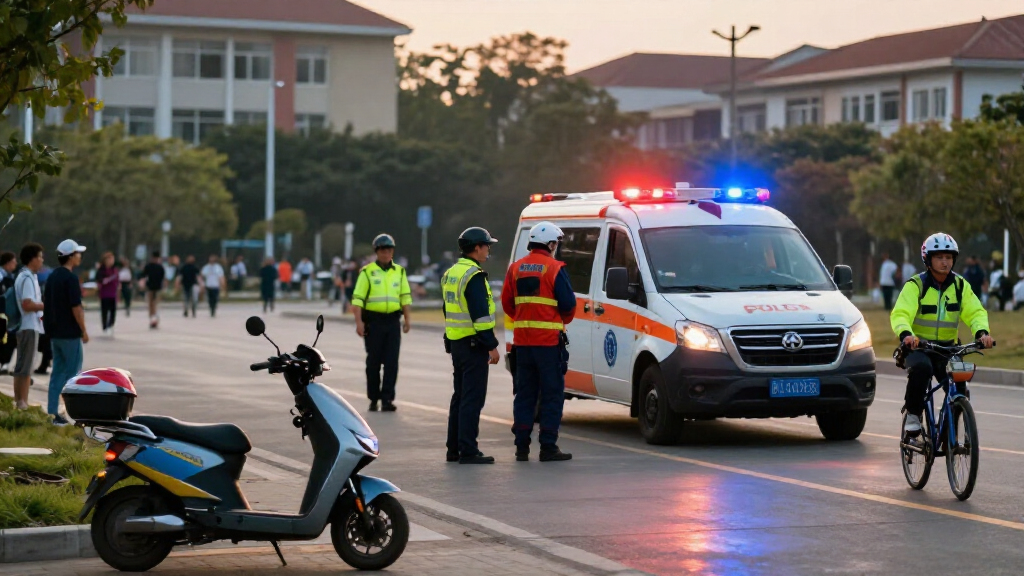
The provided report says UT Austin police confirmed activity on Speedway was a medical emergency response, citing KEYE. It gives no information about the person involved, the nature of the emergency, injuries, or the time and location of the response.
UT Austin police confirmed that activity on Speedway was a medical emergency response, according to a report that cites local broadcaster KEYE. The information available does not identify who needed assistance or explain the nature of the emergency, leaving the immediate circumstances unclear.
The reported development is narrow: police characterized the activity on Speedway as a medical response. No further details are supplied about the call, the response’s timing or duration, or whether emergency vehicles or other responders attended. The report does not state whether the person involved was a student, employee, visitor, or another member of the public.
There is also no confirmed information in the available account about injuries, a transfer to hospital, or an ongoing threat. The police confirmation, as summarized, addresses what the activity was; it does not provide a broader account of what happened before or after responders arrived. Those details should not be inferred from the presence of a medical response.
The item appears within a business-opportunity brief from IdeaNavigator AI, which proposes monitoring local health and safety news for consumer-health and food-industry compliance professionals. Its stated signal score of 88 out of 100 is part of that brief’s assessment, not a police rating or independently explained measure of the emergency. The score does not establish the incident’s severity or its relevance to a particular company.
UT Austin Speedway Activity Police Confirm Medical Response
UT Austin police confirmed activity on Speedway was a medical emergency response, according to KEYE. The available account does not explain the circumstances or outcome.
What police confirmed
The confirmation identifies the activity as a medical response, but gives no fuller account.
Medical emergency response
Police characterized the Speedway activity as a medical response, as reported by KEYE.
Circumstances and outcome
The account does not identify the person involved, describe their condition, or report what happened afterward.
Details not provided
Incident and business relevance
The brief uses the local report to illustrate a proposed monitoring service for consumer-health and food-industry safety teams.
- Police confirmed a medical emergency response.
- No connection to a product, contaminant, or public-health advisory is reported.
- Share this item and two others with five prospective users.
- Observe whether alerts affect decisions or are forwarded.
What the Police Confirmation Establishes
The confirmation helps distinguish a medical response from other possible explanations for visible activity on Speedway. For people trying to understand a developing local incident, that is a useful clarification, but it is not a complete account of the event. Without details about the person’s condition or the response’s outcome, readers cannot determine its severity from this information alone.
The business angle described by IdeaNavigator AI is more indirect. The brief argues that safety and compliance staff at consumer-health or food companies may benefit from timely alerts about health and safety developments. But this particular report concerns an emergency response at a university location; the material does not show a connection to a product, contamination issue, public-health advisory, or operational risk for those industries.
That distinction matters when interpreting monitoring services or alerts: speed of detection is not the same as demonstrated business impact. The brief proposes a way to test whether role-filtered updates influence decisions, but it supplies no evidence that this incident changed a company decision or that prospective users acted on the alert.
Products Worth Considering

Kindle Paperwhite Signature Edition Bundle, 32GB, Jade, with Plant-Based Leather Cover and Wireless Charging Dock

LG UltraGear 32-inch 4K UHD OLED Gaming Monitor, 165Hz

Apple MacBook Air 15-inch with M5 Chip, 16GB Memory, 512GB SSD, Sky Blue
As an affiliate, we earn on qualifying purchases.
How the Alert Is Being Framed
IdeaNavigator AI presents the police update as an example for a proposed consumer health and safety signal monitor. The suggested product would watch local news and other feeds for health, safety, and contaminant findings, then summarize what changed, why it matters, and what a designated safety or compliance lead might do. The stated audience is staff at consumer-health or food brands.
The brief says the goal is to surface relevant developments faster than a general weekly roundup. It recommends testing the concept by sharing this item and two additional health, safety, or contaminant stories with five people who match the intended buyer profile, then tracking whether an item changes a decision or is forwarded to a colleague. That is a proposed validation exercise, not a completed test: no participant feedback, subscription demand, or measured outcome is reported.
For the Speedway incident itself, the necessary context remains limited. The available account attributes the characterization to UT Austin police through KEYE, but gives no timestamp, precise location, or additional police statement. It does not establish a connection between the emergency and the proposed monitoring product beyond using the item as an example of a local alert.
“The activity on Speedway was a medical emergency response.”
— UT Austin police, as reported by KEYE
Details Still Missing From the Report
The account does not provide the date or time of the response, its precise location on or near Speedway, or how long responders remained. It does not say what prompted the call, whether one or more people needed care, what condition they were in, or whether anyone was taken to a medical facility. Those facts remain unconfirmed in the material available here.
It is also unclear whether police released additional information beyond the short characterization relayed by KEYE. No direct statement, incident number, or follow-up update is included. The current status of the person involved and whether the response affected campus access or activity are not reported.
Separately, there is no evidence that this local emergency is connected to a consumer-health or food-safety concern. IdeaNavigator AI frames it as a monitoring example, but supplies no link to a contaminant finding, product warning, or regulatory filing. Its 88/100 signal score is not explained with a method or comparison baseline, so it should be treated as the brief’s own rating rather than an independently verified measure.
Awaiting Incident and Product Follow-Up
Further details would depend on additional information from UT Austin police or KEYE. A fuller update could clarify when and where the response occurred and whether authorities have information they can release about its outcome. Until then, the confirmed point remains limited to the reported medical-emergency characterization.
On the product idea, the next step described by IdeaNavigator AI is to share the brief and two other relevant items with five prospective users and observe whether they forward the material or say it affected a decision. The brief gives no results or timetable beyond calling for the test to happen that week. Whether this becomes a subscription service, and whether its alerts prove useful to safety or compliance teams, remains unsettled.
Source: IdeaNavigator AI
Key Questions
What did UT Austin police confirm?
The available report says police characterized activity on Speedway as a medical emergency response. It does not include a fuller police statement.
When did the response happen?
The account does not give a date or time, so the timing cannot be established from the information provided.
Was anyone injured or taken to hospital?
The report does not say whether anyone was injured, what condition the person was in, or whether they were taken to a medical facility. Those details are not confirmed.
Does the response involve a food or consumer-health safety issue?
No such connection is reported. IdeaNavigator AI uses the incident as an example in a proposal for a news-monitoring service, but provides no evidence linking it to a product, contamination, or public-health advisory.
Has the proposed monitoring service been tested?
The brief recommends testing the idea with five prospective users, but reports no test results, customer commitments, or evidence that the alert changed a decision.
Source: IdeaNavigator AI