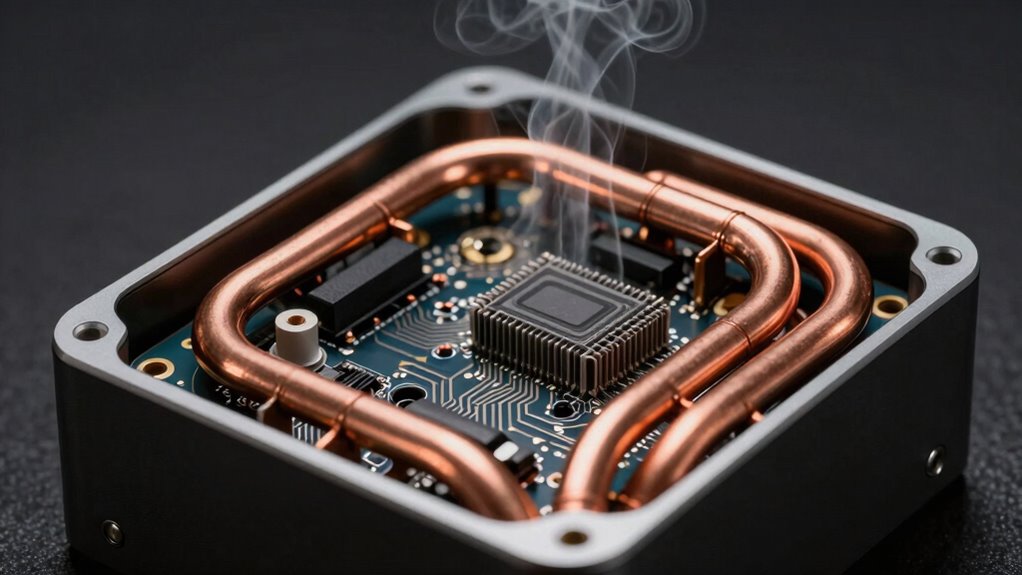

Good hardware depends heavily on thermal design because it keeps your system running smoothly and safely. You might see only the visible parts, but effective heat management prevents overheating, crashes, and damage. It guarantees your components last longer and perform consistently under load. By choosing the right materials and airflow strategies, manufacturers optimize cooling. If you want to understand how this hidden factor impacts performance and longevity, keep exploring these smart thermal solutions.

Get the latest gadgets delivered free — and shop member deals
- Fast, free delivery on millions of items
- Access to Prime Big Deal Days deals on October 6–7
- Prime Video, Amazon Music and more included
Key Takeaways
- Effective thermal design prevents overheating, ensuring hardware reliability and longer lifespan.
- Proper heat management maintains optimal performance under various loads.
- Material selection for heat dissipation directly impacts cooling efficiency and device durability.
- Innovative thermal strategies enable compact, high-performance hardware without thermal compromise.
- Seamless integration of thermal management enhances overall system stability and user experience.
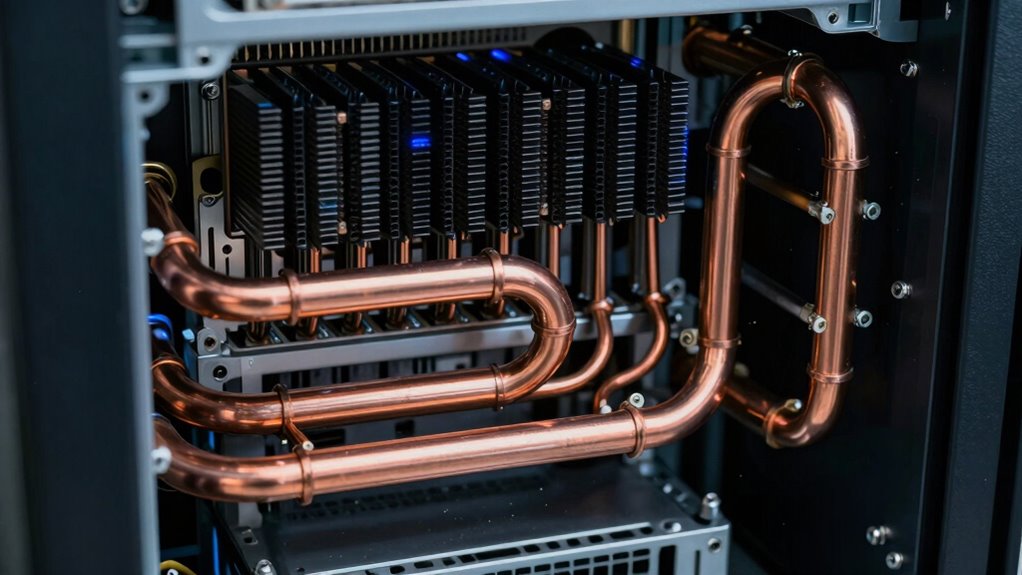
Effective thermal design is vital to guarantee your hardware performs reliably and maintains ideal operating conditions. When you focus on how heat is managed, you ensure your system runs smoothly, avoiding crashes or damage caused by overheating. Cooling efficiency plays a critical role here, as it directly influences how well your hardware dissipates heat. Efficient cooling systems prevent components from reaching unsafe temperatures, extending their lifespan and maintaining consistent performance. To achieve this, you need to pay close attention to material selection, which impacts how heat is transferred and dissipated. Using materials with high thermal conductivity, like copper or aluminum, allows heat to move away from hot spots quickly, promoting better overall cooling. Conversely, choosing materials with poor thermal properties can trap heat, leading to hotspots that degrade performance and cause hardware failures.
Effective thermal design ensures reliable hardware performance and longevity through strategic material selection and efficient cooling solutions.
Material selection isn’t just about thermal conductivity; it also involves considering durability, weight, cost, and ease of manufacturing. For example, aluminum is lightweight and cost-effective, making it a popular choice for heatsinks and chassis components. Copper, though more expensive and heavier, offers superior thermal transfer, ideal for high-performance systems where managing heat is crucial. When designing your thermal system, blending different materials can optimize cooling efficiency—using copper for critical heat transfer parts and aluminum for structural elements. This strategic combination ensures your hardware stays cool without adding unnecessary weight or cost. Additionally, understanding the properties of thermal materials helps in selecting the most effective components for your cooling system. Incorporating thermal conductivity as a key factor during material selection can significantly improve heat dissipation. Recognizing the importance of thermal management principles can also guide you in creating more efficient cooling solutions tailored to your hardware needs. Moreover, staying informed about emerging thermal materials technology can lead to innovative cooling solutions that further enhance system performance.
Furthermore, staying informed about current advances in thermal technology can help you adopt innovative cooling solutions that enhance overall performance. It’s also essential to design your cooling solution with airflow in mind. Properly directed airflow, whether through fans or natural convection, helps carry heat away from sensitive components. When you incorporate effective venting and placement of cooling elements, heat can escape more efficiently, preventing buildup that hampers performance. Additionally, integrating heat sinks and thermal pads with the right materials enhances heat transfer from components to cooling mechanisms. These choices depend heavily on understanding how different materials interact with heat and airflow, emphasizing the importance of material selection in your overall thermal strategy.
In the end, good thermal design isn’t just about adding fans or heatsinks; it’s about creating an integrated system where material choice and cooling efficiency work together seamlessly. When you pay attention to these details, you ensure your hardware remains stable, performs at its best, and lasts longer. Proper thermal management might seem like a behind-the-scenes aspect, but it’s the silent hero that keeps your system running reliably, quietly, and efficiently.
high thermal conductivity heatsinks
As an affiliate, we earn on qualifying purchases.
As an affiliate, we earn on qualifying purchases.
Frequently Asked Questions
How Does Thermal Design Impact Overall Hardware Lifespan?
Thermal design directly impacts your hardware’s lifespan by improving cooling efficiency and heat dissipation. When heat is managed well, components stay cooler, reducing wear and tear over time. Poor thermal design causes overheating, which accelerates hardware degradation and potential failures. By prioritizing effective cooling solutions, you guarantee your hardware runs smoothly longer, preventing damage and extending its overall lifespan. Good thermal design is essential for durable, reliable performance.
What Materials Are Best for Thermal Management in Hardware?
You should prioritize materials with high thermal conductivity, like copper or aluminum, for effective heat dissipation. Their excellent material properties allow heat to transfer quickly away from components, preventing overheating. Copper, with its superior heat dissipation, often outperforms aluminum but may be heavier and costlier. Choosing the right material guarantees your hardware stays cooler longer, extending its lifespan and maintaining ideal performance.
How Do Thermal Solutions Differ Between Gaming and Enterprise Hardware?
You’ll find that thermal solutions differ markedly between gaming and enterprise hardware due to cooling efficiency and heat dissipation needs. Gaming systems prioritize high-performance cooling with advanced air or liquid cooling to handle intense workloads and maintain stable FPS. In contrast, enterprise hardware emphasizes reliable heat dissipation through robust cooling systems, often focusing on passive or semi-passive solutions to guarantee continuous operation, longevity, and minimal downtime during heavy data processing.
Can Poor Thermal Design Cause Hardware to Fail Prematurely?
Think of thermal design as the silent guardian of your hardware—poor design can cause it to fail prematurely, much like a neglected engine overheating. Overclocking challenges and inadequate airflow optimization generate extra heat, stressing components beyond their limits. If airflow isn’t optimized, temperatures rise, accelerating wear and tear. This unchecked heat can lead to early hardware failure, so always prioritize effective thermal management to keep your system running smoothly and reliably.
What Innovations Are Emerging in Thermal Management Technology?
Emerging innovations in thermal management focus on improving heat dissipation and cooling techniques. You’ll see advanced liquid cooling systems and phase-change materials that efficiently transfer heat away from components. Additionally, smart fans with adaptive speeds and heat pipes integrated into circuit boards are becoming more common. These innovations help maintain ideal temperatures, boost performance, and extend hardware lifespan, making your devices more reliable and energy-efficient.
Conclusion
So, savor the significance of stellar thermal strategies behind superb hardware. Don’t dismiss the details—delve into the delicate dance of dampening heat and delivering durability. When you prioritize proper thermal design, you propel performance, prolong lifespan, and prevent problems. Remember, behind every sleek, swift device lies a silent, strategic thermal tale. Embrace the essential, empower your equipment, and enjoy the excellence that expert thermal design effortlessly enables.
Fall Picks
fall essentials
As an affiliate, we earn on qualifying purchases.