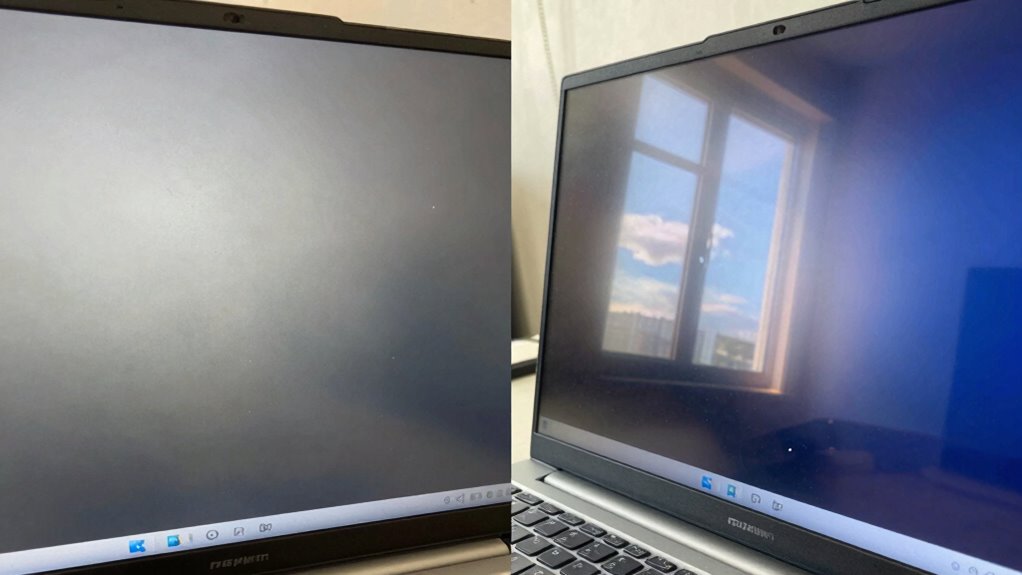

If you prioritize comfort, anti-glare screens might suit you better because they diffuse light and reduce reflections, making them ideal for long use and bright environments. Glossy screens offer vibrant visuals and better color accuracy but reflect light, which can cause eye strain during extended hours. Your choice depends on environment and usage, but exploring further can reveal how each option impacts your overall experience and long-term eye health.

Get the latest gadgets delivered free with Prime
- Fast, free delivery on millions of items
- Prime Video, Amazon Music and more included
- Member-only deals all year
Key Takeaways
- Glossy screens offer richer visuals and better color accuracy but cause more reflections, leading to potential eye strain.
- Anti-glare screens diffuse light, reducing glare and reflections, thus providing more comfort in bright environments.
- Extended use on glossy displays may cause eye fatigue due to reflections, whereas anti-glare screens are more comfortable long-term.
- Anti-glare coatings are more resistant to fingerprints and smudges, maintaining comfort and clarity over time.
- The choice depends on environment: glossy for vibrant visuals, anti-glare for comfort in well-lit or variable lighting conditions.
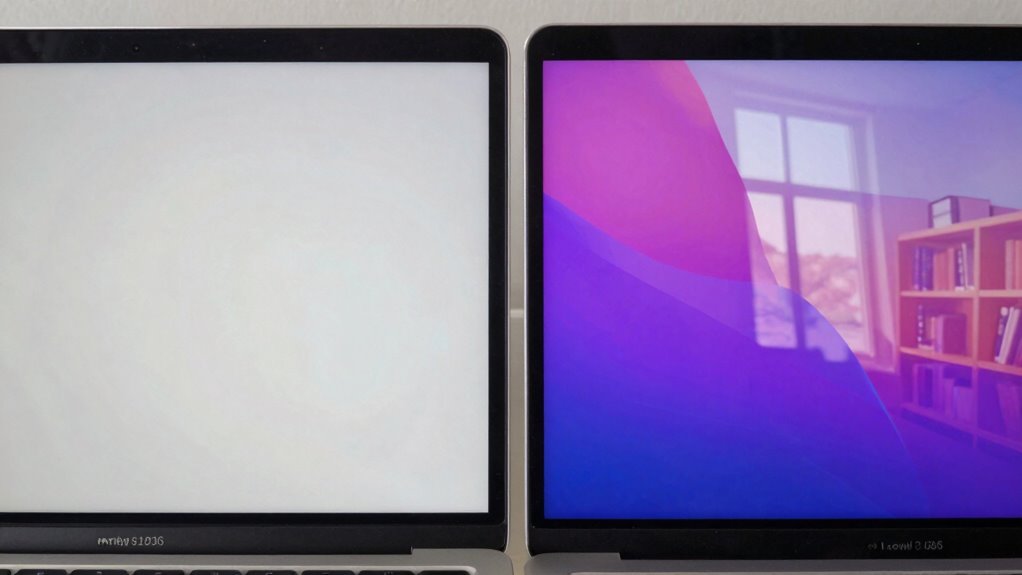
When choosing a computer screen, you’ll notice two main options: anti-glare and glossy displays. Each has its own set of advantages and drawbacks, especially when it comes to visual comfort and performance. If you prioritize accurate color representation, glossy screens often deliver richer, more vibrant visuals due to their reflective surfaces, which enhance color saturation and contrast. This makes them ideal for tasks like photo editing or graphic design, where color precision matters. However, glossy screens tend to reflect light more readily, which can be a problem in bright environments or places with lots of natural light. The reflections can cause eye strain and make it difficult to see the screen clearly over extended periods.
Anti-glare screens, on the other hand, are designed to diffuse light and reduce reflections. This feature makes them more comfortable for long-term use, especially if you work in well-lit or variable lighting conditions. While they might not deliver the same punch of color vibrancy as glossy displays, anti-glare screens often provide more consistent visibility, which is crucial if you need to work for hours without discomfort. When it comes to durability, anti-glare coatings tend to be more resistant to fingerprints and smudges, helping the screen stay cleaner and clearer over time. This can be a significant advantage if you’re often on the move or working in environments where dust and fingerprints are common. Understanding screen coatings and their environmental impact can help you choose a more sustainable option for your setup.
Color accuracy is another critical factor that influences your choice. Glossy screens usually offer better color accuracy because their surfaces don’t distort light as much as matte finishes do. However, if you frequently work in brightly lit spaces or with clients, the glare and reflections might outweigh the benefits, making an anti-glare display a better fit. Durability also plays a role; anti-glare coatings are generally tougher and more resistant to scratches, ensuring your screen remains clear and functional longer. Conversely, glossy screens are more susceptible to scratches and fingerprints, which can diminish visual quality over time if not properly maintained.
Ultimately, your decision hinges on balancing visual comfort with color fidelity and durability. If you’re in a controlled environment with minimal ambient light, a glossy display can provide stunning visuals. But if you need a screen that reduces eye strain and withstands daily wear and tear, an anti-glare option might serve you better. Recognizing these differences helps you choose the display that aligns with your work habits and environment, ensuring a more comfortable and efficient experience. Additionally, understanding the environmental impact of screen coatings can help you make more sustainable choices in your technology use.
Products Worth Considering

Samsung 49-Inch Odyssey G93SC QD-OLED Curved Gaming Monitor

LG UltraGear 32-inch 4K UHD OLED Gaming Monitor, 165Hz

LG UltraGear 32-inch QHD Curved Gaming Monitor, 180Hz, 1ms, FreeSync
As an affiliate, we earn on qualifying purchases.
Frequently Asked Questions
How Do Anti-Glare Screens Affect Color Accuracy?
Anti-glare screens can cause some color shift, making colors appear less vibrant or slightly muted. You might find it harder to achieve accurate color reproduction because of calibration challenges. However, if you frequently work in bright environments or need reduced glare, anti-glare screens can still be beneficial. Just be aware that they might require more calibration effort to guarantee your colors stay true to life.
Are Glossy Screens More Prone to Fingerprints?
Yes, glossy screens are practically fingerprint magnets, with fingerprints showing up like neon signs, making them feel impossible to ignore. This visibility can be frustrating, especially if you’re constantly touching your screen. Plus, glossy screens often have higher touch sensitivity, which can amplify fingerprint smudges. So, if you dislike cleaning fingerprints or want a cleaner look, glossy screens might not be your best choice.
Which Screen Type Is Better for Outdoor Use?
For outdoor use, anti-glare screens are better because they minimize UV reflection and reduce glare caused by ambient lighting, making it easier to see the display in bright conditions. Glossy screens tend to reflect more light, which can wash out images and cause eye strain. With anti-glare, you get a clearer view outside, even under direct sunlight, offering a more comfortable and practical experience.
Do Anti-Glare Screens Impact Screen Brightness?
Anti-glare screens can slightly reduce screen brightness because their screen coating diffuses light to minimize surface reflection. This coating helps prevent glare from ambient light, but it can also absorb some of the light emitted by the display. As a result, you might notice the image appears a bit dimmer compared to glossy screens. However, this tradeoff often improves comfort, especially in brightly lit environments, by reducing eye strain caused by surface reflection.
Can Screen Protectors Improve Anti-Glare Performance?
Screen protectors can improve anti-glare performance by reducing reflections and diffusing light, making your screen easier to view in bright environments. They also enhance screen durability, protecting against scratches and minor impacts. However, consider the cost implications, as high-quality protectors may be expensive. Investing in a good protector can be worthwhile, especially if you frequently work outdoors or in bright settings, ensuring comfort and protecting your device.
Conclusion
Just like a mirror reflects both truth and illusion, your choice between anti-glare and glossy screens reveals what you value most—clarity or comfort. With anti-glare, you navigate through a fog of distractions, seeking focus in a world full of glare. A glossy screen, like a window to a vivid dream, offers stunning visuals but invites unwanted reflections. Ultimately, it’s your own balance—your personal dance between clarity and ease—that will guide you to the perfect screen.