
TL;DR

Get the latest gadgets delivered free with Prime
- Fast, free delivery on millions of items
- Prime Video, Amazon Music and more included
- Member-only deals all year
The 2026 AI processor lineup features several confirmed models from AMD and Intel, emphasizing performance, efficiency, and future-proofing. This article details what is known, what remains uncertain, and why it matters for tech enthusiasts and professionals.
Major technology companies AMD and Intel have officially unveiled their 2026 AI processor lineups, highlighting new models designed to advance artificial intelligence capabilities and computational efficiency. For a detailed overview, see the original analysis. These announcements mark significant steps in the ongoing race for AI hardware dominance, with confirmed models promising notable improvements in speed and power management.
AMD introduced the Ryzen AI-X 2026 series, featuring a new architecture optimized for AI workloads, with specific models like the Ryzen AI-X 9800 and 9500. Intel revealed its Xeon AI 2026 series, including the Xeon AI 9800 and 9600, emphasizing enhanced multi-threaded performance and energy efficiency. Both companies confirmed these processors will support advanced machine learning tasks, with AMD focusing on integrated AI accelerators and Intel on scalable multi-core designs.
While the models and features are officially announced, specific performance benchmarks and pricing details remain unconfirmed. Industry analysts suggest these processors will be compatible with upcoming motherboard chipsets and will support the latest memory standards. The companies also indicated that these chips will be available in both server and high-end desktop variants, targeting AI developers, data centers, and enterprise users.
The 10 picks
- 1
 AMD Ryzen 9 9950X 16-Core Desktop ProcessorView on Amazon →
 - 2
 AMD Ryzen 7 9800X3D 8-Core, 16-Thread Desktop ProcessorView on Amazon →
 - 3
 AMD Ryzen 7 5800X3D 8-core, 16-thread Desktop Processor with AMD 3D V-Cache T…View on Amazon →
 - 4
 AMD Ryzen 7 7800X3D 8-Core, 16-Thread Desktop ProcessorView on Amazon →
 - 5
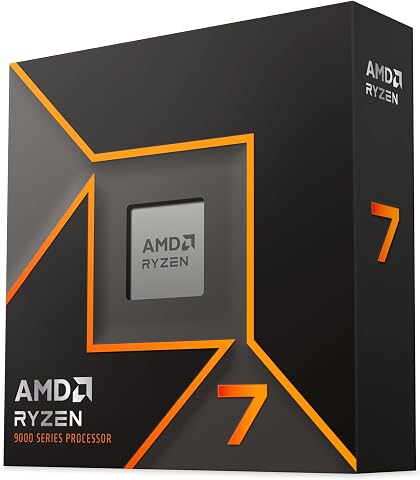 AMD Ryzen 7 9700X 8-Core, 16-Thread Unlocked Desktop ProcessorView on Amazon →
 - 6
 AMD Ryzen 7 5800XT 8-Core, 16-Thread Desktop ProcessorView on Amazon →
 - 7
 AMD Ryzen 7 7700X 8-Core, 16-Thread Unlocked Desktop ProcessorView on Amazon →
 - 8
 Intel Core Ultra 5 Desktop Processor 225, 10 cores (6 P-cores + 4 E-cores), u…View on Amazon →
 - 9
 AMD Ryzen 5 9600X 6-Core, 12-Thread Unlocked Desktop ProcessorView on Amazon →
 - 10
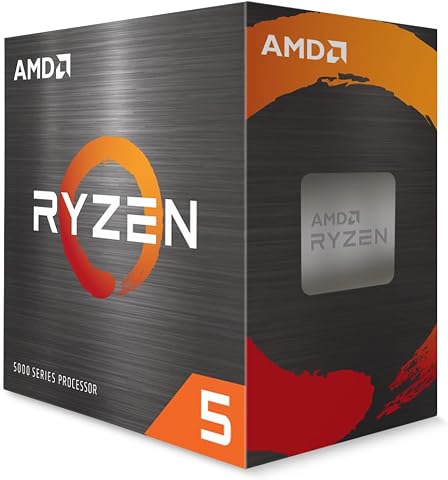 AMD Ryzen 5 5500 6-Core Desktop Processor with Wraith Stealth CoolerView on Amazon →
Impact of the 2026 AI Processor Lineup on Tech Development
This new processor lineup signals a major leap forward in AI hardware capabilities, enabling faster training and inference for AI models. For developers, enterprises, and researchers, these chips could reduce costs and energy consumption while increasing computational power. The advancements may also accelerate the deployment of AI across various industries, from healthcare to autonomous vehicles, making this lineup a pivotal development in next-generation AI technology.
Previous AI Processor Developments and Industry Trends
In recent years, AI processors from AMD, Intel, NVIDIA, and other players have focused on integrating specialized accelerators and optimizing power efficiency. The 2026 models build on this trend, promising to deliver higher core counts, better thermal management, and improved software support. Historically, each new generation has brought substantial performance gains, with AMD’s 2023 Ryzen AI-X series and Intel’s 2024 Xeon AI chips setting the stage for this upcoming lineup. Industry insiders expect these developments to influence hardware standards and AI deployment strategies significantly.
Unconfirmed Details and Potential Variations in the Lineup
Specific performance benchmarks, pricing, and release dates for the 2026 AI processors are still unconfirmed. It is also unclear how these chips will compare directly with competitors like NVIDIA’s AI accelerators or upcoming ARM-based solutions. Industry insiders suggest that some models may undergo further refinement before launch, and market availability could vary across regions. Additionally, the full extent of software and hardware ecosystem support remains to be seen.
Upcoming Launches and Industry Impact Expectations
Manufacturers are expected to release detailed specifications, performance benchmarks, and pricing information throughout 2026, with products hitting the market later in the year. Developers and enterprise users should monitor official announcements from AMD and Intel for compatibility updates and software support. The broader tech industry anticipates that these processors will influence future AI hardware standards and accelerate AI adoption across multiple sectors.
Key Questions
What are the main features of the 2026 AI processors?
The 2026 AI processors from AMD and Intel are expected to include advanced AI accelerators, higher core counts, improved power efficiency, and support for the latest memory and interconnect standards. Specific features will be detailed upon official release.
When will these processors be available to purchase?
While announcements have been made in early 2026, the processors are expected to be released later in the year, with exact dates varying by model and region.
How do these processors compare to current AI hardware?
Industry experts believe the 2026 lineup will significantly outperform existing models in terms of speed, efficiency, and scalability, although concrete benchmarks are not yet available.
Will these processors support existing AI software frameworks?
Both AMD and Intel have indicated ongoing support for popular AI frameworks, but full compatibility details will be clarified at launch.
Source: ThorstenMeyerAI.com
Halloween Picks
halloween
As an affiliate, we earn on qualifying purchases.