
📊 Full opportunity report: Advancing Social Care With Automated Benefit Check Solutions on IdeaNavigator AI — validation score, market gap, and execution plan.
Open a free Amazon Business account
Business pricing, bulk buying and tax-exempt orders.
Create a free accountAs an affiliate, we earn on qualifying purchases.
TL;DR
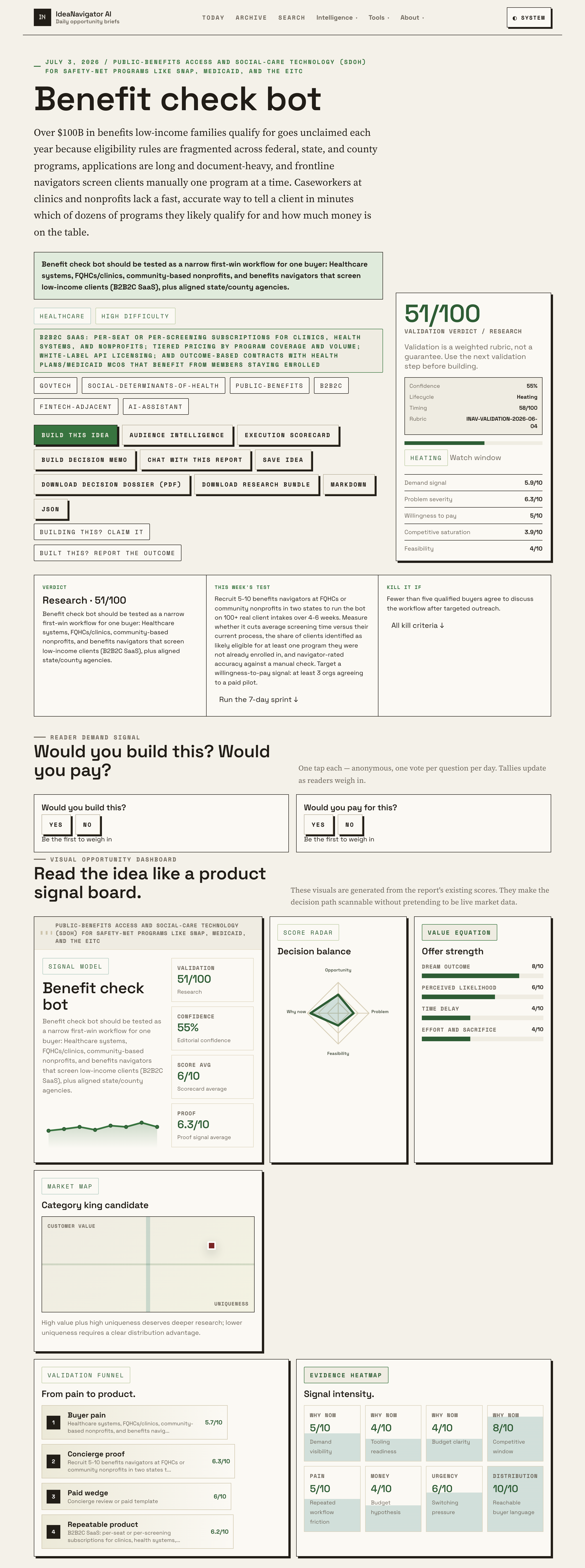
A new conversational AI tool is being piloted to help clinics and nonprofits quickly identify benefits for low-income clients. It responds to a major gap after a nonprofit closure and rising eligibility checks post-pandemic. Early results focus on efficiency and accuracy.
A new automated benefit screening chatbot is being tested at community clinics and nonprofits to help identify eligibility for social assistance programs more efficiently. The tool aims to address a gap left by the recent shutdown of a major benefits enrollment nonprofit and the increased demand for eligibility redeterminations following pandemic-related Medicaid unwinding.
The chatbot, developed as a white-label SaaS solution, asks clients a series of yes/no and multiple-choice questions to determine likely eligibility for programs such as SNAP, Medicaid, EITC, CTC, WIC, and LIHEAP. It then provides an estimated benefit amount and next steps, including application links and document checklists.
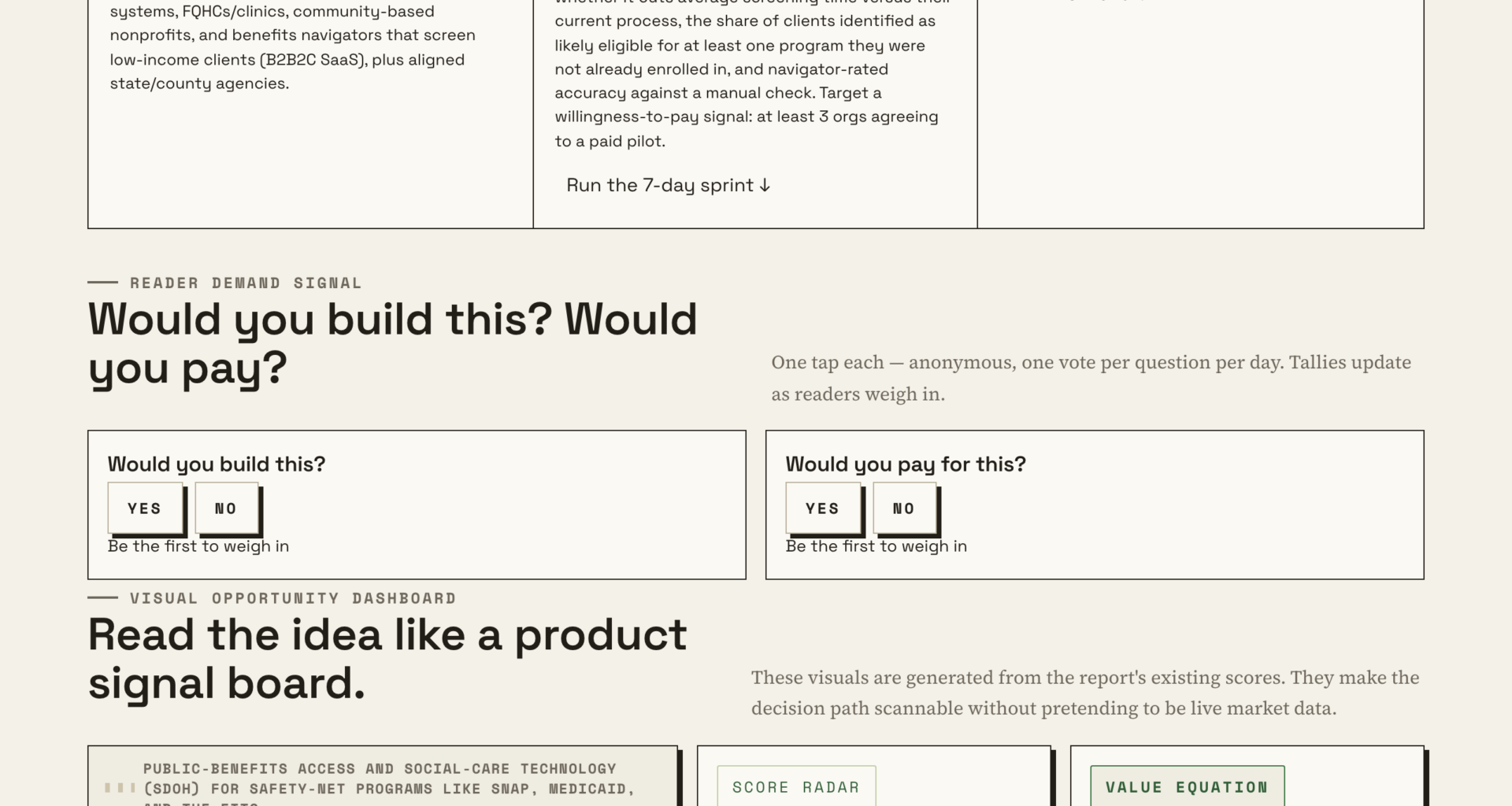
Initial testing involves 5-10 benefits navigators at Federally Qualified Health Centers (FQHCs) and community nonprofits across two states, aiming to evaluate whether the tool reduces screening time, improves client benefit identification, and maintains accuracy. The pilot will log anonymized outcomes and allow navigators to export summaries for client applications.
The solution is designed to be embedded on clinic websites or delivered via SMS, with the goal of making benefits screening faster, more accurate, and less resource-intensive, especially in the context of a shifting social safety net landscape.
This development could significantly improve how social care organizations identify and enroll eligible low-income clients in assistance programs. By reducing manual effort and increasing screening accuracy, the tool has the potential to unlock over $100 billion in unclaimed benefits annually, according to estimates. It also responds to a critical capacity gap created by the 2024 shutdown of a major benefits enrollment nonprofit and the surge in Medicaid redeterminations post-pandemic.
Improved efficiency in benefits screening could lead to higher enrollment rates, better health and economic outcomes for vulnerable populations, and reduced administrative burdens on frontline staff. If successful, this approach may become a standard component of social care workflows, especially in safety-net health systems and community organizations.
benefit eligibility screening software
As an affiliate, we earn on qualifying purchases.
As an affiliate, we earn on qualifying purchases.
Background of Benefits Screening Challenges
For years, low-income families have left billions of dollars in benefits unclaimed annually due to complex eligibility rules, lengthy application processes, and manual screening methods. Frontline navigators often screen clients one program at a time, which is time-consuming and prone to errors.
The shutdown of Benefits Data Trust, a nonprofit that provided benefits enrollment services across seven states, in early 2024, left a significant gap in capacity for outsourced benefits access. Simultaneously, the post-pandemic Medicaid unwinding process has increased the workload for eligibility redeterminations, further straining existing resources.
Recent advances in conversational AI and natural language processing now make it feasible to deliver multi-program screening at near-zero marginal cost, offering a promising solution to these persistent challenges. The new chatbot aims to leverage these technologies to streamline the process and improve outcomes.
Uncertainties Around Pilot Outcomes and Scalability
It is not yet clear how accurately the chatbot will perform in real-world settings, or whether benefits navigators will adopt it at scale. The pilot’s success depends on whether it can reliably reduce screening times and identify unclaimed benefits without increasing errors. Additionally, questions remain about the long-term sustainability, integration costs, and how the tool will adapt to different state and local rules beyond the initial pilot regions.
Next Steps for Validation and Broader Deployment
The pilot will run over 4-6 weeks, with participating organizations measuring key metrics such as screening time reduction, benefits identified, and navigator-rated accuracy. If results prove promising, developers plan to expand the pilot to additional states and organizations, refine the AI’s capabilities, and explore wider deployment options. Success could lead to broader adoption across the social safety net sector, with potential partnerships for outcome-based financing and API licensing.
Key Questions
How does the benefit check chatbot work?
The chatbot asks clients a series of yes/no and multiple-choice questions about their circumstances. It then estimates eligibility and benefits for programs like SNAP, Medicaid, and others, providing next steps and application links.
Who is testing this new tool?
Fifteen to twenty benefits navigators at Federally Qualified Health Centers and community nonprofits in two states are participating in the pilot.
What are the expected benefits of using this AI tool?
It aims to reduce screening time, improve accuracy in identifying eligible benefits, and help clients access more resources quickly, potentially unlocking billions in unclaimed benefits annually.
When will the results of the pilot be available?
Results are expected after the 4-6 week testing period, with initial data collection ongoing now.
Could this technology be scaled nationwide?
If successful, the developers plan to expand to more states and organizations, with potential for wider adoption across social care and health systems.
Source: IdeaNavigator AI
Fall Picks
fall essentials
As an affiliate, we earn on qualifying purchases.