
TL;DR

Get the latest gadgets delivered free — and shop member deals
- Fast, free delivery on millions of items
- Access to Prime Big Deal Days deals on October 6–7
- Prime Video, Amazon Music and more included
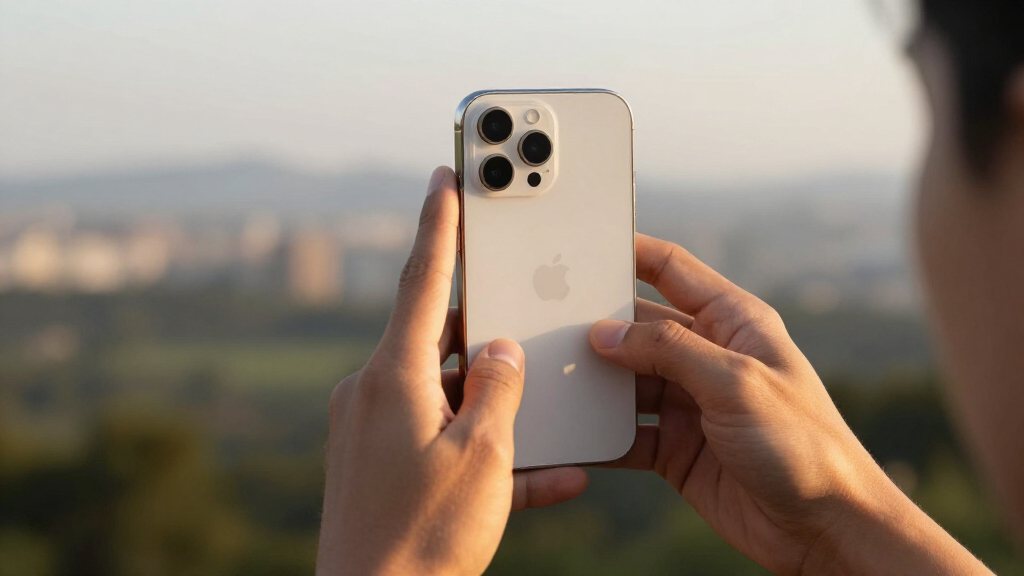
A developer has introduced an iPhone app that captures images from both rear lenses simultaneously and fuses them into a single photo. This innovation could improve mobile photography by providing higher-quality, multi-angle images in real time.
An iPhone application showcased on Show HN enables users to capture images simultaneously from both rear lenses and fuse them into a single photo. This development could enhance mobile photography by providing more detailed and multi-perspective images in real time, according to the developer. The app’s demonstration highlights a new approach to leveraging dual-lens camera systems on iPhones.
The app, developed by an individual developer and shared on the Show HN platform, uses the iPhone’s hardware capabilities to trigger both lenses at the same moment, capturing two images concurrently. It then processes and merges these images into a single composite photo, aiming to improve depth, clarity, and perspective. The developer claims this method can produce higher-quality images compared to traditional single-lens captures, especially in challenging lighting or complex scenes.
Apple’s iPhones have featured dual-lens cameras since 2019, primarily used for portrait effects and optical zoom. This app takes a different approach by capturing from both lenses simultaneously, rather than relying solely on existing hardware functions. The demonstration suggests that software-level control over dual lenses might unlock new photographic possibilities, such as enhanced depth mapping or multi-angle shots.
While the app is still in a prototype stage, the developer has shared a few sample images showing the fused results. It remains unclear if the app will be officially released or if it requires jailbreaking or other modifications to function fully on consumer devices. The developer has expressed interest in exploring further enhancements and potential integration with existing camera apps.
Potential Impact on Mobile Photography Innovation
This development could represent a meaningful step forward in smartphone camera technology by enabling real-time fusion of images from both lenses. If adopted broadly, it might allow users to capture more detailed, multi-perspective photos without additional hardware or post-processing. Such capabilities could influence future iPhone camera features and inspire other developers to explore software-based enhancements for dual-lens systems.
For consumers, this could mean improved photo quality in low-light or complex scenes, as well as new creative options for multi-angle or depth-enhanced images. For the broader industry, it signals ongoing innovation in mobile imaging, emphasizing software solutions that maximize existing hardware capabilities.
As an affiliate, we earn on qualifying purchases.
Advances in Dual-Lens Camera Technology and Software
Since the introduction of dual-lens cameras on iPhones in 2019, Apple and third-party developers have explored various ways to enhance mobile photography. Apple’s native features include Portrait mode and optical zoom, which rely on hardware and software integration. However, the concept of simultaneously capturing from both lenses and merging images in real time remains relatively unexplored outside of experimental apps.
This particular app, shared on Show HN, builds on the hardware foundation by offering a new software-driven approach to dual-lens image capture. While similar ideas have been proposed in research and development circles, this is among the first publicly demonstrated consumer-facing applications aiming to do so.
It is not yet clear whether Apple intends to incorporate such features into its native camera app or if third-party developers will be able to access the necessary hardware controls through official APIs. The demonstration underscores ongoing interest in pushing the boundaries of what mobile cameras can achieve through software innovations.
“This app captures images from both lenses simultaneously and fuses them into a single photo, unlocking new creative possibilities for iPhone photography.”
— Developer of the app
Unconfirmed Details and Future Integration Plans
It remains unclear whether the app will be officially released to the public or if it requires modifications such as jailbreaking to operate. Details about compatibility, performance in various scenarios, and integration with native camera functions are still emerging. Additionally, it is not confirmed whether Apple is aware of or endorses this approach, or if future iOS updates might support similar features natively.
Next Steps for Development and Industry Adoption
The developer plans to refine the app and explore additional features, such as real-time processing and enhanced depth effects. Observers will be watching for potential updates, broader developer interest, and whether Apple might incorporate similar capabilities into future iOS versions. Further demonstrations and user testing will clarify the technology’s viability and potential market impact.
Key Questions
Can this app be used on all iPhones?
It is not yet confirmed if the app is compatible with all iPhone models. Compatibility depends on hardware capabilities and whether the app can access both lenses simultaneously, which may vary by device and iOS version.
Will Apple integrate this feature into its native camera app?
There is no official confirmation from Apple about integrating such software-based dual-lens fusion features. The app remains a third-party demonstration, and native support would depend on Apple’s development decisions.
Does this technology require jailbreaking the iPhone?
It is not clear whether the current version of the app requires jailbreaking or other modifications. Official APIs and restrictions may limit such capabilities on standard consumer devices.
What are the advantages of capturing from both lenses simultaneously?
Simultaneous capture can improve depth perception, reduce motion artifacts, and enable more complex image fusion, potentially leading to higher-quality photos in challenging conditions.
Is this technology likely to become mainstream?
While promising, widespread adoption depends on further development, official support, and hardware compatibility. It remains an experimental approach at this stage.
Source: hn
Halloween Picks
halloween
As an affiliate, we earn on qualifying purchases.