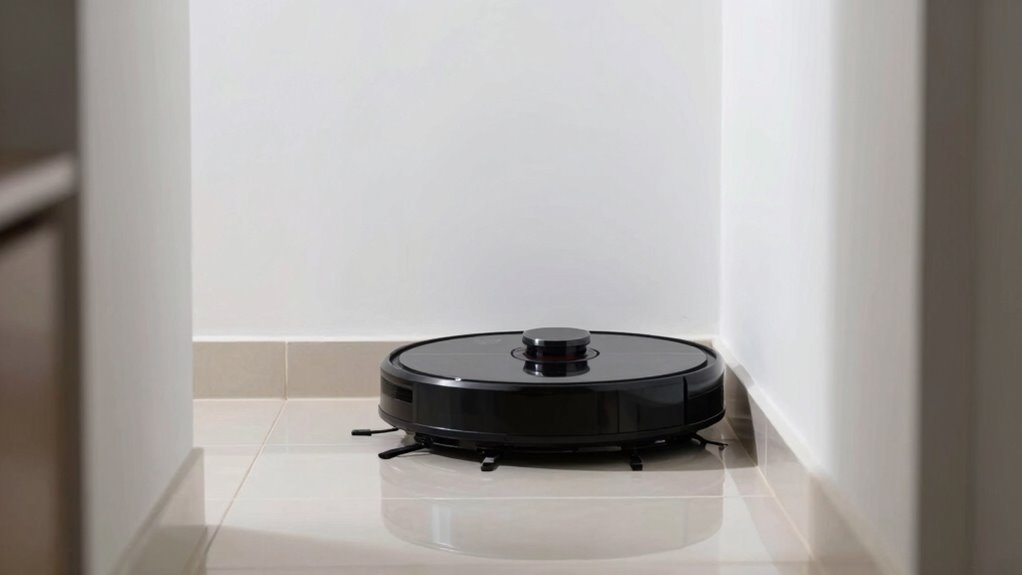

Choosing the right spot for your robot vacuum’s dock is more important than it seems. Place it against a wall or in a corner for easy access, but avoid tight spaces that hinder alignment. Keep the area clutter-free, ensuring enough room for the robot to approach and depart smoothly. Positioning near high-traffic zones helps with quick return to charge and better navigation. Learn more about optimizing your dock placement for the best cleaning results.

Get the latest gadgets delivered free with Prime
- Fast, free delivery on millions of items
- Prime Video, Amazon Music and more included
- Member-only deals all year
Key Takeaways
- Proper placement ensures efficient navigation, thorough cleaning, and reliable charging for the robot vacuum.
- Position the dock against a wall or in an open area to facilitate easy approach and departure.
- Keep the surrounding area clutter-free to prevent sensor interference and improve obstacle avoidance.
- Choose a location near a power outlet with stable environmental conditions for optimal performance.
- Strategic placement minimizes navigation issues and enhances overall cleaning coverage.
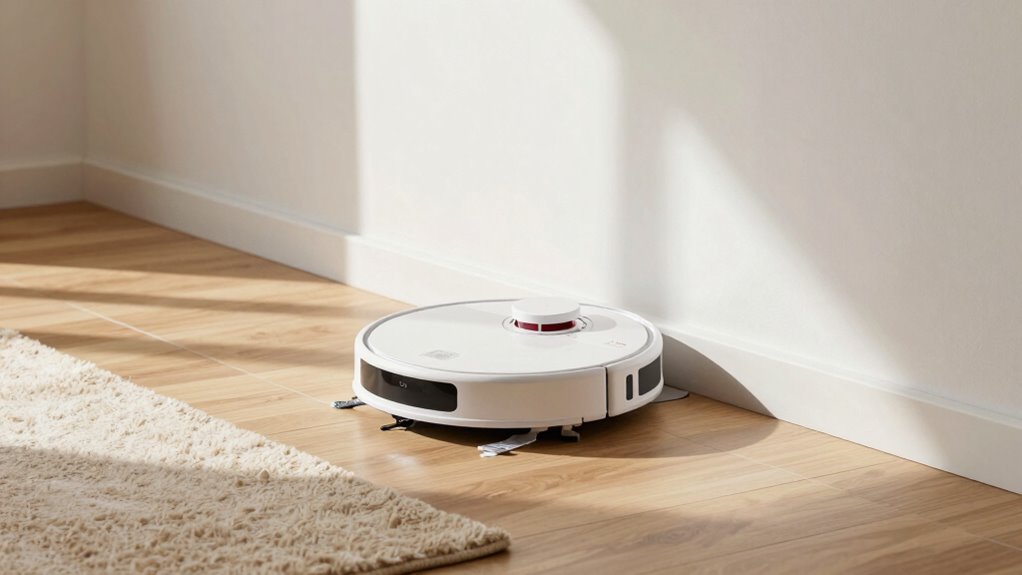
Have you ever wondered where the best spot is to place your robot vacuum’s dock? It might seem like a small decision, but it can profoundly impact your vacuum’s efficiency and cleaning performance. Proper charging station placement is vital to guarantee your robot operates smoothly and doesn’t get stuck or lose power unexpectedly. You want to find a location that’s easily accessible for the robot, close enough for quick charging, and strategically positioned to maximize cleaning coverage. A good spot isn’t just about convenience; it’s about creating an environment that supports the robot’s navigation and obstacle avoidance strategies.
Choosing the right dock placement boosts your robot vacuum’s efficiency and cleaning performance.
When choosing where to place the dock, consider the layout of your space. Position it against a wall or in a corner that provides enough room for the robot to approach from different angles. Avoid tight corners or cramped spaces where the robot might struggle to align correctly or encounter obstacles. The ideal placement offers a clear, open path that allows the robot to dock without difficulty. You should also think about proximity to high-traffic areas—placing the dock near entrances or hallways can make it easier for the robot to return for charging after completing its cleaning cycle.
Obstacle avoidance strategies are vital when selecting a dock location. Items like shoes, cables, or furniture placed too close can interfere with the robot’s navigation, causing it to bump or get stuck. Keep the area around the station free of clutter and obstacles, and ensure there’s enough space for the robot to approach and leave the dock comfortably. Some robots have sensors that detect obstacles, but they still rely on a clear path to dock correctly. If the station is tucked away in a cluttered corner, the robot might have trouble finding its way back or might misjudge distances, leading to inefficient cleaning or missed spots. Additionally, understanding robot navigation can help optimize overall positioning to enhance performance. Proper dock placement can also improve the robot’s ability to avoid common navigation issues and ensure consistent cleaning coverage.
Another key point is to avoid placing the dock in areas with fluctuating temperatures or excessive dust, as these conditions can affect the robot’s charging efficiency and sensor performance. Also, consider the location’s proximity to a power outlet, and make sure the cord is safely managed to prevent tripping or accidental disconnection. Being aware of indoor air quality conditions around the dock can further contribute to the robot’s longevity and efficiency.
As an affiliate, we earn on qualifying purchases.
Frequently Asked Questions
How Often Should I Move the Dock to Optimize Cleaning?
You should move your robot vacuum dock every few months to optimize cleaning. Doing so helps maintain battery life and prevents dust accumulation around the dock area, which can interfere with charging. Regularly repositioning the dock guarantees your robot can access different parts of your home efficiently. Keep an eye on how well your vacuum cleans and charges, and shift the dock if you notice decreased performance or buildup around the current spot.
Can Multiple Docks Improve Cleaning Efficiency?
Ever wondered if multiple docks boost your robot vacuum’s cleaning? Yes, they can! Placing multiple charging stations strategically improves cleaning efficiency by reducing travel time and ensuring coverage in larger spaces. Proper placement is key—make sure each charging station has ideal obstacle clearance and isn’t blocked by furniture. This way, your robot can quickly dock, recharge, and continue cleaning seamlessly across different areas of your home.
What Materials Should I Avoid Near the Dock?
You should avoid placing materials that interfere with surface compatibility or disrupt the power source proximity near the dock. Items like water, liquids, or wet cloths can damage the dock and hinder the robot’s charging. Keep away from thick rugs, cords, or clutter that might block the surface. Also, steer clear of metallic objects that could interfere with the dock’s sensors or electrical connections, ensuring smooth operation and peak cleaning efficiency.
How Do Pets Affect Dock Placement Decisions?
Think of your pets as guardians of your home’s scent, with pet hair and odor control as your allies. When placing the dock, avoid high-traffic pet zones to prevent hair buildup and odors from overwhelming the area. Position it where your pets won’t bump into it or scatter hair, ensuring smooth docking and efficient cleaning. This way, your robot stays effective, and your space remains fresh and pet-friendly.
Is It Necessary to Secure the Dock to the Floor?
Yes, securing the dock to the floor enhances dock stability and guarantees smooth robot operation. Proper floor adhesion prevents the dock from shifting or tipping over, especially if pets or foot traffic are frequent. You should use adhesive strips or non-slip pads designed for your flooring type. This small step helps maintain ideal placement, avoids misalignment, and keeps your robot vacuum charging efficiently without interruptions.
Conclusion
So, next time you’re tempted to toss your robot’s dock behind the couch, remember: this tiny choice can turn your spotless paradise into a chaotic battleground. After all, who knew that a few inches of misplaced furniture could cause such monumental mayhem? Don’t underestimate the power of the perfect dock placement—your robot’s efficiency depends on it, and frankly, your sanity might too. Choose wisely, or prepare for a vacuum-induced existential crisis.
Columbus Day / Indigenous Peoples' Day Picks
long weekend sales
As an affiliate, we earn on qualifying purchases.