
Robot lawn mowers do save time, but only after you overcome the initial setup challenge. You’ll need to plan the layout, troubleshoot controls, and adjust boundaries, which can feel overwhelming, especially if you’re new to smart devices. Once the setup is complete, the mower operates automatically, saving you effort and time. If you want to learn how to make the process smoother and get the most from your mower, keep exploring.
Key Takeaways
- Proper initial setup ensures the mower operates automatically, saving time in ongoing lawn maintenance.
- Troubleshooting setup issues temporarily negate time-saving benefits until resolved.
- Battery capacity and efficiency impact the mower’s ability to complete tasks without frequent recharges.
- Compatibility with smart devices and automation features enhances long-term time savings.
- Weather considerations and noise levels affect scheduling, influencing overall time efficiency.
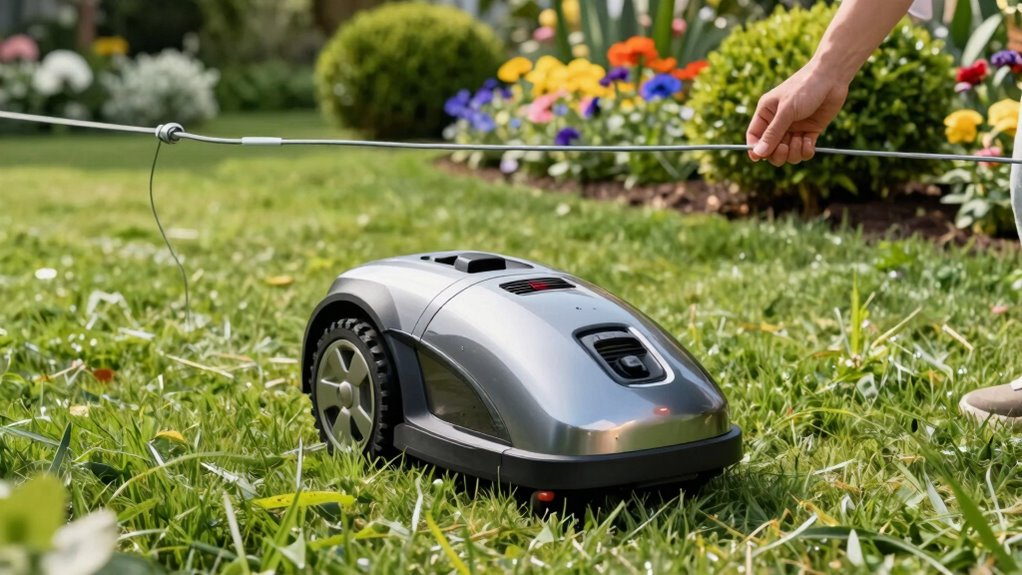
While robot lawn mowers promise to save you time in the long run, the initial setup can be a significant headache. You’ll need to spend time planning the layout, marking boundaries, and configuring the controls. During this process, you might feel overwhelmed by the technical aspects, especially if you’re not familiar with smart devices. Once you finally get it running, you’ll notice that battery life plays a critical role in how effectively your mower can maintain your lawn. A model with a strong, long-lasting battery allows for more extensive mowing sessions without frequent recharging. If the battery dies quickly or doesn’t hold a charge, you’ll find yourself constantly stopping to recharge, which defeats the purpose of having a time-saving device. You’ll want to choose a mower with a battery that matches your lawn size, ensuring it can complete its job in one go or with minimal interruption.
A long-lasting battery is essential for efficient, uninterrupted robot lawn mowing sessions.
Noise levels also matter more than most people realize. While robot mowers are generally quieter than traditional gas-powered mowers, some models produce more noise than others. During the setup phase, it’s worth checking the noise ratings and hearing a demo if possible. If you live in a noise-sensitive neighborhood or have close neighbors, a quieter model will keep everyone happy and prevent complaints. Once operational, the noise level affects when and how often you can run the mower without disturbing others. A quieter machine lets you mow early in the morning or late at night without worry, saving you from the inconvenience of scheduling around noise restrictions. Additionally, understanding battery capacity helps in selecting a model that truly meets your needs. It’s also helpful to consider smart device compatibility to ensure your mower integrates smoothly with your existing home automation system. A good understanding of maintenance requirements can also extend the lifespan of your mower and optimize its performance over time. Moreover, reading user reviews can provide insights into real-world performance and potential issues you might not find in the specifications. Being aware of weather considerations is also important, as some models are better suited to handle different climate conditions, ensuring consistent mowing regardless of weather changes.
After completing the initial setup, the true time-saving benefits become apparent, but only if you’ve chosen a model with good battery life and acceptable noise levels. You might initially find yourself adjusting boundaries or troubleshooting connectivity issues, but these are temporary hurdles. Once everything is configured correctly, your mower will automatically handle regular mowing sessions, freeing up your weekends or evenings. You won’t have to push a heavy mower or spend hours trimming edges. Instead, you’ll enjoy a consistently manicured lawn with minimal effort. However, keep in mind that a poor choice in battery capacity or a noisy model can diminish these benefits, making the setup phase feel even more frustrating.
In the end, investing time in the initial setup pays off. A robot lawn mower with a long-lasting battery and low noise levels will deliver the time savings you’re after, but only if you’re patient during that first, somewhat tedious phase. Once that’s done, you’ll be able to kick back and enjoy a beautifully maintained lawn without the usual hassle.
robot lawn mower with long battery life
As an affiliate, we earn on qualifying purchases.
As an affiliate, we earn on qualifying purchases.
Frequently Asked Questions
How Long Do Robot Lawn Mowers Typically Last?
You can expect your robot lawn mower to last about 2 to 8 years, depending on its quality and usage. Battery life usually spans 1 to 3 years before needing replacement. To maximize lifespan, you should follow maintenance requirements like cleaning the blades and checking the battery regularly. Proper care guarantees your mower continues to operate efficiently, saving you time and effort in the long run.
Are Robot Mowers Suitable for All Grass Types?
Think of your lawn as a diverse garden; some grass types dance easily with robot mowers, while others resist. Robot mowers suit most grass compatibility and terrain adaptation needs, but thick, tall, or uneven grass can challenge their performance. For best results, choose a model designed for your terrain and grass type. With proper selection, you’ll find your robot mower gracefully gliding across your yard, making lawn care effortless.
Can Robot Lawn Mowers Handle Steep Slopes?
Yes, many robot lawn mowers can handle steep slopes, especially models designed with advanced slope handling features. You should check their maximum incline rating to guarantee it matches your terrain. Keep in mind, steep slopes can impact battery performance, as the mower works harder. Opt for a model with a strong battery and good slope handling to maintain efficiency and avoid battery drain during mowing on challenging terrains.
What Is the Average Noise Level of These Mowers?
Robot lawn mowers typically produce sound levels between 55 and 65 decibels, making them quieter than traditional mowers. When considering noise comparison, they’re often comparable to a conversation or background music. You’ll appreciate the low sound levels, especially if you value a peaceful yard. Keep in mind, some models might be slightly louder or quieter, so check the specific sound levels to find one that fits your noise preferences.
Do Robot Mowers Require Regular Software Updates?
Yes, robot mowers do require regular software updates to maintain peak performance. You need to check for updates frequently, especially to guarantee software compatibility with new features or security patches. Manufacturers often release updates to fix bugs or improve functionality, so staying on top of update frequency helps your mower operate smoothly. Neglecting updates might lead to compatibility issues or reduced efficiency, so make it part of your routine maintenance.
Conclusion
Remember, the grass isn’t always greener on the other side—sometimes, you need to go through a little chaos first. Setting up a robot lawn mower might be a hassle, but once it’s running smoothly, it’ll save you time and effort. Just like planting a seed requires patience, the initial headache pays off with a beautifully maintained yard. In the end, patience is a virtue, and your future self will thank you for sticking with it.