
📊 Full opportunity report: Restaurant Food Safety Reimagined With Computer Vision Software on IdeaNavigator AI — validation score, market gap, and execution plan.
TL;DR
A restaurant industry pilot is testing computer vision software to automatically verify food safety inspections during morning walk-throughs. This technology aims to improve accuracy and accountability, replacing manual checklist methods. The initiative is currently in a validation phase at multiple locations.
A computer vision software is being piloted to automatically verify restaurant kitchen safety inspections during morning walk-throughs, aiming to improve accuracy and accountability. This development is significant for restaurant operations and food safety compliance, as it offers a more reliable way to document and identify violations in real-time.
The technology, developed for use by operations or quality assurance managers at multi-unit restaurant groups, uses existing smartphone photos taken during routine inspections. The software analyzes images to detect violations such as uncovered containers, propped cooler doors, or missing date labels, and assigns severity ratings. It then generates timestamped reports and visual trend data across multiple locations.
According to an anonymous researcher involved in the project, the system is designed to replace the current manual checklist process, which often records that a check was performed without verifying the actual condition of the kitchen. The pilot involves running two weeks of walk-through photos from five restaurant locations through the software to compare flagged violations against findings from a hired health-inspection consultant.
Restaurant Food Safety Reimagined With Computer Vision Software
Routine morning walk-throughs are becoming verifiable inspections. A multi-location pilot is testing whether computer vision can analyze ordinary smartphone photos, identify kitchen safety violations and create an objective record of conditions in real time.
Restaurant kitchens supplying real-world walk-through images.
AI findings compared against an inspection consultant.
No specialized camera infrastructure is required for the pilot.
Routine pre-service kitchen walk-throughs
Conditions documented, not merely checked off
Reports, severity ratings and visual trends
Designed to support—not replace—inspectors
From kitchen image to accountable action
The proposed workflow fits around an existing inspection habit: managers photograph kitchen conditions during a walk-through. The software converts those images into structured, reviewable safety evidence.
Capture
A manager takes ordinary smartphone photos during the morning inspection.
Analyze
Computer vision scans visible conditions against predefined safety criteria.
Flag
Potential violations receive a category and severity assessment for review.
Track
Timestamped reports reveal recurring issues across locations and over time.
What the software is being trained to see
The pilot focuses on visible, operationally meaningful conditions that can be documented in a photograph and checked against a clear compliance rule.
Uncovered containers
Identifies food containers that appear exposed instead of properly covered or sealed.
Propped cooler doors
Flags doors left visibly open, helping teams investigate potential temperature risk.
Missing date labels
Detects containers without visible preparation, opening or discard-date information.
One image becomes operational data
The intended value is not simply detecting an issue—it is turning each finding into a record that can be reviewed, compared and acted upon.
Checklist compliance versus visual verification
Manual checklists confirm that someone recorded an answer. Computer vision aims to add evidence of the actual kitchen condition—while keeping human judgment in the loop.
| Inspection dimension | Manual checklist | Computer vision workflow |
|---|---|---|
| Evidence | ~Self-reported completion | +Photo-linked condition record |
| Consistency | −Varies by staff member | +Standardized detection criteria |
| Accountability | ~Limited proof after the event | +Timestamped visual documentation |
| Multi-site analysis | −Manual aggregation required | +Centralized location trends |
| Expert judgment | +Human interpretation | ~Human review still required |
| Current readiness | +Established process | ~Pilot validation pending |
The pilot must prove reliability—not possibility
The decisive question is whether automated image analysis can match real-world expert findings across different kitchens, lighting conditions and inspection routines.
AI findings meet an expert benchmark
Two weeks or more of walk-through images from five restaurant locations will be processed and compared with findings from a hired health-inspection consultant.
Where operators expect the strongest gains
These bars represent the project’s stated opportunity areas—not measured pilot results.
“The goal is to turn routine walk-throughs into verifiable, data-rich inspections that can be tracked and analyzed over time.”Anonymous researcher involved in the project
What operators need to know
The project offers a compelling operational model, but commercial readiness depends on accuracy, integration and responsible handling of inspection imagery.
How are violations identified?
The system analyzes routine inspection photos for predefined visual issues, then assigns categories and severity ratings for human review.
Will it replace human inspectors?
No. The current design augments human inspections with verifiable evidence; full automation is neither tested nor planned.
What could restaurant groups gain?
More consistent records, fewer manual errors, earlier visibility into recurring violations and potentially stronger inspection outcomes.
When could it reach the market?
A wider or subscription-based rollout could follow within a year if validation is favorable, but no confirmed launch date is available.
What happens to the images?
Security measures are reportedly being developed. Specific retention, access and privacy safeguards remain under review.
What could limit performance?
Diverse layouts, obstructed views, inconsistent lighting and ambiguous conditions may affect detection quality and false-positive rates.
The path from pilot to protocol
Adoption depends on a connected evidence chain: real-world images must produce accurate findings, useful reports and measurable improvements in restaurant operations.
Trust must be earned
Until pilot results establish accuracy against qualified inspectors, the system should be treated as an emerging verification aid—not an independent authority or substitute for established food safety protocols.
Enhanced Food Safety Verification Through AI
This innovation could significantly improve food safety compliance by providing verifiable, objective data during routine inspections. It reduces reliance on subjective checklists and manual record-keeping, potentially lowering the risk of violations going unnoticed. For restaurant groups, this may lead to better health inspection scores and increased consumer trust.
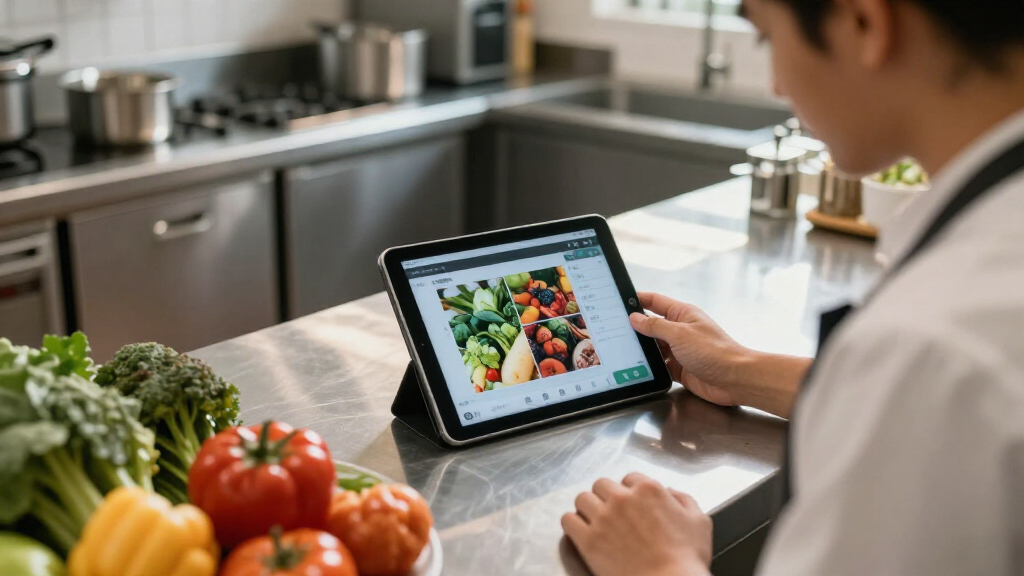
restaurant kitchen safety inspection camera
As an affiliate, we earn on qualifying purchases.
As an affiliate, we earn on qualifying purchases.
Current Inspection Challenges and Technological Opportunities
Traditional restaurant inspections depend heavily on manual checklists completed by staff or inspectors, which can be prone to oversight or intentional misreporting. The industry has sought more reliable, scalable solutions for verifying compliance. Recent advances in computer vision and AI enable analysis of ordinary phone photos to detect violations automatically, representing a shift toward data-driven food safety management.
The pilot builds on existing trends of digitizing restaurant operations, with some companies already experimenting with AI for inventory and quality control. This project aims to validate whether AI-based photo analysis can reliably identify violations in real-world settings.
“The goal is to turn routine walk-throughs into verifiable, data-rich inspections that can be tracked and analyzed over time.”
— an anonymous researcher
Uncertainties Around AI Accuracy and Adoption
It is not yet clear how accurately the software will flag violations compared to human inspectors, or how well it will perform across diverse kitchen layouts and lighting conditions. The pilot results are still pending, and broader adoption will depend on validation outcomes and integration with existing systems.
Next Steps in Validation and Potential Rollout
The pilot will run for at least two weeks, with results comparing AI-flagged violations against expert inspections. If successful, the developers plan to refine the system, expand testing to more locations, and explore subscription-based deployment for restaurant groups. Further validation will determine if this approach can become a standard part of food safety protocols.
Key Questions
How does the computer vision software identify violations?
The software analyzes photos taken during routine inspections to detect issues like uncovered food, propped cooler doors, and missing labels, assigning severity ratings based on predefined criteria.
Will this replace human inspectors entirely?
Currently, the system is designed to augment, not replace, human inspections by providing verifiable data. Full automation is not yet planned.
What are the benefits for restaurant operators?
Operators can gain more accurate, consistent documentation of safety conditions, reduce manual errors, and potentially improve health inspection scores and customer trust.
When will this technology be widely available?
The pilot is ongoing, with wider deployment contingent on successful validation. A commercial rollout could occur within the next year if results are favorable.
Are there privacy or security concerns?
The system analyzes photos taken during inspections; data security measures are being implemented, but specific privacy concerns are still under review.
Source: IdeaNavigator AI