Choosing the wrong projector type can silently ruin your setup by causing image sizing problems, distortion, or poor picture quality. For example, a long-throw projector in a small room will produce images that are too small, while a short-throw might create distortion if not matched properly. Understanding your space, screen size, and projector features is key. Keep exploring, and you’ll discover how to pick the ideal projector to avoid these issues altogether.
Key Takeaways
- Choosing the wrong projector type for your room size can cause image size issues or distortion.
- Fixed lens projectors lack flexibility, risking poor fit if room dimensions are misjudged.
- Short-throw and ultra-short-throw models suit small spaces but may reduce image sharpness.
- Different technologies (DLP vs. LCD) impact brightness, image quality, and suitability for your environment.
- Matching projector type to space and needs ensures optimal image size, clarity, and setup flexibility.
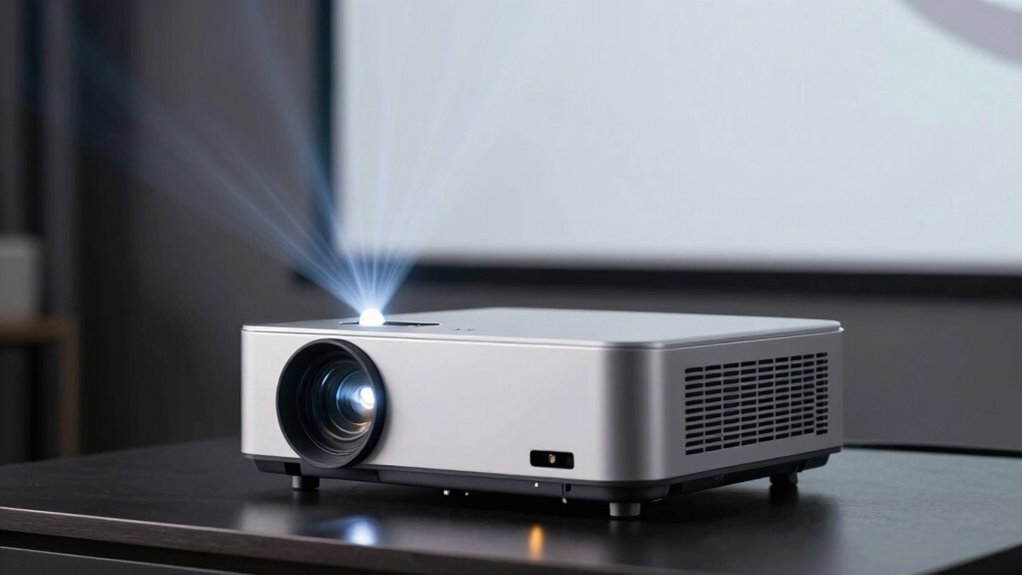
Choosing the right projector depends on understanding the different types available and their specific features. When it comes to selecting a projector, one of the most critical factors to consider is how it will fit into your space, which hinges largely on screen size and throw distance. Screen size determines how large your image will appear, impacting your viewing experience, while throw distance affects how far the projector needs to be placed from the screen to produce that size. If you pick a projector with a fixed lens and a limited throw distance, but your room layout requires it to be placed far away, your image might be too small or distorted. Conversely, choosing a projector with a short throw or ultra-short throw lens can help you maximize space, allowing you to project large images from a short distance, but these models tend to be pricier and may have specific placement requirements.
Choosing the right projector depends on space, screen size, and throw distance for optimal viewing.
Different projector types are designed to cater to various room sizes and setups. For example, standard or long-throw projectors are ideal for large venues and rooms with plenty of space behind the projector, but they demand a considerable distance to achieve large screen sizes. If your room is smaller or you want to avoid cluttering your space with a bulky projector, short-throw or ultra-short-throw projectors are better options—they can produce big images from just a few inches away from the screen. However, these models often come with trade-offs like reduced image sharpness or higher costs.
Understanding the specifics of each projector type helps prevent setup mistakes that could ruin your viewing experience. For instance, a projector with a fixed lens doesn’t allow for much flexibility in adjusting throw distance, so if you misjudge your space, your image could end up too small or too large, forcing you to rearrange your furniture or even buy a different model. Some projectors offer zoom capabilities or lens shift, giving you more control over screen size and placement, making it easier to adapt to your room’s dimensions. This flexibility can save you from the frustration of ending up with a setup that doesn’t fit your space or provides an unsatisfactory image size.
Additionally, being aware of projector technology options, such as DLP or LCD, can influence your choice based on image quality, brightness, and maintenance needs. In the end, selecting the appropriate projector type involves balancing your room’s size, the desired screen size, and the available throw distance. By understanding these core features and how they influence each other, you’ll be better equipped to make a choice that enhances your viewing experience rather than complicates it. A well-chosen projector, aligned with your space constraints, ensures you get the right screen size without sacrificing image quality or your budget.
Frequently Asked Questions
How Do I Choose the Right Projector for My Budget?
To choose the right projector for your budget, first consider your projection distance and how far the projector needs to be from the screen. Next, look at the image resolution; higher resolution offers clearer visuals but may cost more. Balance these factors with your budget, opting for a model that meets your projection distance requirements while providing acceptable image quality without overspending.
What Is the Lifespan of Different Projector Lamp Types?
You’ll find that lamp durability varies by projector type, with LED lamps lasting up to 20,000-30,000 hours and traditional bulbs around 2,000-4,000 hours. Keep in mind, replacement costs can be significant, especially for high-end projectors. Regular maintenance and choosing a lamp with longer durability help you avoid frequent replacements and high costs. So, consider lamp lifespan and replacement expenses when selecting your projector to guarantee it fits your budget.
Can I Use a Home Projector for Outdoor Events?
Yes, you can use a home projector for outdoor events, but you need to take into account your outdoor setup carefully. Look for projectors with weatherproof features to protect against moisture and dust. Make certain you have a stable surface or mount, and use a high-lumen model for bright outdoor environments. Additionally, plan for power sources and avoid direct sunlight, which can wash out the image and ruin your viewing experience.
Are There Differences in Noise Levels Among Projector Types?
Yes, there are differences in noise levels among projector types. When you compare noise levels, you’ll find that DLP projectors tend to be quieter than LCD models, making them ideal for quiet environments. If you’re sensitive to sound, check the projector’s sound levels before buying. Generally, look for projectors with lower decibels (dB) ratings, as these will produce less noise, ensuring your setup remains unobtrusive and enjoyable.
What Maintenance Is Required for Long-Term Projector Use?
You need to regularly perform lamp replacements as they burn out over time, impacting brightness. Keep your projector clean by following proper cleaning procedures, such as dusting vents and lenses, to prevent overheating and maintain image quality. Check and replace filters if applicable, and ensure ventilation areas stay clear. Doing these simple maintenance steps helps your projector run smoothly and extends its lifespan, saving you from costly repairs or replacements later on.
Conclusion
Choosing the right projector is like selecting a guiding star for your home theater adventure. When you pick wisely, your setup shines brightly, casting a warm glow of enjoyment and clarity. But a misstep might dim the mood, turning your cinematic dreams into faint shadows. Keep your vision clear, and you’ll create a space where every movie night feels like a cozy evening under the evening sky—bright, inviting, and perfectly suited to your world.