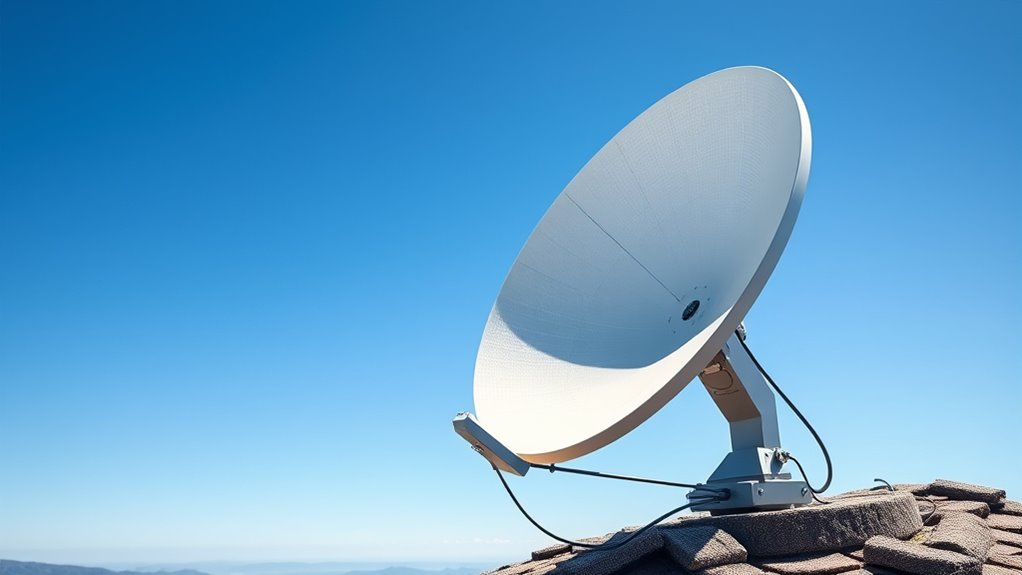

Satellite-to-phone (NTN) technology allows your mobile device to connect directly with satellites orbiting high above, bypassing traditional cell towers and ground infrastructure. This means you can stay connected in remote or underserved areas where cellular signals are weak or nonexistent. As more devices become compatible with NTN, coverage expands to nearly any location, supporting calls, texts, and data access. Keep exploring to discover how this groundbreaking technology can change your connectivity experience.
Key Takeaways
- Satellite-to-Phone (NTN) enables direct communication between satellites and mobile devices without ground infrastructure.
- It expands coverage to remote areas, ensuring connectivity in regions with weak or no cellular networks.
- Devices need specialized hardware or compatible chips to connect directly to satellite networks.
- NTN enhances emergency response, remote work, and travel by providing reliable satellite communication.
- Widespread adoption depends on developing compatible smartphones and external modules for seamless integration.

Satellite-to-phone (NTN) technology is revolutionizing connectivity by allowing direct communication between satellites and mobile devices, even in remote or underserved areas. This breakthrough means you no longer need traditional cell towers or extensive ground infrastructure to stay connected. Instead, your device can communicate directly with satellites orbiting high above, providing coverage in places where cellular networks are weak or non-existent. The key to this innovation lies in expanding satellite coverage, guaranteeing that even the most isolated regions can access reliable connectivity. As a user, you’ll find that this technology bridges gaps in communication, whether you’re hiking in the mountains, sailing offshore, or living in rural communities. It’s a game-changer for emergency situations, remote work, and global travel, making it possible to send messages, make calls, or access data without depending on ground-based networks. Additionally, advancements in device compatibility are crucial for widespread adoption, ensuring more users can benefit from this technology.
Device compatibility plays an essential role in the widespread adoption of satellite-to-phone services. Not all phones are immediately compatible with NTN networks, but manufacturers are developing devices equipped with specialized chips and antennas designed to communicate directly with satellites. When your device becomes compatible, you’ll notice a significant improvement in connectivity options. Many newer smartphones are built with the necessary hardware, or you might need an external satellite communication device or module that connects to your existing phone. The goal is seamless integration, so you don’t have to carry bulky equipment or switch devices to stay connected. As satellite coverage expands, more devices will support this technology, making it accessible to a broader audience. This compatibility guarantees that whether you’re using a high-end smartphone or a rugged outdoor device, you can tap into satellite-to-phone services without hassle.
Another aspect to consider is how this technology transforms your experience in areas with limited network infrastructure. With satellite coverage extending to nearly every corner of the globe, you gain freedom from traditional network constraints. Your device will be able to connect directly to satellites, enabling calls, texts, and data transfers in places where cellular signals are weak or nonexistent. This capability is especially essential for emergency responders, explorers, and remote workers who rely on consistent communication. Overall, the integration of device compatibility and expanded satellite coverage makes satellite-to-phone (NTN) a practical, reliable solution for global connectivity. It’s no longer about where you are but about guaranteeing you stay connected when you need it most, regardless of terrain or infrastructure limitations.
Frequently Asked Questions
How Does NTN Satellite Coverage Compare to Traditional Cellular Networks?
NTN satellite coverage generally extends beyond traditional cellular networks, especially in remote areas. Satellite technology allows you to receive signals where cellular signals struggle, thanks to broader coverage and better signal penetration in challenging terrains. While cellular networks offer high-speed data in urban zones, NTN satellites provide reliable connectivity in isolated regions, making them ideal for emergency and outdoor use. This comparison highlights NTN’s advantage in reaching places cellular networks can’t easily access.
What Are the Latency Implications of Satellite-To-Phone Communication?
You might notice some latency in satellite-to-phone communication, especially during signal interference or network congestion. However, companies are working on latency optimization to reduce delays and improve user experience. While the signal has a longer travel distance compared to terrestrial networks, advancements aim to minimize lag, making calls smoother and faster. Expect ongoing improvements as technology evolves, ensuring you experience less delay even in challenging conditions.
How Secure Is Data Transmission via NTN Satellite Connections?
You can trust that data transmission via NTN satellite connections is quite secure. Encryption protocols protect your information from unauthorized access, making it difficult for hackers to intercept or decode your data. Additionally, measures are in place to guarantee data integrity, so your messages and calls remain accurate and unaltered during transmission. While no system is entirely invulnerable, satellite-to-phone communication prioritizes security to keep your data safe.
Can NTN Services Work in Remote or Disaster-Affected Areas?
You’ll find NTN services are quite reliable in remote or disaster-affected areas, making them essential for emergency preparedness and rural connectivity. These satellite-to-phone networks can bridge gaps where traditional infrastructure falls short, ensuring you stay connected when it matters most. Their ability to operate independently of local networks means you can communicate, coordinate, and access crucial information even in the most challenging conditions.
What Are the Costs Associated With Satellite-To-Phone Services?
You’ll find that satellite-to-phone service costs vary based on pricing options and service plans. Typically, plans range from pay-as-you-go options to monthly subscriptions, with prices influenced by data limits and coverage areas. While initial device costs can be higher, ongoing fees are usually affordable, especially if you need reliable connectivity in remote or disaster-affected areas. Comparing plans helps you find the best balance between cost and coverage.
Conclusion
Satellite-to-phone (NTN) technology is transforming how you stay connected, especially in remote areas. Did you know that over 3 billion people worldwide lack reliable internet access? With NTN, that number could drop markedly, bringing communication to even the most isolated places. As this technology advances, you’ll find it easier than ever to connect anywhere on the planet, making the world feel a little smaller and more accessible for everyone.