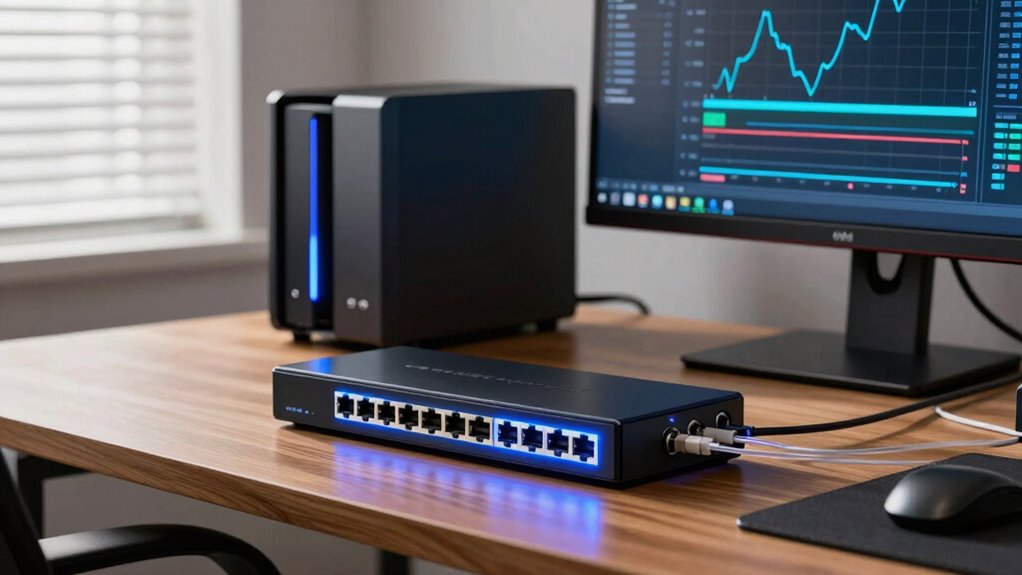

Faster Ethernet like 5GbE and 10GbE at home really matters when you handle large files, stream 4K or 8K content, or support multiple devices at once. If you’re working remotely or running a smart home, these speeds reduce lag, buffering, and transfer times considerably. Upgrading now can future-proof your network and improve daily connectivity. Keep going to discover exactly when these higher speeds truly make a difference in your home setup.
Key Takeaways
- When multiple devices stream 4K/8K content simultaneously, faster Ethernet prevents buffering and lag.
- Large file transfers, backups, and media syncing benefit from 5GbE/10GbE speeds, saving time.
- Powering smart home devices and gaming setups demands higher bandwidth for seamless operation.
- Future-proofing your network ensures compatibility with evolving technology and increasing data needs.
- High-performance Ethernet enhances overall home network reliability and supports demanding applications instantly.
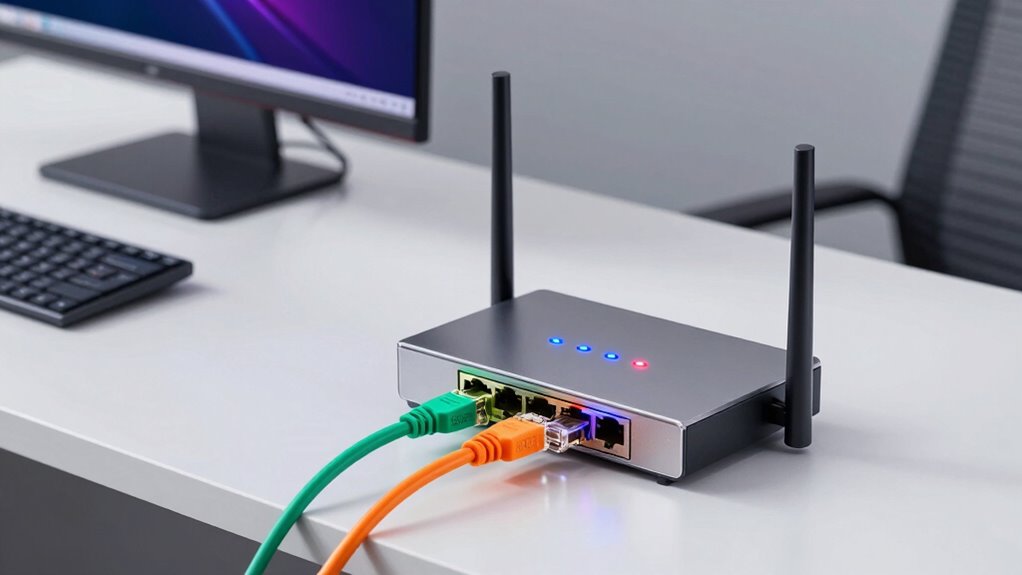
In today’s connected world, having fast and reliable internet at home is more important than ever. Whether you’re working remotely, gaming, or streaming your favorite shows, your network’s performance can make all the difference. Upgrading to 5GbE or 10GbE Ethernet speeds can markedly enhance your home network, especially as your devices demand more bandwidth. These faster speeds aren’t just about future-proofing; they deliver real, tangible benefits right now. When you prioritize network upgrades to support these higher Ethernet speeds, you’re setting yourself up for smoother, more efficient connectivity across all your devices.
One of the key advantages of moving to 5GbE or 10GbE is the boost in streaming benefits. If you regularly stream 4K or even 8K content, higher Ethernet speeds help eliminate buffering and reduce lag. You’ll notice that videos load faster, and playback remains seamless, even during high-demand periods. This is especially useful if you have multiple devices streaming simultaneously or if you’re hosting a home theater system that requires a stable, high-bandwidth connection. Upgrading your network to support these speeds ensures your streaming experience is smooth, clear, and interruption-free.
Higher Ethernet speeds ensure smooth, buffer-free streaming for 4K and 8K content, even with multiple devices.
Implementing higher-speed Ethernet also improves data transfer within your home. Transferring large files, backing up data to a NAS, or syncing devices becomes quicker and more efficient. Without the bottleneck of slower connections, you’ll save time and frustration. For example, copying a large video library or backing up important files to a local server happens in a fraction of the time compared to traditional gigabit Ethernet. This is particularly relevant if you frequently work with large files or run a home office that demands fast data access.
Beyond the immediate benefits, investing in network upgrades to support 5GbE or 10GbE prepares your home for the future. As more devices become capable of handling higher speeds—smart home hubs, 4K cameras, gaming consoles—you’ll be ready for the increased demand. This also means your network infrastructure stays relevant longer, avoiding frequent upgrades as technology advances. Plus, with the evolving landscape of smart home technology and content consumption, future-proofing your network ensures you won’t need to constantly revisit your setup.
Frequently Asked Questions
Can Existing Home Wiring Support 10GBE Speeds?
Your existing home wiring likely can’t support 10GbE speeds without upgrades. Standard Ethernet cables, like Cat5e or Cat6, typically max out at 1GbE or 10GbE over short distances, but older wiring or poorly installed cables might limit performance. To achieve true 10GbE speeds, you’ll need to upgrade your cables and possibly your network infrastructure. Proper planning guarantees your network upgrades deliver the faster speeds you want without bottlenecks.
What Are the Real-World Benefits of Upgrading to 5GBE or 10GBE?
Upgrading to 5GbE or 10GbE is like opening a floodgate for your home network, letting data flow freely. You’ll notice less network congestion, smoother streaming, and faster file transfers. This means higher streaming quality without buffering, quicker backups, and seamless gaming. If your devices support it, these speeds turn your home into a powerhouse, ensuring your internet keeps pace with your digital life’s demands.
Is 10GBE Compatible With Current Wi-Fi Networks?
No, 10GbE isn’t directly compatible with your current Wi-Fi networks because it relies on wired connections. However, it integrates well with your network infrastructure if you have a compatible switch and network interface card. For wireless compatibility, you’ll still need a good Wi-Fi router, but 10GbE can notably boost wired device speeds, improving overall network performance and data transfer rates within your home.
How Much Does Installing 10GBE Infrastructure Typically Cost?
Installing 10GbE infrastructure typically costs between $300 to $1,000, depending on your setup. You’ll need cost estimation for components like switches, network cards, and cables. Active components include a 10GbE switch, compatible network adapters for your devices, and high-quality cabling. Keep in mind, higher-quality equipment can augment costs, but it ensures faster, more reliable connections. Budget accordingly based on your network size and performance needs.
What Devices Are Needed to Achieve 10GBE at Home?
To achieve 10GbE at home, you need a compatible network switch that supports 10GbE ports, fiber modules for fiber connections, and compatible network adapters in your devices. Make certain your devices have 10GbE network interface cards or adapters. You might also need appropriate cabling, like Cat6a or fiber optic cables, to guarantee high-speed data transfer. These components work together to deliver reliable 10GbE performance in your home network.
Conclusion
As you consider upgrading your home network, the leap to 5GbE or 10GbE might seem tempting—but is it truly necessary? The technology promises faster speeds, but the real question is, will your current setup and future needs justify the switch? The answer isn’t simple, and the potential benefits could surprise you. The future of home networking is closer than you think—are you ready to unleash its full potential when it finally arrives?