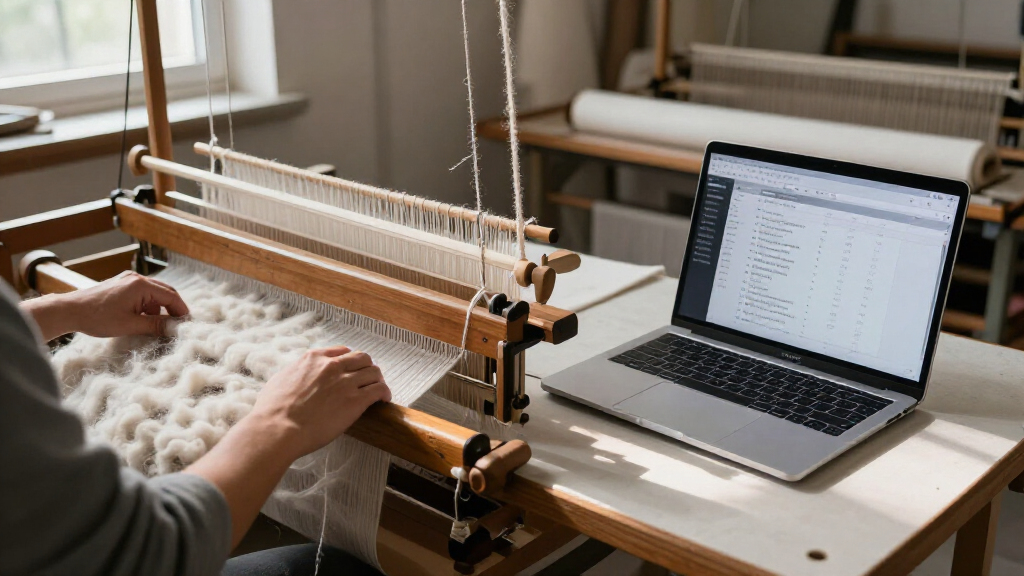

🔍 Read the full analysis: How The Luddites’ Experience Illuminates AI And Labor on ThorstenMeyerAI.com

Get the latest gadgets delivered free with Prime
- Fast, free delivery on millions of items
- Prime Video, Amazon Music and more included
- Member-only deals all year
TL;DR
A November 5, 2026, article from ThorstenMeyerAI.com compares the Luddites’ 1811–13 protests with current disputes over AI and work. Historical records describe machine workers targeting some frames over underpayment and cheaper goods, while Britain’s response included troops and executions. The comparison highlights recurring questions about wages, job quality and workers’ say, but does not establish that AI will produce the same economic effects.
ThorstenMeyerAI.com published a new installment of its “Work After Work” series on November 5, 2026, comparing the 1811–13 Luddite protests with current disputes over artificial intelligence and labor. The episode argues that the historical conflict centered not on a blanket rejection of machines, but on pay, product quality and workers’ influence over how machinery was used.
The installment, titled “How the Luddites’ Experience Illuminates AI and Labor,” draws on records including a magistrate’s report to the Home Office, parliamentary speeches and the law passed after the protests. Its account describes the first Luddites as framework knitters who operated stocking frames to make knitted goods, often at home or in small workshops. Some rented the machines and were paid by the piece by hosiers, merchants who supplied work and sold the goods.
In a February 6, 1812, report cited by the article, Nottingham magistrate Robert Baker wrote that in some places one-fifth of frame workers were out of work before the unrest. Baker said protesters targeted frames belonging to hosiers who paid “the under-price” and wider frames that enabled cheaper stockings. His account is evidence from an official trying to explain the disturbance, not a complete or neutral record of every protester’s motives. The article also notes that a January 1812 reward notice concerned frames whose workers said they had been paid the full rate, showing that some attacks did not match the reported pattern.
The protests spread from Nottinghamshire to other English textile districts. The article says the government sent 900 cavalry and 1,000 infantry into Nottingham by December 1811. Parliament’s Frame-Breaking Act, passed on March 20, 1812, made frame breaking a capital felony; the source reports that 17 men were executed in 1813. These figures describe the period’s state response and punishment, rather than proving that all workers or protests shared one strategy.
The Stakes Behind Workplace Automation
The comparison matters because arguments about workplace technology often involve more than whether a machine can perform a task. The Luddite account points to questions about who receives the gains, whether new production methods reduce pay or product standards, and whether workers can shape decisions that affect their livelihoods. Those questions now arise in debates about how employers use AI, though the historical analogy cannot by itself predict AI’s employment effects.
The source connects those questions to present-day examples, including writers’ contracts in Hollywood, works-council rights in Germany and the European Union’s AI Act. These are different systems and disputes, not evidence that modern workers face the same conditions as nineteenth-century knitters. They illustrate a shared concern: rules governing deployment can affect compensation, working conditions and worker participation alongside the technology itself.
The episode also cites economist Robert Allen’s estimate that British real wages rose 12% from 1780 to 1840, while output per worker rose 46%. It says later research narrows, but does not eliminate, that gap, and that wages grew faster than output after 1840. These figures concern a long historical period and should not be treated as a forecast for AI or as proof that technology alone caused the wage pattern.
Products Worth Considering

DJI Mic 2 Wireless Microphone System (2 Transmitters, Receiver, Charging Case)

Apple iPad mini (A17 Pro), 128GB, Wi-Fi 6E, Space Gray

Logitech MX Master 4 Ergonomic Wireless Mouse with Haptic Feedback, Graphite
As an affiliate, we earn on qualifying purchases.
Nottingham’s Knitters and the Frame
The stocking frame was a mechanical knitting machine worked by hand and foot. Many framework knitters did not own the equipment: the source quotes Home Secretary Richard Ryder telling the House of Commons in February 1812 that frames were hired out by masters or owned by investors who rented them to workers. That arrangement meant workers could depend on machine owners and hosiers for access to equipment and paid work.
The source dates the opening of the most intense period of Luddism to an attack on wide knitting frames in Arnold, near Nottingham, in March 1811. The National Archives describes the movement as spreading from Nottinghamshire to Yorkshire and Lancashire in 1812, as well as to other nearby counties. The name “General Ned Ludd,” used to sign threatening letters, was a mythical figure, according to the National Archives; there is no reliable evidence that he led the movement.
Organized labor had few legal routes to influence conditions. The source notes that the Combination Acts of 1799 and 1800 made trade unions illegal and that Parliament rejected a minimum wage for weavers in 1808. The episode presents those restrictions as part of the setting for protest, while the historical record it cites also shows the government’s forceful response.
““Resentment against the hosiers who paid the under-prices” had been “the leading feature up to the present day.””
— Nottingham magistrate Robert Baker, in a February 6, 1812, report to the Home Office, as quoted by ThorstenMeyerAI.com
Limits of the Historical Comparison
The source material does not establish how AI will affect overall employment, wages or productivity, or whether its effects will be distributed as they were during Britain’s industrialization. The historical wage and output estimates cover 1780 to 1840; they cannot be directly applied to present-day workplaces. The episode’s comparison is a framework for examining labor disputes, not a quantitative prediction.
The motives behind individual Luddite attacks also remain difficult to generalize from the records cited. Baker described underpayment and wider frames as leading targets, but the reward notice about frames reportedly working at full price shows that not every incident followed that account. The source does not provide a full breakdown of attacks, workers’ views or local conditions across every district.
Nor does the article’s list of current examples establish how well each law, contract or workplace arrangement protects workers in practice. The effects of the EU AI Act and other policies depend on implementation and the specific workplace. The source does not report new policy decisions or measured outcomes from the modern examples it names.
How Workplace Rules Develop
The article does not announce a forthcoming policy decision or a scheduled follow-up event. Its immediate takeaway is to watch how employers and lawmakers set terms for AI use: what tasks are automated, how resulting gains and costs are shared, what happens to pay and work quality, and whether employees have a meaningful role in decisions.
For the specific modern examples named, future developments would come through negotiations over writers’ contracts, workplace consultation and implementation of applicable laws, including the EU AI Act. The source gives no dates or outcomes for those processes. The comparison therefore remains a prompt for examining labor rules as AI adoption proceeds, rather than a report that a particular new rule has already been agreed.
Key Questions
What is the news development?
ThorstenMeyerAI.com published an installment of its “Work After Work” series on November 5, 2026, relating the history of the Luddites to current workplace debates about AI.
Were the Luddites opposed to all machines?
The source describes the early Luddites as machine workers who used stocking frames. It says some protesters targeted equipment linked to underpayment and cheaper, lower-quality goods; it does not establish that every protester had the same motive.
What happened to people who broke frames?
Parliament’s Frame-Breaking Act of March 1812 made frame breaking a capital felony. The source reports that 17 men were executed in 1813.
What does the Luddite comparison suggest about AI?
It directs attention to pay, work quality and worker influence as well as the technology itself. It does not predict how many jobs AI will affect or how wages will change.
What remains unknown about the modern comparison?
The source provides no measured outcomes for the current policy and contract examples it names, and no forecast for AI’s effect on employment or wages. How protections work will depend on specific workplace decisions and implementation.
Source: ThorstenMeyerAI.com