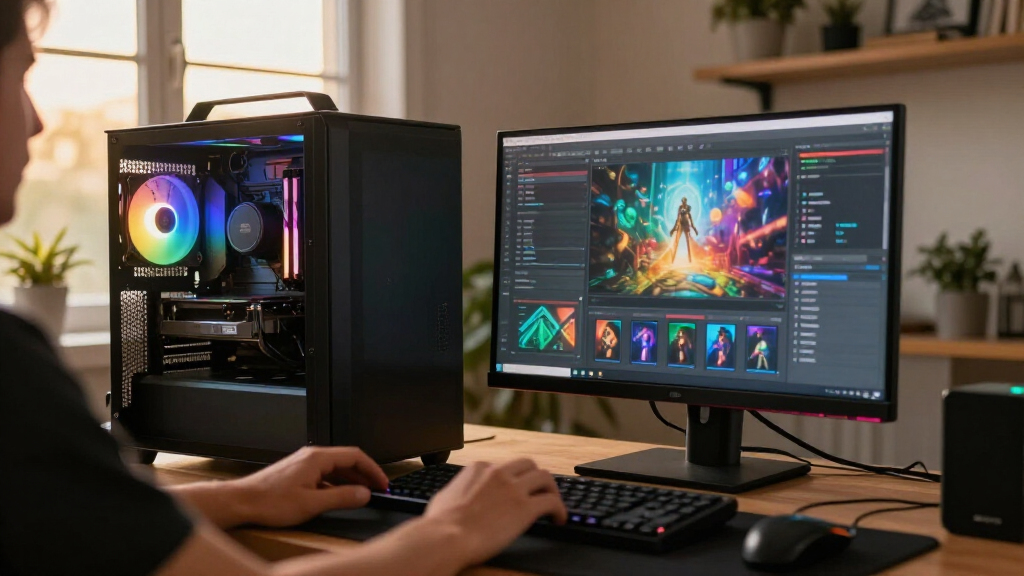

🔍 Read the full analysis: How 10 Best Graphics Cards Handle AI, Gaming, And Everyday Use on ThorstenMeyerAI.com

Get the latest gadgets delivered free — and shop member deals
- Fast, free delivery on millions of items
- Access to Prime Big Deal Days deals on October 6–7
- Prime Video, Amazon Music and more included
TL;DR
The roundup compares 10 graphics cards for gaming, AI-related workloads and everyday display needs, from current RX 9070 XT and RTX 5080 models to older GT and RX cards. The source gives product positioning and selection guidance, but no benchmark results, prices or AI workload measurements.
ThorstenMeyerAI.com has published the original 10-card graphics analysis spanning current gaming hardware and older cards for narrower upgrade needs. It places the Radeon RX 9070 XT and GeForce RTX 5080 models in its high-performance group, while recommending that buyers weigh memory, case fit, power support and display needs before choosing; the source provides no comparative benchmark data.
The guide’s recommended starting point for many gaming PCs is the GIGABYTE Radeon RX 9070 XT Gaming OC 16G, which it describes as pairing a current-generation GPU with 16GB of graphics memory, a consideration also covered in this graphics card guide. The ASUS Prime GeForce RTX 5070 is presented as a more measured current-generation option, while three RTX 5080 variants are aimed at premium builds. The article identifies the ASUS Prime RX 9070 XT as another card in the same GPU class as the GIGABYTE model.
The 10 picks are the GIGABYTE RX 9070 XT Gaming OC 16G, ASUS Prime RX 9070 XT, ASUS Prime GeForce RTX 5070, three RTX 5080 variants including the ROG Astral White, the Radeon RX 580, and the GeForce GT 730 and GT 740. The source does not name all three RTX 5080 variants in the supplied material. It says the premium RTX 5080 models share a GPU, so cooler design, dimensions and build appearance are key distinctions; it singles out the ROG Astral White for its appearance.
For older or specialized systems, the guide positions the RX 580 with 8GB as a possible budget upgrade, subject to realistic expectations about its age and the condition of the rest of the PC, topics also considered in this guide to graphics cards for AI and machine learning. The GT 730 and GT 740 are described as options for display connectivity or compact-PC constraints, rather than direct alternatives for modern gaming. The GT 740’s low-profile format may help with physical fit, but buyers still need to check the specific card’s dimensions and outputs.
The 10 picks
- 1
 ASUS ROG Astral GeForce RTX 5080 16GB GDDR7 White OC Edition Graphics CardView on Amazon →
 - 2
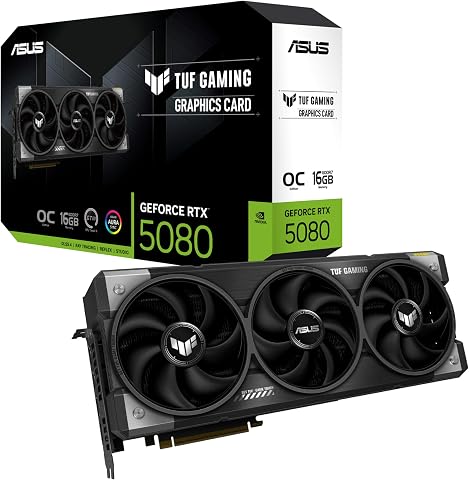 ASUS TUF Gaming GeForce RTX 5080 16GB GDDR7 OC Edition Graphics CardView on Amazon →
 - 3
 GIGABYTE GeForce RTX 5080 Gaming OC 16G Graphics CardView on Amazon →
 - 4
 ASUS Prime NVIDIA GeForce RTX 5070 OC Edition Graphics CardView on Amazon →
 - 5
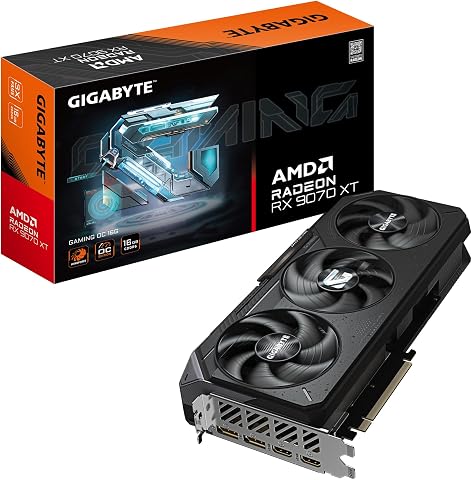 GIGABYTE Radeon RX 9070 XT Gaming OC 16G Graphics CardView on Amazon →
 - 6
 ASUS Prime Radeon RX 9070 XT 16GB GDDR6 OC Edition Gaming Graphics CardView on Amazon →
 - 7
 ASRock Radeon RX 9070 Challenger 16GB OC Graphics Card, RDNA 4, 2520MHz Boost…View on Amazon →
 - 8
 Kelinx AISURIX RX 580 8GB GDDR5 Graphics Card with Dual HDMI and DisplayPortView on Amazon →
 - 9
 GT 730 Graphics Card 4GB DDR3 64-bit with HDMI, DisplayPort, VGAView on Amazon →
 - 10
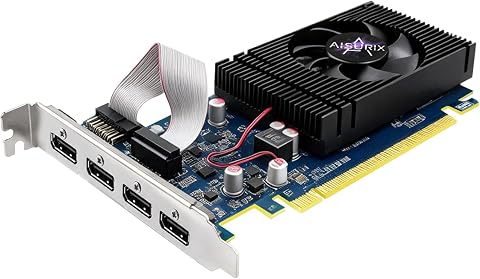 AISURIX GT 740 4GB GDDR5 Low-Profile Graphics Card with 4 HDMI PortsView on Amazon →
Matching GPUs to Real PC Builds
The selection illustrates why a graphics-card purchase involves more than comparing model names or memory figures. The GPU’s capability, target games and display resolution determine whether a card is appropriate for gaming, while case dimensions, power-supply capacity and connectors can determine whether it works in an existing PC at all. A larger cooler may affect cooling and noise, but can also rule out a card in a smaller case.
The guide also separates gaming upgrades from display-expansion purchases. An older GT card can address a need for outputs or a low-profile card, but those features do not make it equivalent to a newer gaming GPU. The same caution applies to AI use: the supplied source discusses AI in the title but gives no AI benchmarks, supported application testing or workload comparisons. Buyers considering AI tasks need evidence for the software and workload they intend to run.
How the Guide Ranks Its Picks
The article says it ranked the cards by their likely roles: current gaming, upgrading an older PC, or adding display support. For gaming picks, it weighs GPU generation, memory capacity and position within a product family. It also considers cooler and form-factor cues, because performance alone does not establish whether a card will fit a system.
Its broad ordering puts RX 9070 XT and RTX 5080 cards at the top, the RTX 5070 as a less demanding current-generation route, and the RX 580, GT 730 and GT 740 lower because they serve older or narrower needs. The supplied material does not include the complete product-by-product specifications, prices, test methods or performance results that would allow readers to independently compare the ranking.
“For most gaming PCs, I’d start with the GIGABYTE Radeon RX 9070 XT Gaming OC 16G.”
— ThorstenMeyerAI.com buying guide
Performance Evidence Still Missing
The supplied article text does not provide game benchmarks, AI workload tests, prices or a publication date. It also does not specify the complete names and model details for all three RTX 5080 variants. Claims about relative gaming suitability should therefore be treated as the guide’s recommendations, not as independently demonstrated results in the material provided.
Exact dimensions, power requirements, connector layouts, display outputs and software compatibility can differ among board-partner models. The guide advises checking the specific card and the rest of the PC, but the supplied text does not list those details for each of the 10 picks.
Checks Before Buying a Card
Readers comparing these picks should check independent tests for the games, resolution and settings they use, and consult the intended AI or creative software’s hardware guidance if those workloads matter. Before ordering, they should confirm the exact card’s length, thickness, power connectors, supply recommendations and display outputs against their case and system.
The guide gives no upcoming testing date or product announcement. A fuller comparison would need model-level specifications, current prices and results from consistent gaming and AI workload tests.
Key Questions
Which card does the guide recommend as a starting point for gaming?
It names the GIGABYTE Radeon RX 9070 XT Gaming OC 16G as a starting point for most gaming PCs. The supplied material does not include benchmarks to independently assess that recommendation.
Does the guide compare AI performance across all 10 cards?
No AI benchmark results or application tests appear in the supplied source. The title mentions AI, but the factual material focuses mainly on gaming, system fit, power and display needs.
Are the three RTX 5080 cards different GPUs?
The guide describes them as premium variants of the same GPU and says buyers should compare cooler design, physical fit and appearance. It specifically notes the ROG Astral White’s distinctive build appearance.
Are the GT 730 and GT 740 suitable modern gaming alternatives?
The guide positions them for display support or compact-PC needs, not as direct substitutes for current gaming GPUs. It describes the GT 740’s low-profile format as relevant to physical fit.
What should buyers check before upgrading?
Check game and display targets, the exact card’s dimensions, available power connectors and power-supply capacity. For AI or creative tasks, confirm the software’s hardware guidance and look for workload-specific testing.
Source: ThorstenMeyerAI.com
Halloween Picks
halloween
As an affiliate, we earn on qualifying purchases.