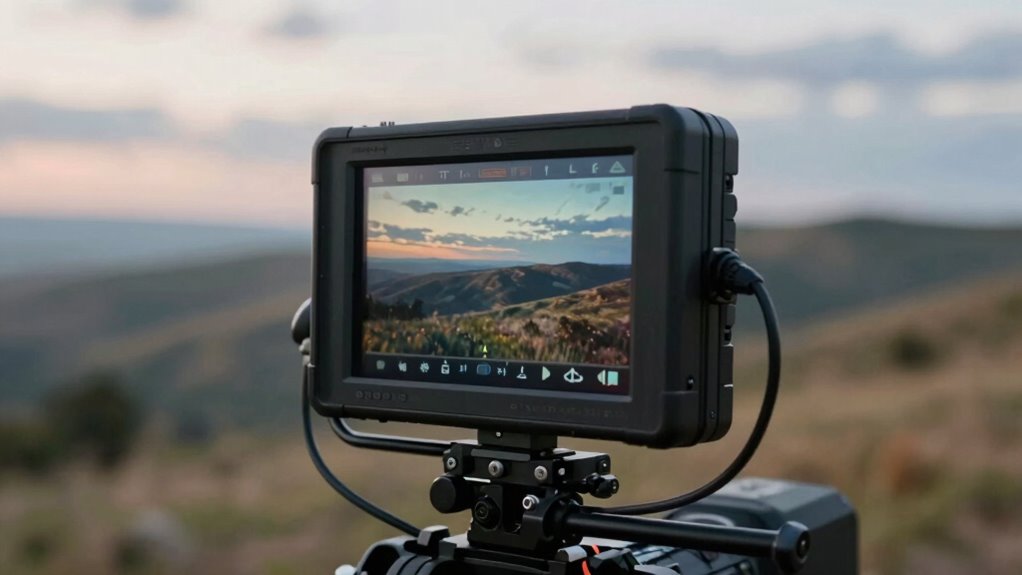
Using a field monitor helps you catch issues early by giving real-time feedback on focus, framing, and exposure before images hit the sensor. It prevents costly mistakes and reduces the need for reshoots, saving you time on set. Plus, it works well outdoors where screens can be hard to see. Proper setup and ergonomic use keep your workflow smooth, so you get better shots faster. Keep going to discover how these tools improve your shooting process even further.

Get the latest gadgets delivered free with Prime
- Fast, free delivery on millions of items
- Prime Video, Amazon Music and more included
- Member-only deals all year
Key Takeaways
- Field monitors provide real-time feedback, allowing quick adjustments to focus, framing, and exposure before capturing images.
- They help prevent mistakes and reshoots by catching issues early during shooting.
- Improved visibility in bright outdoor conditions reduces errors caused by poor screen clarity.
- Enhanced ergonomics with flexible monitor positioning reduces fatigue, increasing on-set efficiency.
- Proper environmental setup and equipment management protect gear and sustain optimal shooting conditions.
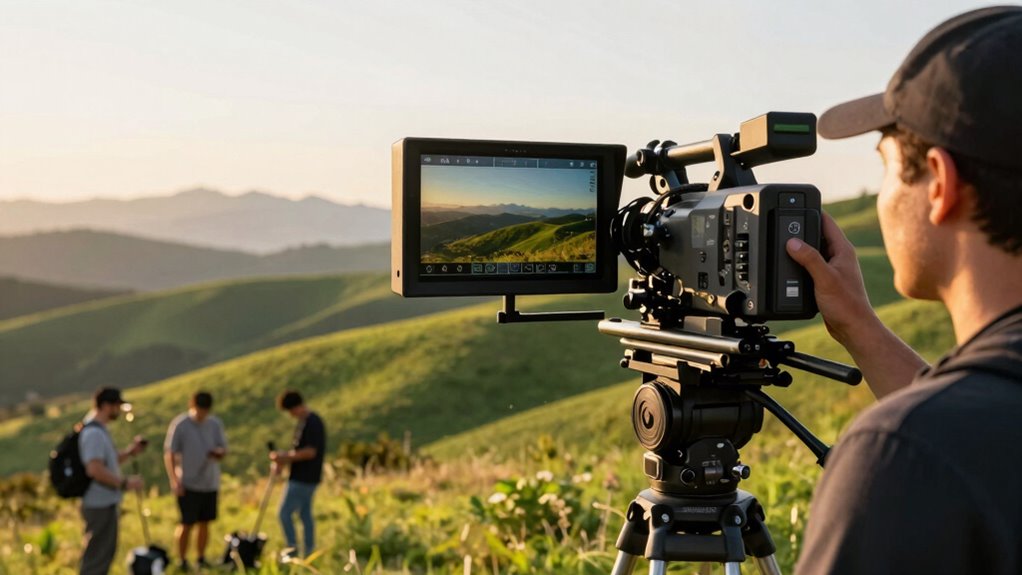
Before a single shot hits the camera sensor, field monitors play an essential role in preventing mistakes and saving time on set. They act as your eyes, giving you real-time feedback that’s critical for smooth shooting. When you’re adjusting focus, framing, or exposure, a good monitor helps you see details that the camera’s built-in screen might miss, especially in bright outdoor conditions. But beyond visual clarity, a field monitor impacts your workflow in subtle, yet necessary ways—like improving camera ergonomics and extending battery life. The way you set up and interact with your monitor can make your shooting experience more comfortable and efficient, reducing fatigue and speeding up decisions.
A well-designed monitor with ergonomic features guarantees that you don’t strain your neck or eyes during long shoots. You can position it at the perfect angle, reducing awkward postures that cause discomfort. This ergonomic benefit means you stay more focused and alert, which improves your overall shot quality. Some monitors even come with tilting or swiveling screens, allowing you to adjust easily without losing sight of your framing. When you prioritize camera ergonomics, you’re less likely to make mistakes caused by poor visibility or awkward handling, saving you from costly reshoots. Incorporating ergonomic design considerations into your monitor setup can also prevent long-term physical strain. Additionally, understanding how indoor air quality affects physical comfort can help you create a healthier shooting environment, especially during long days on set. Proper ventilation and maintaining good air quality can also prevent overheating of electronic equipment, including monitors, thereby prolonging their lifespan and maintaining optimal performance. Ensuring proper monitor connectivity options can further streamline your setup and reduce technical hurdles during shoots. Good air quality and proper ventilation not only protect your equipment but also contribute to a more comfortable and productive workspace, especially in enclosed or poorly ventilated environments.
As an affiliate, we earn on qualifying purchases.
Frequently Asked Questions
How Do Field Monitors Impact Crew Workflow During a Shoot?
You’ll find that field monitors streamline your crew’s workflow by providing real-time, accurate color representation, ensuring everyone sees the same image and reducing miscommunication. They help with quick adjustments on set, saving time. Plus, their power management features extend battery life, so your team can work longer without interruptions. This efficiency boosts productivity, keeps everyone aligned, and ultimately leads to a smoother, more coordinated shoot.
What Are the Best Features to Look for in a Field Monitor?
You’ll want a field monitor with superb color accuracy to guarantee your footage looks true to life, saving time on corrections later. Power options matter too—you need reliable, versatile sources like batteries or AC power to keep shooting smoothly. Look for high resolution screens and good brightness levels so you can see details clearly even in bright sunlight. These features help you make confident, quick decisions on set, elevating your filmmaking game.
Do All Shoots Require the Same Type of Monitor?
Not all shoots require the same type of monitor. You should choose one based on color accuracy and power options. For example, a high-end production might need a monitor with precise color reproduction to guarantee the final look matches your vision. On the other hand, a quick outdoor shoot might prioritize portability and versatile power options, like batteries. Matching your monitor’s features to your shoot’s needs helps you work efficiently and get the best results.
How Do Field Monitors Influence Budget Considerations?
Field monitors influence your budget by impacting cost efficiency and equipment investment. They can be a significant upfront expense, but their ability to prevent costly mistakes and save time makes them a worthwhile investment. Choosing the right monitor for your shoot helps optimize resource allocation, reducing the need for extensive post-production corrections. Ultimately, investing wisely in quality monitors can streamline your workflow and guarantee you get the best footage without overspending.
Can Field Monitors Be Used Effectively in Outdoor Lighting Conditions?
Yes, you can use field monitors effectively outdoors, but sunlight readability is your biggest challenge. You’ll want a monitor with a high-brightness display to see clearly in direct sunlight. Keep an eye on battery life, as outdoor shoots drain power faster. With the right features—like anti-glare screens and long-lasting batteries—you can rely on your monitor to deliver accurate visuals even in bright, unpredictable outdoor lighting conditions.
Conclusion
You might think a field monitor is just a fancy accessory, but it’s actually a game-changer. It helps you catch issues early, saving time and frustration during shoots. Sure, some say it’s unnecessary or costly, but consider how it improves your confidence behind the camera. With a good monitor, you’ll avoid reshoots and deliver better footage faster. Invest in one—you’ll thank yourself when the shoot’s over and the results speak for themselves.
Halloween Picks
halloween
As an affiliate, we earn on qualifying purchases.