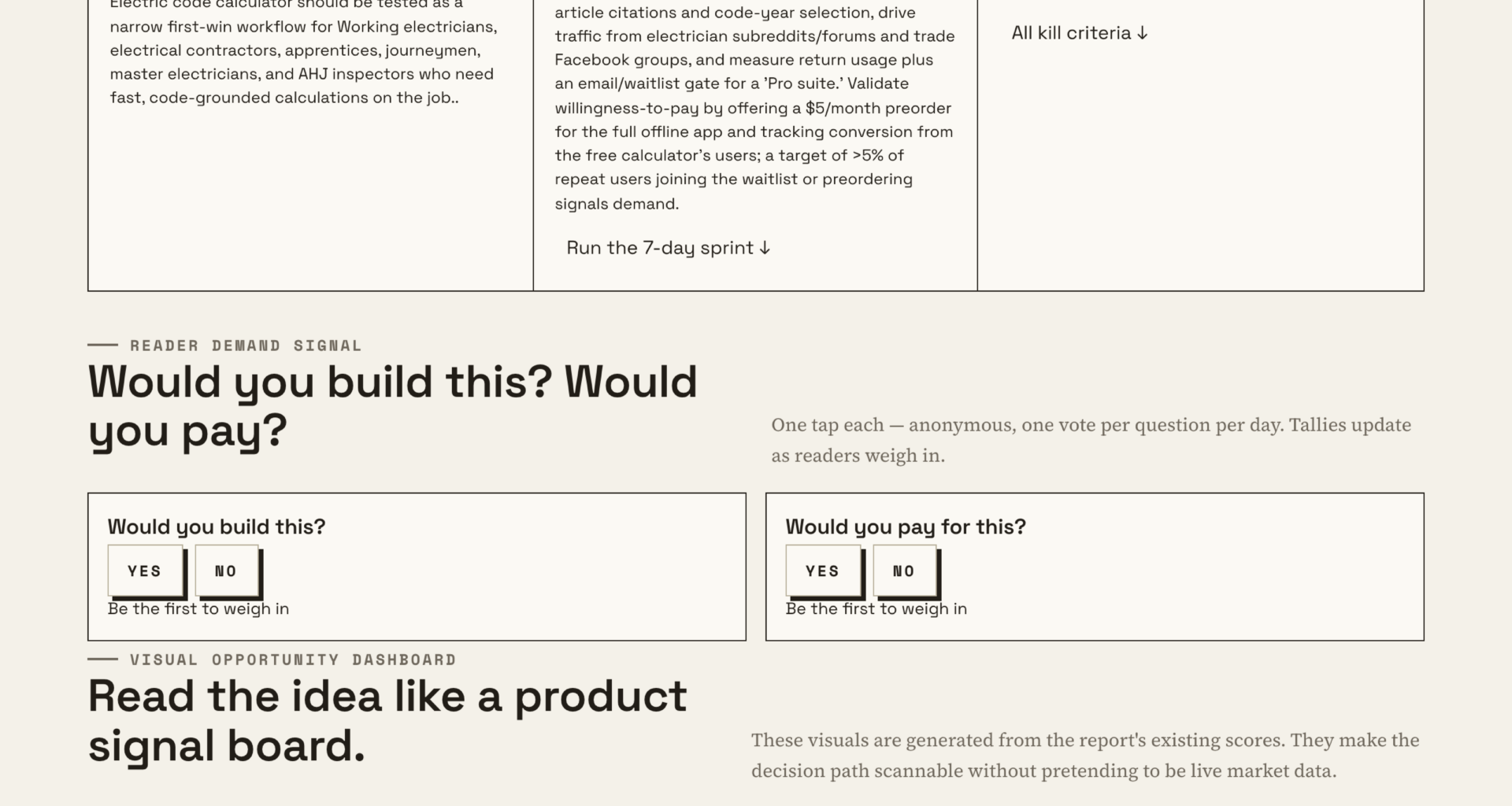

📊 Full opportunity report: Electric Code Calculator on IdeaNavigator AI — validation score, market gap, and execution plan.

Get the latest gadgets delivered free with Prime
- Fast, free delivery on millions of items
- Prime Video, Amazon Music and more included
- Member-only deals all year
TL;DR
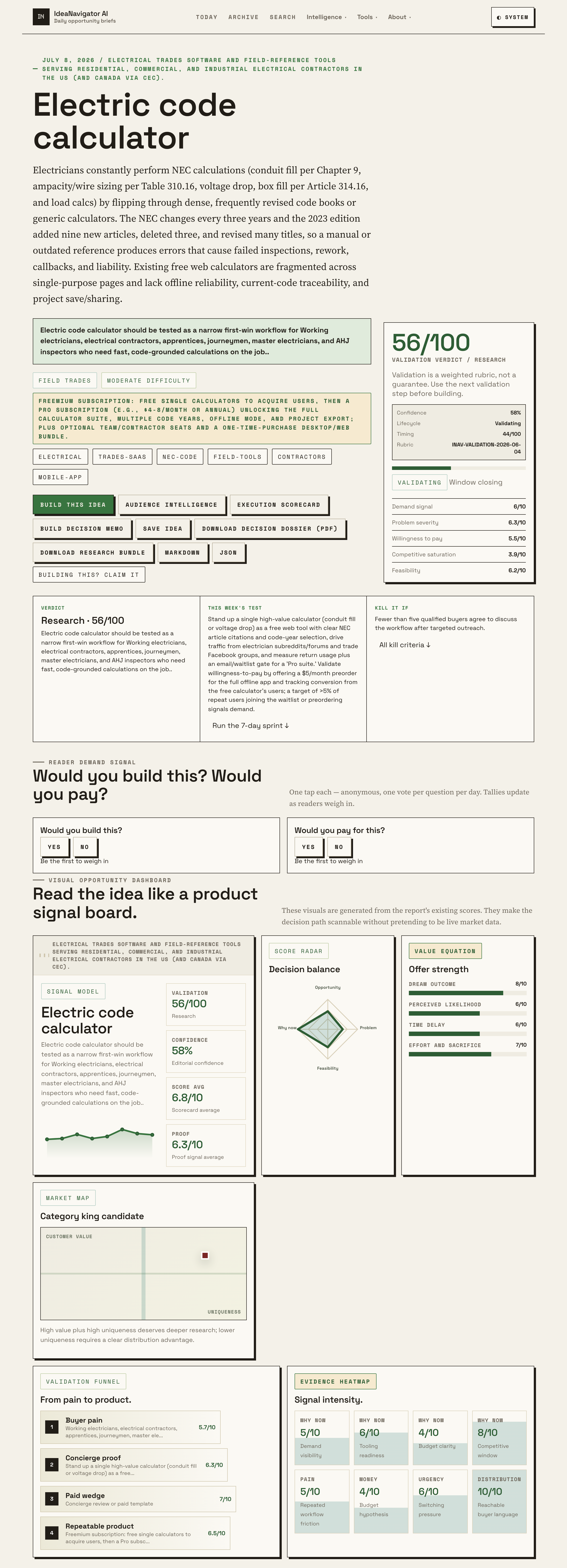
A new electric code calculator is being developed to help electricians perform NEC calculations quickly and accurately on the job. It offers offline access, project sharing, and current code updates, addressing a critical industry need amid rising demand and code revisions.
A new electric code calculator is in development to provide electricians, contractors, and inspectors with a fast, reliable tool for NEC calculations, aiming to reduce errors and improve compliance on the job.
The calculator is designed as a mobile-first and web application, focusing on high-use NEC calculations such as conduit fill, wire sizing, voltage drop, and box fill. It will cite specific NEC articles and tables, and will support multiple code years, including 2017, 2020, and 2023, to match current standards. The tool will operate fully offline, enabling users to perform calculations in the field without internet access and to save or share project data.
Developers plan to launch with a free tier offering core calculators and a paid Pro tier unlocking additional features such as multiple code-year support, offline mode, and project sharing. The business model is based on a freemium subscription, with monthly or annual plans costing between $4 and $8. The target market includes residential, commercial, and industrial electrical contractors across the US and Canada, with initial validation through a prototype focused on conduit fill or voltage drop calculators.
Impact on Electrical Industry Efficiency and Accuracy
This tool addresses a critical need for accurate, up-to-date NEC calculations, reducing errors that can lead to failed inspections, rework, and liability. By enabling offline access and project sharing, it streamlines fieldwork and training, especially as the industry faces a surge in demand and a large portion of electricians nearing retirement. The calculator could become a standard reference, improving safety and compliance across the sector.
As an affiliate, we earn on qualifying purchases.
Industry Challenges and Code Revision Cycles
Electricians frequently perform complex NEC calculations manually or with fragmented online tools, risking errors due to outdated references or misinterpretation. The NEC updates every three years, with the 2023 edition adding nine new articles, deleting three, and revising many others. This creates a demand for tools that stay current with the latest code, especially as electrification projects—such as data centers, EV charging, and solar installations—drive new requirements and skills gaps. The rising employment demand, projected at 9% growth from 2024 to 2034, further emphasizes the need for accessible, reliable calculation tools.
Development Timeline and User Adoption Uncertainties
It is not yet clear how quickly the app will be adopted by the target audience, or how well the initial MVP will perform in real-world conditions. The success of validation efforts and willingness-to-pay remain to be tested through user engagement and preorders. Additionally, the impact of future NEC revisions and how seamlessly the app will integrate with existing workflows are still uncertain.
Next Steps for Validation and Market Entry
The development team plans to release a prototype focusing on a high-value calculator, such as conduit fill, to gather user feedback and measure demand through traffic from electrician forums and trade groups. They will also test preorders for a full offline version, aiming for at least 5% conversion among early users. Based on initial results, further development and marketing efforts will follow, with a goal to launch a full product within 2024.
Key Questions
When will the electric code calculator be available for use?
The initial prototype is expected to be released in early 2024, with a full product launch targeted for the latter half of the year.
Will the calculator support multiple NEC code years?
Yes, the app will support at least the 2017, 2020, and 2023 NEC editions, allowing users to select the appropriate code cycle for their project.
Can the calculator be used offline in the field?
Yes, offline operation is a core feature, enabling users to perform calculations without internet access and save or share project data locally.
What features will the paid Pro tier include?
The Pro subscription will unlock full calculator access, multiple code-year support, offline mode, project export, and potentially team or contractor sharing options.
How will the tool improve safety and compliance?
By providing accurate, current calculations that cite specific NEC articles, the calculator reduces errors that can lead to code violations, rework, and safety issues.
Source: IdeaNavigator AI
Halloween Picks
halloween
As an affiliate, we earn on qualifying purchases.