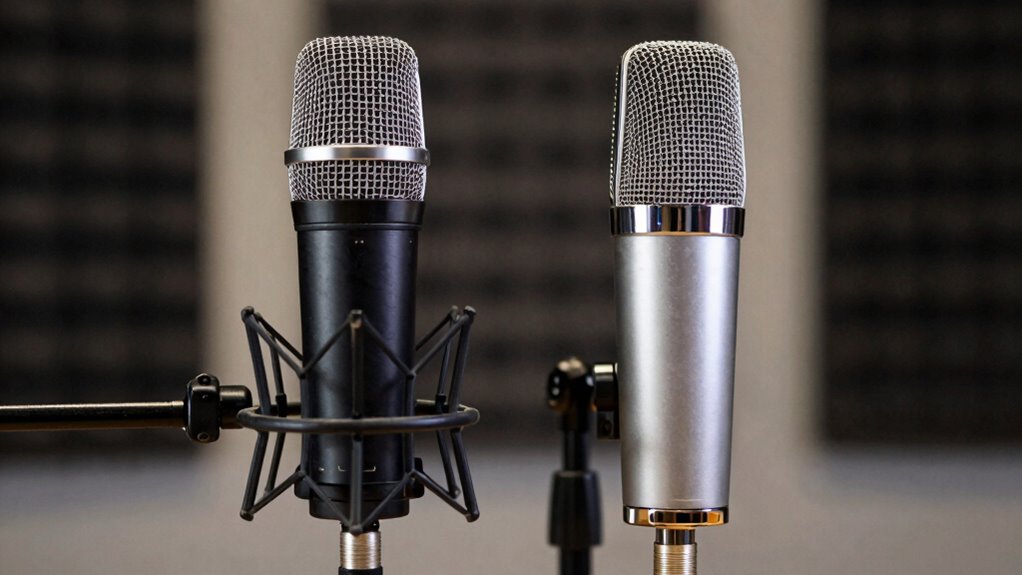

Choosing the wrong microphone type can seriously harm your audio quality. Using a dynamic mic in a studio or with gentle sounds may result in dull, less detailed recordings, while a condenser mic in a noisy environment could pick up unwanted background noise or cause distortion. Knowing when to use each mic guarantees clear, natural sound. If you want to avoid these pitfalls, keep exploring to discover how to match your microphone to your recording needs.
Key Takeaways
- Using a dynamic mic in studio settings may result in dull, less detailed recordings due to limited frequency response.
- Employing a condenser mic in noisy environments can cause unwanted background noise to be captured, degrading audio quality.
- Choosing a condenser mic for loud live stages risks distortion from its high sensitivity and wide frequency response.
- Selecting the wrong microphone type can produce harsh, dull, or distorted sound, complicating post-production.
- Mismatched microphones and environments lead to poor audio clarity, emphasizing the importance of matching mic type to application.

Are you unsure which type of microphone suits your needs best—dynamic or condenser? The key to making the right choice lies in understanding their differences, especially when it comes to polar patterns and frequency response. These technical aspects directly impact how your microphone captures sound and whether it’s suitable for your specific environment or application.
Polar patterns describe how a microphone picks up sound from different directions. Dynamic mics typically feature cardioid or hypercardioid patterns, meaning they focus on sound coming from directly in front of them while minimizing noise from the sides and rear. This makes them excellent for live performances or noisy settings where you want to isolate the source. Condenser microphones, on the other hand, often have more versatile polar patterns, including cardioid, omnidirectional, and figure-8. This flexibility allows them to capture sound from multiple directions, making them ideal for studio recordings where capturing a natural, detailed soundscape is essential. Choosing the right polar pattern guarantees your microphone minimizes unwanted noise and emphasizes the sound you want.
Polar patterns determine how microphones pick up sound from various directions, affecting their suitability for different environments.
Frequency response is another critical factor. It refers to the range of audio frequencies a microphone can accurately reproduce. Dynamic mics usually have a limited frequency response, often emphasizing mid-range frequencies and rolling off high and low ends. This makes them durable and well-suited for loud sources like guitar amps or vocals in live settings, but they might lack the detail needed for studio recordings. Condenser microphones boast a broader and flatter frequency response, capturing high and low frequencies with greater accuracy. This makes them perfect for vocals, acoustic instruments, and any situation where capturing nuance and clarity is paramount. Understanding frequency response helps ensure you select a microphone that aligns with your specific audio needs.
The wrong choice of microphone can lead to poor audio quality—distorted, dull, or overly harsh sound—simply because it doesn’t match the sound source or environment. For example, using a dynamic mic in a controlled studio setting to record vocals might result in a less detailed sound, whereas a condenser microphone in a noisy live environment could pick up unwanted background noise. Conversely, selecting a condenser microphone for loud, high-energy performances might lead to distortion due to its sensitivity and broader frequency response.
In essence, understanding polar patterns and frequency response helps you match the right mic to your needs, guaranteeing your audio is clear, natural, and professional. Whether you’re recording in a studio or performing live, knowing these technical differences prevents the “wrong choice” that causes bad audio, saving you time, effort, and frustration in post-production or during a performance.

Soundcore by Anker Q20i Hybrid Active Noise Cancelling Headphones, Wireless Over-Ear Bluetooth, 40H Long ANC Playtime, Hi-Res Audio, Big Bass, Customize via an App, Transparency Mode (Black)
Hybrid Active Noise Cancelling: 2 internal and 2 external mics work in tandem to detect external noise and...
As an affiliate, we earn on qualifying purchases.
Frequently Asked Questions
Can I Use a Dynamic Mic for Studio Vocals?
Yes, you can use a dynamic mic for studio vocals, but it might not give you the best results. Dynamic mics usually have a cardioid polar pattern, which helps isolate vocals from background noise, and a limited frequency response compared to condensers. This can lead to a less detailed vocal sound. If you want clearer, more nuanced recordings, a condenser mic is generally the better choice.
Do Condenser Mics Require Special Power Sources?
Yes, condenser mics require special power sources, specifically phantom power, to operate. Phantom power supplies the necessary voltage, typically 48V, that powers the internal amplifier of the mic. Without it, a condenser mic won’t function properly, resulting in poor sound quality or no sound at all. Make sure your audio interface or mixer provides phantom power to meet the power requirements of the condenser microphone for peak performance.
Which Mic Type Is Better for Outdoor Recordings?
For outdoor recordings, dynamic mics are better because they handle wind noise and harsh conditions more effectively. Their rugged build makes them portable and durable for field use. You’ll find they’re less sensitive to environmental elements, so they capture clearer audio with less interference from wind or background noise. Choose a dynamic mic when portability and weather resistance matter most, ensuring your outdoor recordings stay clean and professional.
Are Condenser Mics More Durable Than Dynamic Mics?
Think of condenser mics as delicate glass figurines and dynamic mics as sturdy metal tools. Condenser mics aren’t more durable; their material durability and environmental resilience are lower, making them prone to damage from rough handling or harsh conditions. If you need a mic that withstands outdoor elements and tough use, dynamic mics are your best bet. They’re built to endure, while condensers excel in sensitivity, not ruggedness.
How Do I Choose the Right Microphone for Live Performances?
To select the appropriate microphone for live performances, consider your sound sensitivity needs and placement. If you need to capture vocals or instruments clearly without picking up too much ambient noise, a dynamic mic is usually best. Use proper microphone placement to avoid feedback and ensure clear sound. Test different options to see which mic best suits your environment, balancing durability, sound quality, and your specific performance demands.
Amazon Product B0G2XQGCVX
As an affiliate, we earn on qualifying purchases.
Conclusion
So, don’t let confusion hold you back. Yes, condenser mics are great for studio clarity, but if you’re recording loud sources or on a budget, a dynamic mic might actually serve you better. Choosing the right mic isn’t about following trends — it’s about matching your needs. If you think you need fancy gear for good sound, think again. Sometimes, the simple, right mic makes all the difference in capturing quality audio.
Amazon Product B0G7H639YD
As an affiliate, we earn on qualifying purchases.

Soundcore by Anker Q20i Hybrid Active Noise Cancelling Headphones, Wireless Over-Ear Bluetooth, 40H Long ANC Playtime, Hi-Res Audio, Big Bass, Customize via an App, Transparency Mode (White)
Block the World, Keep the Music: Four built-in mics work together to filter out background noise — whether...
As an affiliate, we earn on qualifying purchases.