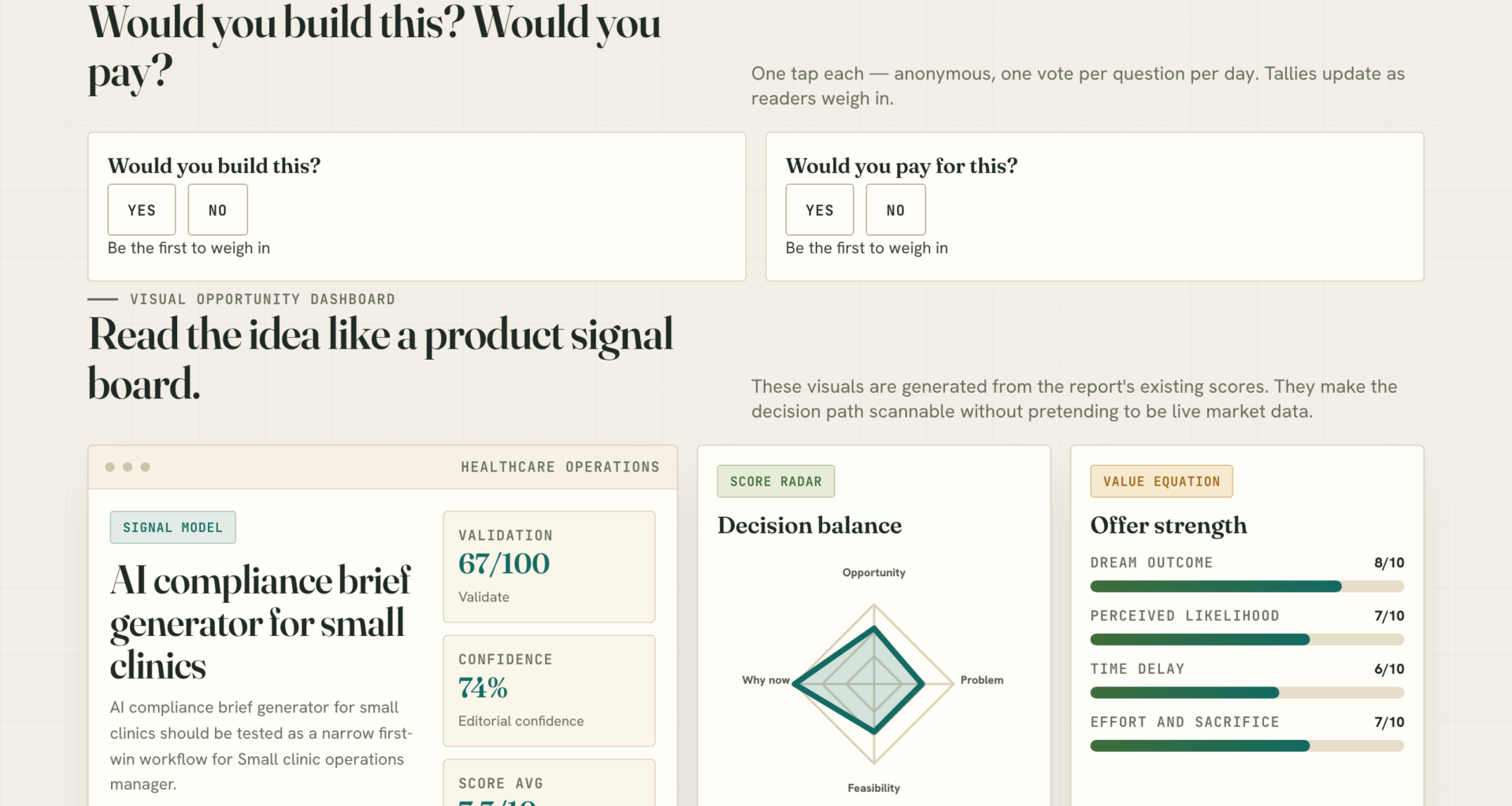

📊 Full opportunity report: AI compliance brief generator for small clinics on IdeaNavigator AI — validation score, market gap, and execution plan.

Get the latest gadgets delivered free — and shop member deals
- Fast, free delivery on millions of items
- Access to Prime Big Deal Days deals on October 6–7
- Prime Video, Amazon Music and more included
TL;DR
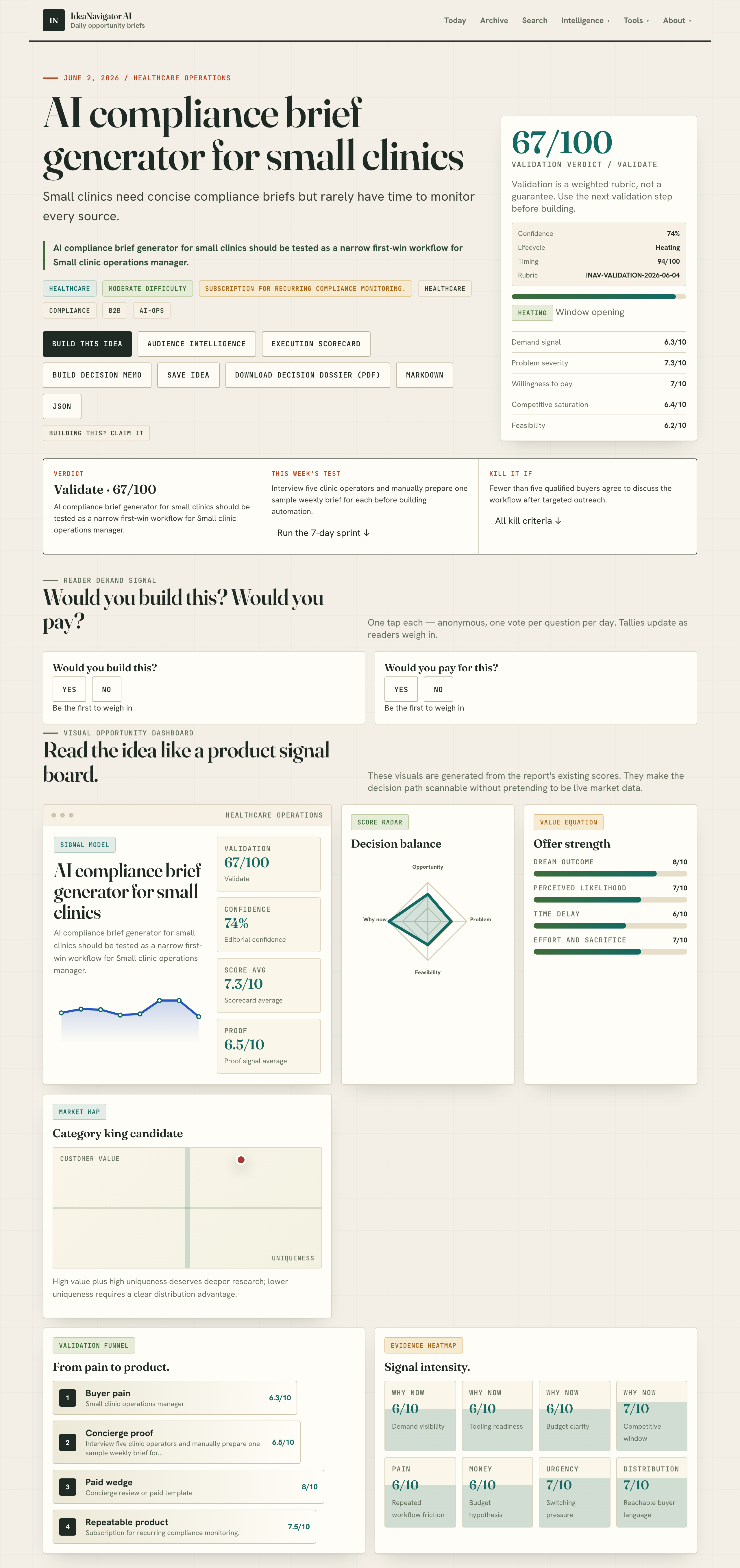
A new AI tool designed for small clinics will generate weekly compliance briefs, helping clinic managers stay updated on regulations efficiently. Testing is underway before broader rollout.
IdeaNavigator AI is testing a new AI-powered compliance brief generator for small clinics, aiming to simplify regulatory updates for busy clinic managers. This development addresses the challenge small healthcare providers face in monitoring evolving regulations without dedicated compliance teams, making it a potentially valuable operational tool.
The proposed AI tool will produce a weekly compliance brief that includes summarized regulatory updates, source links, and a concise action checklist. It is designed specifically for small clinics, which often lack the resources to track multiple sources manually. The initial phase involves interviewing five clinic operators and creating manual samples to validate the concept before automating the process. The generator is expected to be subscription-based, offering recurring compliance monitoring services to healthcare operations.
This initiative is driven by the increasing volume of regulatory updates in healthcare, combined with advances in AI summarization technology. The goal is to deliver timely, relevant compliance information that helps clinics avoid violations and streamline their operational workflows.
Impact of AI Compliance Briefs on Small Clinic Operations
This development could significantly improve compliance management for small clinics, which often struggle with limited staff and resources. By automating the creation of concise regulatory briefs, clinics can stay informed and act swiftly on compliance issues, reducing legal and financial risks. The subscription model also offers a scalable solution for ongoing regulatory updates, potentially transforming how small healthcare providers handle compliance monitoring.
medical compliance software for small clinics
As an affiliate, we earn on qualifying purchases.
As an affiliate, we earn on qualifying purchases.
Growing Regulatory Complexity and AI Solutions in Healthcare
Small clinics face increasing regulatory demands, with frequent updates from health authorities requiring ongoing monitoring. Currently, many rely on manual research or sporadic updates, which can lead to oversight. Advances in AI, particularly in summarization and natural language processing, have made automated compliance tools feasible. IdeaNavigator AI’s initiative follows broader trends toward digital automation in healthcare operations, aiming to fill a gap for small providers who lack dedicated compliance staff.
“Automating compliance briefs could save small clinics hours each week and reduce the risk of missing critical updates.”
— an anonymous researcher
Unconfirmed Aspects of the AI Compliance Brief Generator
It is not yet clear how accurately the AI will summarize complex regulatory language or how clinics will respond to the automated briefs in practice. The effectiveness of the tool in real-world scenarios remains to be validated through testing, and user feedback will determine its future development.
Next Steps in Testing and Deployment of the Compliance Tool
The initial testing phase involves manual creation of weekly briefs for five clinics, with feedback gathered to refine the AI’s summarization and usability. Pending successful validation, the company plans to automate the process and launch a subscription service. Further, broader pilot programs may follow to assess scalability and integration with existing clinic management systems.
Key Questions
How will the AI generate compliance briefs?
The AI will analyze regulatory sources, summarize key updates, and compile them into a concise weekly report with source links and action items, tailored for small clinics.
What are the benefits for small clinics?
The tool aims to save time, reduce the risk of compliance violations, and provide clear, actionable updates without requiring dedicated compliance staff.
When will the AI compliance brief generator be available?
The project is currently in testing; a broader rollout depends on successful validation and user feedback, with no specific launch date announced.
Will clinics need to do anything to use the tool?
Initially, clinics will review and provide feedback on the manual samples; future automation will require minimal input, primarily reviewing the generated briefs.
How will the subscription model work?
Clinics will subscribe to receive weekly compliance briefs, with ongoing updates and support included in the service fee.
Source: IdeaNavigator AI
Fall Picks
fall essentials
As an affiliate, we earn on qualifying purchases.