
📊 Full opportunity report: Acoustic Dampening, Placement, and the “Rig in the Closet” Setup on ThorstenMeyerAI.com — validation score, market gap, and execution plan.
TL;DR
Placing AI workstations in separate rooms or closets significantly reduces noise. Proper ventilation is essential to prevent heat buildup, especially in enclosed spaces.
Putting AI workstations in separate rooms or closets, with proper ventilation, is the most effective way to reduce noise without sacrificing performance, according to recent technical guidance.
Experts emphasize that the most impactful noise reduction strategy is moving the rig away from the user, often into another room or closet, and operating it headless over a network. This approach eliminates the need for soundproofing within the work area and leverages network connectivity to control the machine remotely.
A common solution is the ‘rig in the closet’ setup, which involves placing the high-power machine in an enclosed space. However, this requires active ventilation—such as ducted airflow or exhaust fans—to prevent heat buildup that can throttle performance or damage hardware. Proper airflow management is critical, and specialized soundproof cabinets with temperature control are recommended for optimal results.
Additional measures include mechanical decoupling, like rubber feet, to reduce structure-borne noise, and strategic placement to minimize airborne sound transmission. These techniques collectively help maintain a quiet workspace while ensuring hardware safety and efficiency.
Acoustic dampening
& the rig in the closet.
The most powerful noise fix isn’t a material — it’s a floor plan. A rig you can’t hear because it’s in another room beats any amount of foam. Tap the approaches in Part 1 to see what actually works.
(another room)
(levers 1–4)
(door / barrier)
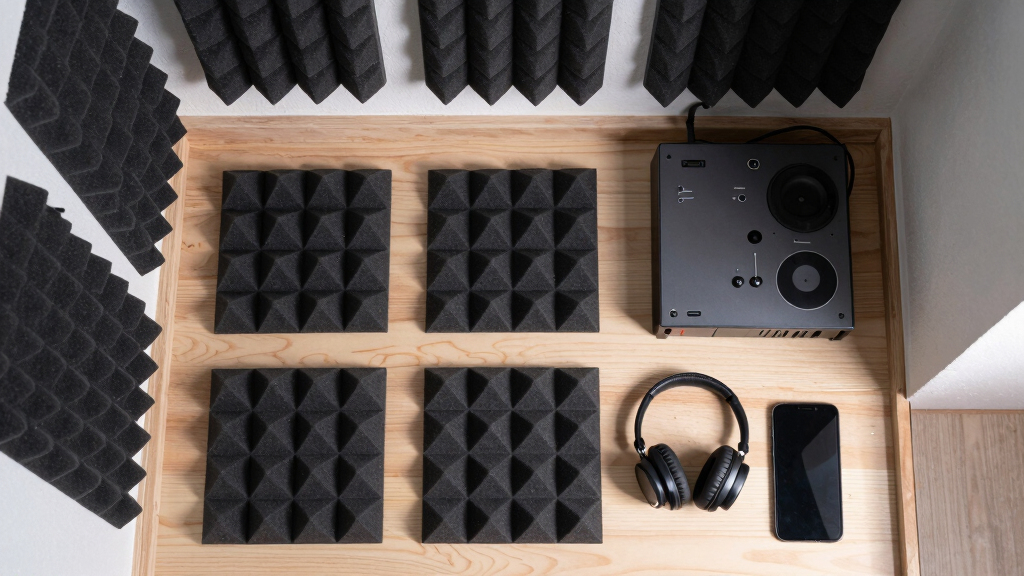
(acoustic foam)
Contain the noise, not the heat
Why Proper Placement and Ventilation Are Critical for Quiet AI Workstations
Implementing effective placement and ventilation techniques can dramatically improve workspace comfort, reduce noise pollution, and extend hardware lifespan. For professionals relying on high-power AI rigs, these methods enable a quieter, more efficient environment, facilitating better focus and productivity without sacrificing computational performance.
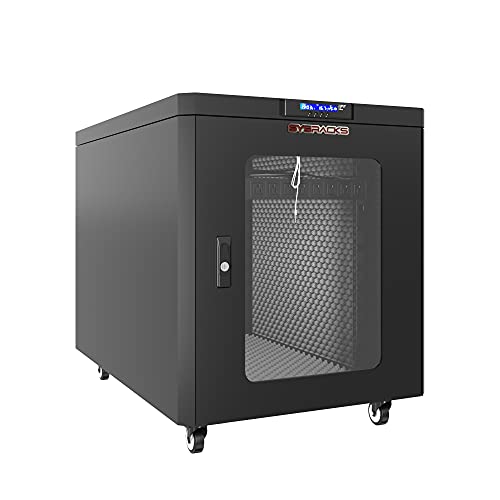
Sysracks Soundproof Server Rack Quiet - Acoustic Sound Proof Cabinet for Servers - Up to 36% Noise Reduction - Locking Server Enclosure - Silent Networking Cabinet - Noise Sound Dampening Box (15U)
- Size: 15U Soundproof Cabinet (26x35x36 inches)
- Air Control: LED screen with 2 fans for temperature and energy saving
- Adjustable Rails: U-Mark rails and shelf for versatile equipment installation
As an affiliate, we earn on qualifying purchases.
As an affiliate, we earn on qualifying purchases.
Background on Noise Management for High-Power AI Rigs
Traditional noise mitigation for high-performance computers often focuses on acoustic foam, soundproof cases, or vibration dampening. For more on this, see our guide on acoustic dampening, placement, and the 'rig in the closet' setup. However, these measures are less effective than strategic placement, such as relocating the rig to another room or closet. The concept of 'rig in the closet' has gained popularity as a practical solution, but it requires careful attention to airflow and heat dissipation. Experts have long recognized that airflow management is essential to prevent thermal throttling and hardware damage, especially in enclosed spaces.
"The most effective way to silence a noisy rig isn't acoustic foam — it's moving it out of your workspace entirely. A machine in another room can be virtually inaudible."
— Thorsten Meyer, AI hardware expert
Remaining Challenges in Enclosed 'Rig in the Closet' Setups
While ventilation solutions are well-understood, the optimal design for soundproof cabinets that also effectively dissipate heat remains complex and costly. The exact balance between noise suppression and thermal management can vary depending on hardware specifications and room conditions. Additionally, the long-term reliability of sealed environments with active airflow is still being studied.
Next Steps in Implementing Quiet AI Workstation Setups
Users should focus on integrating proper ventilation solutions, such as ducted airflow or purpose-built soundproof cabinets, into their workspace designs. Further research and development are expected to produce more affordable, efficient solutions that combine noise reduction with thermal management. Monitoring ambient temperature and hardware performance will continue to be essential as these setups become more widespread. Learn more about proper placement and ventilation techniques.
Key Questions
Is it necessary to use a soundproof cabinet for a 'rig in the closet' setup?
Not necessarily. A well-ventilated closet or room can suffice, but soundproof cabinets provide additional noise reduction and thermal control, especially in shared or sensitive environments.
What are the risks of placing a high-power GPU in a sealed closet?
The main risk is heat buildup, which can cause thermal throttling, reduce hardware lifespan, or lead to failure. Proper ventilation is essential to mitigate these risks.
Can I run my AI workstation headless in another room and still access it remotely?
Yes. Using a wired or strong wireless network connection allows remote operation via SSH or API calls, making placement in another room practical and effective.
What tools or equipment are recommended for ventilating a closet or enclosed space?
Quiet exhaust fans, ducted airflow systems, and purpose-built soundproof cabinets with temperature control are recommended for effective heat dissipation without increasing noise.
Source: ThorstenMeyerAI.com