
📊 Full opportunity report: The AI Innovation That Powers The Shortwave Numbers Listening Site on ThorstenMeyerAI.com — validation score, market gap, and execution plan.
TL;DR
An AI-designed web platform recreates the experience of tuning into secret shortwave signals, combining vintage aesthetics with interactive controls. This innovative site offers users a realistic, tactile radio listening simulation within a browser.
A new web experience, Room 36 — Shortwave Numbers Listening Post, has been launched, offering a highly realistic simulation of vintage shortwave radio listening, entirely crafted by AI. This site enables users to manually tune a virtual radio receiver, hear authentic static and Morse code signals, and explore spectral waterfalls, all within a browser. The project’s goal is to evoke the tactile experience of vintage radio signal hunting, making it accessible without specialized equipment.
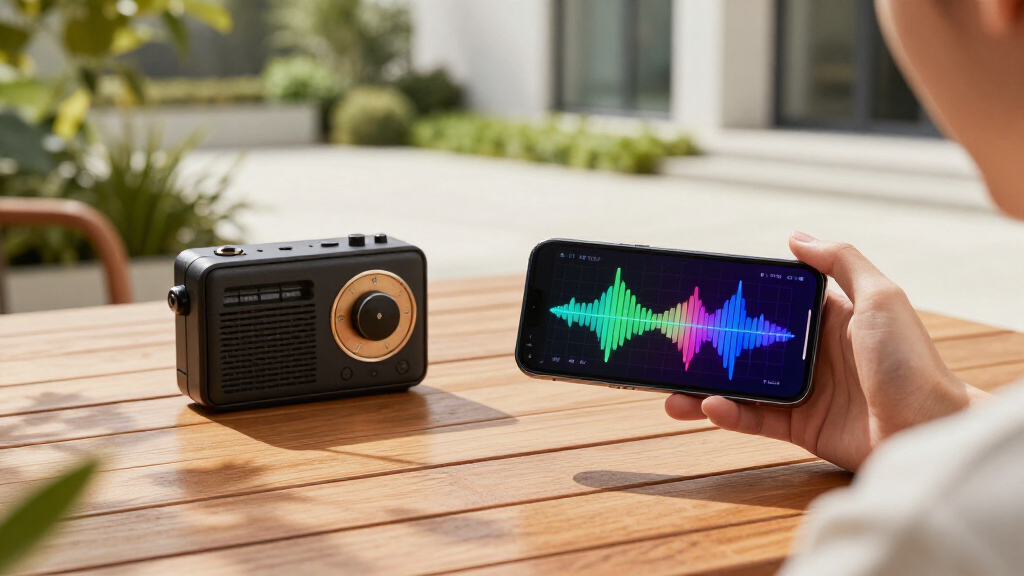
The site features an interactive SVG-based control panel designed to resemble a mid-20th-century radio room, using a restrained color palette of bakelite brown-black, amber, phosphor cyan, and soft cream. For more insights into the design process, see the original analysis. The core visual elements include a draggable tuning dial, knobs, and meters, all built with inline SVG for crisp rendering. The spectral waterfall visualizes real-time signal activity, scrolling downward with each frame, and is synchronized with the audio synthesis, which uses Web Audio API to generate static hiss, heterodyne whistles, carrier hum, and Morse code signals.
Interaction begins when users power on the receiver via a dedicated button, activating the layered audio effects and spectral visualization. This project showcases how AI can create immersive web experiences, as detailed in this analysis. The site’s code is fully self-contained, relying solely on HTML, CSS, and JavaScript, with no external dependencies or assets. The spectral display includes simulated station peaks, noise, and hidden messages, with one frequency containing an Easter egg message. Learn more about the design techniques from the original source. The entire experience aims to replicate the suspense and tactile engagement of vintage signal hunting, offering a unique, immersive web-based alternative to physical radio listening.
Implications of AI-Generated Vintage Radio Experience
This project demonstrates how AI can craft highly detailed, interactive digital recreations of historical technology, blending nostalgia with modern web craftsmanship. It offers a new way for enthusiasts and the general public to explore the world of shortwave radio and Morse code communication without specialized equipment. The immersive design pushes the boundaries of web-based simulation, potentially influencing future educational tools, digital art, and preservation of radio history. It also highlights AI’s capacity to generate complex, tactile interfaces that evoke physical devices, making vintage technology accessible and engaging in a digital format.
As an affiliate, we earn on qualifying purchases.
Background on AI and Digital Recreation of Vintage Radio
Recent years have seen increasing use of AI to generate realistic simulations of historical technologies and interfaces. Prior projects have recreated vintage computers, mechanical devices, and analog systems, often for educational or artistic purposes. This site builds on that trend by specifically targeting the niche of shortwave radio and Morse code signals, which have historically been associated with espionage, military communication, and clandestine operations. The design draws inspiration from Cold War-era radio rooms, emphasizing authenticity through color schemes, SVG craftsmanship, and layered audio effects. The project is part of a broader effort to preserve and reinterpret radio history through digital art and AI-driven interfaces.
“This site showcases how AI can craft immersive, tactile experiences that evoke vintage radio listening, blending history with modern web technology.”
— an anonymous researcher
Unconfirmed Aspects of the AI’s Creative Process
It is not yet clear how much of the design was directly generated by AI versus manually crafted by developers. Details about the specific AI models or training data used remain undisclosed. Additionally, the extent to which AI contributed to the audio synthesis, spectral visualization, and interface design is still being clarified by the creators. The project’s creators have emphasized the AI’s role in generating the visual and audio layers, but the precise workflow and automation levels are not publicly detailed.
Future Developments and Potential Expansions
The developers plan to expand the site’s features, potentially adding more interactive elements, new signal simulations, and educational content about shortwave radio history. They may also release similar projects exploring other vintage technologies or further refine the AI’s role in generating realistic, tactile interfaces. Visitors can expect updates that enhance the realism, interactivity, and educational value of the experience, as well as possible integration with online communities of radio enthusiasts and digital historians.
Key Questions
Is the shortwave signals simulation based on real radio broadcasts?
The signals are synthesized using Web Audio API and are designed to sound authentic, including static, heterodyne whistles, and Morse code, but they are not actual intercepted broadcasts.
Can I listen to real shortwave signals on this site?
No, the site does not connect to real radio signals; it offers a simulated experience created by AI and digital synthesis for educational and entertainment purposes.
How does the site create the spectral waterfall visualization?
The spectral waterfall is generated dynamically with JavaScript, displaying simulated signal activity, noise, and station peaks synchronized with the audio synthesis.
Is this project open source or available for modification?
The site’s code is fully self-contained and built with open web standards, but specific licensing details have not been publicly announced. It is primarily intended as a demonstration of AI-driven design and simulation.
What is the significance of the hidden message in the log?
The hidden message serves as an Easter egg, showcasing the site’s ability to incorporate subtle, coded signals similar to real shortwave clandestine broadcasts, adding an element of mystery and engagement.
Source: ThorstenMeyerAI.com