
TL;DR

Get the latest gadgets delivered free with Prime
- Fast, free delivery on millions of items
- Prime Video, Amazon Music and more included
- Member-only deals all year
In 2026, artificial intelligence is poised to introduce significant innovations, including advanced language models and real-world applications. These developments are expected to impact multiple sectors, though some technical and ethical questions remain unresolved.
Several leading AI companies and research organizations have confirmed plans to release groundbreaking models and applications in 2026, signaling a potential shift in how AI integrates into daily life and industry. For insights into the latest hardware used in AI development, see the 10 Best Capture Cards in 2026. These innovations are expected to enhance natural language understanding, automation, and data processing, making AI more accessible and powerful than ever before.
Major tech firms like OpenAI, Google DeepMind, and emerging startups have announced upcoming AI models that promise to surpass current capabilities in language comprehension, reasoning, and task automation. To understand the hardware that supports these models, check out the 10 Best Capture Cards in 2026. For instance, OpenAI has indicated that its next-generation language model, set for release in 2026, will feature improved contextual understanding and multi-modal capabilities, integrating text, images, and possibly video.
In addition to language models, AI-driven applications in healthcare, autonomous vehicles, and robotics are expected to see significant breakthroughs. Researchers are also working on AI systems that can learn more efficiently, reducing the need for vast data sets and energy consumption, addressing longstanding concerns about AI scalability and sustainability.
While these developments are confirmed through official announcements and patent filings, detailed specifications and deployment timelines are still being finalized. For more on the equipment used in AI research, see the 10 Best Capture Cards in 2026. Industry insiders suggest that many of these models will undergo rigorous testing before broad release, and regulatory frameworks are also anticipated to evolve alongside these technological advances.
The 10 picks
- 1
 Elgato 4K S Capture Card for PS5, Xbox Series X/S, Switch 2View on Amazon →
 - 2
 AVerMedia Capture Card for Streaming, 4K60 HDR Passthrough, 1080p60 Video Rec…View on Amazon →
 - 3
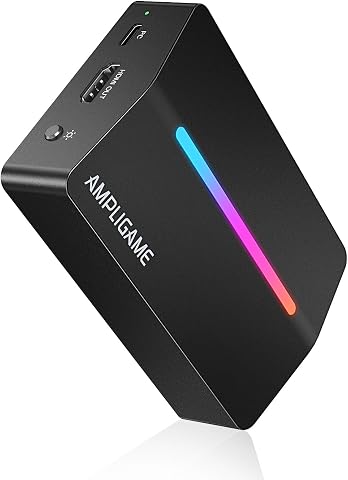 Fifine AmpliGame Video Capture Card, HD 1080p 60fps, 4K HDMI to USB, Compatib…View on Amazon →
 - 4
 4K HDMI Video Capture Card for Streaming and RecordingView on Amazon →
 - 5
 4K HDMI Video Capture Card, 1080P 60FPS Game Capture Device with HDMI Loop-Ou…View on Amazon →
 - 6
 XIIXMASK USB 3.0 HDMI Capture Card, 1080P 60FPS Capture, 4K Pass-ThroughView on Amazon →
 - 7
 Acer USB 3.0 HDMI Capture Card, 4K HDMI Loop-Out, 1080P 60Hz for StreamingView on Amazon →
 - 8
 4K HDMI Capture Card for Streaming, Full HD 1080P 60FPS USB 3.0 Cam Link Game…View on Amazon →
 - 9
 Guermok Video Capture Card, 4K USB3.0 HDMI to USB C, 1080P 60FPS & 2K 30FPSView on Amazon →
 - 10
 Audio Express AXHDCAP 4K HDMI Video Capture CardView on Amazon →
Impacts on Industry and Society in 2026
The anticipated AI innovations in 2026 could reshape multiple sectors, including healthcare, finance, transportation, and entertainment. More advanced language models could improve customer service, automate complex tasks, and enable more natural human-computer interactions. In healthcare, AI may assist in diagnostics and personalized medicine, potentially saving lives and reducing costs.
However, these advancements also raise critical questions about ethical use, data privacy, and job displacement. Policymakers and industry leaders are closely monitoring these developments to balance innovation with societal impacts, emphasizing the need for responsible AI deployment.
Previous AI Milestones and Future Outlook
Over the past decade, AI has seen rapid growth, with notable milestones such as GPT-3’s release in 2020 and the widespread adoption of AI-powered assistants. These advances laid the groundwork for more sophisticated models, but many experts agree that the scale and scope of AI in 2026 could be unprecedented.
Current limitations include issues with bias, explainability, and energy consumption, which researchers aim to address through new architectures and training methods. The upcoming year is viewed as a pivotal point, where these challenges may be mitigated, enabling broader and safer AI applications.
Industry analysts predict that the convergence of hardware improvements, such as specialized AI chips, and algorithmic innovations will accelerate progress, making 2026 a landmark year for AI development.
Unresolved Challenges and Regulatory Developments
Despite confirmed plans for major AI releases in 2026, many technical details remain undisclosed. It is unclear how quickly these models will be adopted at scale, or how regulators will respond to the rapid evolution of AI capabilities. Ethical concerns, such as bias, misinformation, and job displacement, continue to be debated, and comprehensive policies are still in development.
Additionally, questions about AI safety, robustness, and transparency are ongoing, with experts calling for more rigorous testing and international cooperation before widespread deployment.
Upcoming Releases and Policy Discussions in 2026
Throughout 2026, expect major AI models to be launched by leading firms, accompanied by demonstrations and pilot programs across industries. Governments and regulatory bodies are also anticipated to introduce new frameworks aimed at ensuring safe and ethical AI use.
Research institutions will likely continue refining AI architectures, while public discourse on AI ethics and societal impacts will intensify. Stakeholders will monitor these developments closely to balance innovation with responsibility.
Key Questions
What specific AI models are expected to launch in 2026?
Several companies have announced plans to release next-generation language models and multimodal AI systems, with details to be finalized closer to launch dates. OpenAI and Google DeepMind are among the leaders expected to unveil significant advancements.
How will AI innovations affect jobs and industries?
AI is expected to automate and augment many tasks, leading to shifts in employment across sectors such as customer service, manufacturing, and healthcare. While some jobs may be displaced, new roles focused on AI oversight and development are also likely to emerge.
Key issues include bias and fairness, misinformation, data privacy, and the potential for AI to be used maliciously. Policymakers and industry leaders are working on frameworks to address these risks responsibly.
Will regulations keep pace with AI developments in 2026?
Regulatory discussions are ongoing, but it is uncertain whether new policies will be fully implemented in time for the major AI launches. International cooperation and adaptive frameworks are seen as crucial to managing risks effectively.
Source: ThorstenMeyerAI.com
Halloween Picks
halloween
As an affiliate, we earn on qualifying purchases.