
If you struggle with procrastination or need to create clear boundaries, time‑boxing works best as it limits task duration and fosters a sense of urgency. If you prefer a predictable routine and visual organization, time‑blocking helps you allocate specific times for activities and balance your workload. Both techniques can be combined for maximum productivity. To discover which approach fits you best and how to implement them effectively, keep exploring these strategies further.

Get the latest gadgets delivered free with Prime
- Fast, free delivery on millions of items
- Prime Video, Amazon Music and more included
- Member-only deals all year
Key Takeaways
- Use time-boxing when you need to limit task duration and create urgency, especially for tasks prone to overextension or procrastination.
- Opt for time-blocking when you prefer visual schedules, routine, and balancing multiple activities with clear time allocations.
- Combine both methods for maximum flexibility: use time-boxing within blocked calendar slots to enhance focus and manage time effectively.
- Time-boxing is ideal for tasks requiring intense focus and quick completion, while time-blocking suits longer, routine, or high-priority activities.
- Choose based on your workflow and personality: time-boxing for urgency and boundaries; time-blocking for predictability and visual planning.
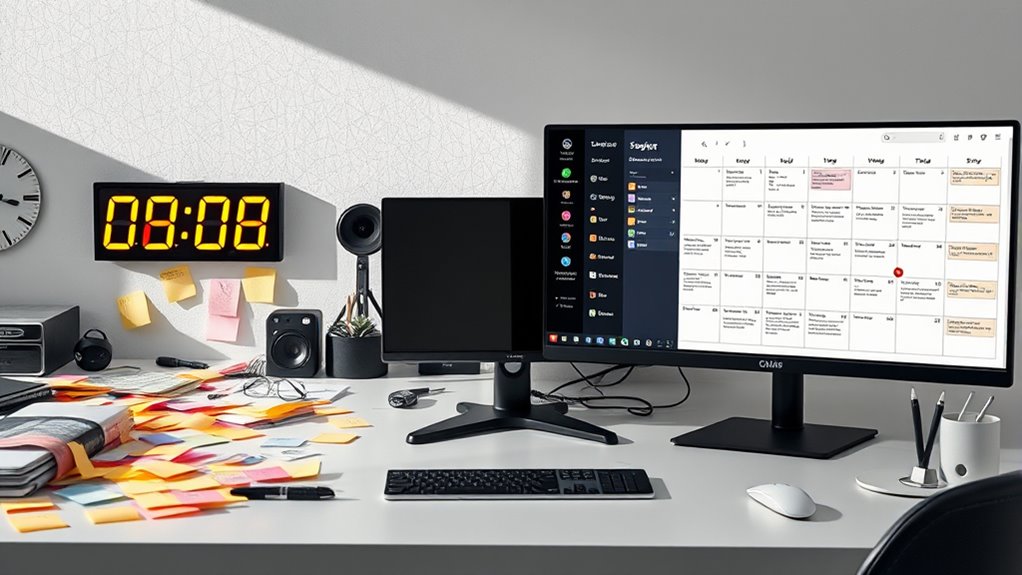
When it comes to managing your time effectively, understanding the difference between time-boxing and time-blocking can make a significant impact. Both are popular productivity techniques that help you organize your day, but they serve different purposes and suit different working styles. Knowing when to apply each can optimize your scheduling strategies and boost your efficiency. Time-boxing involves setting a fixed amount of time for a task or activity, regardless of whether you complete it. For example, you might decide to spend 30 minutes responding to emails or 45 minutes writing a report. Once that time is up, you move on, whether the task is finished or not. This technique encourages focus and prevents tasks from dragging on indefinitely. It’s especially useful when you want to limit distractions and maintain a sense of urgency. Time-boxing is a highly effective productivity technique for those who struggle with procrastination or overextending themselves. It helps you create boundaries around your work, ensuring you allocate specific periods for different activities. Additionally, the time management method of time-boxing can help prevent burnout by encouraging regular breaks and mindful pacing. On the other hand, time-blocking involves scheduling specific blocks of time for particular tasks or types of work. Instead of just setting a timer, you actually carve out chunks of your day in your calendar—say, 9 to 10 a.m. for strategic planning, 10:30 to 11:30 a.m. for meetings, or 2 to 3 p.m. for deep work. This approach makes your schedule more predictable and structured, giving you a clear roadmap of what to focus on at any given moment. Time-blocking is ideal if you prefer a visual plan that integrates seamlessly into your daily routine. It helps you prioritize high-value activities and ensures that your day is balanced, reducing the chances of last-minute cramming or neglecting important tasks. Choosing between the two depends on your workflow and personality. If you often get sidetracked or feel overwhelmed by your to-do list, time-boxing can provide the discipline needed to stay on track. Conversely, if you thrive on routine and like to see your day laid out in advance, time-blocking offers better clarity and control. Both methods can complement each other—using time-blocking to organize your day and time-boxing within those blocks to maintain focus. Experimenting with these scheduling strategies will help you discover which approach boosts your productivity most effectively. Ultimately, mastering both can give you a versatile toolkit to manage your time with greater precision.
As an affiliate, we earn on qualifying purchases.
Frequently Asked Questions
Can Time-Boxing Be Used for Long-Term Planning?
You might wonder if time-boxing fits long-term planning. While it helps manage project flexibility day-to-day, it’s less suitable for long-term goals, which require planning accuracy and strategic foresight. Time-boxing limits your scope within set periods, making adjustments harder over extended timelines. For long-term planning, consider broader time-blocking or other methods that offer the flexibility and detail needed to stay aligned with your bigger objectives.
How Do I Choose Between Time-Boxing and Time-Blocking?
Did you know that 82% of highly productive people use structured time management strategies? To choose between time-boxing and time-blocking, consider your goals. If you need focused, short bursts of work, time-boxing helps. For longer tasks or flexible schedules, time-blocking offers more adaptability. Think about your workflow, deadlines, and preferences. Experiment with both to see which boosts your productivity techniques best and fits your daily routine.
Are There Industries Where One Method Is More Effective?
In certain industries, industry-specific productivity and creative workflow methods dictate which approach works best. For example, in project management or software development, time-blocking helps you allocate focused periods for tasks. Conversely, in creative fields like design or writing, time-boxing encourages bursts of intense effort, helping you meet deadlines without burnout. You should choose based on your industry’s demands, optimizing your workflow with the method that aligns best with your work style.
How Do I Handle Interruptions During Scheduled Blocks?
Imagine you’re working on a project, and an unexpected email pops up. To handle interruptions, practice distraction management by setting clear boundaries, like turning off notifications during your scheduled blocks. Use flexibility strategies such as brief, scheduled buffer periods to address urgent matters without derailing your workflow. This approach helps you stay focused, manage distractions effectively, and maintain productivity during your dedicated work time.
Can These Methods Improve Work-Life Balance?
These productivity techniques can definitely improve your work-life balance by helping you set clear boundaries and manage your time better. When you allocate specific periods for work and personal activities, you reduce stress and prevent burnout. By sticking to scheduled blocks, you create a routine that promotes better stress management, allowing you to enjoy your personal time fully. Ultimately, these methods help you work smarter, not harder, for a healthier balance.
Conclusion
Both time-boxing and time-blocking are powerful tools to manage your day, like two sides of the same coin. Time-boxing keeps you focused on strict limits, like a sprint, while time-blocking provides a steady, structured pace, like a marathon. Choose what suits your style—sometimes you need the quick burst, other times the steady flow. Experiment to find what works best for you, turning your to-do list into a well-oiled machine.
Columbus Day / Indigenous Peoples' Day Picks
long weekend sales
As an affiliate, we earn on qualifying purchases.