
A learning loop—comprising plan, do, and review—helps you improve skills and processes through continuous feedback and adjustments. In the planning phase, set clear goals and strategies. During the do stage, actively implement your plan while staying flexible. Afterward, review your results and gather feedback to identify what works and what needs improvement. Repeating this cycle promotes ongoing growth and mastery. If you keep exploring, you’ll uncover even more ways to optimize your learning process.
Key Takeaways
- The “Plan” phase involves setting goals, identifying learning needs, and developing strategies for effective execution.
- “Do” is the implementation stage where actions are taken, applying skills and adjusting as needed.
- “Review” entails evaluating results, gathering feedback, and analyzing performance to identify improvements.
- Repeating the cycle of Plan, Do, Review promotes continuous learning and iterative growth.
- Regular feedback and reflection help refine skills, prevent stagnation, and foster mastery over time.
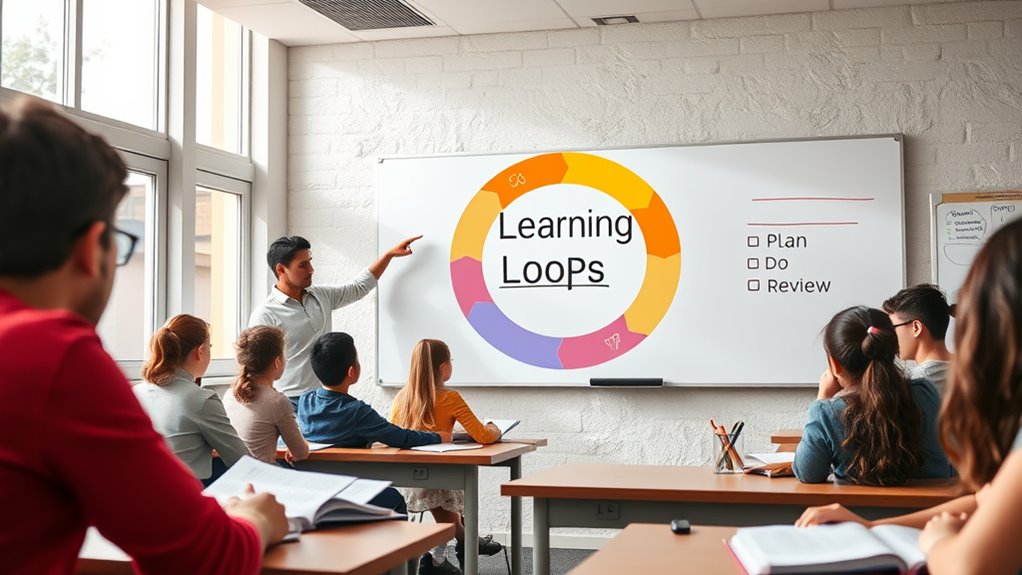
Have you ever wondered how continuous improvement happens in learning and work? It’s often driven by what’s called learning loops—simple yet powerful cycles that help you refine your skills and processes over time. At the core of these loops are feedback cycles and iterative improvement, which enable you to make small, manageable adjustments that lead to bigger gains. When you understand and effectively use these principles, you transform your approach from trial and error to a systematic process of growth.
Continuous improvement thrives through learning loops—small cycles that foster growth, refinement, and mastery over time.
The first step in a learning loop is planning. You set specific goals or objectives, identify what you need to learn or improve, and develop a strategy to achieve those targets. This phase is essential because it gives you direction and clarity, ensuring that your efforts are focused. Once your plan is in place, you move into the do phase—where you put your plan into action. During this stage, you actively engage, apply your skills, and carry out tasks, all while paying close attention to what’s working and what isn’t. It’s important to remain open to adjustments, as rigidity can hinder your progress.
After executing your plan, the review phase begins. This is where feedback cycles come into play. You evaluate the results of your actions, gather data, and reflect on what you learned. Feedback can come from various sources—self-assessment, peer input, or performance metrics. The key is to analyze this feedback honestly and objectively, identifying areas where you excelled and aspects that need improvement. This review step fuels iterative improvement because it provides the insights necessary to refine your approach. Proper understanding of toilet flushing mechanisms and their efficiency can also serve as a metaphor for how small adjustments in processes lead to better outcomes. Instead of considering your effort a one-and-done event, you see it as a continuous process—each cycle building on the last.
By repeating these steps—plan, do, review—you create a learning loop that promotes ongoing development. Each cycle offers opportunities to adjust your methods, test new ideas, and deepen your understanding. Over time, this iterative process leads to mastery, as small improvements compound into significant progress. The beauty of feedback cycles within this framework is that they keep you honest and aligned with your goals, preventing stagnation. They make learning dynamic and responsive, allowing you to adapt quickly to new challenges or insights.
Ultimately, mastering learning loops means embracing the idea that growth isn’t a one-time event but a continuous journey. With each cycle, you get better at planning, executing, and reviewing—driving your personal and professional development forward through consistent, deliberate effort.
Frequently Asked Questions
How Do Learning Loops Differ From Traditional Training Methods?
Learning loops differ from traditional training methods because they emphasize iterative feedback and continuous improvement. Instead of one-time instruction, you actively engage in cycles of planning, doing, and reviewing, which helps you identify areas for growth and adjust quickly. This approach makes learning more dynamic and personalized, allowing you to adapt your skills efficiently over time. Traditional methods often lack this ongoing process, making learning less flexible and responsive.
Can Learning Loops Be Applied in Large Organizations Effectively?
You can definitely apply learning loops in large organizations. For example, a multinational company implemented regular feedback cycles to improve product development, boosting organizational agility. Although scalability challenges exist, breaking initiatives into smaller, manageable loops helps teams adapt quickly. By fostering continuous learning and quick adjustments, learning loops enhance responsiveness and innovation, making them a practical approach even in complex, large-scale environments.
What Tools Facilitate Tracking of the Review Phase?
You can effectively track the review phase using digital dashboards and feedback surveys. Digital dashboards provide real-time data visualization, helping you identify progress and areas needing improvement. Feedback surveys gather direct input from team members or stakeholders, offering valuable insights for adjustments. Combining these tools guarantees you stay informed, make data-driven decisions, and continuously improve your processes, making your learning loops more efficient and impactful.
How Long Should Each Phase of the Loop Typically Last?
You should tailor each phase’s timing strategies based on your goals and project complexity. Typically, plan and review phases last longer—around 20-30% of the loop—while the do phase is quicker, about 40-50%. Loop duration varies, but shorter cycles of one to four weeks work well for agile adjustments. Adjust the timing strategies to guarantee thorough planning, effective action, and meaningful review, keeping your learning process dynamic and responsive.
Are There Common Pitfalls to Avoid When Implementing Learning Loops?
You should watch out for feedback fatigue, which can cause team members to become less responsive over time, and incomplete data, which skews your insights. To avoid these pitfalls, keep feedback sessions focused and manageable, and make certain you gather thorough, accurate data. Regularly refresh your approach to maintain engagement and reliability, so your learning loop remains effective and drives continuous improvement.
Conclusion
Just like Odysseus steering the seas, your learning journey relies on the continuous cycle of plan, do, review. Embrace these loops as your guiding stars, steering you toward growth and mastery. Every experience becomes a clue, leading you closer to your destination. Remember, the path to wisdom isn’t a straight line but a series of thoughtful turns—each one an opportunity to learn, adapt, and forge ahead on your adventure.