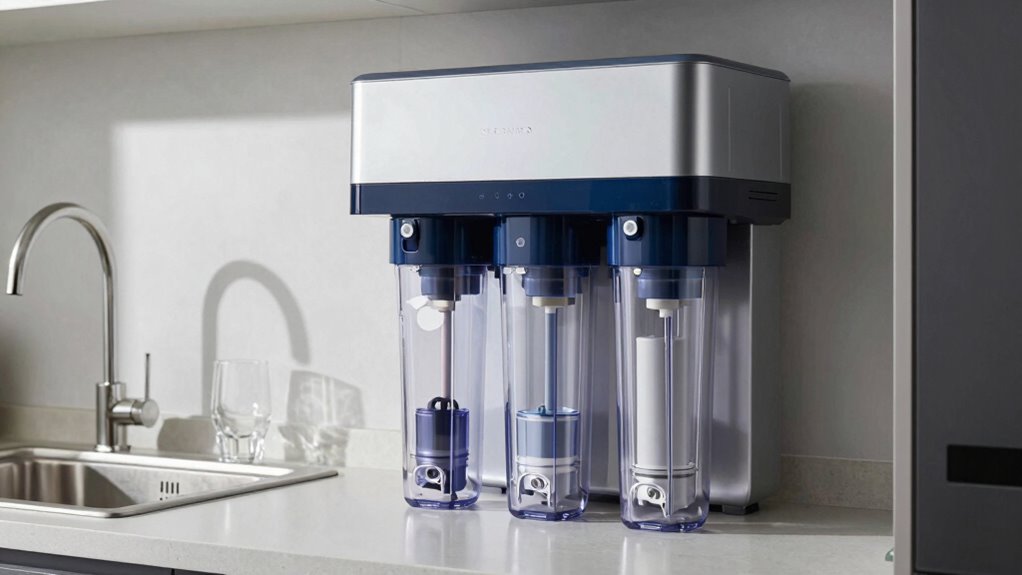

To decide between whole-home water filters and under-sink systems, consider your water quality needs and installation preferences. Whole-home filters treat water for the entire house, removing contaminants like chlorine and sediment, but require more complex setup. Under-sink systems offer targeted filtration for drinking and cooking water and are easier to install yourself. As you explore further, you’ll discover how each option fits different household needs and which might be best for you.

Get the latest gadgets delivered free with Prime
- Fast, free delivery on millions of items
- Prime Video, Amazon Music and more included
- Member-only deals all year
Key Takeaways
- Determine if you need comprehensive household water treatment or point-specific drinking water filtration.
- Consider installation complexity: whole-home systems are more complex and often require professional setup.
- Assess maintenance needs: whole-house filters need regular filter replacements for overall quality, while under-sink filters focus on point-of-use.
- Identify water concerns: address broad contaminants with whole-house filters, or target specific issues with under-sink systems.
- Match filter types to water quality: activated carbon, reverse osmosis, or other filters depend on specific contaminant removal needs.
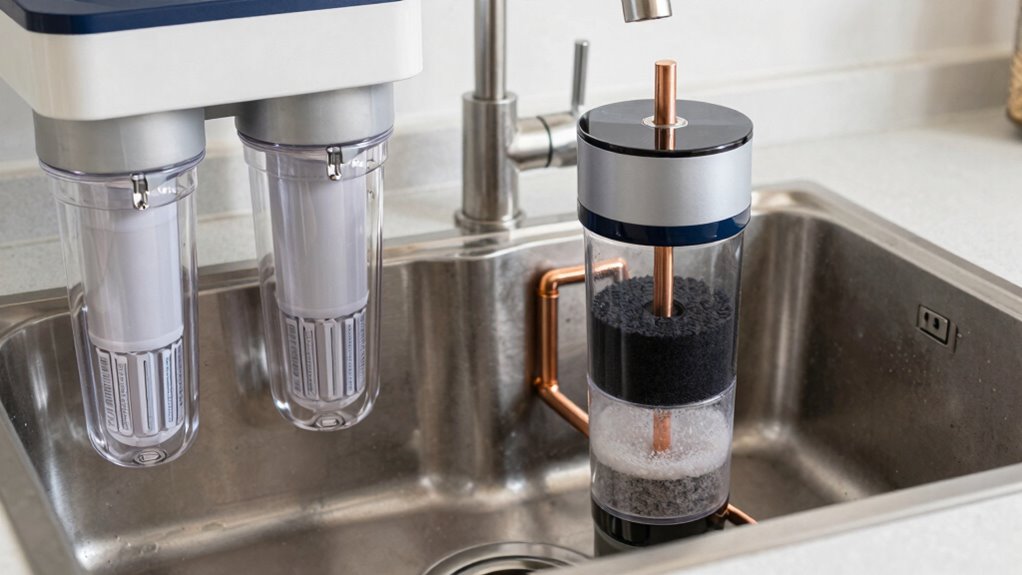
When it comes to ensuring clean and safe drinking water, choosing the right filtration system is essential. You need to consider whether a whole-home water filter or an under-sink system best suits your needs. Both options provide clean water but serve different purposes and come with unique installation and maintenance requirements. To make an informed decision, ask yourself: what’s more important — comprehensive household coverage or dedicated point-of-use filtration?
Choosing between whole-home and under-sink water filters depends on your household needs and maintenance preferences.
A whole-home water filter is designed to treat all the water entering your house. This means every tap, shower, and appliance benefits from cleaner water. It’s ideal if you’re concerned about overall water quality, including chlorine, sediment, or other contaminants that affect your entire household. However, before installation, you’ll need to review the installation process carefully. It involves connecting the filter system to your main water line, which may require professional help if you’re not comfortable working with plumbing. Once installed, water filter maintenance becomes a crucial task; you’ll need to replace filters periodically to keep the system functioning efficiently. This maintenance ensures your whole house stays equipped with safe water and prevents buildup that could reduce flow or filter effectiveness. Understanding water quality and how it impacts your health can help you choose the most effective filtration solution. Additionally, considering water testing can provide detailed insights into specific contaminants present in your water supply.
On the other hand, under-sink systems focus on providing high-quality drinking water at a specific faucet, usually in the kitchen. They’re more straightforward to install, often fitting directly beneath your sink without major plumbing modifications. The installation process is simpler and can often be done on your own if you’re comfortable with basic tools, but some prefer professional installation to ensure everything is sealed and working correctly. Water filter maintenance here involves changing filters at regular intervals — typically every six to twelve months — depending on usage and water quality. These systems are a great choice if your primary concern is drinking and cooking water, rather than treating water for the entire household. Filtration effectiveness can vary based on the type of contaminants present in your water supply, so understanding your specific water quality can guide your choice. Remember that the choice of filter type (such as activated carbon or reverse osmosis) can significantly influence the system’s ability to remove particular contaminants.
As an affiliate, we earn on qualifying purchases.
Frequently Asked Questions
How Often Do I Need to Replace the Filters in Each System?
You should replace filters in a whole-home water filter every 6 to 12 months, depending on your water quality and usage, following the recommended replacement schedule. Under-sink systems typically require filter changes every 6 to 12 months as well. Keep an eye on the filter lifespan, and check manufacturer instructions to guarantee peak performance. Regular replacements help maintain water quality and prevent clogs or reduced flow.
Can Both Systems Remove Heavy Metals From Water?
Yes, both systems can remove heavy metals, but their water quality and filtration efficiency vary. Whole-home filters often cover your entire house, providing broader protection, yet might be less specialized. Under-sink systems typically offer higher filtration efficiency, targeting specific contaminants like heavy metals more effectively. So, if heavy metals are your concern, an under-sink system might deliver better water quality, though both can help reduce these harmful substances.
Do Under-Sink Systems Affect Water Pressure?
Under-sink systems can affect water pressure, especially if the system isn’t compatible with your plumbing setup or has a low flow rate. When water flow through the filter slows down, you’ll notice reduced pressure at the faucet. To avoid this, choose a system compatible with your plumbing and designed for ideal flow rate. Regular maintenance also helps keep water pressure steady and ensures the system works effectively.
Are There Any Maintenance Costs Associated With These Filters?
You’ll find that maintenance costs for under-sink filters are generally minimal, mainly involving filter replacements. Investigating filter lifespan reveals replacement may be needed every six months to a year, depending on usage and water quality. The cost comparison shows that while initial setup is affordable, ongoing expenses for filters can add up. However, regular upkeep ensures your system runs efficiently, saving you money and extending its lifespan.
Which System Is More Environmentally Friendly?
You’ll find that under-sink systems are more environmentally friendly because they typically use less water and energy, promoting water conservation. They efficiently remove chemicals directly at the point of use, reducing reliance on bottled water and waste. Whole-home filters cover more area but might consume more resources. If your goal is chemical removal with minimal environmental impact, an under-sink system offers targeted filtration, making it a smarter, eco-friendlier choice.
Conclusion
In the end, choosing between whole-home filters and under-sink systems is like picking a trusty steed for your journey—each has its strengths. If you want clean water straight from the tap everywhere, a whole-home filter is your knight in shining armor. But if you prefer targeted purification, an under-sink setup is more your speed. Think of it as having your own personal fountain of youth—tailored, efficient, and just right for your needs.
Columbus Day / Indigenous Peoples' Day Picks
long weekend sales
As an affiliate, we earn on qualifying purchases.