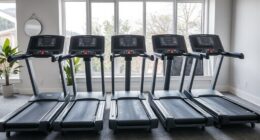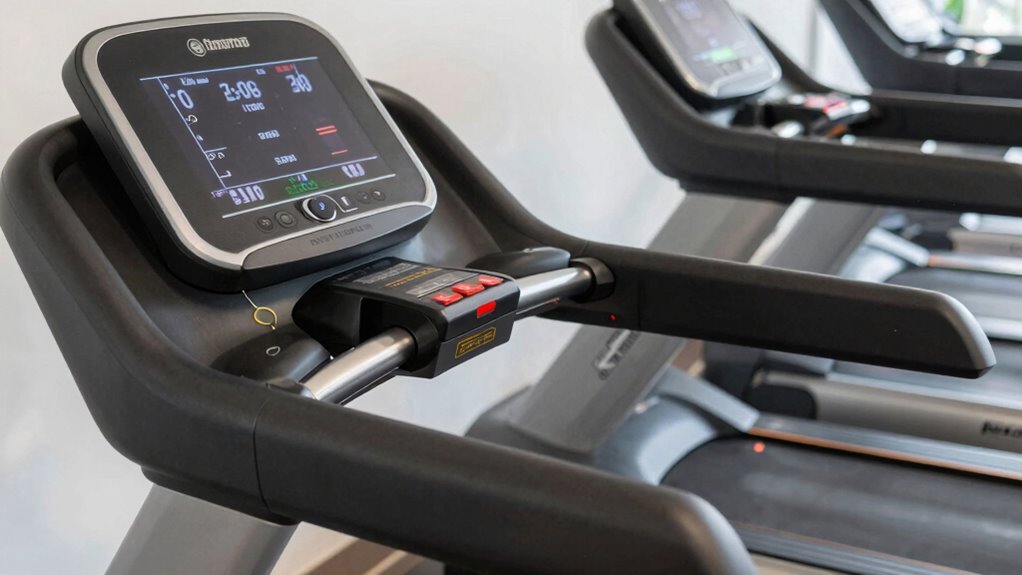

When choosing a treadmill, focus on its motor horsepower and belt width, as these numbers directly impact durability and long-term performance. A motor with at least 2.5 HP is good for home use, while 3.0 HP suits frequent running or heavier users. Wider belts (around 20-22 inches) offer more comfort and stability, reducing uneven wear. Knowing these core specs helps you pick a lasting machine, and if you keep exploring, you’ll discover more about how these numbers shape treadmill longevity.
Key Takeaways
- Motor horsepower (HP) indicates the treadmill’s power; ≥2.5 HP suits home use, ≥3.0 HP is better for frequent running or heavier users.
- Higher HP reduces overheating and motor burnout, extending the treadmill’s lifespan through durable performance.
- Belt width, typically 16 to 22 inches, affects comfort and stability; wider belts handle more intense workouts and offer better durability.
- Wider belts distribute impact evenly, decreasing uneven wear and prolonging treadmill life.
- Focusing on core specs like motor HP and belt width ensures long-term durability rather than just maximum speed features.

Have you ever wondered what all those treadmill specifications really mean? When shopping for a treadmill, it’s easy to get lost in a sea of numbers and technical jargon. But understanding key specs can help you pick a machine that’s built to last. Two important factors to consider are motor horsepower and belt width. These numbers aren’t just stats—they directly impact the treadmill’s durability and your workout experience.
Motor horsepower, often abbreviated as HP, indicates the power of the treadmill’s motor. Think of it as the engine that drives the belt. A higher horsepower means the motor can handle more intense workouts and heavier users without straining. For home use, a treadmill with at least 2.5 HP is typically sufficient for walking and light jogging. If you plan to run frequently or have a heavier weight, look for models with 3.0 HP or more. This extra power reduces the risk of overheating and motor burnout over time, translating into longer durability. Remember, a motor with inadequate horsepower may work fine initially but could overheat or fail prematurely under consistent stress. So, investing in a machine with a robust motor guarantees it can withstand years of daily use.
A treadmill with at least 2.5 HP ensures durability for home workouts and heavier users.
Belt width is another vital spec that often gets overlooked. It refers to the width of the running surface, usually measured in inches. A wider belt provides more room for movement, which is especially important if you’re a serious runner or share the treadmill with others. Common widths range from 16 to 22 inches. If you’re tall or like to run at a faster pace, opting for a belt closer to 20 or 22 inches gives you more comfort and stability. Narrow belts, around 16 inches, might be fine for walking or light jogging but can feel cramped during more vigorous workouts, potentially causing instability and uneven wear. A wider belt generally means a sturdier, more durable deck, as it distributes your impact more evenly across the surface. In turn, this reduces wear and tear, prolonging the lifespan of the treadmill.
In addition, a high-quality motor not only handles your current workout needs but also ensures the treadmill remains reliable over time. In essence, both motor horsepower and belt width serve as indicators of a treadmill’s capacity to endure and perform reliably over time. Don’t just focus on flashy features or maximum speed; look at these core specs to ensure you’re choosing a machine that can handle your workout routine and last for years. When you understand what these numbers mean, you make smarter decisions and invest in equipment that truly matches your fitness needs.
Frequently Asked Questions
How Do Treadmill Motor Types Affect Durability?
You’ll find that treadmill motor types directly impact durability by affecting motor efficiency and overall durability factors. A brushless DC motor typically lasts longer and runs more smoothly because it generates less heat and wears down slower. In contrast, brushed motors may need more maintenance and have shorter lifespans. Choosing the right motor type guarantees your treadmill performs reliably over time, reducing breakdowns and keeping your workouts consistent.
What Maintenance Practices Extend Treadmill Lifespan?
Think of your treadmill as a trusty steed from a bygone era. To keep it running smoothly, stick to regular lubrication schedules, which reduce friction and wear, and inspect for frame corrosion, especially if you live in a humid area. Clean the belt and deck often, and tighten loose bolts. These simple maintenance practices help extend your treadmill’s lifespan, ensuring it stays reliable for years to come.
Are Higher Horsepower Models Always More Durable?
Higher horsepower models aren’t always more durable, but they often have better motor efficiency, which can extend lifespan when properly maintained. Always check the warranty coverage—models with longer warranties tend to be built with higher quality components. You should consider your workout needs and maintenance practices, not just horsepower, to ensure your treadmill lasts longer. Proper upkeep and choosing a model with solid warranty coverage can make a big difference in durability.
How Does Belt Material Influence Treadmill Longevity?
You should consider belt material because it directly affects your treadmill’s longevity. A durable running surface made from high-quality materials resists wear and tear better over time. Proper belt tension is essential; too loose or tight can cause uneven wear, shortening lifespan. Opt for belts with sturdy, high-grade materials and regularly check tension to guarantee your treadmill stays smooth and lasts longer.
What Role Does User Weight Play in Treadmill Wear?
Your weight considerably impacts treadmill wear; heavier users put more strain on the machine, accelerating parts like the belt and motor. When your weight exceeds the treadmill’s recommended limit, it can cause faster wear and tear. Wearing proper running shoes helps absorb impact and reduces strain on the treadmill. To prolong its lifespan, stay within the weight capacity and choose footwear that cushions your steps, minimizing stress on the equipment.
Conclusion
Now that you’ve cracked the treadmill codes, you can spot the durable giants hiding behind those numbers. No more guesswork, no more broken promises—just pure, unstoppable power packed into every stride. With these specs, you’re not just buying a machine; you’re releasing a beast that will outlast the apocalypse itself. Get ready to conquer endless miles, because once you understand these numbers, durability becomes your new best friend—forever unbeatable, forever unstoppable.