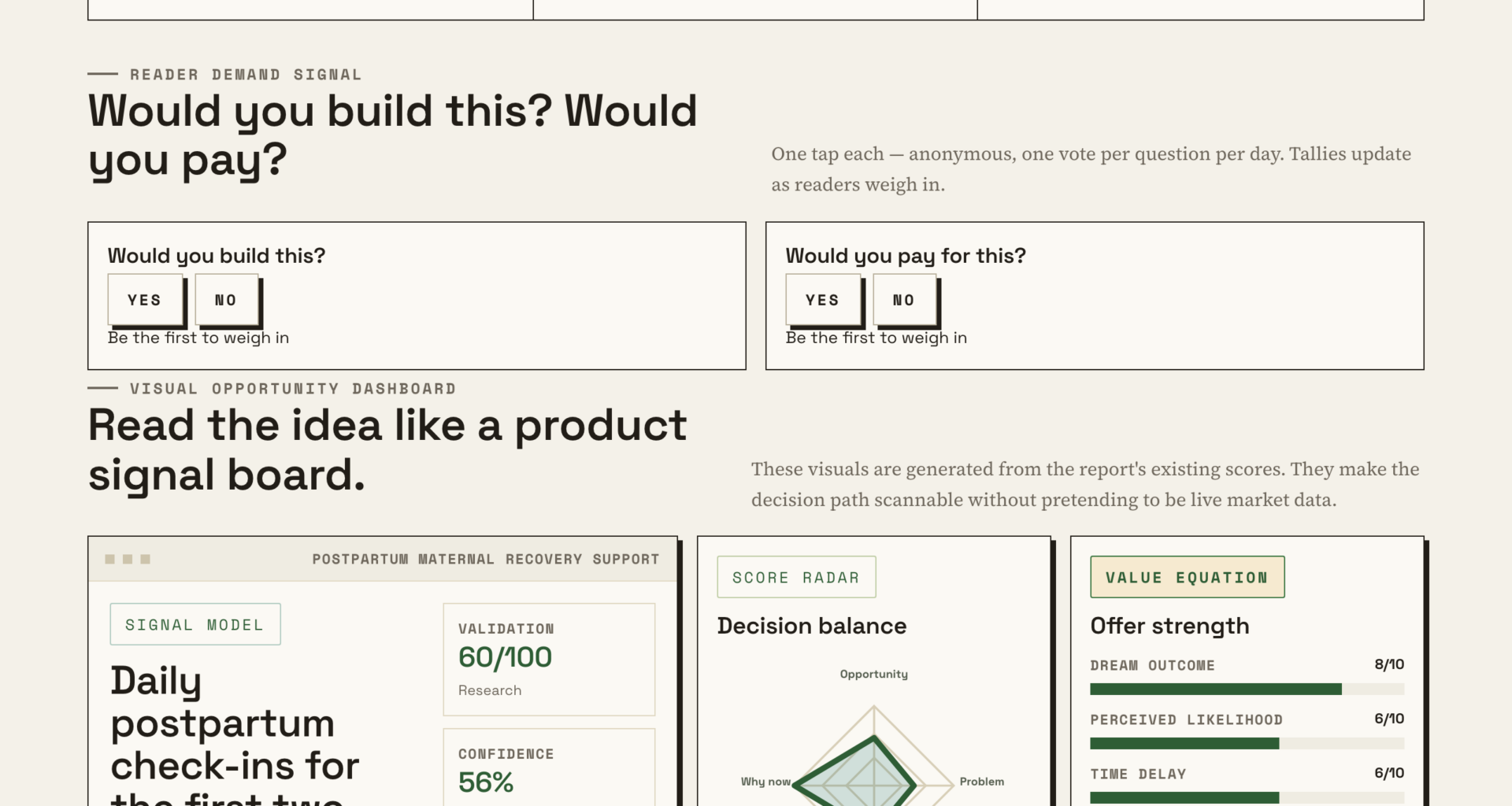

📊 Full opportunity report: Supporting New Mothers: The Power Of Daily Postpartum Checks on IdeaNavigator AI — validation score, market gap, and execution plan.
TL;DR

A pilot program is launching to provide daily postpartum check-ins for first-time mothers within the first two weeks after discharge. This aims to address gaps in current postpartum care by offering personalized, timely support, potentially reducing health risks during the critical recovery period.
A new pilot program is testing daily postpartum check-ins for first-time mothers within the first two weeks after hospital discharge. This initiative aims to address a critical gap in postpartum care, where mothers often receive little support until their six-week follow-up, despite the high risk of complications during the early recovery period.
The program involves recruiting 15 first-time mothers within 48 hours of discharge and providing them with daily check-ins through a smartphone-based platform. These check-ins are personalized based on a recovery profile created during onboarding, which considers delivery details, feeding method, and mental health baseline. The goal is to surface tailored recovery tips and prompt mothers to contact healthcare providers if concerning symptoms are flagged.
This initiative responds to growing awareness of the postpartum health gap, which leaves many women without support during the first two weeks—a period identified as high-risk for complications such as infections, bleeding, or mental health issues. The program is designed to be a low-cost, scalable solution that can be integrated into existing maternal health services, with potential funding through subscriptions, OB practices, or payer sponsorships.
Potential Impact on Postpartum Care Standards
If successful, this pilot could demonstrate a practical way to improve postpartum monitoring, potentially reducing emergency visits and hospital readmissions among new mothers. It addresses a known gap in care by providing daily, personalized support during a vulnerable period, which could lead to better health outcomes, increased maternal confidence, and early detection of complications.
Moreover, this approach aligns with broader maternal health campaigns emphasizing the importance of postpartum support, and it leverages smartphone technology to make personalized monitoring feasible at scale. Widespread adoption could reshape postpartum care protocols and influence policy changes aimed at improving maternal health metrics.
postpartum check-in app for new mothers
As an affiliate, we earn on qualifying purchases.
As an affiliate, we earn on qualifying purchases.
Current Postpartum Care Practices and Gaps
Currently, most first-time mothers are discharged with minimal guidance and are scheduled for a follow-up appointment at six weeks postpartum. During this period, many experience symptoms that are normal recovery signs or signs of complications, but they often lack immediate support or guidance to distinguish between the two. This gap has been highlighted in maternal health awareness campaigns, which point to the risks of delayed intervention during the early postpartum weeks.
Recent studies and expert opinions underscore that the first two weeks are critical for recovery, yet existing systems rely heavily on mothers seeking help or attending scheduled visits, which may be too late for some issues. The advent of smartphone technology offers an opportunity to provide daily, tailored check-ins that could bridge this gap effectively.
“Daily postpartum check-ins could serve as a vital tool in early detection of complications and support maternal confidence during the most vulnerable period.”
— an anonymous researcher
Uncertainties About Pilot Outcomes and Scalability
It is not yet clear whether the pilot will demonstrate significant reductions in postpartum complications or hospital readmissions. The small sample size and short duration mean results are preliminary, and broader effectiveness remains to be validated through larger studies. Additionally, questions about long-term engagement, user experience, and integration into existing healthcare systems are still unresolved.
Next Steps for Pilot Evaluation and Broader Adoption
The pilot is expected to run over the next few months, with researchers measuring completion rates, flagged symptom responses, and subsequent healthcare contacts. If positive, plans may include expanding the program to more participants, refining the platform based on user feedback, and advocating for integration into standard postpartum care protocols. Further studies will be necessary to confirm effectiveness and cost-efficiency at scale.
Key Questions
How does the daily postpartum check-in platform work?
The platform uses a personalized recovery profile built during onboarding, then delivers daily check-ins with tailored questions and tips. It prompts mothers to contact their healthcare provider if certain symptoms are flagged.
Who is eligible to participate in the pilot program?
First-time mothers discharged from the hospital within 48 hours of delivery are eligible to participate in this initial trial.
What are the potential benefits of daily postpartum check-ins?
Benefits include early detection of complications, increased maternal confidence, personalized support, and potentially reduced emergency visits and hospital readmissions during the critical first two weeks.
Will this program be available widely if proven effective?
If the pilot demonstrates success, there are plans to expand the program through OB practices, payer sponsorship, or subscription models, aiming for broader adoption in postpartum care protocols.
What challenges might this program face?
Challenges include ensuring user engagement, integrating with existing healthcare systems, securing funding, and validating long-term benefits through larger studies.
Source: IdeaNavigator AI