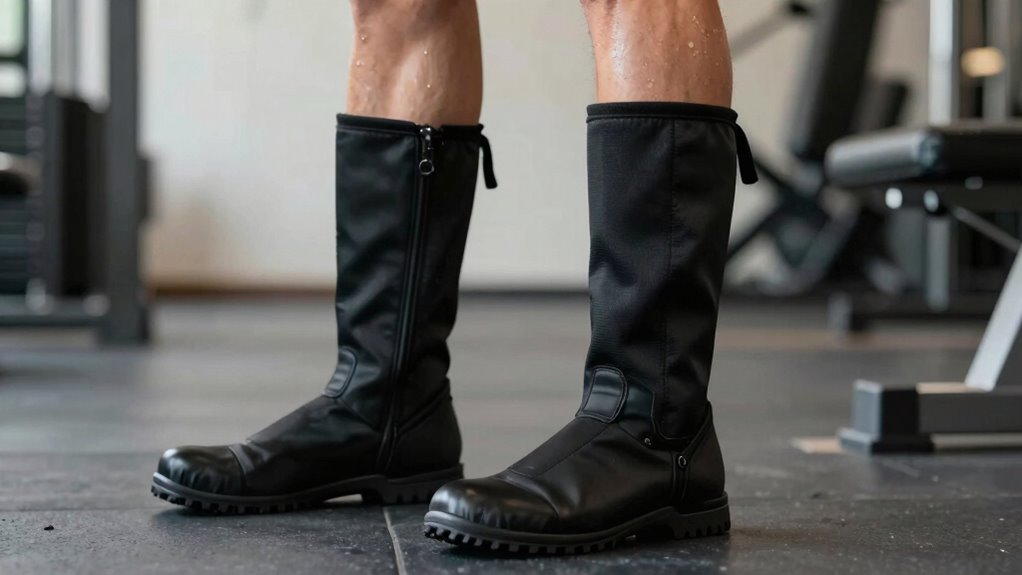

Using compression boots at the right times can boost circulation, reduce soreness, and speed up recovery, making them feel even better. Apply them immediately after heavy exercise or during periods of prolonged inactivity to maximize benefits. Employing them before activity helps prepare muscles and prevent injuries. Proper timing ensures you get the most out of each session, leaving your legs feeling energized and refreshed. Stay tuned to discover how to optimize their use for your needs.
Key Takeaways
- Using compression boots immediately after exercise enhances recovery by boosting circulation and reducing muscle soreness.
- Applying compression during prolonged inactivity prevents muscle fatigue and improves comfort throughout the day.
- Incorporating compression boots into warm-up routines can prepare muscles and reduce injury risk.
- Proper timing, such as post-activity or during rest, maximizes their benefits for circulation and muscle repair.
- Strategic use tailored to activity and body signals ensures optimal recovery, comfort, and performance.
Compression boots can quickly boost your recovery and leave your legs feeling refreshed, but timing is everything. When used correctly, they can be a game-changer for your muscle recovery process, helping you bounce back faster after intense workouts or long days on your feet. The key lies in knowing when to use them for maximum benefit. If you apply compression boots too late, you might miss out on some of their most effective advantages, especially in regards to circulation improvement. Conversely, using them at the right time can make a noticeable difference in how quickly your muscles repair and how energized you feel afterward.
The moment you finish a heavy workout, your muscles are vulnerable to fatigue and soreness. This is when compression boots can be most beneficial, as they work to enhance circulation and reduce swelling. By improving blood flow, they help deliver oxygen and nutrients to your tired muscles, facilitating faster muscle recovery. This process not only alleviates soreness but also prevents the buildup of lactic acid, which is often responsible for that post-exercise stiffness. When you use compression boots immediately after activity, you support your body’s natural recovery mechanisms and set the stage for quicker healing. Additionally, understanding the benefits of improved circulation can help you optimize your recovery routine. Incorporating proper recovery techniques, including compression therapy, can further enhance your results. Recognizing the importance of timing can help you maximize these benefits effectively. Being aware of your body’s response to different strategies can also help you tailor your recovery efforts more precisely.
Timing also plays a pivotal role in preventing muscle fatigue from setting in during long periods of standing or sitting. If you wear compression boots during or immediately after these activities, you stimulate circulation improvement, which helps keep your muscles active and less prone to cramping or soreness. This proactive approach means you’re less likely to experience the deep fatigue that can linger overnight or into the next day. Moreover, consistent use at strategic times can help maintain ideal blood flow, reducing the risk of muscle tightness and enhancing your overall comfort. Recognizing the importance of muscle recovery in your routine can encourage more mindful use of compression therapies. Additionally, utilizing compression boots during rest periods can support ongoing circulation and aid your muscles in staying loose and ready for subsequent activity. Incorporating proper timing into your routine ensures you’re maximizing the benefits of compression therapy and promoting sustained muscle health.
Using compression boots during or after prolonged standing or sitting boosts circulation and reduces muscle fatigue.
However, it’s not just about post-exercise use. Incorporating compression boots into your routine before activities that demand physical effort can also be advantageous. Pre-activity use can prepare your muscles by promoting circulation and loosening tightness, making your workouts more effective and reducing the likelihood of injury. Just remember, the best results come from understanding your body’s signals and planning your compression sessions accordingly. Being aware of how your body responds to different timings can help you customize your recovery and performance strategies more effectively.
Ultimately, the true power of compression boots lies in their timing. Using them at the right moments—whether immediately after exercise, during periods of prolonged inactivity, or as part of your warm-up—allows you to leverage their full potential for muscle recovery and circulation improvement. When you pay attention to when and how you use them, you’ll notice a marked difference in how your legs feel, how quickly you recover, and how energized you stay throughout your day.
compression boots for muscle recovery
As an affiliate, we earn on qualifying purchases.
As an affiliate, we earn on qualifying purchases.
Frequently Asked Questions
Can Compression Boots Be Used During Exercise?
Yes, you can use compression boots during exercise, but it’s best to do so carefully. They promote muscle relaxation and circulation enhancement, which can help reduce fatigue and improve recovery. However, avoid using them during intense exercise, as they might restrict movement or cause discomfort. Instead, consider using compression boots post-workout to optimize muscle recovery and boost circulation, ensuring you get the most benefit without interfering with your training.
Are Compression Boots Suitable for Everyone?
You might wonder if compression boots suit everyone, especially during your recovery routine. While compression therapy boosts circulation enhancement and helps reduce soreness, they’re not ideal for everyone. If you have blood clots, heart issues, or circulatory problems, you should consult your healthcare provider before using them. For most healthy individuals, compression boots are a safe way to promote recovery, but always listen to your body and seek advice if unsure.
How Long Should I Wear Compression Boots Each Session?
You should wear compression boots for about 20 to 30 minutes per session. During this time, you’ll notice improved circulation and muscle relaxation. Avoid exceeding 30 minutes, as longer use can cause discomfort or impede circulation. Keep an eye on how you feel—if you experience pain or excessive tightness, remove the boots. Consistent, moderate use helps maximize benefits without risking negative effects.
Do Compression Boots Help With Post-Workout Recovery?
Absolutely, compression boots are your secret weapon for post-workout recovery. They promote muscle relaxation and enhance circulation, helping your body flush out toxins and reduce soreness. Think of them as a gentle hug that revitalizes tired muscles. By increasing blood flow, they speed up recovery time and prevent stiffness. Incorporate them into your routine, and you’ll feel refreshed faster—ready to conquer your next workout with renewed energy.
Can Compression Boots Replace Traditional Massage Therapy?
Compression boots can’t fully replace traditional massage therapy, but they’re great as massage alternatives for improving circulation and aiding recovery. You get consistent pressure that stimulates blood flow, helping reduce soreness and swelling. However, massage therapy offers hands-on benefits like targeted muscle release and relaxation that compression boots can’t replicate. For ideal recovery, consider combining both methods—compression boots for circulation improvement and massage therapy for deep tissue work and stress relief.
Conclusion
Think of compression boots as your personal pit stop, revving up your muscles for the race ahead. When you time it right—after a workout or a long day—they work like a reset button, helping you recover and feel refreshed. But using them too often or at the wrong moments can be like pouring water on a fire—you might cool down, but you won’t get the full boost you need. So, listen to your body and time it wisely.