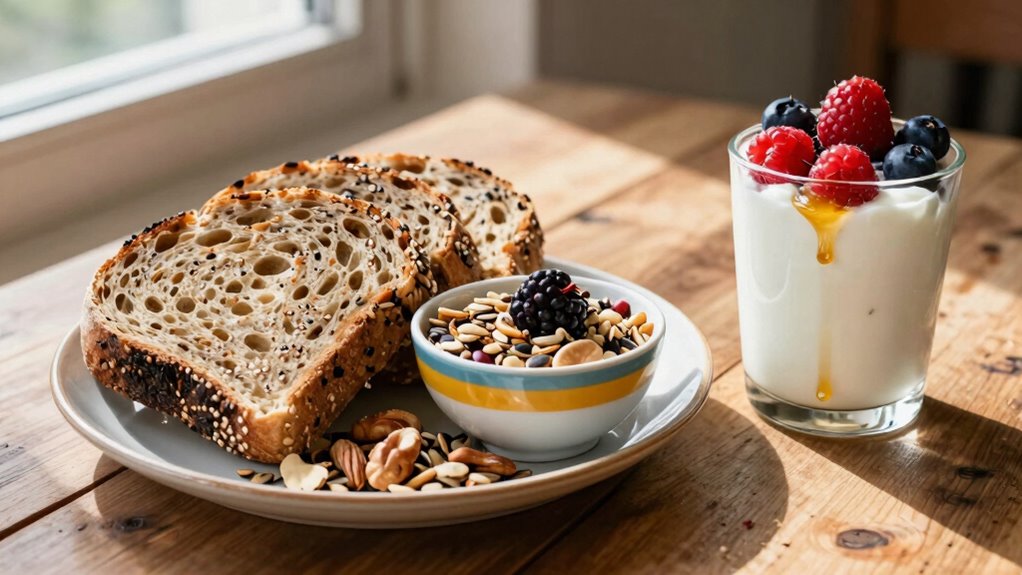

To stay full longer, focus on meals rich in protein, fiber, and healthy fats. These nutrients digest more slowly, helping stabilize your blood sugar and keeping hunger at bay. Protein signals fullness, while fiber adds bulk without extra calories. Healthy fats slow stomach emptying, prolonging satisfaction. Avoid refined carbs and sugary foods that cause quick energy spikes followed by crashes. If you want to learn how to make meals more filling, keep exploring these simple strategies.
Key Takeaways
- Meals high in protein, fiber, and healthy fats digest slowly, prolonging feelings of fullness.
- Consistent meal timing helps regulate hunger signals and prevents overeating.
- Balanced meals with diverse nutrients stabilize blood sugar and sustain satiety.
- Choosing nutrient-dense snacks with fiber and healthy fats supports longer-lasting fullness.
- Proper portion control and regular eating patterns prevent extreme hunger and cravings.
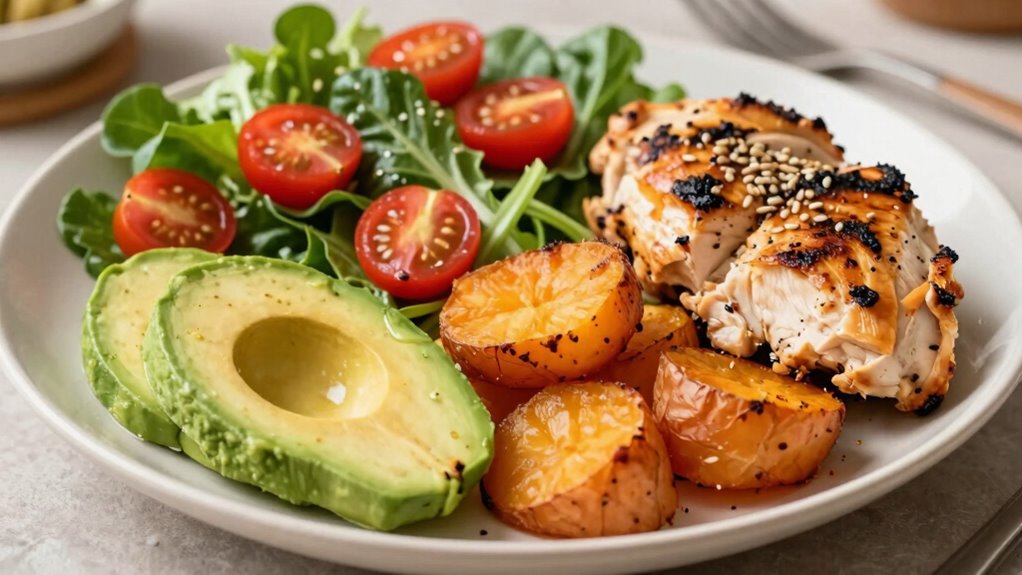
Have you ever wondered why some foods keep you full longer than others? It all boils down to how your body responds to different foods, but your snacking habits and meal timing also play significant roles. If you tend to snack frequently or eat at irregular times, your hunger signals can become confused, making it harder to feel satisfied after meals. On the other hand, establishing consistent meal timing helps regulate your appetite, allowing your body to anticipate food intake and respond more effectively to hunger cues.
When it comes to satiety, the types of foods you choose matter a lot. Meals rich in protein, fiber, and healthy fats tend to keep you full longer because they digest more slowly. Protein, in particular, stimulates the release of hormones that signal fullness, reducing your desire to snack shortly afterward. High-fiber foods, like vegetables, legumes, and whole grains, add bulk to your meals without extra calories, helping you feel satisfied for extended periods. Healthy fats, found in avocados, nuts, and olive oil, slow stomach emptying and promote lasting fullness. Conversely, meals high in refined carbs and sugars often lead to quick spikes and drops in blood sugar, triggering hunger sooner and encouraging frequent snacking. Additionally, understanding the role of meal composition in satiety can help you craft more filling meals. Incorporating a variety of nutrient-dense foods can further enhance your overall satiety and nutritional intake. Recognizing the impact of portion sizes can also make a substantial difference in managing hunger and preventing overeating.
Your snacking habits also influence how long you stay full. If you snack on processed or sugary foods, you might experience a temporary boost in energy, but you’ll likely crash quickly, which can lead to overeating later. Opting for nutrient-dense snacks that combine protein, fiber, and healthy fats can help stabilize your blood sugar levels and sustain satiety. Additionally, paying attention to meal timing helps prevent extreme hunger and overeating. Skipping meals or waiting too long between eating episodes can make you ravenous, leading to overeating or choosing less nutritious options.
Regularly spaced meals and snacks help keep your blood sugar steady, which in turn controls your appetite. When your body expects food at certain times, it becomes better at managing hunger signals, making you less prone to impulsive snacking or overeating. Incorporating balanced meals throughout the day also prevents the intense hunger that often leads to poor food choices. Understanding the importance of meal timing and establishing consistent eating patterns can significantly improve your satiety and overall health. Ultimately, understanding how meal timing and your snacking habits influence satiety empowers you to make smarter decisions about what and when to eat, helping you maintain a healthy weight and energy levels. By focusing on nutrient-rich foods and consistent eating patterns, you set yourself up for longer-lasting fullness and fewer cravings.
high protein fiber healthy snack packs
As an affiliate, we earn on qualifying purchases.
As an affiliate, we earn on qualifying purchases.
Frequently Asked Questions
How Does Hydration Affect Feelings of Fullness?
Hydration substantially impacts your feelings of fullness because water aids digestion and helps regulate hunger signals. When you’re well-hydrated, it’s easier to distinguish thirst from hunger, preventing unnecessary eating. Drinking water before meals can also fill your stomach temporarily, making you feel full longer. So, staying hydrated supports your satiety and overall digestion, ensuring you don’t confuse thirst with hunger and helping you maintain better control over your appetite.
Can Exercise Influence Satiety Levels During Meals?
Yes, exercise can influence your satiety levels during meals. Timing your workout before eating boosts your metabolic rate, which can make you feel fuller sooner and for longer. Exercise increases hormones that promote fullness and helps regulate appetite. By planning your workout around mealtime, you may find yourself less inclined to overeat and better able to control portion sizes, supporting your overall satiety and nutrition goals.
Do Supplements Help in Increasing Satiety?
Supplements can help increase your satiety, especially when taken with proper meal timing. Certain supplement types, like fiber or protein powders, promote fullness by slowing digestion or stimulating hormone responses. Incorporate these into your meals strategically, such as before or during eating, for better appetite control. However, remember that supplements complement a balanced diet and healthy habits—don’t rely solely on them to keep you full long-term.
How Does Sleep Quality Impact Hunger and Fullness?
Like a fragile glass, your sleep quality influences your hunger and fullness levels. When your sleep cycles are disrupted, your rest quality suffers, leading to increased hunger and decreased fullness cues. Poor sleep can cause hormonal imbalances, making you crave unhealthy foods. Prioritizing deep, restorative sleep helps regulate these hormones, so you feel fuller longer and manage hunger better throughout the day.
Are There Specific Foods That Suppress Appetite Naturally?
Yes, certain foods naturally suppress appetite, especially when you focus on flavor combinations and food textures. Foods high in protein, fiber, and healthy fats, like nuts, seeds, and lean meats, help you feel full longer. Incorporate crunchy textures and savory flavors to enhance satiety. Eating whole, unprocessed foods with diverse textures and bold flavors can curb hunger efficiently, making it easier to stick to your meal plan.
Conclusion
Now that you understand the secrets behind lasting fullness, you’re like a master chef in your own kitchen, crafting meals that keep hunger at bay. Remember the wise tortoise, steady and patient, knowing that nourishing your body with the right foods leads to sustained energy and satisfaction. So, embrace these satiety strategies—your hunger won’t stand a chance, and you’ll stay fueled for whatever adventure awaits. Keep nourishing wisely, and enjoy the journey!