To prevent disasters with power strips and extension cords, avoid overloading them by checking their wattage limits and distributing devices across multiple outlets. Never daisy-chain cords or use damaged ones that could spark fires. Keep cords organized, away from water and heat, and inspect them regularly. Using surge protectors and proper cable management reduces risks, ensuring safety. Learn the essential safety tips to keep your space secure and prevent electrical accidents.
Key Takeaways
- Do not overload power strips or extension cords beyond their rated wattage limits.
- Avoid daisy-chaining multiple cords or strips together to prevent fire hazards.
- Regularly inspect cords for damage and replace any frayed or cracked wires immediately.
- Use cords away from water, heat sources, and high-traffic areas to reduce risks.
- Implement proper cord management with organizers to prevent tangling and tripping hazards.

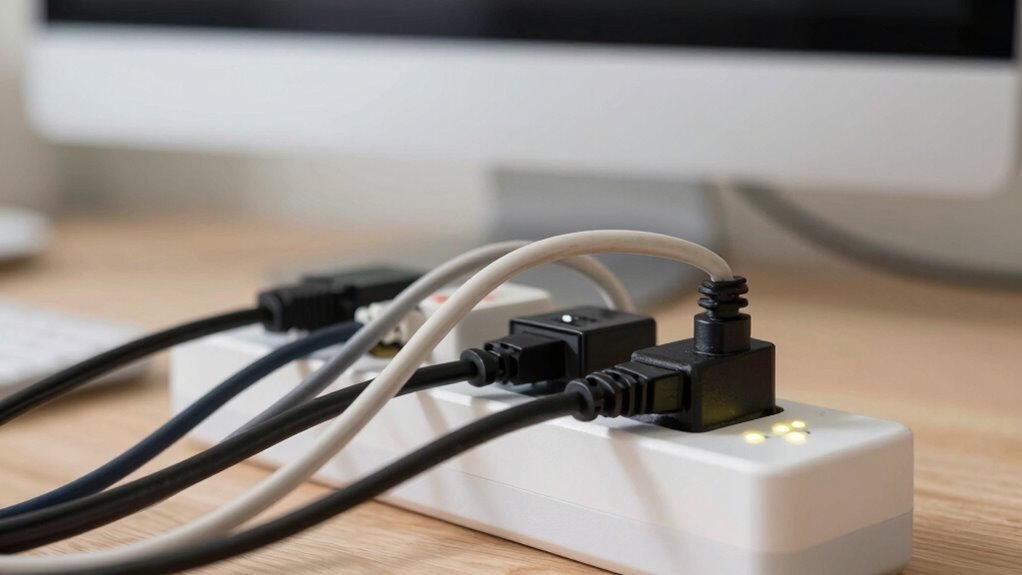
Power strips and extension cords are vital tools for expanding your electrical outlets and powering multiple devices simultaneously. However, if you’re not careful, they can pose serious safety risks. One of the main dangers is overloading hazards, which occur when too many devices draw power through a single strip or cord. Overloading can cause wires to heat up, increasing the risk of fires or electrical failures. To avoid this, always check the power rating of your power strip or extension cord and make sure the total wattage of connected devices doesn’t exceed that limit. Distributing the load across multiple outlets or cords helps prevent overloads and keeps your devices safe.
Avoid overloading power strips to prevent fires and electrical failures. Check wattage limits and distribute loads safely.
Cord management is another essential aspect of using power strips and extension cords safely. Tangled or poorly organized cords can lead to tripping hazards or accidental disconnections, which could damage equipment or cause injuries. Use cord organizers or clips to keep cords neat and off the floor, reducing clutter and minimizing strain on the connections. Avoid running cords under rugs or furniture, as this can trap heat and damage the insulation, increasing the risk of short circuits or fires. Proper cord management not only enhances safety but also prolongs the lifespan of your cords and devices. Additionally, understanding the importance of safe application techniques can help prevent common electrical accidents.
Be mindful of where you plug in your power strips and extension cords. Never daisy-chain multiple strips or cords together, as this amplifies the risk of overloading and electrical faults. Instead, use a single, high-quality power strip with surge protection if you need to connect multiple devices. Surge protectors help guard your electronics against power spikes, which can occur during storms or outages. Always inspect cords and strips for signs of damage, such as fraying or cracks, and replace damaged items immediately. Damaged cords are more likely to short circuit or cause fires.
Finally, pay attention to the environment where you use these devices. Keep cords away from water, heat sources, or high-traffic areas where they might be pinched or damaged. Never force a cord into an outlet or connect it to an incompatible device. By following these safety rules — avoiding overloading hazards and maintaining proper cord management — you greatly reduce the risk of electrical accidents. Remember, power strips and extension cords are convenient, but they demand respect and careful handling to guarantee your safety and that of your home or office.
Frequently Asked Questions
Can I Connect Multiple Extension Cords for High-Power Appliances?
You shouldn’t connect multiple extension cords for high-power appliances, as power strip overloads can occur, risking electrical fires. Using several extension cords increases the risk of overloading and can lead to dangerous situations. Also, pay attention to extension cord length; longer cords can cause voltage drops, reducing efficiency and safety. Always plug high-power appliances directly into a properly rated wall outlet and avoid daisy-chaining cords for safety.
Are There Specific Safety Certifications to Look for on Power Strips?
You should always check for safety certifications on power strips before use. Look for safety labels that indicate compliance with recognized certification standards like UL, ETL, or CSA. These labels mean the product has passed rigorous safety testing. Skipping this step could expose you to risks like electrical fires or shocks. Don’t take chances—only use power strips with verified safety certifications to keep your home safe.
How Often Should I Inspect Cords for Damage or Wear?
You should inspect your cords for damage or wear at least once a month. Regular inspection helps catch issues like frayed insulation, exposed wires, or scorch marks early, preventing potential hazards. If you notice any cord damage during your inspection, stop using it immediately and replace it. Making inspection frequency a routine habit guarantees your safety and reduces the risk of electrical fires or shocks caused by damaged cords.
Is It Safe to Daisy Chain Multiple Extension Cords?
Daisy chaining multiple extension cords is like stacking building blocks—it’s risky and unstable. For extension cord safety, never connect more than one extension cord together, as it can cause overheating or fires. I once saw a friend’s living room nearly go up in flames because he daisy chained cords without knowing the danger. Always use a single, properly rated extension cord for your needs and avoid daisy chaining to stay safe.
What Should I Do if My Power Strip Overheats?
If your power strip overheats, unplug it immediately to prevent potential hazards. Overload prevention is essential—never connect too many devices, and avoid daisy chaining. Check for signs of thermal safety issues like burning smells or excessive heat. Allow the power strip to cool down in a well-ventilated area before inspecting or using it again. If overheating recurs, replace the power strip to stay safe and avoid electrical fires.
Conclusion
By following these safety rules, you can avoid disasters and keep your home safe. Remember, don’t overload power strips or extension cords, and never daisy chain them. Think of your living room like a vintage 1950s diner—everything should run smoothly without sparks flying. Staying cautious today prevents a blackout tomorrow. So, be smart, stay safe, and keep your electrical setup as reliable as a well-oiled jukebox.