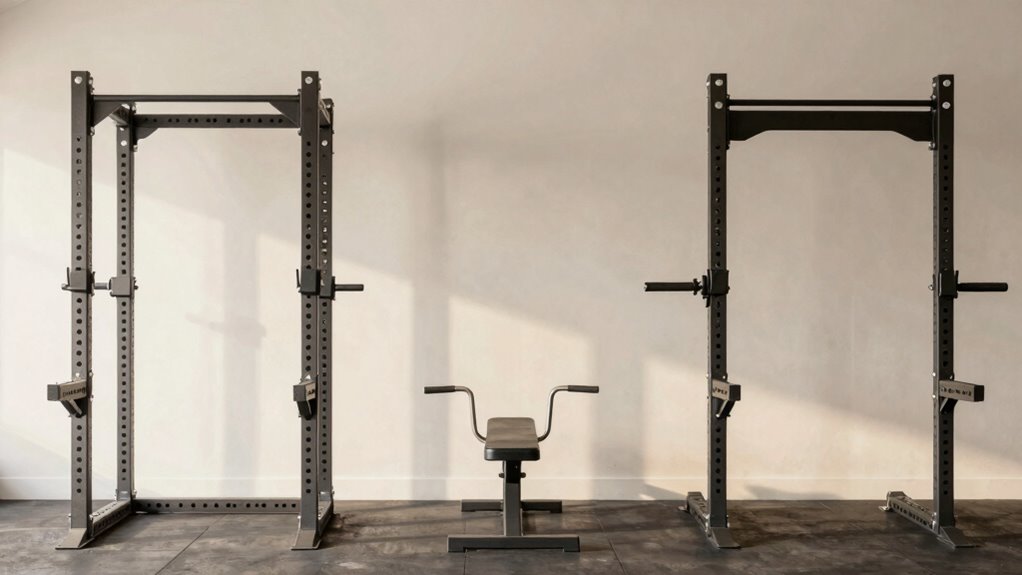

When choosing between a power rack, squat stand, or half rack, consider safety, adjustability, and space. Power racks offer the best safety features and storage options, making them ideal for heavy and varied lifts, but they take up more space. Squat stands are compact and suitable for lighter workouts but lack safety features. Half racks provide a middle ground with some safety and storage benefits. Keep these differences in mind to make the best choice for your goals and space—there’s more to discover ahead.
Key Takeaways
- Power racks offer comprehensive safety features and adjustable safety bars, ideal for heavy and varied lifts.
- Squat stands are compact and affordable but lack safety mechanisms, suitable for lighter, less frequent training.
- Half racks provide a middle ground with some safety and storage options but may not be as versatile or secure as full power racks.
- Consider your space constraints: power racks are larger, while squat stands and half racks are more suitable for limited areas.
- Match your safety needs and storage preferences to your training goals before choosing between these equipment types.
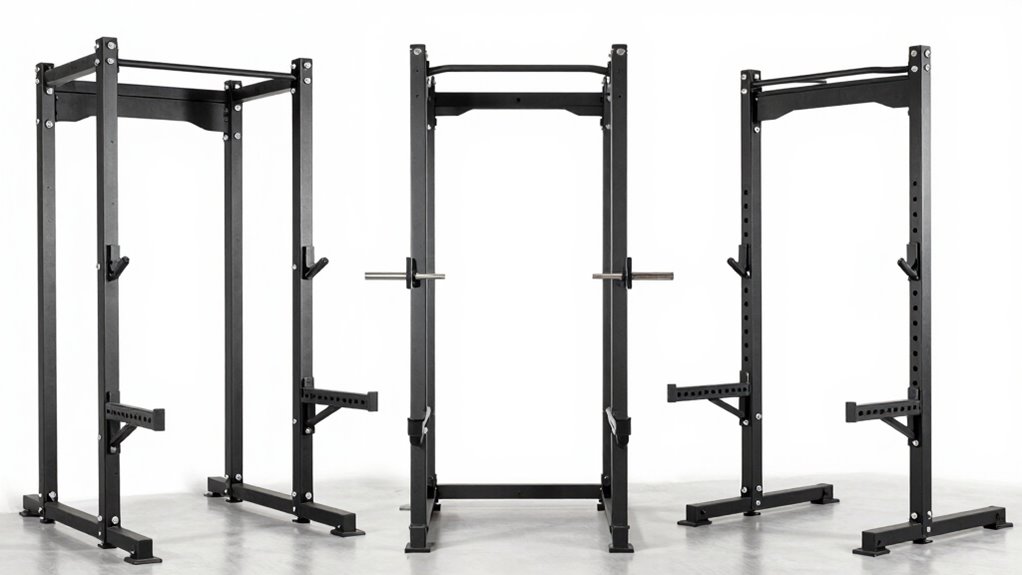
When choosing between a power rack, squat stand, and half rack, understanding their differences is vital for setting up an effective and safe workout space. Safety features are essential because they directly impact your ability to lift heavy confidently. Power racks often come equipped with safety bars or pins that can be adjusted to catch the bar if you fail a lift, reducing the risk of injury. These safety features are especially important if you’re training alone or pushing your limits. In contrast, squat stands typically lack such safety mechanisms, which makes them less suitable for heavy lifts or solo training. Half racks usually have some safety features, but they might not be as extensive or adjustable as those on full power racks. When selecting equipment, consider how much safety you need based on your workout style and experience level. Additionally, adjustable safety features can provide greater flexibility and security during various lifts. Storage options also play a significant role in your decision. Power racks are designed with versatility in mind, often featuring built-in storage hooks or pegs for organizing your plates, bands, or accessories. This helps keep your workout area tidy and minimizes the risk of tripping over equipment. A squat stand generally offers limited or no built-in storage, so you might need additional racks or shelves nearby. Half racks may have some storage features, but they tend to be less extensive than full power racks, which can impact how well you can organize your gear. If you prefer a clutter-free workout environment and want everything within easy reach, a power rack with ample storage options is likely your best choice. Furthermore, safety features and storage options are interconnected when it comes to your overall training experience. A well-designed power rack not only keeps you safe with its adjustable safety bars but also offers convenient storage solutions that streamline your workout. This integration allows you to focus on lifting rather than searching for weights or worrying about safety hazards. On the other hand, if space is limited and you don’t plan to lift very heavy, a squat stand might suffice, but be prepared to organize your equipment separately. Half racks tend to strike a middle ground but may lack some safety and storage conveniences, making them suitable for lighter or less frequent training. Ultimately, your choice should balance your safety needs with your storage preferences. Prioritize safety features that match your lifting goals and consider how storage options will keep your workout area organized and efficient. Making an informed decision ensures you build a setup that’s safe, functional, and tailored to your training style.
Frequently Asked Questions
Which Equipment Offers the Best Safety Features for Beginners?
A power rack offers the best safety features for beginners because of its all-encompassing safety mechanisms, like adjustable safety bars and catch plates, which provide beginner protection during heavy lifts. Unlike squat stands or half racks, power racks are designed to catch the bar if you lose control, reducing injury risk. This added safety makes them the ideal choice for newcomers who want confidence and security while training.
Can These Racks Be Used for Exercises Other Than Squats?
Yes, these racks can be used for multi-purpose exercises beyond squats. Many models support accessory compatibility, allowing you to add pull-up bars, dip stations, or weight storage. This versatility makes them suitable for bench presses, pull-ups, and other strength training routines. Just guarantee your chosen rack offers the right features and space for your preferred exercises, so you get the most out of your investment.
What Is the Typical Price Range for Each Type?
Imagine a sturdy power rack towering over a compact squat stand, with a half rack in between. Power racks generally cost between $300 to $1,000, offering durability and versatility. Squat stands are more affordable, ranging from $100 to $300, perfect for limited budgets. Half racks fall in the middle, around $200 to $700, balancing price and functionality. Your choice hinges on your budget and workout needs.
Are There Space Limitations to Consider When Choosing a Rack?
Yes, space constraints are vital when choosing a rack. You need to take into account your room size and available area for safe movement. Full power racks take up more room, so if space is limited, a squat stand or half rack might be better options. Measure your space carefully and make certain there’s enough clearance for exercises and safety. Don’t forget to leave room for accessories and comfortable workout movement.
How Easy Is It to Assemble Each Type at Home?
Most home gym racks are designed for DIY installation, and about 75% of users find assembly straightforward. Power racks often have detailed instructions, making DIY setup easier, while squat stands and half racks may be simpler due to fewer parts. Your experience depends on your DIY skills, but generally, you can expect assembly to take a few hours with basic tools. With patience, you’ll have your rack ready in no time.
Conclusion
Ultimately, choosing between a power rack, squat stand, or half rack is like selecting the right tree in a dense forest — each offers its own shade and strength. Think about your space, goals, and comfort, and you’ll find the perfect fit guiding you through your fitness journey. Remember, the right equipment isn’t just a purchase; it’s the sturdy branch that supports your growth and keeps you rooted in progress. Choose wisely, and let your strength flourish.