
To create an effective pool cleaning schedule, balance automatic cleaners for routine debris removal with manual tasks like brushing and chemical testing. Regularly check and maintain your equipment, especially filters and pumps, and adjust cleaning frequency seasonally based on debris and usage. Test and balance your water weekly to keep it clear and safe. By combining these methods, you’ll keep your pool pristine and extend equipment life—keep exploring to master every step.
Key Takeaways
- Implement automatic cleaners regularly for routine debris removal and water circulation, reducing manual effort.
- Schedule manual inspections and targeted cleaning for spots automatic systems may miss, like corners or stubborn stains.
- Adjust cleaning frequency seasonally, increasing manual skimming during foliage-heavy months and reducing automatic runs in winter.
- Regularly test water chemistry and clean filters to ensure optimal performance of both manual and automatic cleaning devices.
- Balance automated and manual tasks to maintain water quality, safety, and equipment longevity efficiently.
Assessing Your Pool’s Needs and Setting Priorities
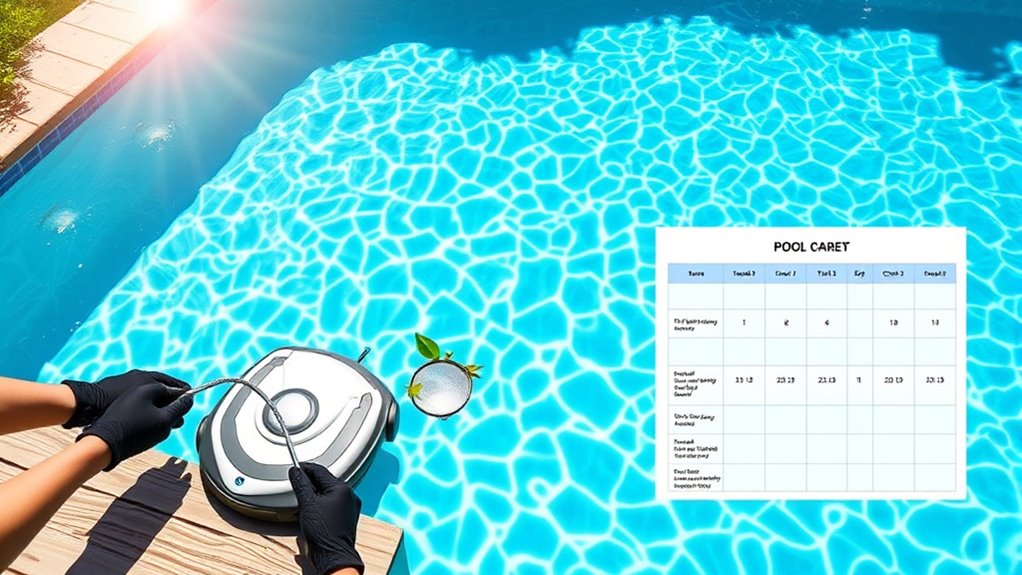
Before creating a cleaning schedule, it’s important to assess your pool’s specific needs and priorities. Consider how your pool’s poolside decor impacts maintenance—decor items can trap debris or require special cleaning. Evaluate your pool safety measures; if you have children or pets, you’ll need to prioritize keeping the water clean and safe. Check how often debris like leaves or dirt falls into the pool, and note any algae or staining issues. Your priorities should include regular skimming, cleaning filters, and maintaining chemical balance. By understanding these factors, you can tailor a schedule that ensures your pool stays inviting and safe, while also protecting your decor and emphasizing safety measures. This initial assessment sets the foundation for an effective cleaning plan. Additionally, understanding the rustic aesthetic of your surroundings can help determine the best maintenance practices that complement your overall decor and environment. Regularly inspecting your pool and surroundings can also help identify potential issues early, reducing long-term maintenance costs. Incorporating a schedule for routine checks can further streamline your maintenance efforts and prevent larger problems. Being aware of the various cleaning methods, such as manual and automatic options, allows you to choose the most efficient approach for your needs.
Choosing the Right Automatic Cleaning Devices
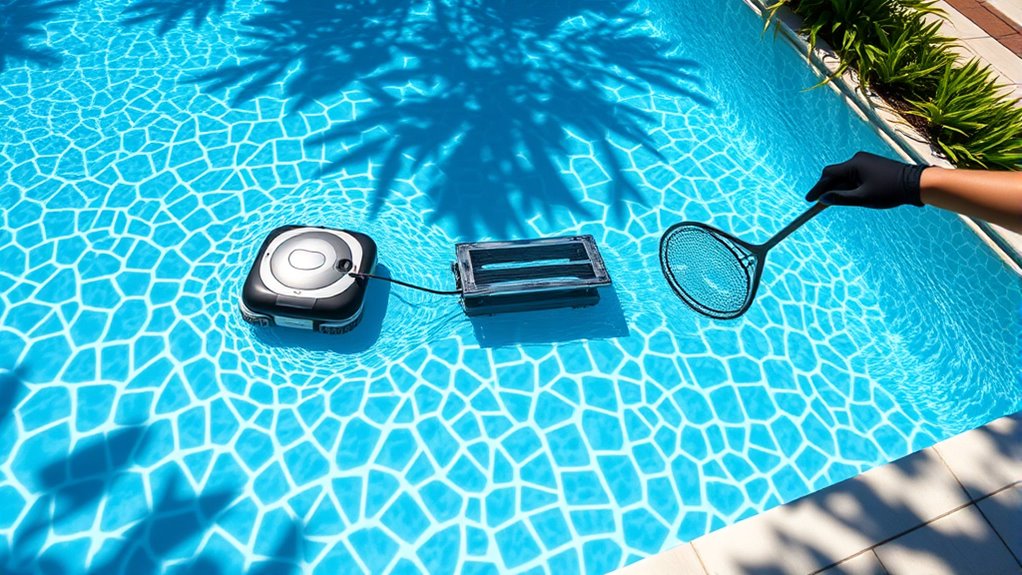
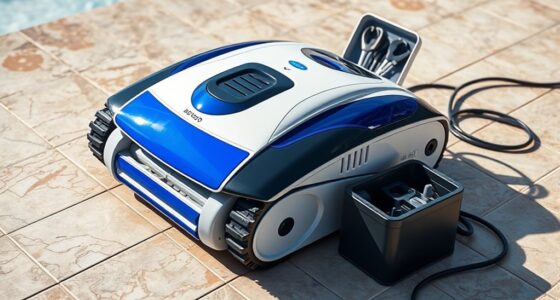
Choosing the right automatic cleaning devices can substantially simplify your pool maintenance routine. Robotic cleaners are excellent for thorough cleaning, steering around obstacles, and reaching hard-to-access spots without much effort from you. They often come with programmable features, making maintenance even easier. Suction devices, on the other hand, connect to your pool’s skimmer or dedicated suction line, effectively removing debris from the bottom and walls. When selecting between these options, consider your pool size, shape, and typical debris load. Robotic cleaners are ideal for larger or more complex pools, while suction devices work well for regular, light cleaning. Both types help reduce manual effort, ensuring your pool stays clean with less time and effort on your part. Additionally, evaluating the performance metrics of each device can help you choose the most efficient option for your needs. Understanding the technology differences between these devices can also assist in making an informed decision. Moreover, considering maintenance requirements can help you select a device that remains reliable over time. Incorporating air quality considerations can also enhance your overall pool environment, especially if you use chemical treatments that may impact indoor air quality. Regularly reviewing device efficiency can further optimize your cleaning routine and prolong the lifespan of your equipment.
Establishing a Weekly Manual Maintenance Routine
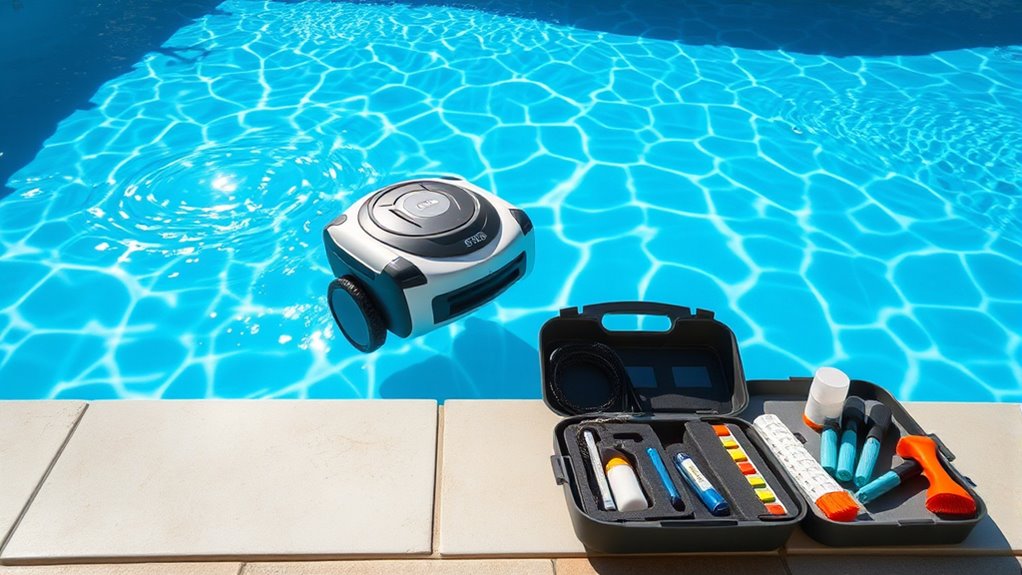
Establishing a consistent weekly manual maintenance routine is essential for keeping your pool crystal clear and balanced. Regularly checking and cleaning your skimmer baskets prevents clogs and maintains proper water flow. This helps stop pool algae from forming and keeps your water fresh. To keep things smooth, consider these steps:
Consistent weekly maintenance keeps your pool clear, algae-free, and perfectly balanced.
- Empty skimmer baskets to remove debris and improve filtration.
- Brush the pool walls and floor to dislodge algae and dirt.
- Test and adjust chemical levels for peak water balance.
Integrating Automatic and Manual Cleaning for Optimal Results
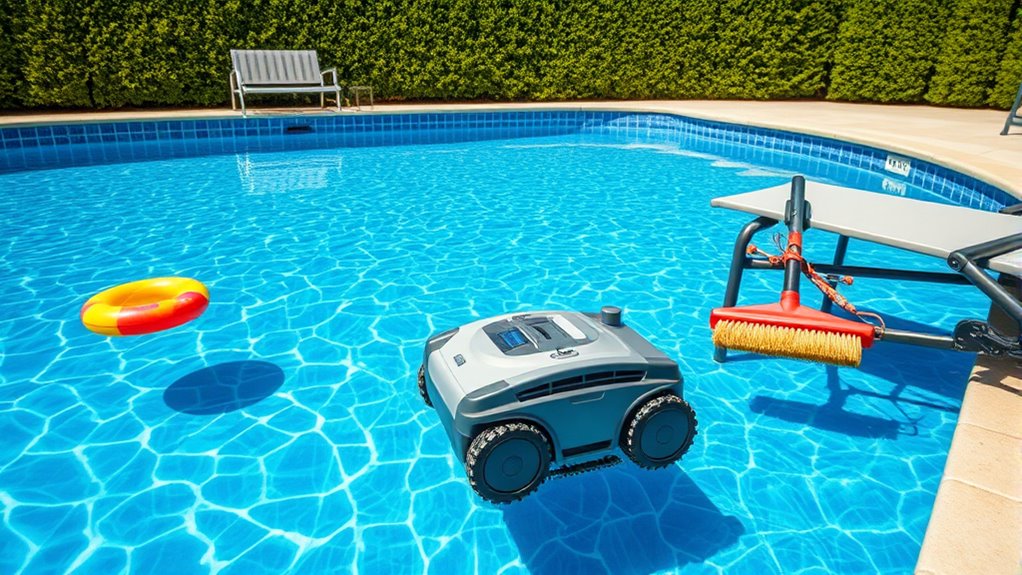
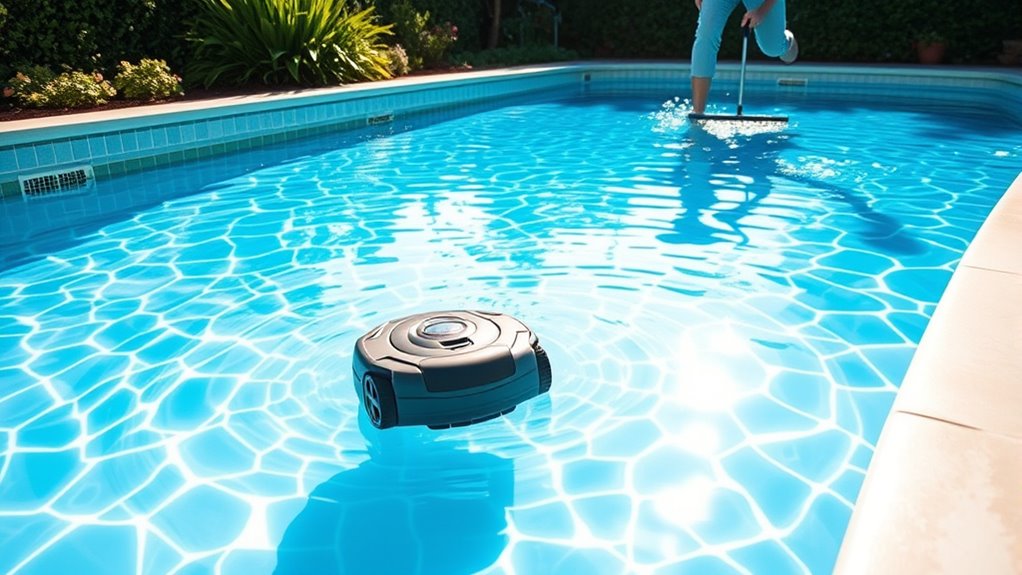
By combining automatic pool cleaners with your manual maintenance routine, you can achieve a more thorough and efficient cleaning process. Automatic cleaners handle the routine removal of debris and help maintain consistent water circulation, which is essential for pool safety. They reach hard-to-access areas, reducing the risk of algae buildup and ensuring better water quality. Meanwhile, manual cleaning allows you to target specific spots, check for potential issues, and ensure the filters and skimmers are functioning properly. Integrating these methods ensures your pool remains safe, clean, and properly circulated. This balanced approach minimizes the chances of overlooked debris or imbalanced water chemistry, creating a healthier swimming environment. Ultimately, combining automatic and manual cleaning maximizes efficiency and keeps your pool in top condition.
Scheduling Regular Water Testing and Chemical Balancing
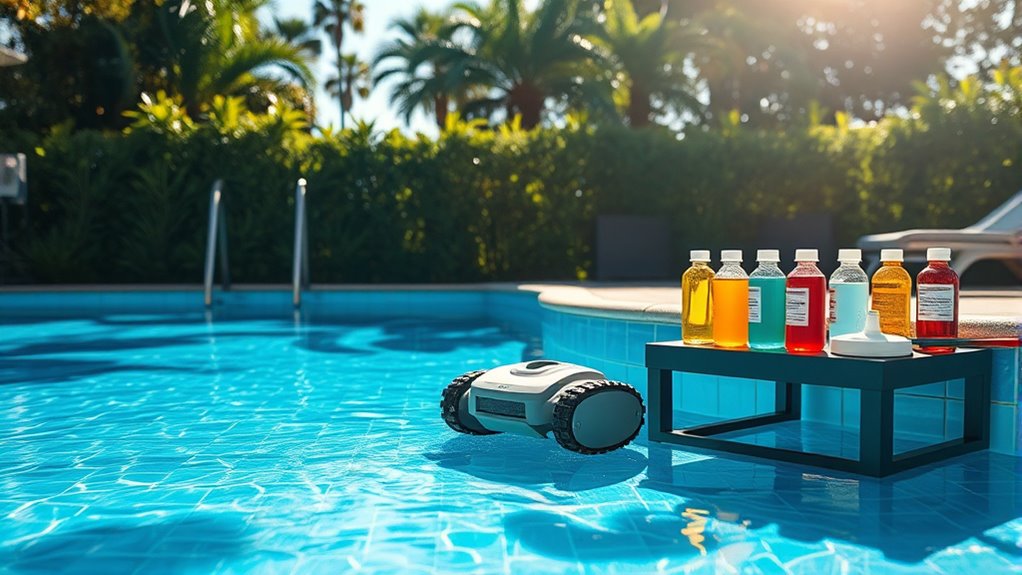
Regular water testing is essential to keep your pool balanced and safe. You should test the water at least once a week, or more often during heavy use or after storms. When testing, use accurate kits and adjust chemicals carefully to maintain proper pH and sanitizer levels. Incorporating consistent testing routines ensures the ongoing health and safety of your pool environment. Additionally, monitoring water quality indicators can help detect imbalances early and prevent potential issues before they become costly. Staying aware of side effects of chemical imbalance, such as skin irritation or cloudy water, can prompt timely adjustments to maintain optimal conditions.
Water Testing Frequency
How often should you test your pool water to keep it balanced and safe? At least once a week is recommended, especially during swimming season. Regular testing helps maintain proper pH balance, which is key for comfort and equipment longevity. It also plays a vital role in algae prevention, keeping your pool crystal clear. Testing more frequently after heavy use or storms ensures that any chemical imbalances are addressed promptly. Use a reliable test kit for accurate readings to avoid guesswork. Adjust chemicals promptly based on test results to prevent issues from developing. Understanding your credit score can help you finance pool upgrades or repairs more effectively. Keeping a consistent schedule ensures your water stays clean and safe. Proper testing prevents issues before they escalate, saving you time and money on more extensive cleaning later. Staying informed about water chemistry can help you better interpret test results and maintain optimal water quality. Regular maintenance and vigilance will keep your pool inviting and safe all season long. Additionally, understanding the chemical balance helps in making precise adjustments to keep your pool water healthy and inviting.
Chemical Adjustment Tips
Scheduling regular water tests allows you to stay ahead of chemical imbalances that can harm your pool. When you test frequently, you can promptly adjust pH balancing to keep levels between 7.2 and 7.6, ensuring comfortable swimming and protecting your equipment. Keep an eye on sanitizer levels, maintaining them between 1 and 3 ppm to prevent bacteria growth and algae. If test results show pH is too high or low, add pH increasers or decreasers accordingly. Similarly, if sanitizer levels are off, add the appropriate sanitizer or shock the pool. Regular testing and timely adjustments help maintain clear, safe water and reduce the need for costly chemical corrections later. Staying vigilant with your water chemistry ensures a healthier, more enjoyable swimming environment. Incorporating AI-driven data analytics can further optimize your chemical adjustment schedule by providing insights into trends and patterns in your water quality. Additionally, understanding filter maintenance practices can prevent issues that may affect water clarity and quality, making your pool care more efficient. Monitoring chemical levels regularly can also help you identify potential problems before they become serious, saving both time and resources. For optimal results, it’s also beneficial to understand the Glycolic Acid Benefits for Skin, which can help in maintaining healthy skin around the pool area by reducing roughness and irritation caused by exposure to pool chemicals.
Seasonal Adjustments to Your Cleaning Plan
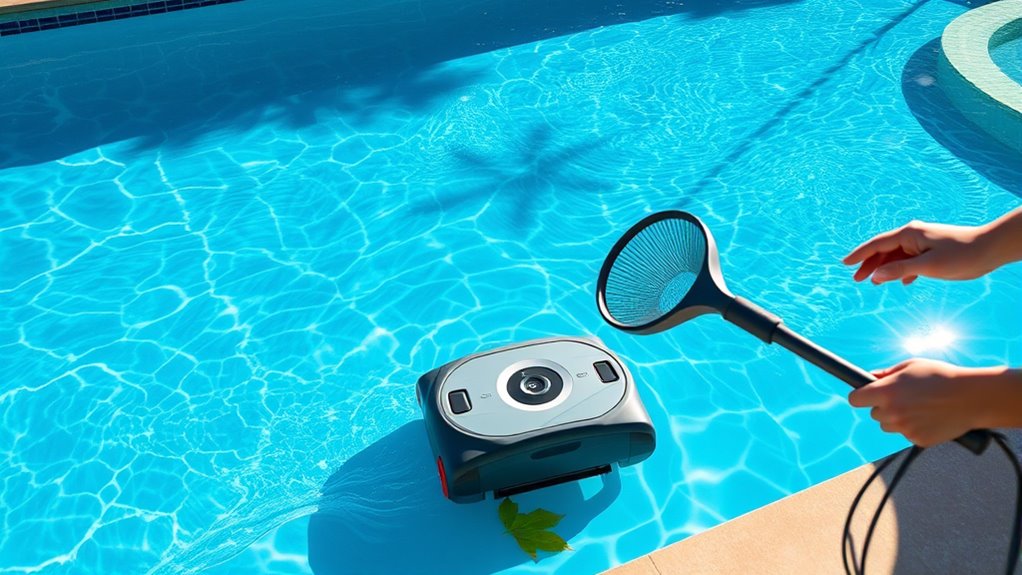
As the seasons change, so do the needs of your pool cleaning routine. Cooler months may reduce algae growth but require attention to pool safety, like maintaining proper covers and secure fencing. In warmer months, increased debris from landscaping integration demands more frequent manual skimming and filter checks. Adjust your automated systems to suit seasonal conditions, ensuring they operate efficiently without wasting energy.
Consider these seasonal tips:
- Use safety covers and fencing to prevent accidents during off-season months.
- Adjust automatic cleaning schedules based on debris levels.
- Regularly inspect and clean filters after landscaping projects or heavy foliage.
Troubleshooting Common Issues With Automated Systems

Automated pool cleaning systems can save you time, but they occasionally encounter issues that disrupt their performance. When your cleaner isn’t working properly, check for common problems like dirty filters or uncalibrated sensors. Poor filter maintenance can cause reduced suction and missed spots, so clean or replace filters regularly. Sensor calibration issues might lead to navigation errors or incomplete coverage—recalibrate as needed. Use the table below to troubleshoot:
| Issue | Solution |
|---|---|
| Poor cleaning coverage | Recalibrate sensors |
| Stuck or slow movement | Clean filters and check for debris |
| System not starting | Inspect power source and reset system |
Address these issues promptly to keep your system running smoothly.
Tips for Maintaining Equipment and Extending Lifespan
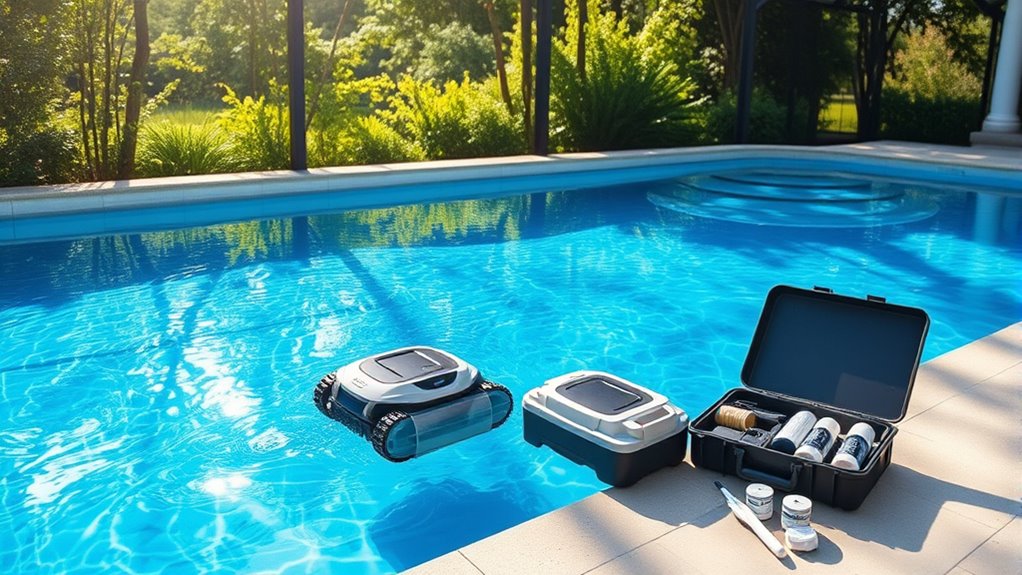
Keeping your pool equipment in top shape starts with regular inspections to catch issues early. Store your gear properly when not in use to prevent damage and wear. Don’t wait too long to replace worn parts, as timely updates can extend the lifespan of your equipment considerably.
Regular Equipment Inspections
Regular equipment inspections are essential for maintaining your pool’s systems and preventing costly repairs. Regularly check your filter to ensure proper filter maintenance, which keeps water clean and flow steady. Inspect your pump to spot any signs of wear or leaks early, extending its lifespan. During inspections, look for debris buildup, unusual noises, or corrosion that could signal issues.
- Clean or replace filter cartridges as needed
- Listen for unusual sounds from the pump
- Check hoses and fittings for leaks or cracks
Performing these simple tasks helps you catch problems early, saving money and hassle down the line. Consistent inspections keep your equipment running smoothly, ensuring your pool stays crystal clear and inviting.
Proper Storage Practices
Proper storage practices are essential for protecting your pool equipment from damage and extending its lifespan. Keep chemicals in a cool, dry place, away from direct sunlight and moisture to prevent deterioration and safety hazards. Proper equipment organization helps you find tools quickly and prevents clutter that could cause damage. Store hoses, skimmers, and vacuums in designated spots, and clean equipment thoroughly before storing. Use labeled containers for chemicals to avoid mix-ups. Maintaining a tidy storage area reduces wear and tear, prolongs equipment life, and keeps your pool setup safe.
| Tip | Benefit |
|---|---|
| Store chemicals securely | Prevent accidents and chemical degradation |
| Organize equipment neatly | Easy access and reduced damage |
| Keep dry and cool | Extends equipment lifespan |
| Label storage containers | Ensures proper chemical use |
Timely Parts Replacements
Replacing worn or damaged parts promptly is essential for maintaining your pool equipment’s efficiency and preventing costly repairs. Regularly check your filter and replace it when needed to ensure ideal water flow and clarity. Keep up with pump maintenance by inspecting for leaks, unusual noises, or reduced performance, and replace parts as necessary. Staying proactive extends equipment lifespan and saves money down the line.
- Schedule filter replacement before it clogs or causes system strain
- Perform routine pump maintenance to avoid breakdowns
- Replace worn-out impellers or seals promptly for smooth operation
Frequently Asked Questions
How Often Should I Replace My Automatic Pool Cleaner Parts?
You wonder how often to replace your automatic pool cleaner parts. Regular pool cleaner maintenance is key to keeping it running smoothly. Typically, replacement intervals vary based on usage and part quality, but you should inspect brushes, tracks, and hoses monthly. Replace worn or damaged parts promptly to avoid costly repairs. Generally, expect to replace filters every 6-12 months and other components as needed, ensuring your cleaner performs efficiently.
Can Manual Cleaning Damage Automatic Pool Equipment?
A stitch in time saves nine, and this applies to pool maintenance. Manual cleaning can cause manual damage if you’re too rough or use improper tools, risking damage to your equipment. However, gentle, careful cleaning usually doesn’t threaten equipment safety. Regular, cautious manual cleaning complements automatic cleaners, ensuring your pool stays pristine without risking damage. Always follow manufacturer instructions to maintain the longevity of your pool equipment.
What Are Signs My Pool Needs a Professional Cleaning Service?
If your pool looks cloudy, has algae, or a foul odor, it’s time to call a professional. Poor pool chemistry can cause algae growth and cloudiness, while equipment maintenance issues might lead to strange noises or malfunctioning pumps. Professionals can assess your pool’s condition, balance chemicals properly, and guarantee your equipment works efficiently, preventing costly repairs and keeping your pool safe and inviting.
How Do Weather Conditions Affect My Cleaning Schedule?
They say “a stitch in time saves nine,” and that’s true for weather’s impact on your pool. Seasonal changes and wind effects can stir up debris, requiring you to adapt your cleaning schedule. During windy days, clean more frequently to prevent buildup, while in calmer seasons, you can space out maintenance. Staying attentive to weather patterns helps keep your pool pristine, saving you time and effort in the long run.
Is It Necessary to Drain and Refill the Pool Periodically?
You might need to drain and refill your pool periodically to maintain proper water chemistry and prevent buildup of contaminants. Over time, chemicals can become unbalanced, and debris can accumulate even with regular filter maintenance. Draining helps reset water quality, especially after heavy use or storms. Regularly testing your water and monitoring your filter’s performance guarantees you keep your pool clean and safe without unnecessary draining.
Conclusion
Now that you’ve set your perfect cleaning routine, imagine the crystal-clear water shimmering beneath the sun, every corner spotless, every chemical balanced. But beware—hidden problems can lurk beneath the surface, waiting to disrupt your paradise. Stay vigilant, keep your equipment in top shape, and adapt your plan as seasons change. With this balanced approach, your pool becomes a tranquil retreat—ready to surprise you when you least expect it. Are you prepared for what’s next?