To store your automatic pool cleaner for the off-season, start by cleaning and inspecting all parts, including filters, brushes, and hoses. Drain and thoroughly dry everything to prevent mold and rust. Coil cables loosely and store the power supply in a dry, protected spot. Keep the cleaner elevated and in a secure area away from pests and extreme temperatures. Proper storage now guarantees it stays in top condition—more tips follow if you continue.
Key Takeaways
- Thoroughly clean and inspect all components, including brushes, filters, and hoses, before storage.
- Drain water from hoses, brushes, and motor housing to prevent mold and corrosion.
- Store the cleaner in a dry, well-ventilated area, elevating it to avoid pests and impact damage.
- Coil cables loosely and keep power units in a protected, dry space, away from extreme temperatures.
- Regularly check the storage environment for pests and moisture, and perform maintenance before the next season.
Cleaning and Inspecting Your Pool Cleaner Before Storage
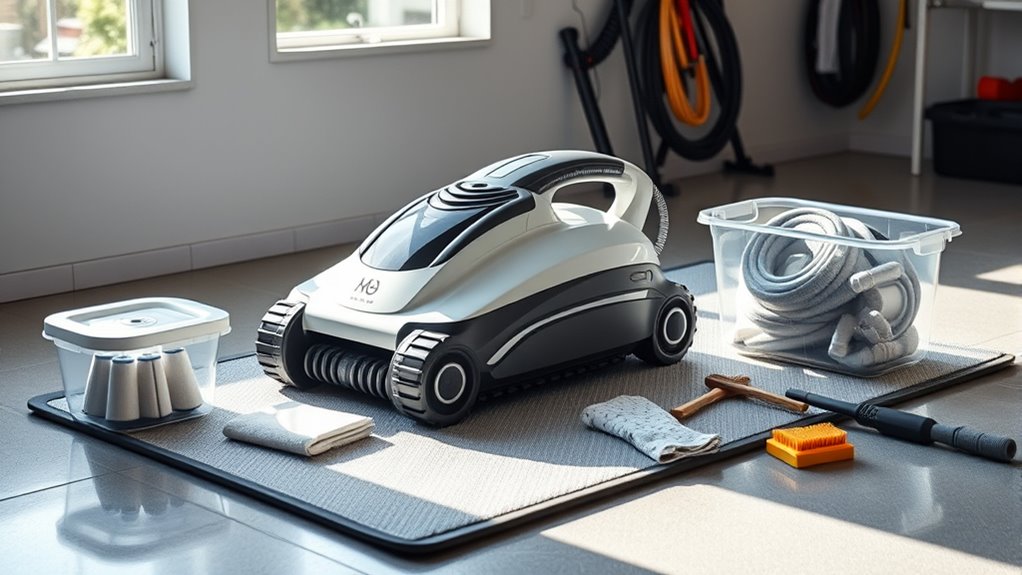
Before storing your pool cleaner for the off-season, it is vital to clean and inspect it thoroughly. Begin by removing any debris or dirt to prevent buildup during storage. Check all brushes, filters, and hoses for damage or wear, replacing parts if necessary. Proper pool chemical maintenance is essential; guarantee the water chemistry balance is correct to avoid corrosion or algae growth. Balance pH, alkalinity, and sanitizer levels before turning off the pump. Rinse the entire cleaner with clean water to eliminate residual chemicals and dirt. Inspect the power cord and connections for fraying or damage, and clean the brushes and tracks for smooth operation later. Doing this ensures your cleaner remains in good condition and ready for use when the season starts again. Additionally, maintaining proper digital literacy and understanding the device’s features can help ensure optimal performance and safety in future use. Regularly reviewing device maintenance guidelines can further extend the lifespan of your pool cleaner. Incorporating industry best practices can also help prevent issues and improve the longevity of your equipment. Staying informed about technological advancements in pool cleaning devices can help you select upgrades or replacements that enhance efficiency.
Draining and Drying All Components Thoroughly
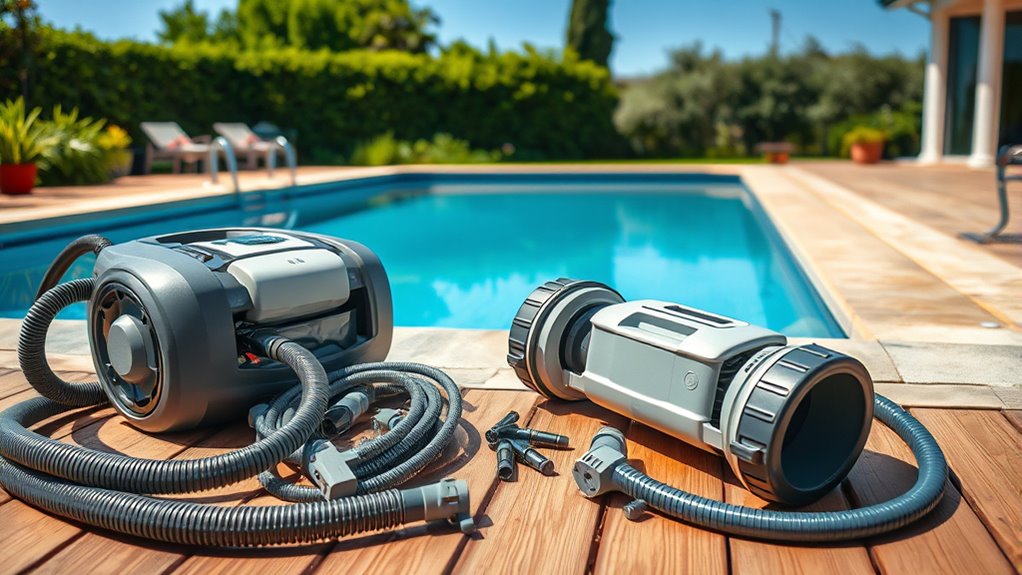
To prevent mold, corrosion, and mold buildup, it’s essential to drain and dry all components of your pool cleaner thoroughly. Proper component maintenance includes removing water from all hoses, brushes, and the motor housing. Use compressed air or a clean cloth to ensure no moisture remains in crevices or seals. Drying your cleaner completely helps avoid rust and mold growth during storage. Incorporate effective storage techniques by placing the parts in a well-ventilated area, allowing air circulation to speed up drying. Pay special attention to small parts and joints, ensuring no residual water remains. Additionally, inspecting and maintaining the performance of your pool cleaner can help identify potential issues before storage. Ensuring that all electrical connections are free of moisture can also prevent short circuits during storage. Regularly checking and cleaning filters can improve the effectiveness of your cleaner during the next use. Properly storing the components in a dry environment can also extend the lifespan of your pool cleaner. Incorporating appropriate storage conditions, such as avoiding extreme temperatures, further safeguards the device’s longevity. Taking these steps minimizes damage and preserves your cleaner’s longevity. Thorough drying and proper component maintenance are key to keeping your automatic pool cleaner in good shape for the next season.
Properly Storing the Power Supply and Cables
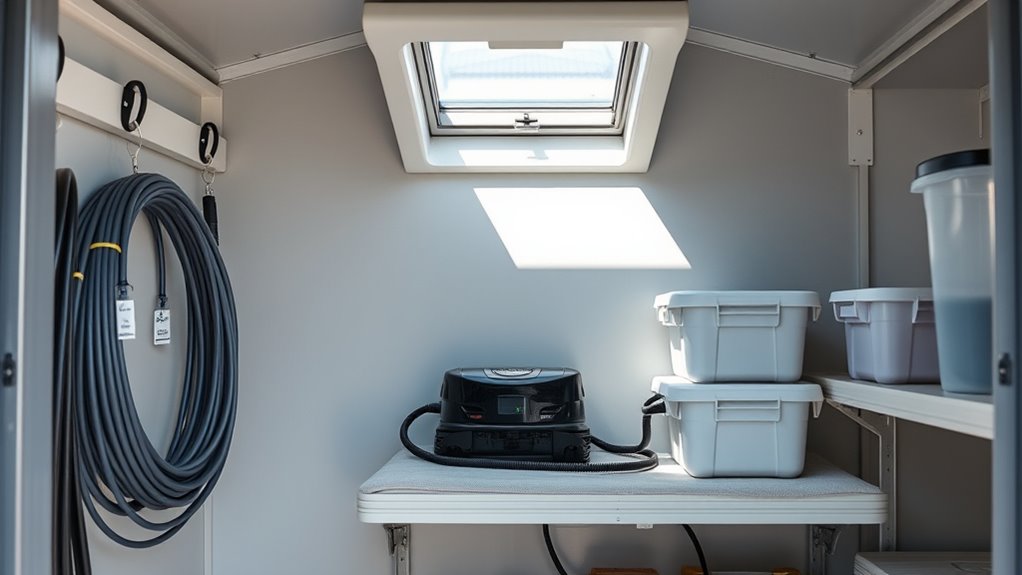
When storing your pool cleaner’s power supply, carefully detach it to prevent damage. Coil the cables loosely to avoid kinks and stress on the wires. Make sure to store everything in a dry, protected area to keep it in good condition for next season. Proper storage can also prevent water damage and prolong the lifespan of your equipment. To maintain optimal performance, it’s also advisable to regularly check and clean the components before storage. Additionally, considering the importance of product protection in maintaining equipment, using appropriate storage methods can further ensure your pool cleaner remains functional and reliable for years to come. Incorporating storage best practices can help safeguard your investment and ensure readiness for the upcoming swimming season. Using quality storage containers can provide extra protection against environmental factors and accidental damage.
Detach Power Units Carefully
Carefully detaching the power units guarantees your automatic pool cleaner stays in top shape for next season. Follow proper disconnect procedures to prevent damage. Gently unplug the power unit, avoiding excessive force. Store the cables neatly to prevent tangling or cracks. Use the table below to organize your disconnect steps:
| Step | Action | Tips |
|---|---|---|
| 1 | Turn off the power unit | Ensure safety first |
| 2 | Unplug from the power source | Handle cables carefully |
| 3 | Detach the power unit from the cleaner | Keep it upright |
| 4 | Coil cables loosely | Prevent kinks |
| 5 | Store in a dry, protected spot | Avoid moisture and sunlight |
Proper storage practices also help preserve the integrity of electrical components, enhancing the longevity of your equipment. Additionally, ensuring the cables are free from damage or wear reduces the risk of malfunctions when reusing the cleaner. Regular inspections can help identify early signs of wear and tear, allowing for timely maintenance or replacements.
Coil Cables Loosely
Coiling cables loosely is essential to prevent kinks and damage during storage. When you coil cables, avoid tight loops that can cause stress on the wires or lead to breakage over time. Use gentle, even coils to keep the cables in good condition. Remember to coil cables neatly, without crossing or twisting them unnecessarily. This helps maintain their flexibility and longevity. Follow these storage tips to keep your power supply and cables in top shape: always coil cables loosely, store them away from sharp objects, and avoid tight bends. Proper coiling not only prevents damage but also makes future setup easier. Taking these simple steps ensures your automatic pool cleaner’s cables stay functional and ready for use when you need them next season.
Store in Dry Place
Storing your automatic pool cleaner’s power supply and cables in a dry place is essential to prevent moisture damage and corrosion. Even during seasonal maintenance, exposure to humidity can compromise electrical components and reduce lifespan. Ensure the storage area is well-ventilated and free from dampness, avoiding basements or sheds prone to moisture. Before storing, clean the power supply and cables thoroughly, removing any dirt or residue from pool chemistry treatments. Coil cables loosely to prevent kinks or damage. Proper storage not only preserves the equipment’s integrity but also makes it easier to set up when pool season begins again. Additionally, using appropriate storage solutions can further protect your equipment from environmental damage. Paying attention to proper storage practices helps prevent issues caused by moisture and extends the lifespan of your pool cleaner. Taking these precautions guarantees your automatic pool cleaner remains in prime condition, ready for use after the off-season.
Choosing the Ideal Storage Location
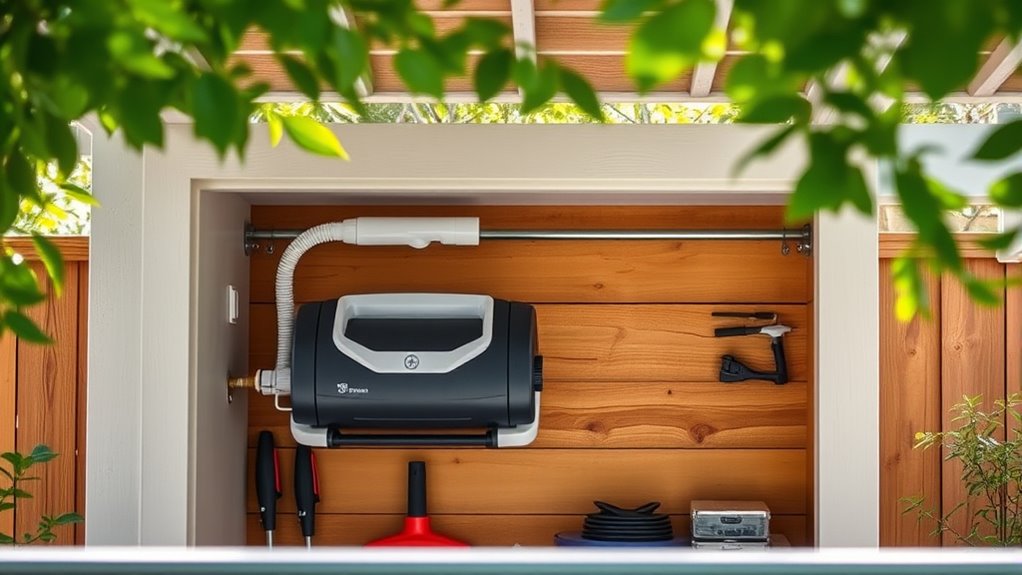
Choosing the right storage location is essential to keep your automatic pool cleaner in good condition during the off-season. You want a spot that’s dry, protected, and easily accessible. A garden shed offers a secure environment away from harsh weather, while garage storage keeps your cleaner out of direct sunlight and rain.
Consider these points:
- Keep it in a garden shed to avoid exposure to moisture and temperature swings
- Use garage storage for convenience and protection from the elements
- Guarantee the area is clean, free of debris, and well-ventilated for ideal preservation
Protecting Your Pool Cleaner From Damage and Wear
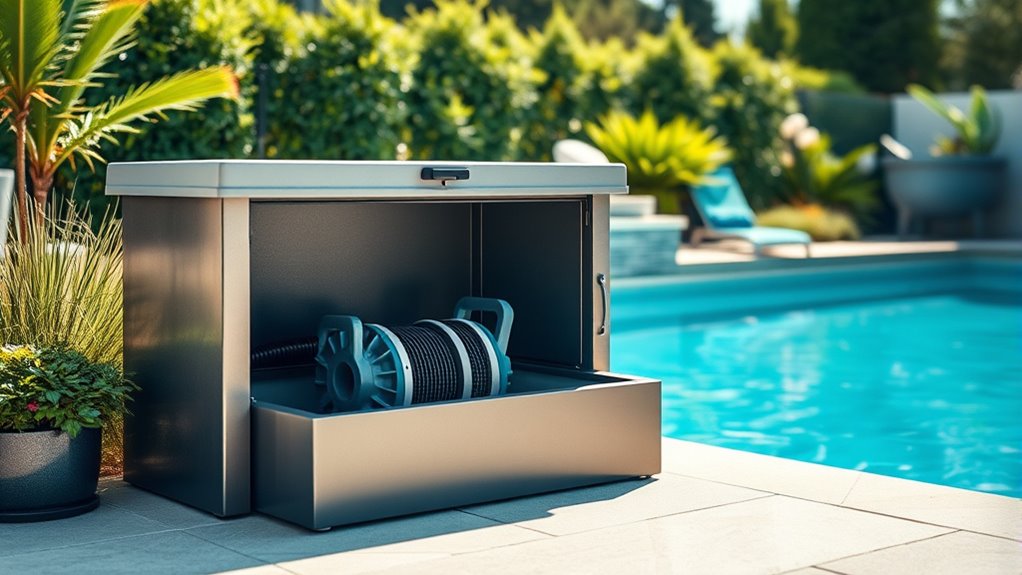
To keep your automatic pool cleaner in top condition during the off-season, it’s important to protect it from damage and wear. Proper chemical maintenance is essential; guarantee the pool water is balanced before storage to prevent corrosion or deterioration of parts. Rinse the cleaner thoroughly to remove any residual chemicals or debris. Use quality storage furniture designed for pool equipment to avoid accidental drops or impacts. Keeping the cleaner elevated and secure helps prevent damage from pests, sunlight, or moisture. Avoid leaving it in direct sunlight or damp areas, which can cause material degradation. Regularly inspect the cleaner for cracks or worn parts, and address issues promptly. Proper protection ensures your pool cleaner stays in good shape and ready for use when swimming season resumes.
Tips for Long-Term Storage During Off-Season
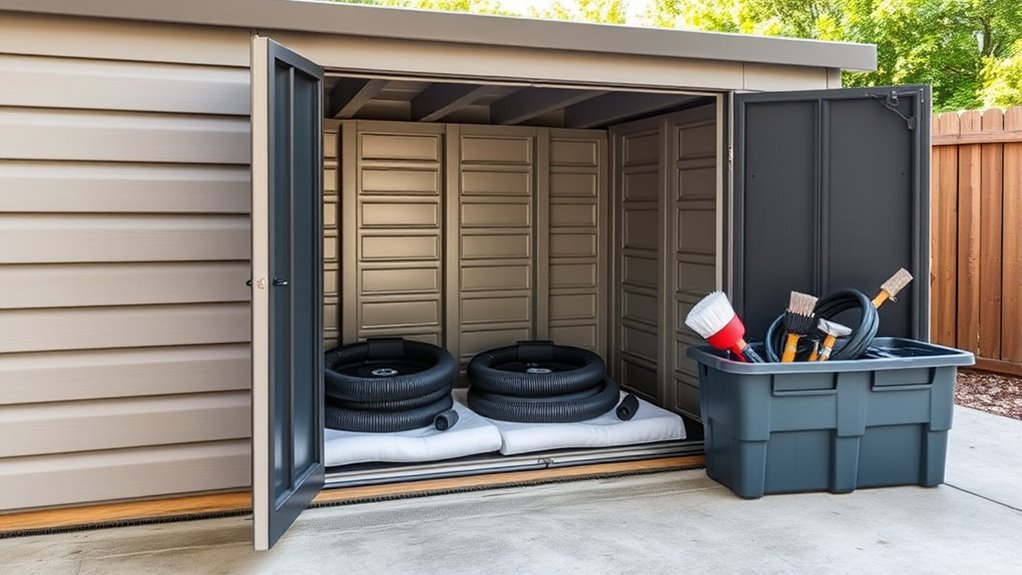
When preparing your automatic pool cleaner for long-term off-season storage, it’s crucial to create an environment that prevents deterioration over time. Proper seasonal maintenance and storage conditions ensure your cleaner remains in top shape. Start by cleaning the pool cleaner thoroughly, removing any debris or residue. Next, disconnect and store pool cleaner accessories separately in a dry, cool place to avoid damage. Consider draining all water from the hoses and brushes to prevent mold or cracking. Store the cleaner in a secure, dry location away from direct sunlight and extreme temperatures. Regularly check on the storage area to prevent pests or moisture buildup. Taking these steps helps protect your pool cleaner during the off-season, ensuring it’s ready for use when the season resumes.
Preparing Your Pool Cleaner for the Next Season

As you prepare your pool cleaner for the next season, start by inspecting all components for wear or damage. Check brushes, wheels, and the power cord for cracks or deterioration. Clean the filter and brushes thoroughly to remove debris and algae, guaranteeing optimal performance. Don’t forget to verify that the pool water chemistry is balanced; incorrect levels can cause corrosion or mold growth during storage. Conduct seasonal maintenance by lubricating moving parts and inspecting seals. Use the table below to guide your preparations:
| Action | Purpose |
|---|---|
| Clean filters and brushes | Prevent mold and debris buildup |
| Check for damage | Ensure all parts are functional |
| Balance pool water chemistry | Protect components and maintain longevity |
Proper preparation guarantees your cleaner will work smoothly when you reopen the pool.
Frequently Asked Questions
How Often Should I Check My Pool Cleaner During Storage?
You should check your pool cleaner regularly during storage, ideally every 4-6 weeks. Keep it in a storage container that protects it from dust and moisture. While checking, make certain the battery is preserved by charging it if necessary, but don’t overcharge. Also, inspect for any signs of damage or mold. Regular checks help maintain your cleaner’s performance and longevity when you’re ready to use it again.
Can I Store the Cleaner Outdoors During Winter?
You can store your pool cleaner outdoors during winter if you take proper precautions. Make certain you use outdoor storage with winter protection, like a waterproof cover or shed, to shield it from snow, ice, and moisture. This helps prevent damage from harsh weather. However, if possible, indoor storage is better to prolong its lifespan. Always clean and dry the cleaner thoroughly before storing it outside for winter protection.
What Cleaning Products Are Safe for Storage?
Did you know using the wrong cleaning products can cause damage to your pool equipment? When storing your cleaner, you want safe chemicals that won’t deteriorate parts or cause mold. Always choose cleaning products labeled safe for pool equipment, and store them in airtight storage containers. This prevents leaks and keeps the chemicals stable. Proper storage ensures your automatic pool cleaner stays in top shape until next season.
How Do I Troubleshoot Storage-Related Issues Later?
When troubleshooting storage-related issues later, start by checking your storage container options to make sure your automatic cleaner is properly protected. Look for signs of damage or wear, and verify that the cleaner is clean and dry before storage. Regular maintenance is key — inspect for clogged parts or leaks, and follow manufacturer instructions. Proper storage helps prevent issues and keeps your automatic cleaner ready for maximum performance when you need it again.
Is Professional Maintenance Recommended Before Storage?
You should definitely consider professional maintenance before storage. A professional can perform a thorough maintenance checklist, ensuring your cleaner is properly cleaned, dried, and protected. They’ll advise on the best storage techniques to prevent damage and keep your equipment in top shape. Proper maintenance before off-season storage extends the life of your automatic pool cleaner and guarantees it’s ready for use when swimming season returns.
Conclusion
Think of your pool cleaner as a trusted friend, resting peacefully through the off-season. By giving it proper care and a safe haven, you guarantee it’ll be ready to spring into action again, like a loyal companion waking from a well-deserved nap. When you store it carefully, you’re planting the seeds for a sparkling pool season ahead. With patience and attention, your cleaner will be waiting, enthusiastic to revive your pool’s shimmering beauty once more.