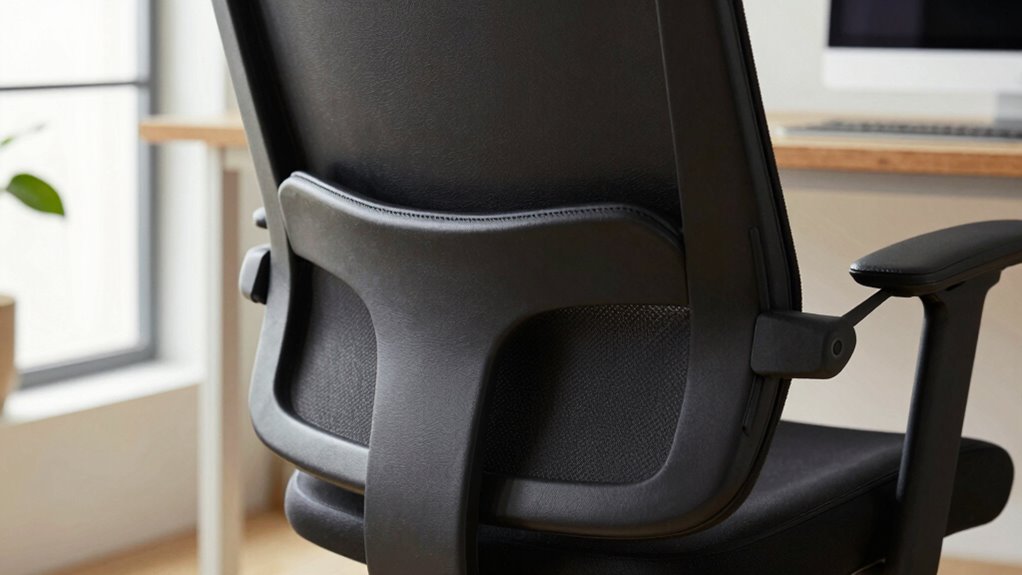

Lumbar support isn’t a magic fix for lower back pain; it works best when combined with proper chair adjustments, good posture, and regular movement. Make sure your chair supports the natural curve of your lower back and keeps your spine aligned. Avoid slouching, take breaks often, and shift positions throughout the day. Small habits make a big difference—keep going to discover more tips to protect your back effectively.
Key Takeaways
- Proper ergonomic chairs with adjustable lumbar support promote natural spinal alignment and reduce strain during prolonged sitting.
- Maintaining good sitting habits, such as keeping feet flat and avoiding slouching, is essential for lower back health.
- Regularly taking breaks, stretching, and changing positions prevents muscle fatigue and supports spine health.
- Supporting the natural curve of the lower back helps prevent discomfort, soreness, and long-term injury.
- A comprehensive approach—including ergonomic setup, mindful habits, and movement—effectively protects and improves lower back health.
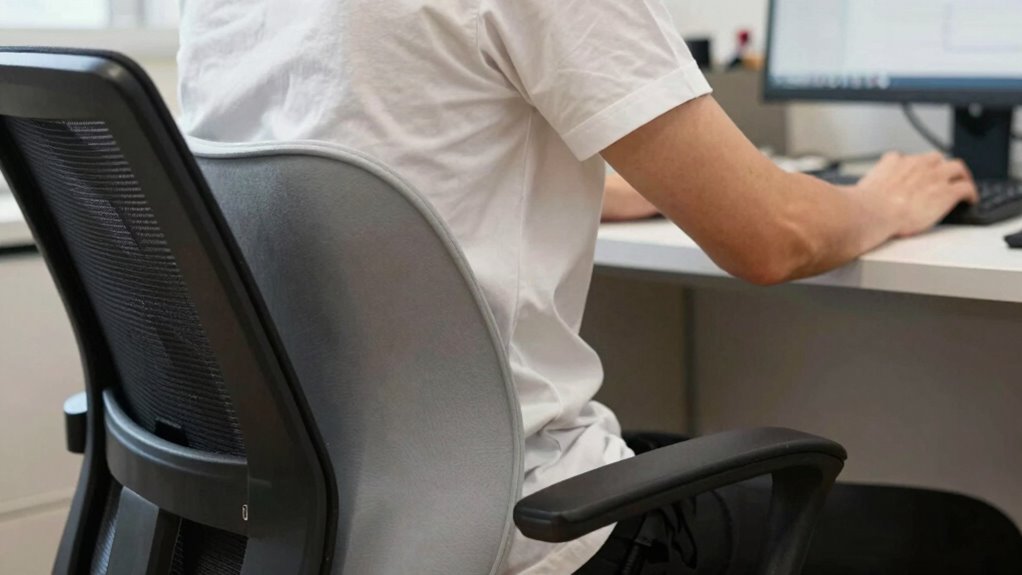
Have you ever wondered why some chairs leave you with a sore back after hours of sitting? The answer often lies in how well the chair supports your body, especially your lower back. Ergonomic chairs are designed with this in mind, aiming to promote proper spinal alignment and reduce strain. When you sit in an ergonomic chair, you’re giving your spine the support it needs to stay in a healthy position, which can make a vital difference in how your back feels after prolonged sitting. These chairs typically feature adjustable lumbar support, allowing you to customize the fit to your unique body shape, ensuring your lower back isn’t left unsupported or overly compressed.
Spinal alignment plays an essential role in preventing discomfort and injury. When your spine is properly aligned, the natural curves are maintained, and pressure is evenly distributed across your discs and vertebrae. Poor alignment, on the other hand, often results from slouching or leaning forward, which puts unnecessary stress on your lower back muscles and discs. This misalignment can lead to muscle fatigue, soreness, and even chronic pain over time. Many people underestimate the importance of maintaining this alignment during long stretches of sitting, but it’s vital for your back health.
Proper spinal alignment prevents discomfort by evenly distributing pressure and avoiding unnecessary stress on lower back muscles.
The key to supporting your lumbar region effectively is not just choosing any chair but selecting one that encourages proper spinal posture. Ergonomic chairs with adjustable lumbar support allow you to fill the natural curve of your lower back, providing continuous support. This support helps keep your spine in a neutral position, which minimizes strain and promotes better posture. When your lumbar support is positioned correctly, your pelvis remains stable and your shoulders stay relaxed, reducing the risk of developing tension headaches or neck pain caused by poor posture.
In addition to a supportive chair, it’s helpful to take regular breaks and change positions frequently. Sitting for hours without movement can still cause issues, even with the best lumbar support. Incorporate standing or stretching breaks to keep your muscles active and blood flowing. Also, pay attention to your sitting habits—avoid slouching or leaning forward, and make sure your feet are flat on the ground, with your knees at a 90-degree angle. These small adjustments, combined with a well-designed ergonomic chair, greatly improve spinal alignment and protect your lower back from unnecessary stress.
Ultimately, lumbar support isn’t a magic fix. It’s part of a detailed approach to maintaining healthy, pain-free sitting. By choosing ergonomic chairs that promote proper spinal alignment and being mindful of your posture and habits, you give your lower back the best chance to stay comfortable and healthy throughout your day. Incorporating Glycolic Acid benefits into your skincare routine can also help improve skin texture and appearance, complementing your overall health and well-being.
Frequently Asked Questions
Can Lumbar Support Replace Physical Therapy?
Lumbar support can’t replace physical therapy, especially if you’re recovering from a sports injury or dealing with chronic pain. An ergonomic desk can help maintain proper posture, but physical therapy addresses underlying issues through targeted exercises and professional guidance. You should use lumbar support as a supplement, not a substitute, to guarantee your lower back gets the thorough care it needs. Always consult a healthcare professional for personalized advice.
Are There Risks to Using Lumbar Support Incorrectly?
Using lumbar support incorrectly can risk poor ergonomic positioning and muscle dependency. If you rely too heavily on it, your muscles may weaken over time, leading to discomfort when not using support. To avoid this, guarantee proper fit and use it as a complement to strengthening exercises, not a replacement. Always listen to your body and adjust your posture to maintain healthy muscle engagement and prevent strain.
How Long Should I Wear Lumbar Support Daily?
You should wear lumbar support for about 1 to 2 hours daily, especially during activities that strain your lower back. Use ergonomic adjustments and practice proper posture techniques to reduce reliance on support. Take breaks often, and avoid wearing it continuously to prevent muscle weakness. Pay attention to how your back feels and consult a healthcare professional if discomfort persists, ensuring you’re using lumbar support safely and effectively.
Does Lumbar Support Work for Sciatica?
You might think lumbar support magically relieves sciatica, but its support effectiveness varies. While it can help stabilize your lower back and reduce pressure, it doesn’t directly target nerve pain. For sciatica relief, combine lumbar support with stretching, proper ergonomics, and medical advice. Think of lumbar support as a helpful tool, not a cure-all—use it alongside other strategies for better relief and comfort.
What Materials Are Best for Lumbar Support?
You should look for lumbar support made from ergonomic materials like memory foam or gel-filled cushions, which conform to your lower back for added comfort. Cushioning options such as high-density foam or breathable mesh also enhance support and ventilation. These materials work together to reduce strain, improve posture, and keep your lower back comfortable during long periods of sitting. Prioritize adjustable designs that let you customize the fit for ideal relief.
Conclusion
Remember, lumbar support isn’t a magic wand—it’s just one piece of the puzzle. Your lower back needs movement, strength, and mindful posture to truly thrive. Think of your spine as a delicate garden; with regular care, gentle stretches, and good habits, it blooms with resilience. So, don’t rely solely on cushions or chairs—be the gardener of your own back, nurturing it daily, and watch your comfort grow stronger with each mindful step you take.