

Guided imagery is a relaxation technique that helps you manage pain by creating vivid mental pictures of peaceful scenes, like forests or streams. As you focus on these calming images, you activate your relaxation response, lowering stress and muscle tension. Combining guided imagery with mindfulness and deep breathing can reduce pain intensity and boost your sense of control. Keep exploring for practical tips on incorporating this effective method into your routine and enhancing your pain relief skills.
Key Takeaways
- Guided imagery uses vivid mental scenes to divert attention from pain and promote relaxation.
- Combining guided imagery with mindfulness enhances awareness and reduces emotional distress associated with pain.
- Relaxation techniques like deep breathing support visualization, decreasing muscle tension and pain perception.
- Regular practice fosters a sense of control, decreases pain intensity, and rewires brain responses over time.
- Starting with brief daily sessions focused on pleasant imagery amplifies long-term pain management benefits.
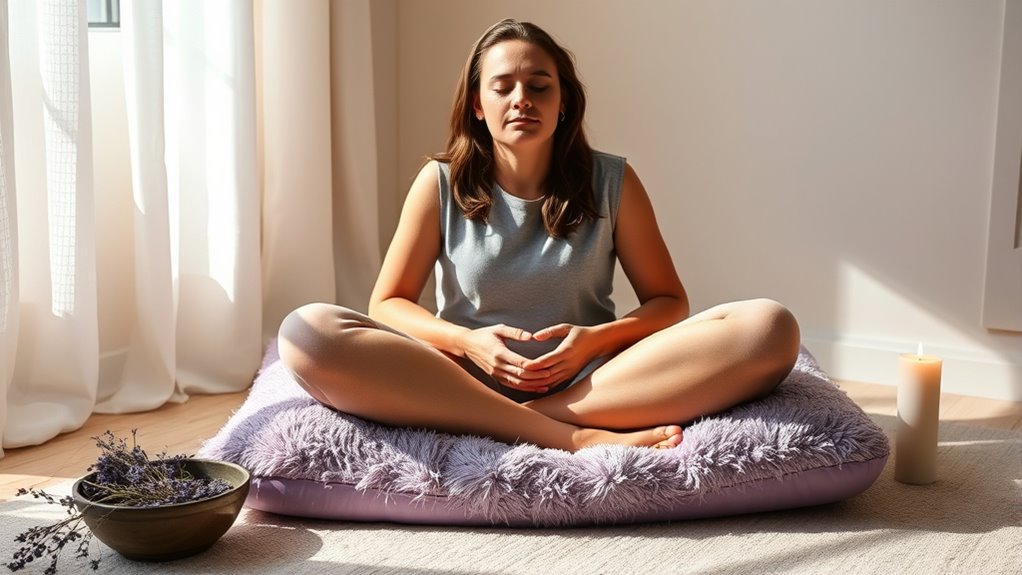
When you’re dealing with chronic or acute pain, finding effective relief can be challenging. Many people turn to guided imagery as a powerful tool to help manage discomfort. This technique involves creating vivid mental images to shift your focus away from pain and promote relaxation. To maximize its benefits, combining guided imagery with mindfulness meditation and relaxation techniques can deepen your sense of calm and control over pain sensations.
Mindfulness meditation teaches you to pay close attention to your present experience without judgment. When you practice mindfulness, you become more aware of pain without reacting impulsively or feeling overwhelmed. Guided imagery enhances this awareness by guiding your mind to peaceful, soothing scenes, allowing you to step back from pain and observe it more objectively. As you visualize tranquil environments—like a quiet forest or a gentle stream—you activate your relaxation response, which can lower stress hormones and reduce muscle tension that often accompanies pain.
Practicing mindfulness and guided imagery helps observe pain objectively and activates your relaxation response to ease tension.
Relaxation techniques, such as deep breathing or progressive muscle relaxation, support guided imagery by helping you physically relax your body. For example, as you imagine a warm, healing light flowing through your body, combining this with slow, deep breaths amplifies the calming effect. This integrated approach helps diminish the intensity of pain signals sent to your brain. When you actively engage in guided imagery, you’re training your mind to focus on comforting images instead of the pain, which can create a sense of control and reduce anxiety. This mental shift can significantly lessen the emotional distress tied to pain, making it feel more manageable.
Incorporating these methods into your routine takes practice, but over time, they can become powerful tools for pain relief. You might start by setting aside a few minutes each day to practice guided imagery, focusing on detailed, pleasant scenes. During these sessions, use mindfulness meditation to stay present and aware of your bodily sensations without judgment, and employ relaxation techniques to deepen your physical calmness. Regular practice helps rewire your brain’s response to pain, making it easier to access a relaxed, pain-free state when discomfort arises.
Frequently Asked Questions
Can Guided Imagery Replace Medication for Pain Relief?
You might wonder if guided imagery can replace medication for pain relief. While it strengthens the mind-body connection and can considerably reduce pain, it may not fully replace medications in all cases. The placebo effect also plays a role, making you believe in its effectiveness. For some, guided imagery offers a valuable, drug-free complement, but it’s crucial to consult your healthcare provider to determine the best approach for your pain management needs.
How Long Does It Take to See Results From Guided Imagery?
When you start practicing guided imagery, you might notice some benefits pretty quickly, often within minutes of a session. However, for more sustained results, it usually takes consistent mindfulness practice and relaxation techniques over several weeks. Everyone’s different, so patience is key. As you continue, you’ll likely find that your ability to manage pain improves gradually, helping you feel more relaxed and in control over time.
Is Guided Imagery Effective for Chronic or Severe Pain?
You might wonder if guided imagery can help with chronic or severe pain. It leverages the mind-body connection, allowing you to influence your emotional regulation and reduce pain perception. While it may not eliminate all pain, many find it effective in managing discomfort by calming your mind and easing tension. With regular practice, guided imagery can become a valuable tool to improve your overall emotional well-being and pain control.
Are There Any Risks or Side Effects Associated With Guided Imagery?
The potential adverse effects of guided imagery are minimal, but you should be aware of contraindication risks. While it’s generally safe, some people might experience increased anxiety or emotional discomfort if certain images trigger memories. Always consult your healthcare provider, especially if you have mental health issues or trauma history. Avoid using guided imagery if it worsens your symptoms, and be cautious of any emotional or physical reactions during practice.
Can Children or Elderly Individuals Use Guided Imagery for Pain Management?
You might wonder if children or elderly individuals can use guided imagery for pain management. Yes, with age-appropriate techniques, it can be effective, but you should consider their cognitive development. For kids, simple, engaging visuals work best, while seniors may benefit from gentle, familiar imagery. Always consult a healthcare professional to guarantee the approach suits their needs and abilities, making it safe and beneficial.
Conclusion
By practicing guided imagery, you plant seeds of calm that grow into a peaceful garden within your mind. As you harness this technique, pain gradually becomes a distant echo, replaced by serenity. Remember, your mind is a powerful tool—like a compass guiding you through stormy seas toward calmer waters. With patience and regular practice, you can turn pain into a gentle whisper, allowing your inner strength to shine through and bring you closer to relief.