
To keep food safe at home, organize your fridge with separate containers for raw meats, cooked foods, and veggies, and store raw meats on the bottom shelf. Always maintain a fridge temperature at or below 40°F (4°C), checking regularly. Cool hot foods quickly and store leftovers in shallow, labeled containers for up to three to four days. Reheat leftovers to at least 165°F, stirring during warming. Keep your kitchen hygienic and follow these tips to prevent foodborne illnesses—they’re easy to master once you understand the core rules.
Key Takeaways
- Keep the refrigerator at or below 40°F (4°C) to slow bacterial growth and ensure food safety.
- Store raw meats on the bottom shelf to prevent cross-contamination.
- Cool hot foods quickly in shallow containers before refrigerating to prevent bacterial proliferation.
- Reheat leftovers to at least 165°F (74°C) and stir evenly to ensure safe, thorough heating.
- Consume refrigerated leftovers within 3-4 days and avoid reheating food more than once.
Ever wonder how to keep your food safe from the moment you bring it home? The answer lies in good kitchen hygiene and smart meal prep tips that help prevent spoilage and foodborne illnesses. When you’re organizing your fridge, it’s essential to set up a system that minimizes cross-contamination and keeps perishable items at the right temperature. Use separate containers for raw meats, cooked foods, and vegetables, and store raw meats on the bottom shelf to avoid drips contaminating other foods. Keep your fridge at or below 40°F (4°C) to slow bacterial growth, and check the temperature regularly to ensure it stays consistent. Proper storage isn’t just about safety—it also extends the freshness of your ingredients, saving you money and reducing waste. Implementing proper food storage techniques can also help diversify your diet with fresh ingredients, contributing to overall well-being.
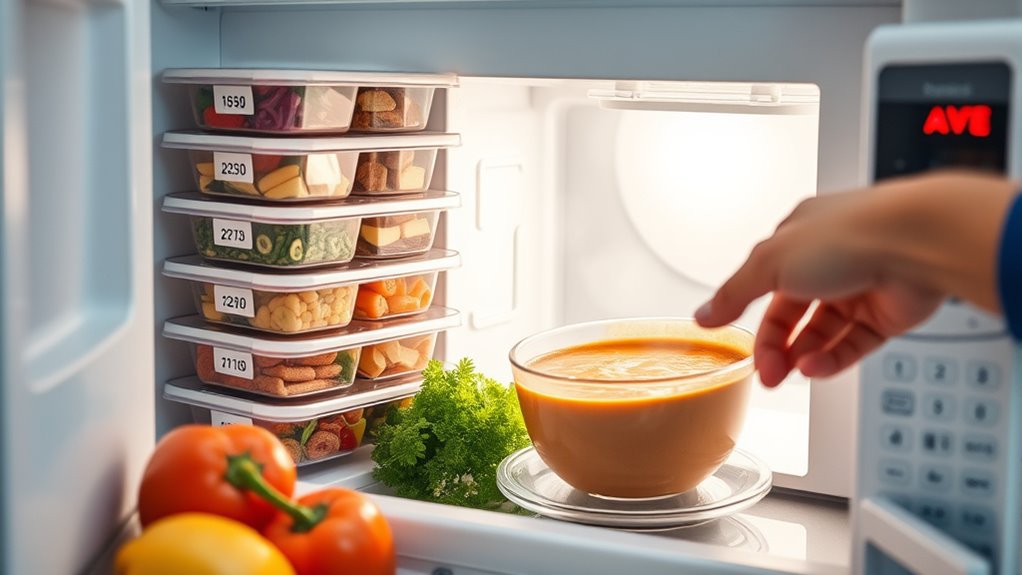
Meal prep tips can make a big difference in maintaining food safety at home. Preparing meals in advance allows you to portion out leftovers and store them properly, which helps you avoid leaving food out too long. When you cook large batches, divide leftovers into shallow containers to promote quick cooling and even reheating. Label each container with the date, so you’re always aware of how long the food has been stored. This practice helps prevent you from consuming spoiled leftovers, which could lead to food poisoning. Always cool hot foods quickly by dividing them into smaller portions before refrigerating, and avoid overstuffing your fridge, which hampers air circulation and affects temperature regulation.
Kitchen hygiene plays a crucial role in food safety, especially when reheating and storing leftovers. Always wash your hands thoroughly before handling food, and clean your countertops, cutting boards, and utensils with hot, soapy water after each use. This reduces the risk of bacteria spreading. When reheating, use a food thermometer to ensure the internal temperature reaches at least 165°F (74°C) for leftovers like poultry or casseroles. Reheating unevenly can leave cold spots where bacteria survive, so stir or rotate during heating. Never reheat food more than once, as repeated cooling and heating cycles increase the risk of bacterial growth. Also, be mindful of the time leftover foods spend in the danger zone (40°F to 140°F); try to consume refrigerated leftovers within three to four days to keep everything safe to eat. Incorporating proper storage standards can further enhance your food safety practices at home.
Frequently Asked Questions
How Often Should I Clean My Refrigerator to Ensure Food Safety?
You should clean your refrigerator at least once a month to maintain proper food safety. Follow a regular cleaning schedule to prevent bacteria buildup and cross-contamination. While cleaning, check your food storage to discard expired items and wipe down shelves and drawers. This routine helps keep your fridge hygienic, reduces odors, and ensures your food stays fresh and safe to eat. Consistency is key for a healthy kitchen environment.
What Are the Signs That Reheated Leftovers Are No Longer Safe to Eat?
Think of reheated leftovers like a once-bright painting fading over time. If they develop a strange odor, like sour milk, or you notice mold growth, it’s a clear sign they’re no longer safe. For example, I once ignored a slight odor change, only to get sick. Always trust your senses—if leftovers smell off or look moldy, discard them to avoid foodborne illnesses.
Can Frozen Leftovers Be Safely Reheated Without Thawing First?
You can safely reheat frozen leftovers without thawing first, but it’s best to follow reheating safety guidelines. When reheating directly from the freezer, use a microwave or stove that allows even heating, and make sure the food reaches 165°F (74°C). Keep in mind, freezer thawing isn’t required, but for even reheating, thawing in the fridge beforehand can help prevent cold spots and ensure safety.
How Can I Prevent Cross-Contamination in My Fridge?
Imagine your fridge as a peaceful harbor, where proper storage keeps chaos at bay. To prevent cross-contamination, always place raw meats on the bottom shelf, like ships safely anchored. Guarantee seal integrity on containers, locking out harmful germs like gatekeepers. Regularly clean shelves and avoid overcrowding, so air flows freely, preventing spills. With these habits, your fridge becomes a fortress, safeguarding your food and health with steady, vigilant care.
What Is the Safest Way to Reheat Food in a Microwave?
To guarantee microwave safety when reheating food, use microwave-safe containers and cover your food to prevent splatters. Reheat in small, even intervals, stirring or rotating food halfway through to promote uniform heating. Reheating tips include checking that the internal temperature reaches at least 165°F to kill bacteria. Always let your food rest for a minute after reheating to allow heat to distribute evenly, minimizing the risk of cold spots.
Conclusion
Remember, following fridge and reheat rules isn’t just a good idea—it’s your secret weapon against foodborne illnesses. Keep hot foods hot and cold foods cold, and always reheat thoroughly. Think of your kitchen as a fortress, defending you from invisible bacteria that could turn a tasty meal into a health nightmare overnight. Stay vigilant, stay safe, and treat your leftovers like precious treasures. Your health depends on it—don’t let bacteria win this battle!