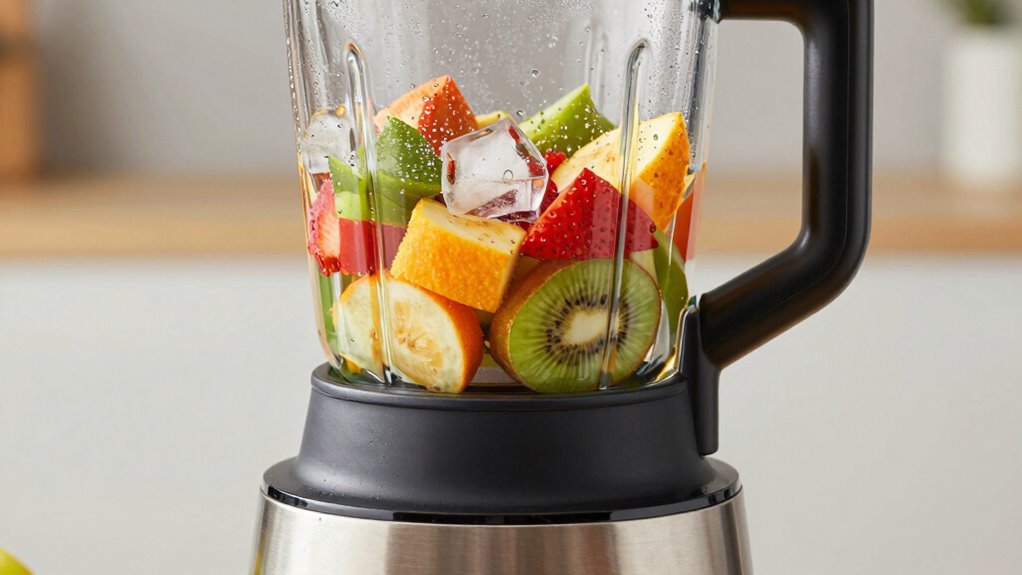

Wattage numbers can be misleading because they don’t reveal how well a blender actually performs. Instead, focus on motor efficiency and blade design, which are better predictors of smooth results. An efficient motor delivers more power at lower wattage, and well-designed blades ensure thorough blending. Higher wattage doesn’t always mean better. To get consistently smooth blends, understanding what makes a motor and blades effective will help you choose wisely—if you want to know more, stay tuned.
Key Takeaways
- Motor efficiency, not wattage, determines how well a blender handles tough ingredients.
- Well-designed blades create better vortexes, ensuring thorough blending regardless of wattage.
- High wattage alone doesn’t guarantee smooth results; motor quality and blade design are more important.
- Efficient motors deliver more torque at lower wattages, improving blending performance and durability.
- Prioritize motor efficiency and blade quality over wattage claims for consistently smooth blends.
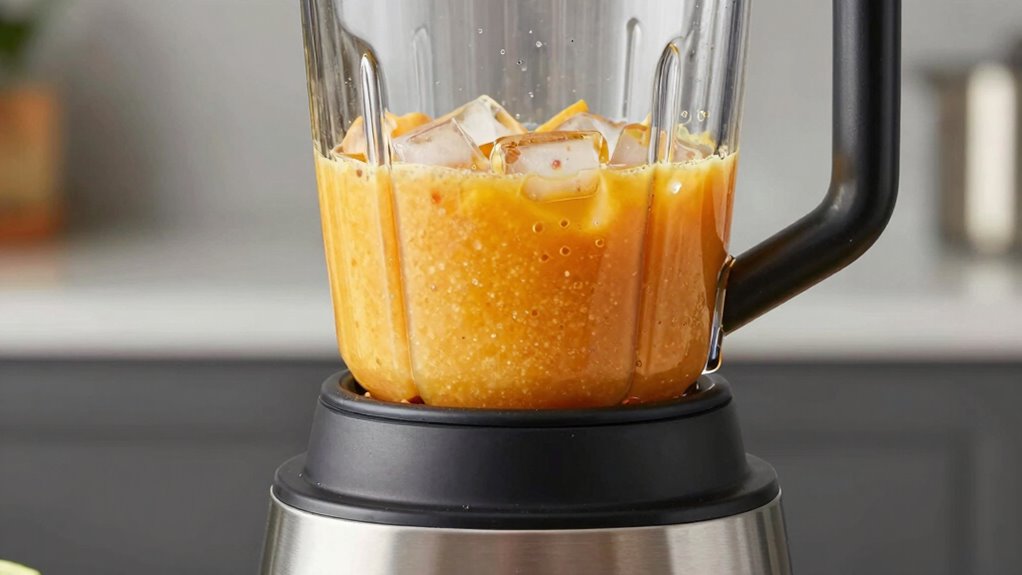
When choosing a blender, wattage is a vital factor that determines its performance and durability. Many people assume that higher wattage automatically means better blending, but that’s not entirely true. Instead, you should focus on motor efficiency and blade design, which play more significant roles in achieving smooth results. A powerful motor is important, but if it isn’t efficient or the blades aren’t designed well, you won’t get the performance you need.
Motor efficiency refers to how effectively a blender converts electrical energy into mechanical power. An efficient motor delivers more torque at lower wattage, meaning it can handle tough ingredients without overheating or bogging down. A high-wattage motor might sound impressive, but if it’s inefficient, it could waste energy and lead to motor wear over time. Look for blenders with motors that are designed to maximize power output relative to their wattage. These motors often feature better cooling systems and materials that reduce energy loss, helping you blend smoothly and consistently.
Efficient motors maximize power at lower wattage for smoother, more durable blending.
Blade design is equally essential in predicting how well your blender performs. Blades that are sharp, sturdy, and shaped to create a vortex pull ingredients down into the blades make all the difference. Well-designed blades ensure that even tough ingredients are broken down thoroughly, resulting in a smoother blend. Some blenders feature blades with multiple angles, serrated edges, or specialized shapes that improve cutting and mixing efficiency. When combined with a motor that’s optimized for its blade design, you get a more powerful and reliable blending experience, regardless of the wattage number.
Many manufacturers promote high-wattage motors as the best choice, but they often neglect to mention how motor efficiency and blade design contribute to overall performance. You might see a blender advertised as 1500 watts, but if the motor isn’t efficient or the blades aren’t suited for tough ingredients, you won’t necessarily get better results than a lower-wattage model with smarter engineering. Instead of fixating on wattage alone, focus on the quality of the motor and the design of the blades. These factors directly impact how well the blender can handle different textures, produce smooth mixtures, and stand up over time.
Ultimately, the key to smooth results isn’t just about raw power. It’s about how effectively that power is used through smart motor design and blade engineering. When you shop for a blender, prioritize these elements over simply chasing higher wattage ratings. This approach will ensure you get a machine that performs reliably and consistently, giving you the smooth, even blends you want with less frustration and more durability. Additionally, understanding motor efficiency can help you identify blenders that deliver better performance without necessarily increasing wattage.
Frequently Asked Questions
How Does Blade Design Affect Blending Performance?
You’ll see better blending performance with a well-designed blade, especially if it’s sharp and made from durable material. Sharp blades cut through ingredients more easily, reducing strain on the motor and ensuring a smooth blend. The material, like stainless steel, resists dulling and corrosion, maintaining sharpness longer. An ideal blade design with these features helps you achieve consistent, smooth results without relying solely on wattage, making your blending more efficient.
Can Motor Quality Impact Blending Consistency?
You might think motor quality doesn’t matter, but it definitely impacts blending consistency. A durable motor guarantees steady power and smoother results over time, reducing the risk of burnout. Plus, high-quality motors tend to operate with lower noise levels, making your blending experience more pleasant. If you want reliable, consistent smoothies, investing in a motor with good durability and quiet operation can make all the difference.
Do Brand Reputation and Price Influence Results?
Yes, brand perception and price influence results. When you choose a well-known brand, you often get better quality and more reliable performance, which helps you achieve smoother blends. Higher-priced blenders tend to have more powerful motors and better design, making your blending experience easier and more consistent. So, investing in a reputable brand or a pricier model can substantially improve your results, saving you time and frustration.
How Important Is Jar Shape and Size?
Sure, because what you really need is a blender with a fancy jar design and just the right jar capacity, right? Well, think again—it’s not just about looks. Your jar shape influences blending efficiency, and size affects how well ingredients circulate. Choose a jar that fits your needs, but don’t fall for the hype. Practicality beats size and design when it comes to smooth, consistent results.
What Role Does User Technique Play in Blending Outcomes?
Your technique markedly impacts blending results. Focus on proper hand positioning to guarantee steady control and even pressure, which helps break down ingredients more efficiently. Adjust blending speed based on what you’re making; start slow to combine ingredients, then increase speed for smoother textures. By maintaining good hand positioning and modulating blending speed, you’ll achieve consistently smooth, professional-looking results, regardless of your blender’s wattage.
Conclusion
So, next time you’re shopping for a blender, why focus solely on wattage? The truth is, wattage doesn’t tell the whole story about performance. Instead, consider blade design, motor quality, and build. Isn’t it better to choose a blender that’s proven to deliver smooth results rather than just chasing numbers? Don’t be fooled by wattage claims—look deeper, and you’ll find the real factors that make blending effortless.