📊 Full opportunity report: A Closer Look At Postpartum Recovery By Delivery Type on IdeaNavigator AI — validation score, market gap, and execution plan.

Get the latest gadgets delivered free — and shop member deals
- Fast, free delivery on millions of items
- Access to Prime Big Deal Days deals on October 6–7
- Prime Video, Amazon Music and more included
TL;DR
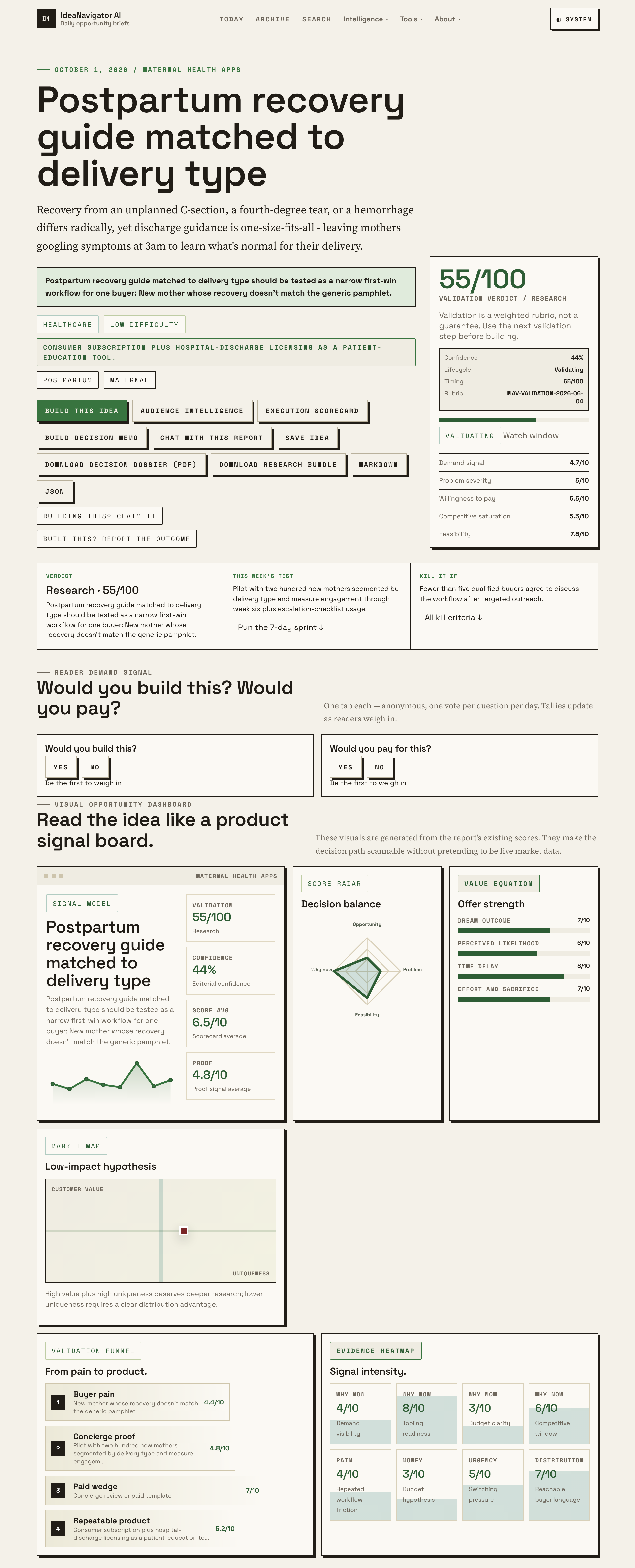
IdeaNavigator AI has proposed a postpartum recovery guide tailored to delivery details, complications and feeding, with week-by-week information and warning-sign checklists. The concept is an untested product proposal; a pilot with 200 mothers is suggested, but no trial results or clinical validation are reported.
According to IdeaNavigator AI’s proposal, the guide would collect details about a person’s delivery mode, interventions, complications and feeding. It would then provide week-by-week recovery expectations suited to that profile, alongside warning-sign checklists and summaries to help prepare for the six-week postpartum visit. These are planned features, not a description of an existing evaluated product.
IdeaNavigator AI frames the proposal around mothers whose recovery differs from what a general pamphlet describes, citing examples such as an unplanned C-section, a fourth-degree tear or hemorrhage. The proposal says mismatched guidance can leave people searching online for answers about symptoms, but provides no data measuring how often this happens or how the suggested guide would change care.
For validation, IdeaNavigator AI suggests a pilot with 200 new mothers, grouped by delivery type. Proposed measures are engagement through week six and use of the escalation checklists. The proposal also names a consumer subscription and hospital licensing for patient education as potential revenue models. It specifies no participating hospitals, launch schedule, pricing or pilot results.
Guidance Tailored to Delivery
Recovery needs can differ with the type of birth and complications, so advice that does not reflect a patient’s experience may leave practical questions unanswered. As IdeaNavigator AI presents it, a guide organized around delivery details could make recovery information easier to find and help users prepare questions for follow-up appointments. Those are intended benefits; the proposal provides no evidence yet that the product improves health outcomes, reduces urgent visits or is safer than existing discharge materials.
The suggested escalation checklists also make the guide’s clinical boundaries important. Any tool that addresses warning signs would need clear, medically reviewed information and direction to appropriate care. IdeaNavigator AI describes the feature but does not identify clinical reviewers, explain how guidance would be maintained or set out how the tool would respond to an emergency.
postpartum recovery guide for cesarean section
As an affiliate, we earn on qualifying purchases.
As an affiliate, we earn on qualifying purchases.
From Discharge to Follow-Up
IdeaNavigator AI frames the concept against what it describes as a shift toward individualized postpartum follow-up. The proposal says new guidelines call for more tailored care, while patient education still treats delivery as a single event type. It does not name the guidelines or provide publication details, so the specific recommendations behind that characterization cannot be assessed from the proposal.
The proposed product would cover the period between discharge and the six-week visit, using a person’s delivery profile to organize expectations and preparation. IdeaNavigator AI names hospital licensing as a way to place it alongside discharge education and a subscription as a direct-to-consumer route. The proposal does not describe either distribution model as tested.
Evidence and Safety Still Pending
IdeaNavigator AI’s proposal reports no completed pilot, user engagement figures, clinical review or outcome data. It is not clear whether the 200-person pilot has been recruited, when it might take place, or what threshold would count as successful engagement or checklist use. The suggested sample size is a plan, not evidence that the guide works.
Other open questions include how recovery recommendations would be developed for different complications, how the guide would handle overlapping conditions, and whether clinicians or hospitals would review its content. The proposal also does not explain privacy protections for sensitive birth and health information, subscription pricing, licensing terms or how urgent symptoms would be directed to care.
Pilot Would Test User Engagement
IdeaNavigator AI proposes a 200-mother pilot segmented by delivery type, with engagement tracked through six weeks and escalation-checklist use measured. The proposal gives no timetable and does not confirm that the pilot is underway. Any later assessment would need to report the results and explain the guide’s clinical review and safety process before readers can judge its value as postpartum care support.
Key Questions
Is the delivery-specific postpartum guide available now?
The proposal describes a product concept and suggested features. It does not say that the guide is available or has been evaluated.
What information would the guide use?
The proposed intake would capture delivery mode, interventions, complications and feeding, then tailor week-by-week recovery expectations, warning-sign checklists and preparation for the six-week visit.
Has a 200-person study taken place?
No results are reported. A pilot involving 200 mothers is suggested, with engagement and checklist use as proposed measures.
Would the guide replace medical advice?
The proposal presents it as patient education but does not specify its clinical review process or explain how it would direct users with urgent symptoms to care. Those details remain unresolved.
Source: IdeaNavigator AI
Evergreen bestsellers Picks
bestsellers
As an affiliate, we earn on qualifying purchases.