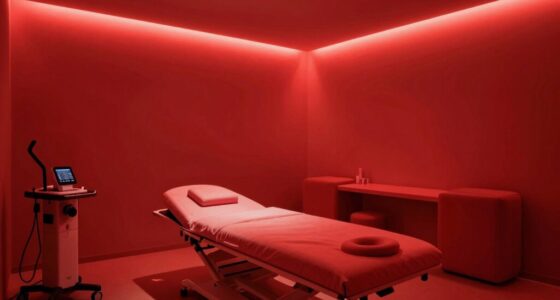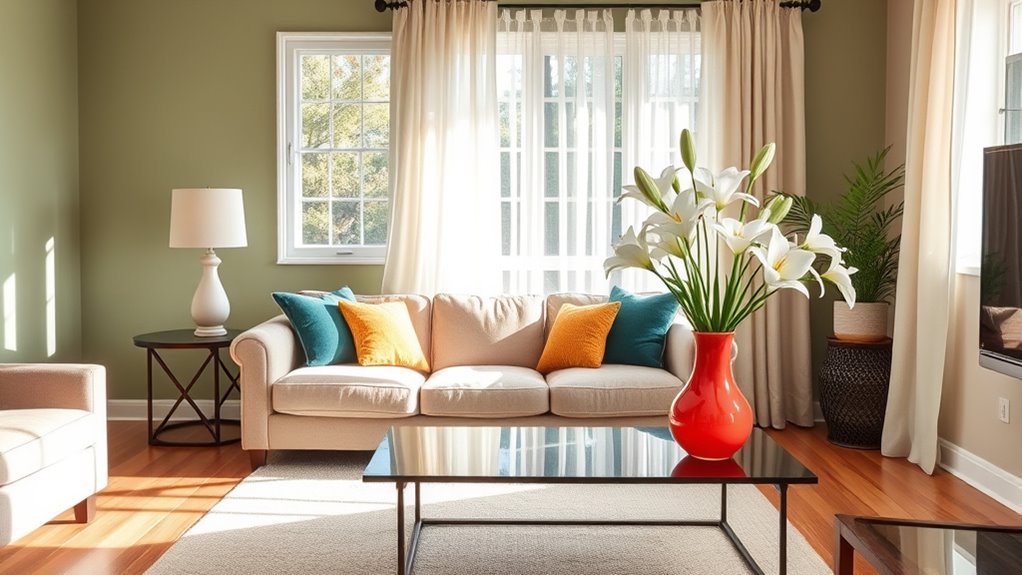

Colors in your home deeply affect your mood and behavior. For example, blue promotes calmness and relaxation, making it perfect for bedrooms. Red energizes social spaces and stimulates conversation, while yellow brings happiness and brightness. Green fosters balance and well-being. By choosing colors mindfully, you can create environments that support your mental health and personal growth. Exploring more about color psychology can help you design spaces that truly reflect and enhance your well-being.
Key Takeaways
- Colors evoke specific emotions and influence mood, shaping the overall atmosphere of a space.
- Blue promotes calmness and relaxation, ideal for stress-relief areas like bedrooms.
- Red energizes spaces, encouraging activity and social interaction, suitable for living or dining rooms.
- Yellow boosts happiness and positivity, making spaces feel cheerful and uplifting.
- Dark hues add sophistication but should be balanced to prevent heaviness and maintain harmony.
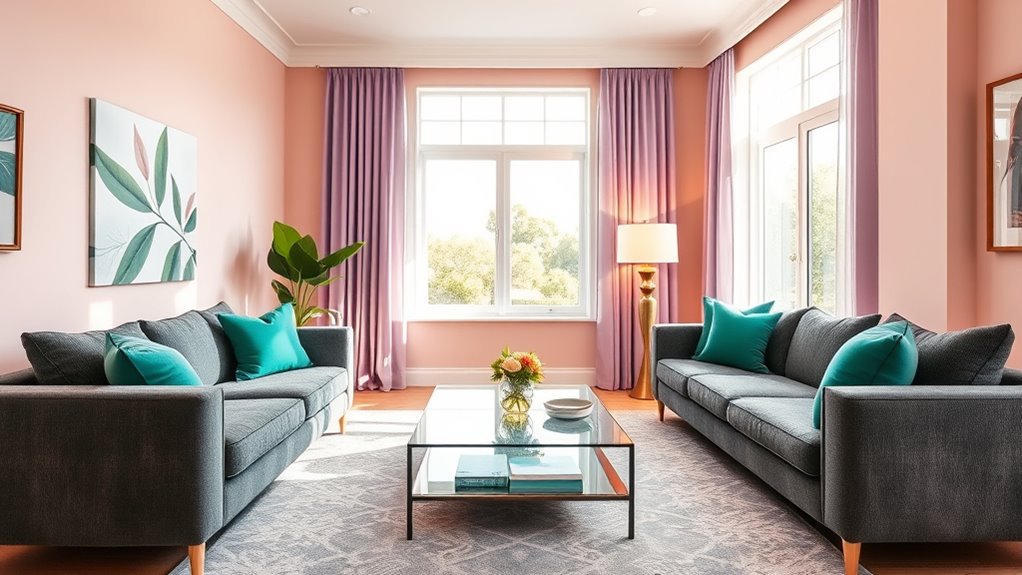
Color plays a powerful role in shaping the atmosphere of your home, influencing your mood and behavior without you even realizing it. When you choose specific hues for your walls, furniture, or accents, you’re not just decorating; you’re tapping into the deep well of color symbolism and emotional impact that colors hold. Each color carries its own meaning and can evoke specific feelings, making your environment more than just visually appealing—it becomes a space that affects how you feel and act.
For instance, blue is often associated with calmness and serenity. If you want a peaceful retreat where you can unwind after a long day, painting your bedroom in soft shades of blue can help promote relaxation. The emotional impact of blue is well-documented; it tends to lower stress levels and foster a sense of tranquility. Conversely, red is a color packed with energy and passion. Incorporating red accents into a living room or dining area can stimulate conversation, boost energy, and create a vibrant, lively atmosphere. The emotional impact of red is powerful, often increasing heart rates and evoking feelings of excitement or urgency.
Yellow, on the other hand, symbolizes happiness and optimism. Using yellow in spaces where you want to feel cheerful and uplifted can make a significant difference. Bright yellow walls or accessories can energize the room and lift your spirits, especially in areas that might otherwise feel dull or uninspired. Green embodies balance and renewal. It’s a calming color linked to nature, promoting harmony and health. Incorporating green into your home can help reduce anxiety and foster a sense of well-being. Understanding the emotional impact of these colors allows you to intentionally design spaces that support your mood and daily routines.
Dark colors like charcoal or navy can add sophistication but may also create a cozy or even somber mood if used excessively. If you’re aiming for a more dramatic or intimate atmosphere, these shades are excellent choices. However, balance is key—pairing dark tones with lighter elements prevents the space from feeling too heavy. Bright colors, such as orange or pink, can energize a room and evoke warmth and friendliness. They’re perfect for social spaces where you want to encourage lively interaction. Additionally, considering the psychological effects of color can help you craft a harmonious environment that aligns with your personal growth and mental well-being.

EVOLVE Interior Paint & Primer, Satin (Sky Blue), 1 Gallon – Available in 50+ Colors, One-Coat Coverage, Excellent Hide, Low VOC, Low Odor, Washable Interior Paint
- Paint and Primer in One: Provides coverage and surface sealing
- Multiple Sheens and Colors: Available in flat, eggshell, satin, semi-gloss
- Various Sizes Available: Options in 1-gallon and 5-gallon sizes
As an affiliate, we earn on qualifying purchases.
As an affiliate, we earn on qualifying purchases.
Frequently Asked Questions
How Do Cultural Differences Influence Color Perception in Home Décor?
Cultural differences greatly influence your perception of color in home décor through cultural symbolism and regional palettes. You might see red as luck in China, but it can signify danger elsewhere. Your regional palette shapes preferences, so you’re likely to choose colors that resonate with your cultural background. Understanding these influences helps you create a space that feels meaningful and harmonious, reflecting your cultural identity through color choices.
Can Color Choices Affect the Mood of Household Members Long-Term?
Your color choices can markedly impact your household members’ long-term mood through color therapy and emotional associations. Bright, calming colors like blue and green promote relaxation, while warm tones like yellow and red can boost energy and positivity. By intentionally selecting colors that align with desired emotional effects, you influence daily feelings and overall well-being, creating a harmonious environment that supports positive mental health over time.
Are There Specific Colors Recommended for Bedrooms to Improve Sleep Quality?
Think of your bedroom as a sanctuary, where sleep is a gentle lullaby. To create this calming haven, choose sleep-inducing hues like soft blues, muted greens, or gentle lavenders. These calming bedroom colors help lower stress and promote restful sleep. Incorporate these shades into your walls, linens, and décor to turn your space into a sleep-friendly retreat, making nightly rest feel like a sweet, soothing embrace.
How Does Lighting Impact the Psychological Effects of Colors in a Room?
Lighting profoundly influences how colors affect your mood. Natural light enhances true colors, creating a calming or energizing atmosphere depending on the hue. Artificial lighting, such as warm or cool bulbs, can alter the color’s psychological impact, making a space feel cozy or vibrant. You should consider both natural light and artificial lighting to optimize your room’s mood, ensuring colors evoke the desired emotional response throughout the day.
What Role Does Personal Color Preference Play in Decorating Decisions?
Think of your favorite colors as your personal soundtrack in home décor. Your personal preferences greatly influence your decorating decisions because they reflect your unique taste and personality. When you choose colors based on your preferences, you’re practicing color psychology through personal expression. This connection helps create a space that feels authentic and comfortable, making your home truly yours. Trust your instincts—they guide you toward colors that resonate with your inner self.
Conclusion
Understanding the psychology of color helps you create a space that truly reflects your mood and personality. For instance, imagine choosing calming blues for your bedroom to promote relaxation after a long day. By consciously selecting colors, you influence how you feel and how others perceive your home. So, next time you’re decorating, remember: the right color isn’t just about style—it’s about shaping your experience and emotions every day.