
Using an incorrect stride length on an elliptical can lead to knee pain or injury, especially if you overextend or maintain an awkward gait. To stay safe, make sure your stride is natural and comfortable, and adjust it if your knees start aching or feel unstable. Proper stride mechanics help prevent joint stress and promote better workout results. Curious about how to set it up right? Keep going for more insights on protecting your knees while exercising.
Key Takeaways
- Overextending your stride length on an elliptical can increase knee joint stress and lead to pain or injury.
- Maintaining a natural, comfortable stride helps distribute pressure evenly and prevents unnatural knee positions.
- Adjusting stride length to match your body’s gait reduces the risk of overextension and knee strain.
- Using an elliptical with customizable stride settings allows you to find a safe, ergonomic movement pattern.
- Listening to your body signals and shortening your stride if knees feel unstable minimizes the risk of joint damage.
Ellipticals are a popular choice for those seeking low-impact, effective cardiovascular workouts. They provide a gentle way to burn calories and improve endurance without putting excessive stress on your joints. But to get the most benefit and avoid injury, it’s crucial to understand how to use them properly. One common mistake people make is ignoring how resistance settings and stride mechanics influence their workout, especially concerning knee health.
When you start using an elliptical, you might be tempted to set the resistance very high in hopes of a more intense workout. However, setting the resistance too high without proper form can strain your knees and compromise your stride mechanics. Instead, focus on adjusting resistance gradually to match your fitness level. Proper resistance allows you to engage your muscles effectively while maintaining control over your movement, which helps prevent undue stress on your knees. Remember, higher resistance isn’t always better; it can lead to compensatory movements that hurt your joints.
Avoid high resistance without proper form to protect your knees and maintain effective stride mechanics.
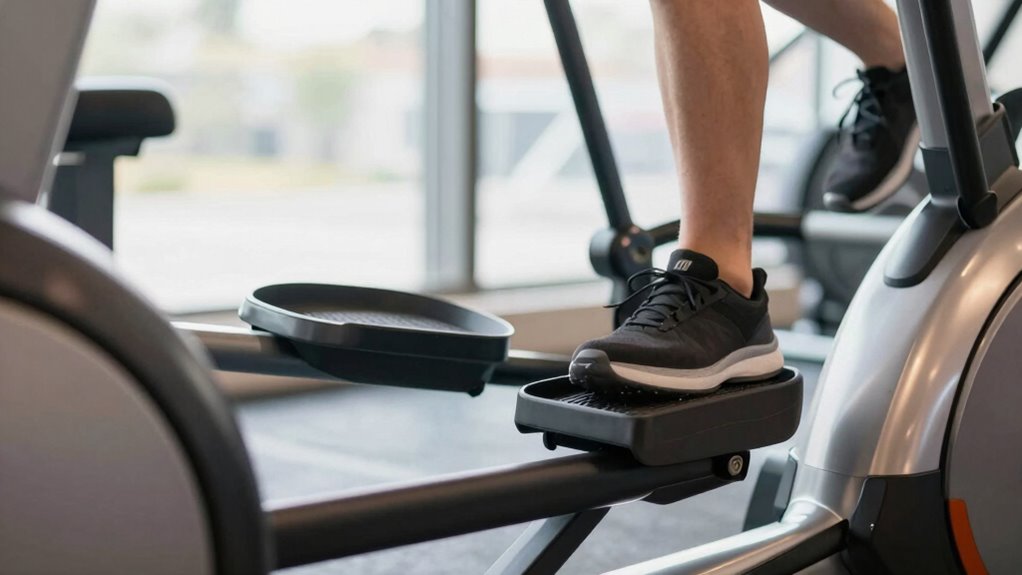
Your stride mechanics play a crucial role in protecting your knees during your elliptical workout. A natural, smooth stride mimics your walking or running motion, but many users inadvertently adopt an overextended or awkward stride length. This can happen if you set your stride length too long, which forces your knees into unnatural positions and increases the risk of pain or injury. To avoid this, choose an elliptical with adjustable stride length and set it to match your natural gait. Keep your knees slightly bent at the start of each stride and avoid overextending your legs at the end. This helps distribute the workload evenly across your leg muscles and prevents undue pressure on your knee joints.
Pay attention to how your body responds as you change resistance and stride length. If you notice your knees aching or feeling unstable, it’s a sign you need to adjust your settings. Lowering resistance and shortening your stride can improve your form and reduce joint stress. Conversely, if your workout feels too easy or you’re not engaging enough muscles, gradually increase resistance and stride length while maintaining proper form. Always listen to your body—pain is a signal that something isn’t right.
Additionally, understanding the importance of proper equipment setup and ensuring your elliptical is correctly assembled can make a significant difference in your workout safety and effectiveness. In essence, mastering resistance settings and stride mechanics is vital for a safe, effective elliptical workout. By setting resistance appropriately and maintaining a natural stride, you can maximize your cardio benefits without risking knee pain or injury. The key is to progress gradually, stay attentive to your body’s signals, and prioritize proper form over sheer intensity. Doing so ensures that your elliptical sessions are both safe and productive, helping you stay active and healthy long-term.
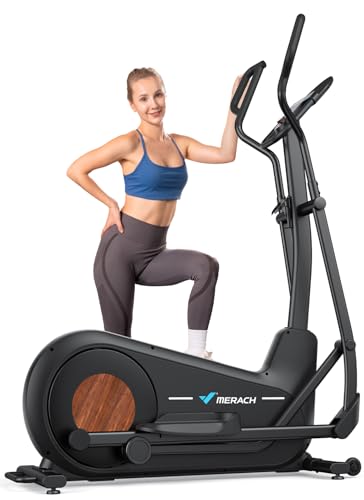
MERACH Elliptical Machine, Elliptical Exercise Machine with 19 in Stride, Hyper-Quiet Magnetic Drive System, Elliptical Trainer with 16 Resistance Levels, 400LBS Loading Capacity
- Self-Powered Operation: No power cord needed for workouts
- Easy Assembly: 90% pre-assembled, setup under 20 minutes
- Compact & Quiet Design: Runs quietly (<15dB), space-saving
As an affiliate, we earn on qualifying purchases.
As an affiliate, we earn on qualifying purchases.
Frequently Asked Questions
How Can I Adjust My Elliptical for Different Fitness Levels?
To adjust your elliptical for different fitness levels, start by modifying the elliptical stride length to match your comfort and height, ensuring smooth motion. Then, increase resistance levels gradually to challenge yourself without overexerting. You can also vary the incline if your machine allows it, which boosts intensity and targets different muscle groups. These adjustments help you customize your workout, improve endurance, and prevent injury.
Are There Specific Brands Better for Knee Comfort?
Yes, some brands prioritize knee comfort with features like ergonomic seats and cushioned pedals. Look for models from NordicTrack, Schwinn, or ProForm, as they often include these features, making workouts gentler on your knees. These brands focus on ergonomic design and cushioning to reduce joint strain, so you can exercise comfortably and safely. Always test different models to find the one that best fits your comfort needs.
What Are the Signs of Improper Elliptical Use?
If you notice discomfort or pain in your knees, you’re likely using the elliptical improperly. Signs include poor elliptical posture, such as slouching or leaning forward, and incorrect stride length adjustment that’s too long or short. Make sure your stride length matches your height and maintain a smooth, controlled motion. Pay attention to your knees’ alignment, and avoid overextending or locking your joints to prevent injury.
Can Ellipticals Help With Knee Joint Issues?
Imagine gentle waves soothing your knee joint health—that’s what elliptical therapy can offer. If used correctly, ellipticals can help improve mobility and reduce pain for knee issues. They provide a low-impact workout that minimizes stress on your joints while strengthening surrounding muscles. Just make certain your stride length is appropriate, and avoid overdoing it. Ellipticals, when used properly, can be a safe and effective way to support your knee joint health.
How Often Should I Replace My Elliptical Machine?
You should replace your elliptical machine every 7 to 12 years, depending on usage and maintenance. Regular elliptical maintenance extends its machine lifespan, so keep it clean, check for loose parts, and lubricate moving components as recommended. If you notice persistent issues, unusual noises, or declining performance despite maintenance, it’s time to contemplate replacing it. Proper care ensures your elliptical stays effective and safe for your workouts.
Conclusion
Remember, choosing the right stride length on an elliptical isn’t just a detail—it’s the key to protecting your knees and maximizing your workout. Think of it as the Goldilocks principle: too long or too short, and you risk harm; just right, and you release smooth, effective movement. So, take control, adjust thoughtfully, and allow your stride to be your ally, not your adversary, in achieving fitness without pain. Your knees will thank you for listening to this silent, yet powerful, whisper of wisdom.